Buying Guide: Tattu 6S LiPo Battery and R-Line V6 Review
Is the Tattu R-Line V6 1600mAh Worth Buying?
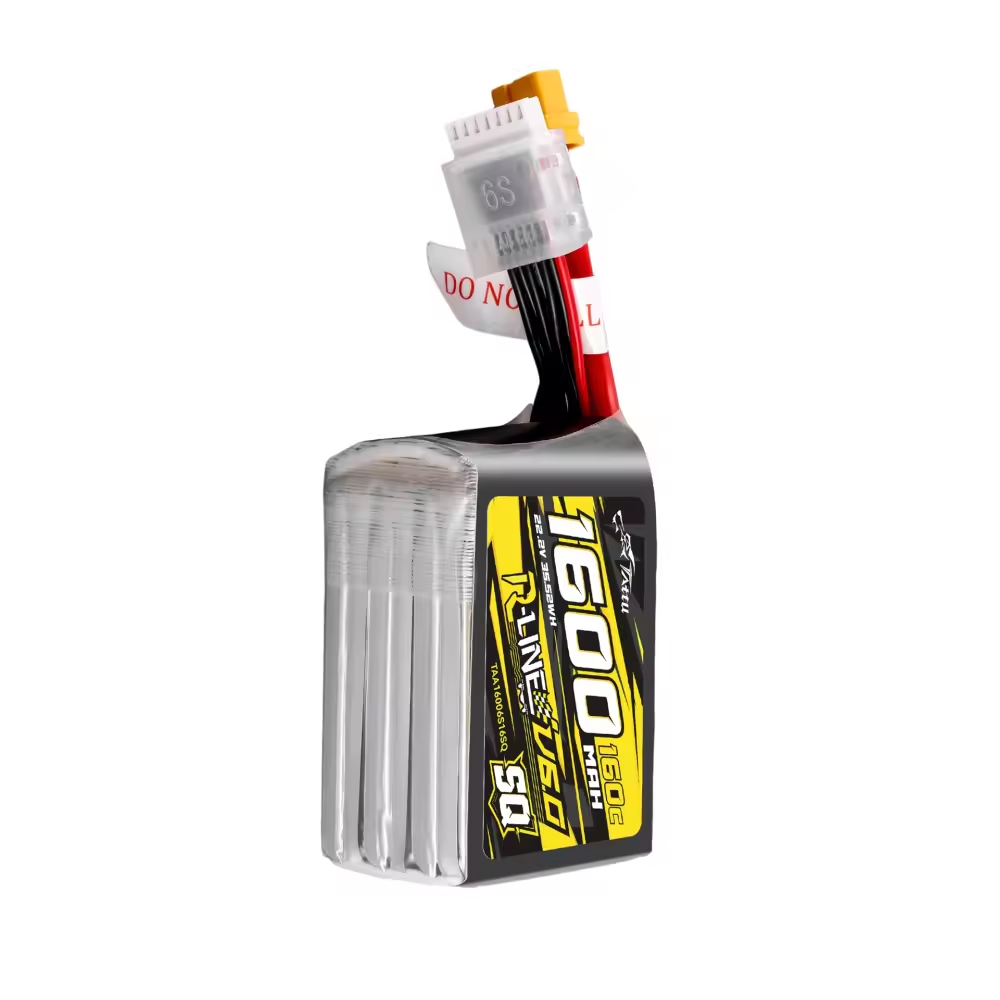
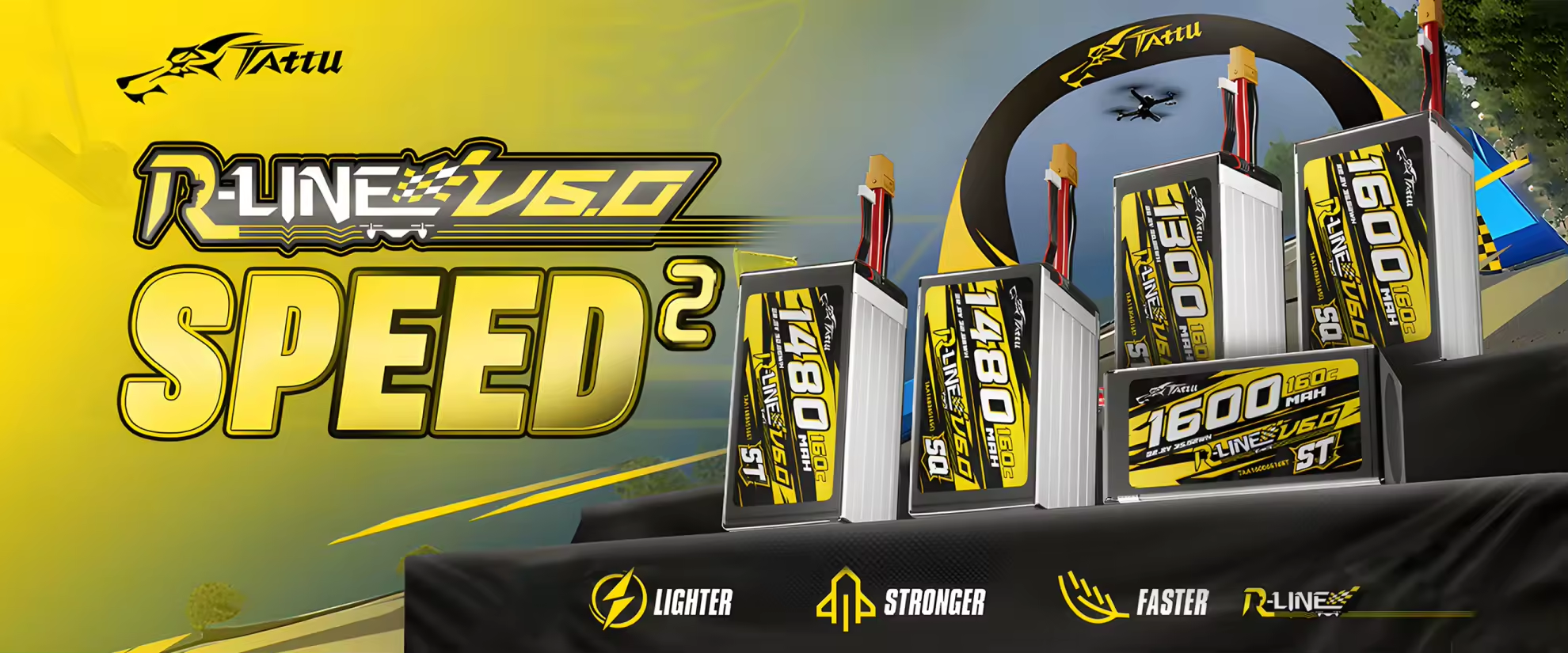
The Tattu R-Line V6 1600mAh is designed for pilots who want the acceleration of a premium racing battery with more usable energy than a typical lightweight race pack.
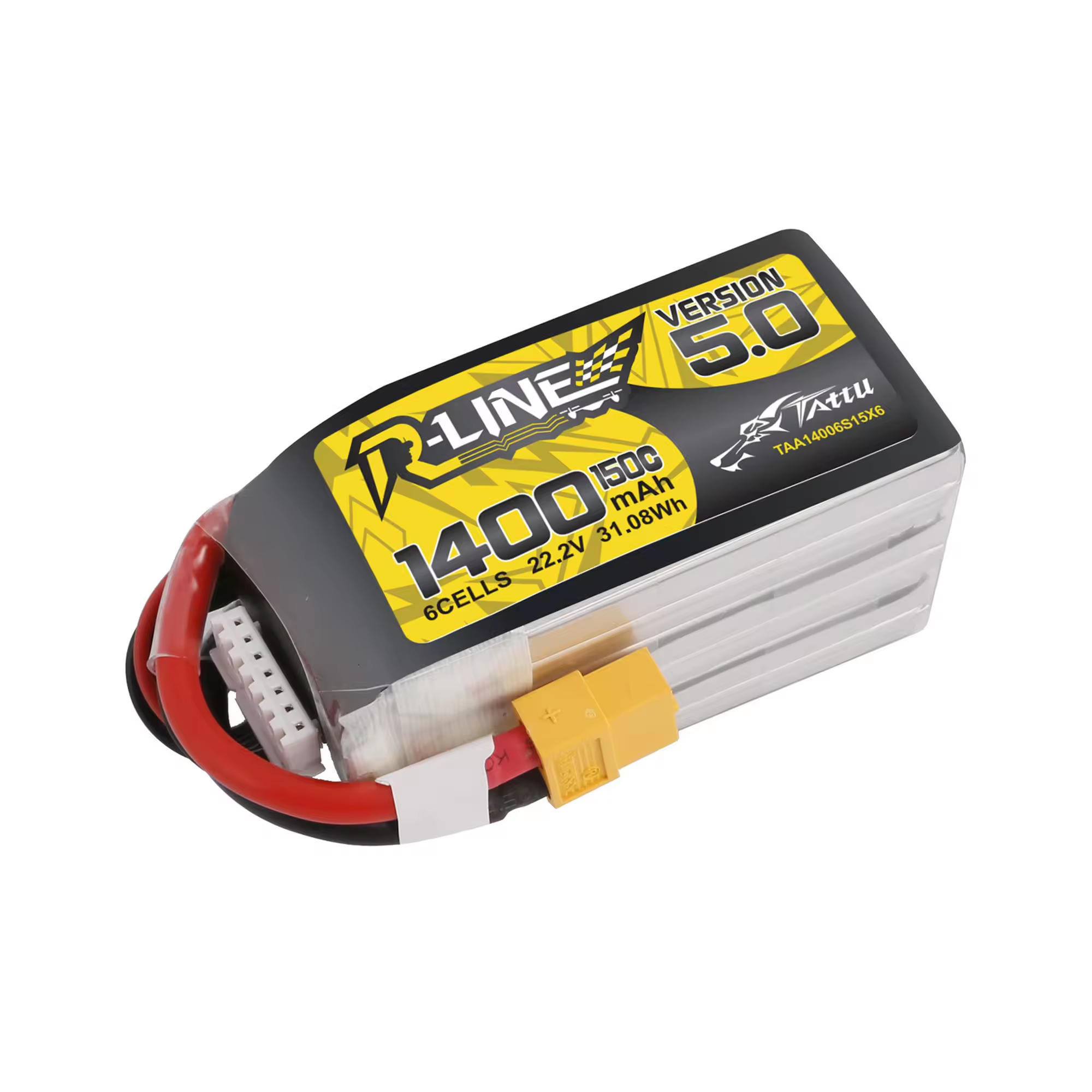
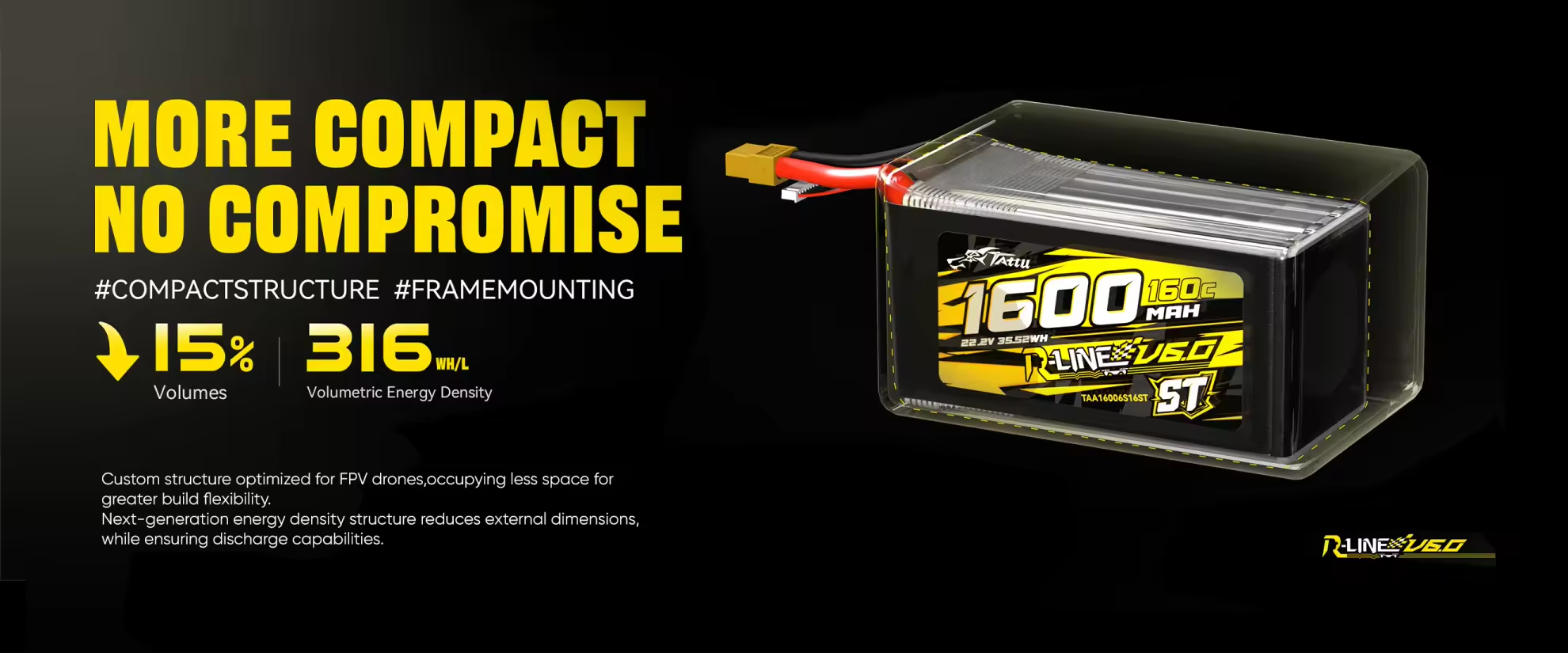
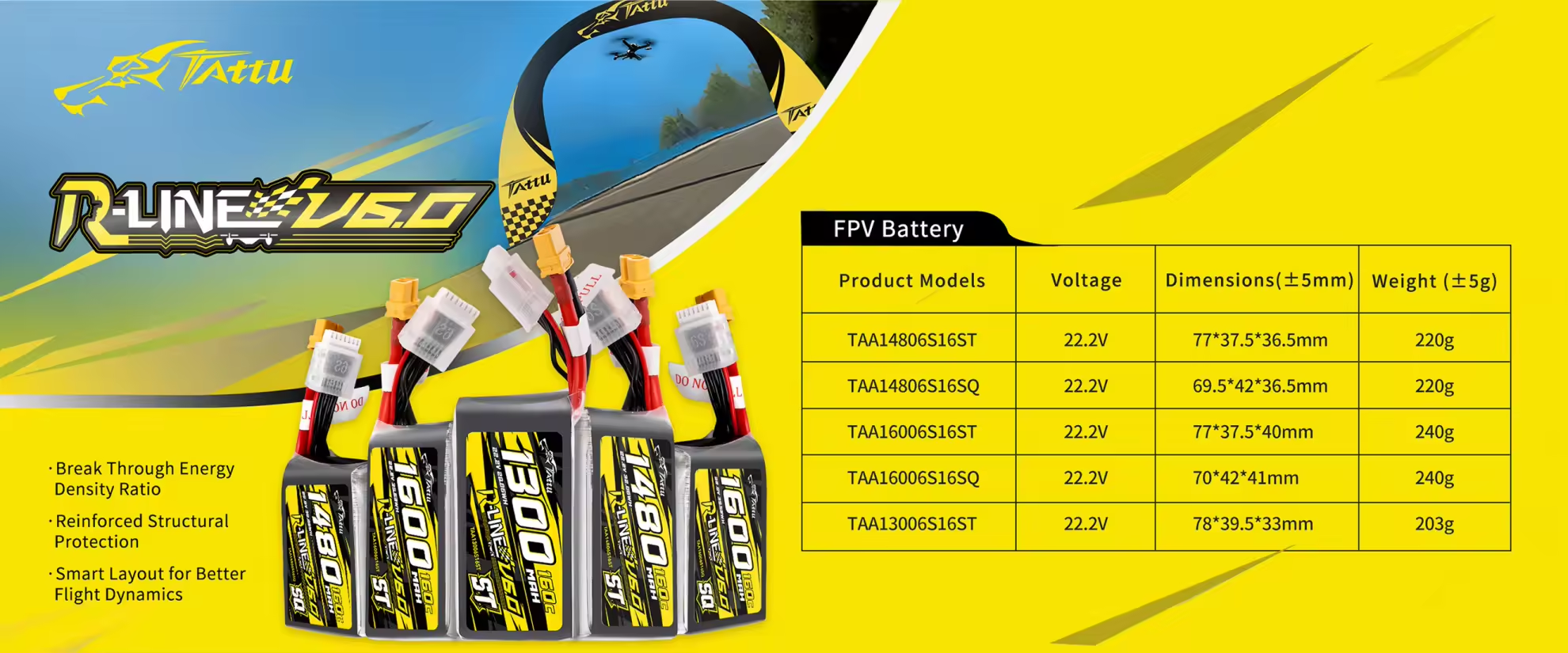
This Tattu 6S LiPo battery provides 35.52Wh of nominal energy in a 6S1P 22.2V configuration. It weighs approximately 240g and measures 77 × 37.5 × 40mm, making it particularly suitable for high-performance 5-inch racing, aggressive freestyle, long race courses and cinematic flying.
Choose the 1600mAh version when additional flight time and stronger late-flight performance are more important than achieving the lowest possible battery weight. Choose a 1200–1480mAh pack when rapid directional changes and minimum all-up weight are the priorities.
MEPSKING Expert Review: Tattu R-Line V6 1600mAh
After reviewing standardized discharge testing and a separate two-month field comparison, the MEPSKING team considers the Tattu R-Line V6 1600mAh one of the strongest options for pilots seeking a premium 6S FPV battery with a balanced combination of power, capacity and weight.
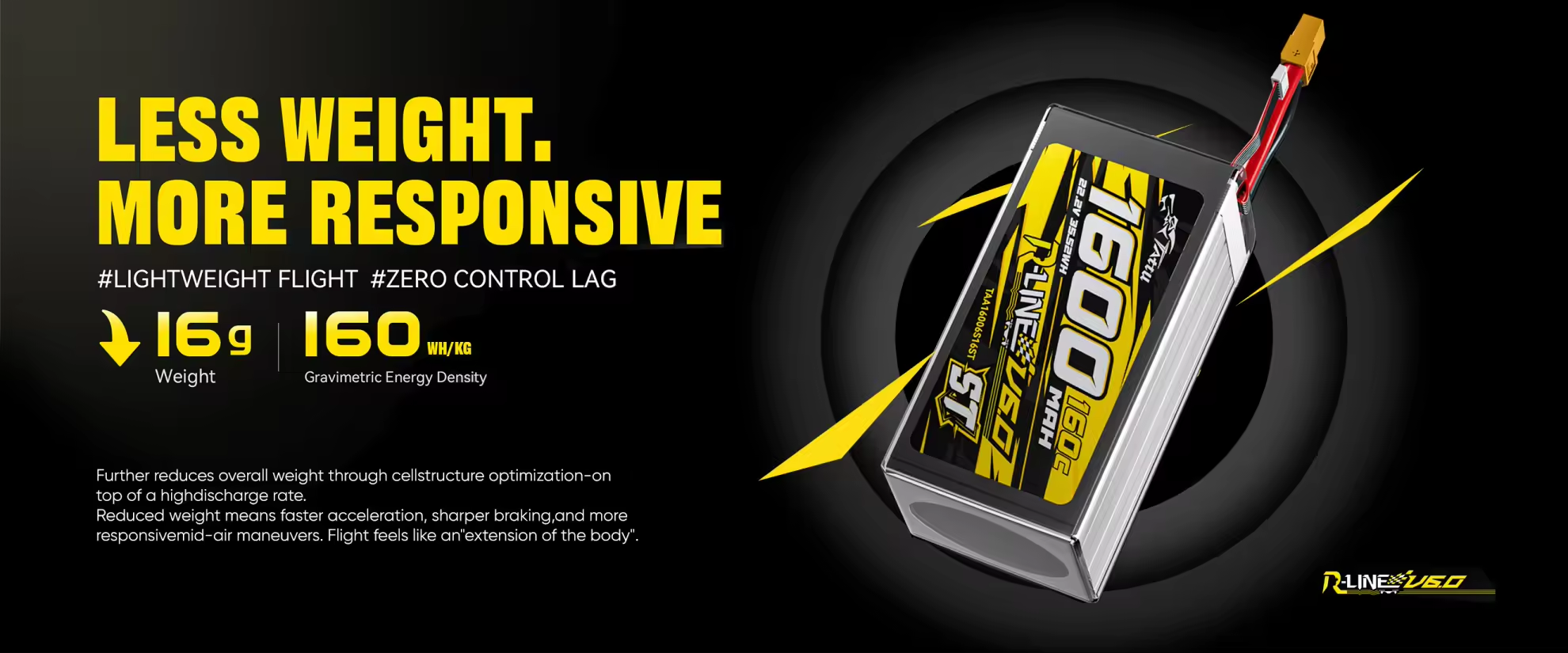
During a controlled 15C discharge test, all tested V6 packs delivered at least their stated capacity. Compared with the previous 1550mAh V5, the 1600mAh V6 is approximately 13–15g lighter while offering more rated capacity. Independent testing measured roughly 14–18% better energy density and approximately 36–41% higher power density, depending on the individual packs tested.
The V6 1600mAh packs produced approximately 2,950–3,100W during an extreme short-duration laboratory burst test. This demonstrates the capability of the cells, but it should not be interpreted as safe continuous power through the drone’s XT60 connector.
MEPSKING’s verdict: choose the V6 1600mAh when sustained punch, longer usable flight time and more consistent late-flight performance matter more than minimum battery weight.
MEPSKING Expert Flight Experience Assessment
The practical flight advantage of the V6 1600mAh is its ability to maintain a more consistent throttle feel as the battery is discharged. Pilots can expect strong punch during acceleration and less need to compensate for voltage drop during the middle of a flight compared with lower-performance packs.
In one two-month field comparison, a pilot alternated four Tattu V6 1600mAh packs and four SMC Racing 1600mAh packs on the same racing drones. Both batteries felt similarly powerful when new. After repeated use, the pilot reported that the Tattu packs retained their punch more consistently, while the tested SMC packs began to require more throttle and triggered low-battery warnings earlier.
This result represents one pilot and one group of batteries, so it does not prove that every Tattu pack will outlast every SMC pack. Combined with the controlled test results, however, it provides useful evidence that the R-Line V6 offers both high initial output and promising performance retention.
Tattu R-Line V6 1600mAh vs SMC Racing 1600mAh
| Comparison | Tattu R-Line V6 1600mAh | SMC Racing 1600mAh |
|---|
| Weight and Size | Approximately 240g with ST and SQ shapes available | Approximately 240g in the tested version |
| Energy Density | Within approximately 1% of SMC in standardized testing | Small laboratory advantage, but pack variation remains relevant |
| Power Density | Within approximately 1–2% of SMC in the bench test | Small average advantage in the short-duration test |
| New-Pack Flight Feel | Strong punch with low perceived voltage sag | Very similar initial punch in the paired flight test |
| Repeated-Use Experience | More consistent punch in one two-month pilot comparison | The tested packs appeared to lose punch sooner |
| Buying Advice | Choose for ST/SQ options, wide availability and promising power retention | Choose when local price and availability are more attractive |
The standardized performance difference between the two batteries is small. Choose the Tattu R-Line V6 when you value wider availability, ST/SQ shape options and the stronger repeated-use result observed in the supplied field comparison.
Which Tattu Battery Capacity and Cell Count Should You Choose?
| Battery Option | Best Application | Purchase Advice |
|---|
| 4S 850–1300mAh | 3–5-inch drones designed around 4S motors | Choose for smoother throttle response and a lower-voltage setup |
| 6S 550–850mAh | Lightweight 3–4-inch high-voltage builds | Check connector type and frame clearance carefully |
| 6S 1050–1300mAh | Lightweight 5-inch racing and agile freestyle | Choose when minimum weight and rapid direction changes are the priority |
| 6S 1400–1480mAh | 5-inch racing and responsive freestyle | Choose when agility matters more than maximum flight time |
| 6S 1550–1600mAh | 5-inch freestyle, long race courses and cinematic flying | Choose for more usable energy with strong high-current performance |
| 6S 1800mAh | Heavier 5-inch cinematic or longer-duration builds | Choose only when the drone can carry the additional weight efficiently |
Choose the Tattu R-Line V6 1480mAh ST battery for a lighter and more agile 5-inch build. Choose this 1600mAh pack for longer sessions and sustained power with only a moderate weight increase. Move to the Tattu R-Line 1800mAh 6S battery only when additional flight time is more important than sharp handling.
ST vs SQ: Which Shape Fits Your Drone?
The ST version sold on this page measures 77 × 37.5 × 40mm. Its longer and narrower stick shape fits conventional 5-inch frames with a sufficiently long top plate.
The SQ version is shorter and wider. It can place the battery mass closer to the centre of the drone and may fit frames with a shorter top plate more easily. Both shapes provide equivalent electrical performance and nearly identical weight.
Measure the usable top-plate area, check the battery-strap position and confirm that the power lead can reach the drone’s XT60 connector. If your frame has a shorter top plate, compare this battery with the Tattu R-Line V6 1600mAh SQ battery.
Charging and Connector Safety
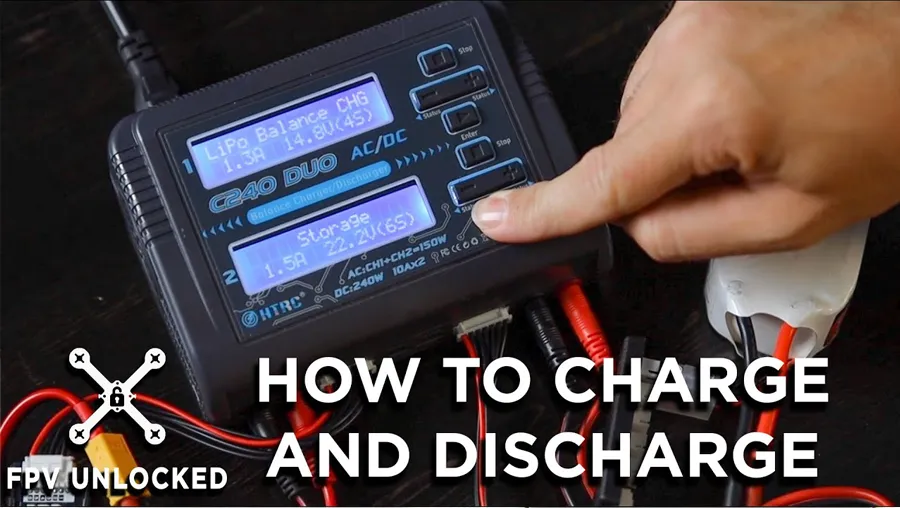
Charge this standard LiPo battery to a maximum of 4.20V per cell, or 25.2V for the complete 6S pack. Do not use a 4.35V LiHV charging program. A 1C charge rate equals 1.6A and is the conservative default for routine charging.
Extreme laboratory testing showed that the XT60 connector reached approximately 120°C when the test exceeded 3kW. This was an intentionally severe bench test rather than a normal flight condition. It demonstrates why pilots should keep XT60 contacts clean and tight and immediately replace loose, worn, discoloured or heat-damaged connectors.
Always use a compatible balance charger such as the Gens ace iMars D300. Never charge a LiPo unattended, and stop using any pack that is swollen, punctured, imbalanced or damaged after a crash.
Explore more FPV drone batteries or browse the complete Tattu battery range.


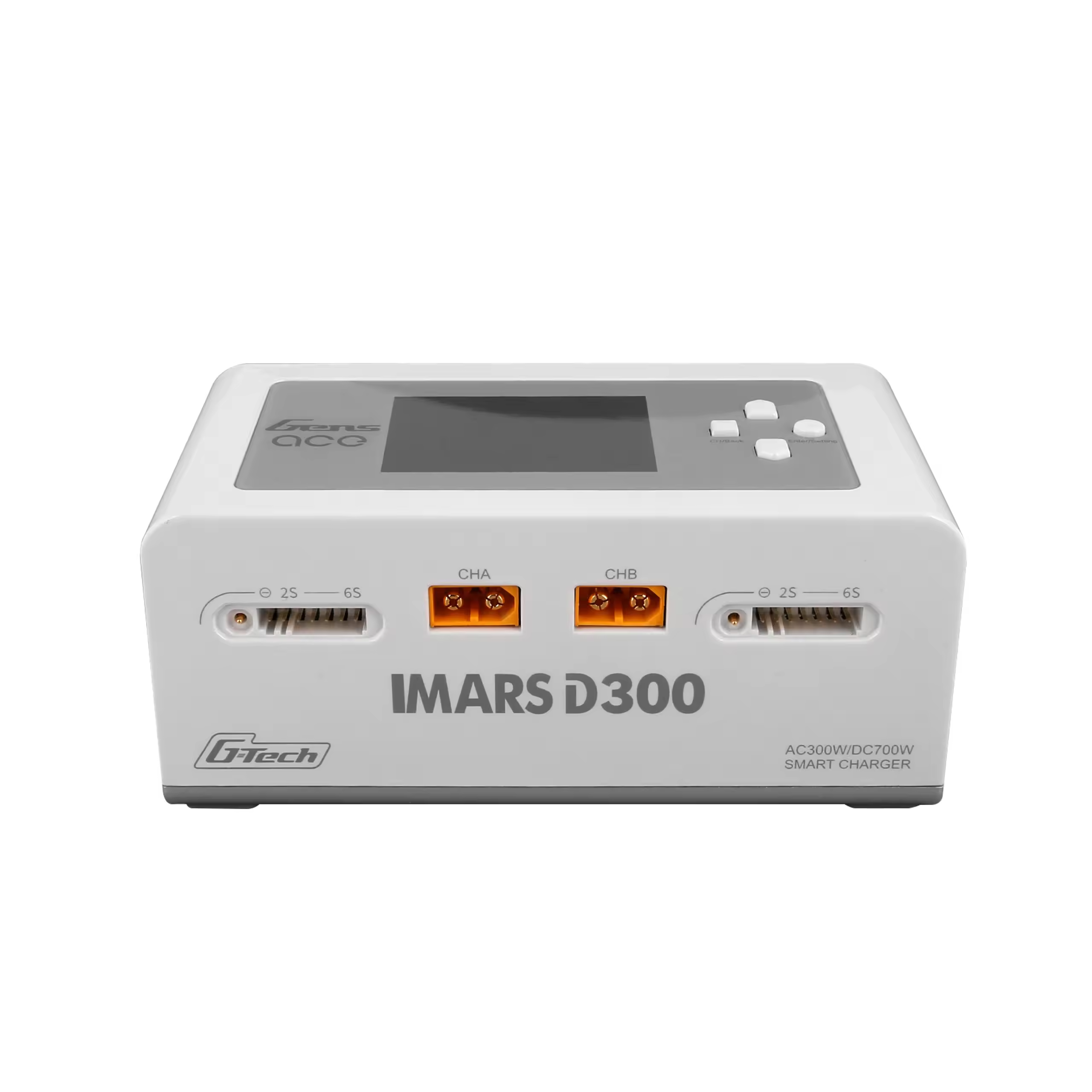

 Tattu Gens ace iMars D300 G-Tech Channel AC/DC 300W/700W RC Battery Charger BlackUS Black$126.09 Save $3.90









 Verified