Emax ECO II 3115 Brushless Motor Buying Guide
Why Choose the EMAX ECO II 3115?
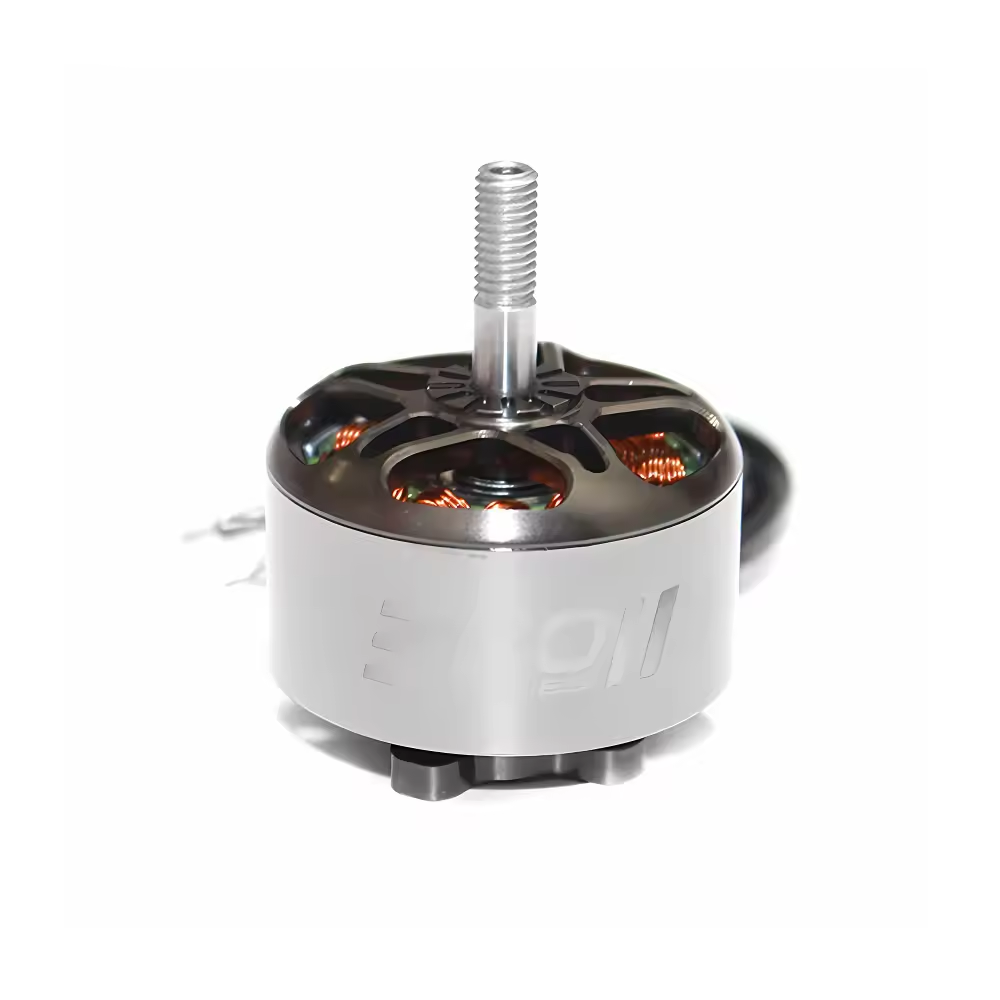
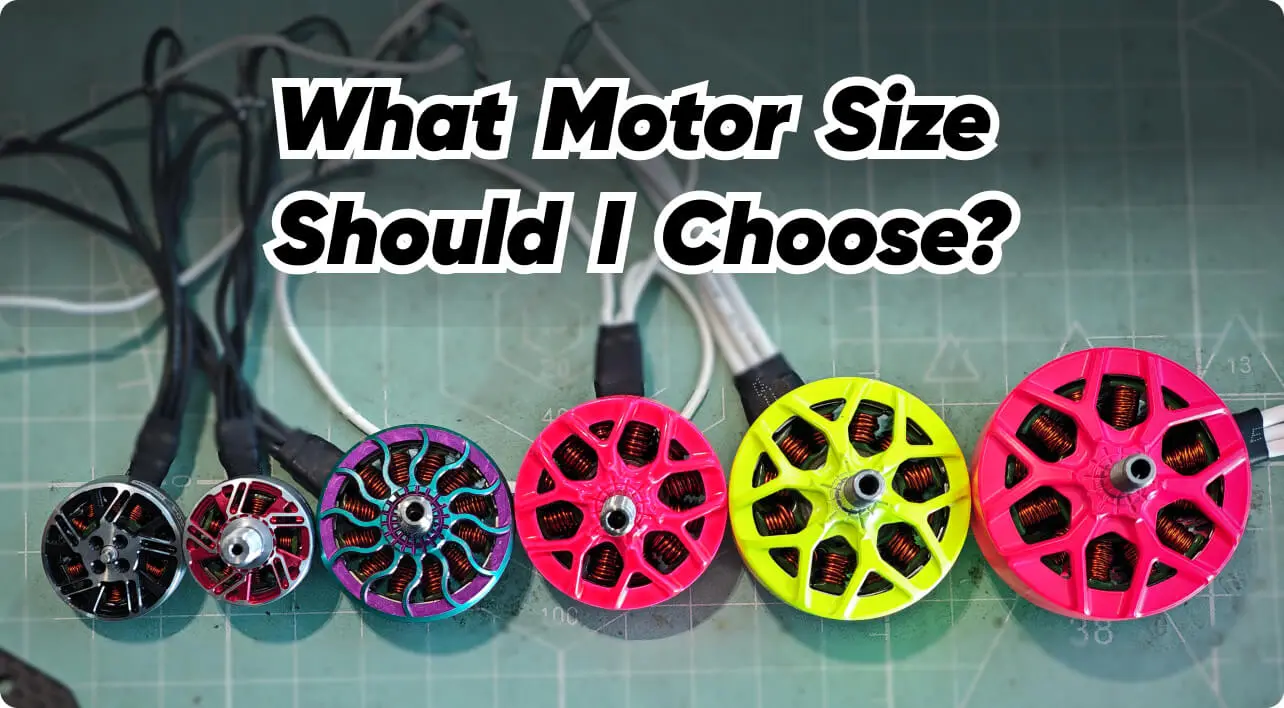
The EMAX ECO II 3115 Brushless Motor is designed for larger FPV and multirotor builds where higher torque, larger propellers and efficient power delivery matter more than the lightweight setup used on typical 5-inch drones.
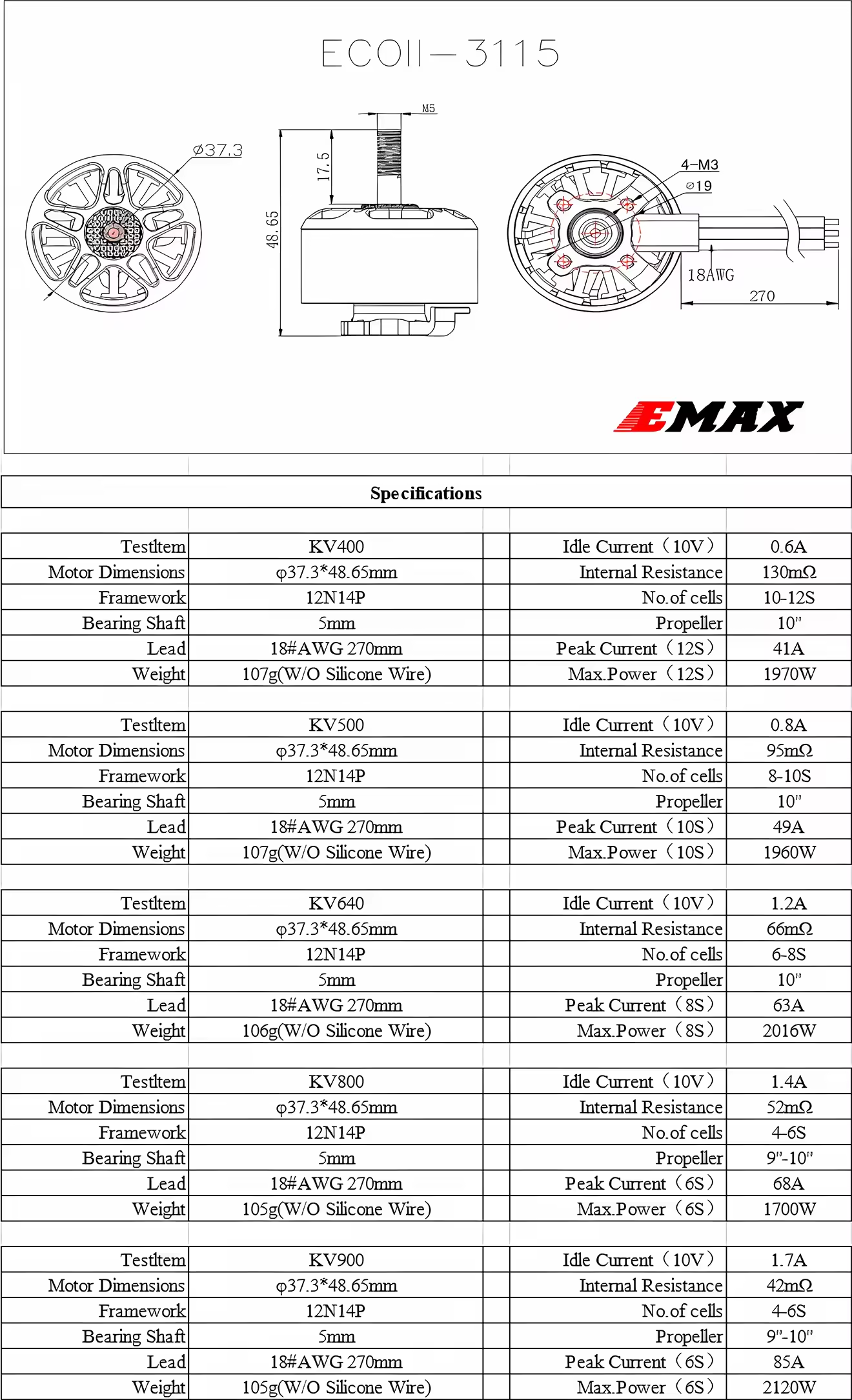
The 3115 stator size is available in 400KV, 500KV, 640KV, 800KV and 900KV, giving pilots multiple ways to match the motor to different battery voltages, propeller sizes and aircraft requirements. The series is particularly suitable for 9–10 inch long-range, cinematic, freestyle and heavier FPV builds.
The key advantage is not simply having five KV choices. It allows the same 3115 motor platform to cover different power-system designs, from lower-KV high-voltage endurance builds to higher-KV 4–6S configurations.
Choosing the Right KV
The easiest way to select the motor is to start with the battery voltage already planned for the drone.
| Build Direction | Recommended KV | Battery Direction | Flying Style |
|---|
| High-voltage long range | 400KV | 10–12S | Efficient cruising / heavy aircraft |
| High-voltage endurance | 500KV | 8–10S | Long range / efficient flight |
| Versatile 6–8S build | 640KV | 6–8S | Long range / cinematic |
| Balanced 6S build | 800KV | 6S-class | General larger FPV use |
| 4–6S performance build | 900KV | 4–6S | Cinematic / freestyle |
For pilots building a 6S 9–10 inch drone, the 640KV or 800KV versions are the more natural starting points. For a 4S or lower-voltage-oriented build, 900KV makes more sense.
For a 10–12S heavy or long-range platform, moving toward 400KV or 500KV helps keep the motor KV appropriate for the higher system voltage.
Power and Current: Match the ESC to the Motor
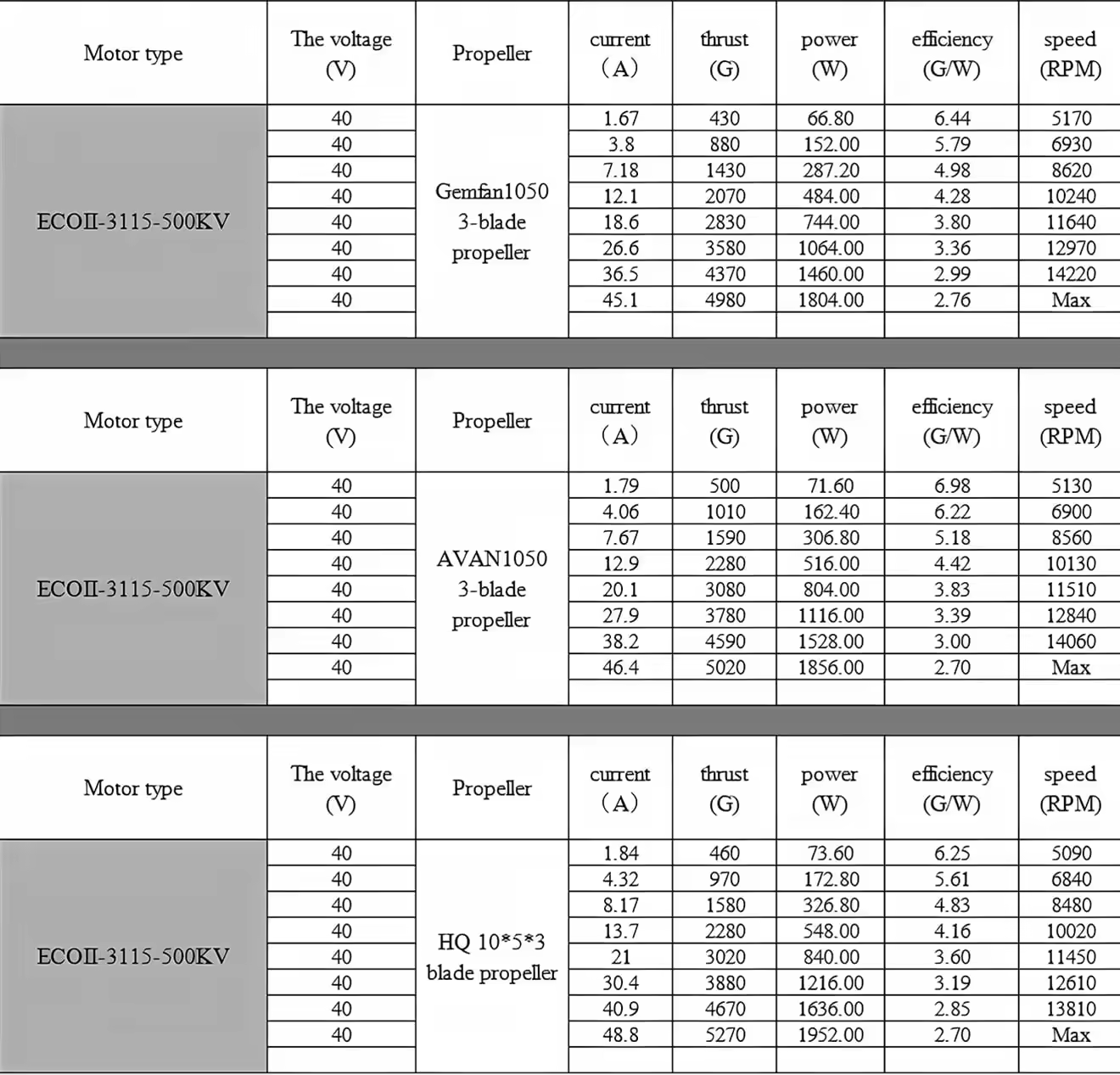
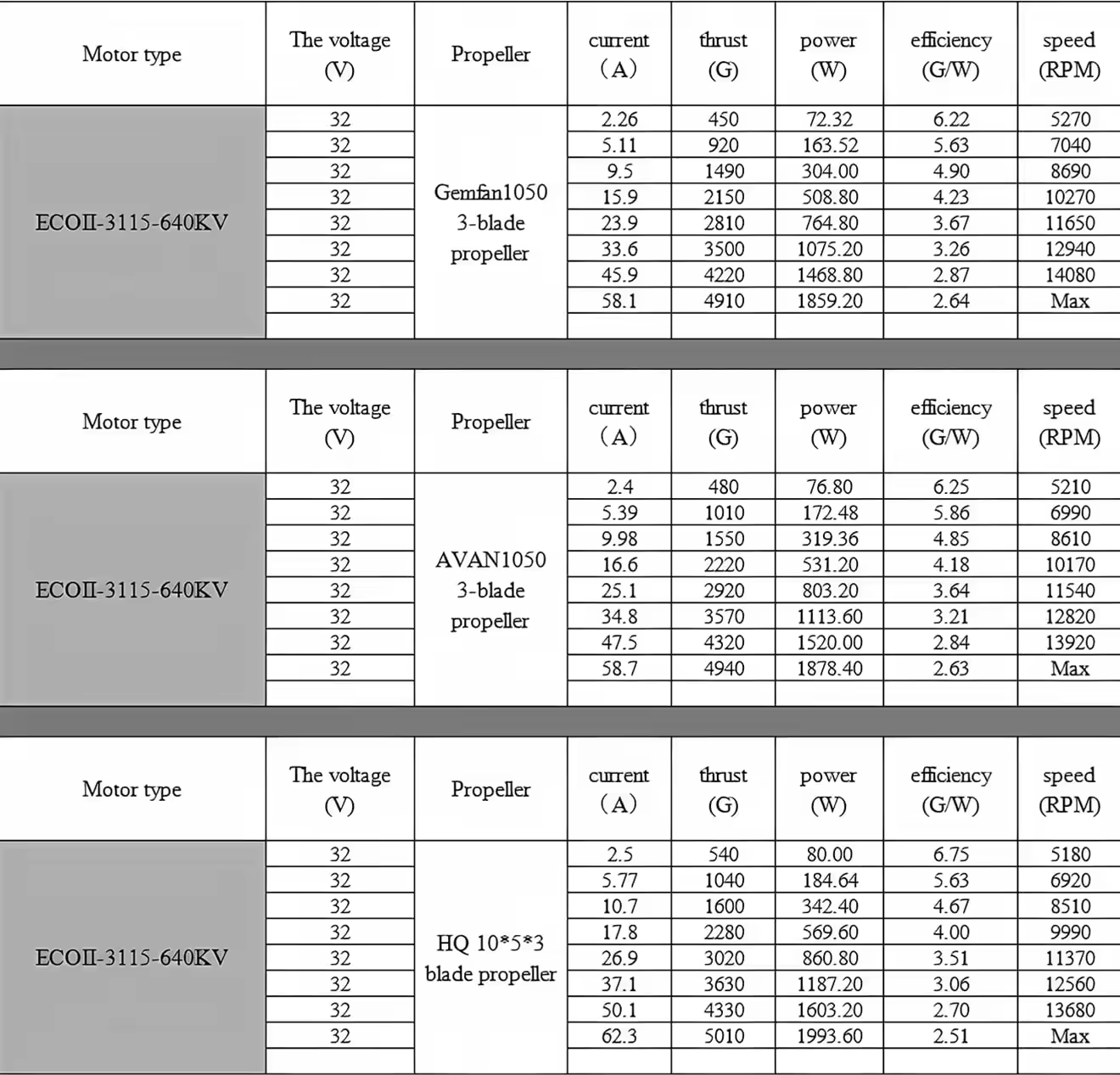
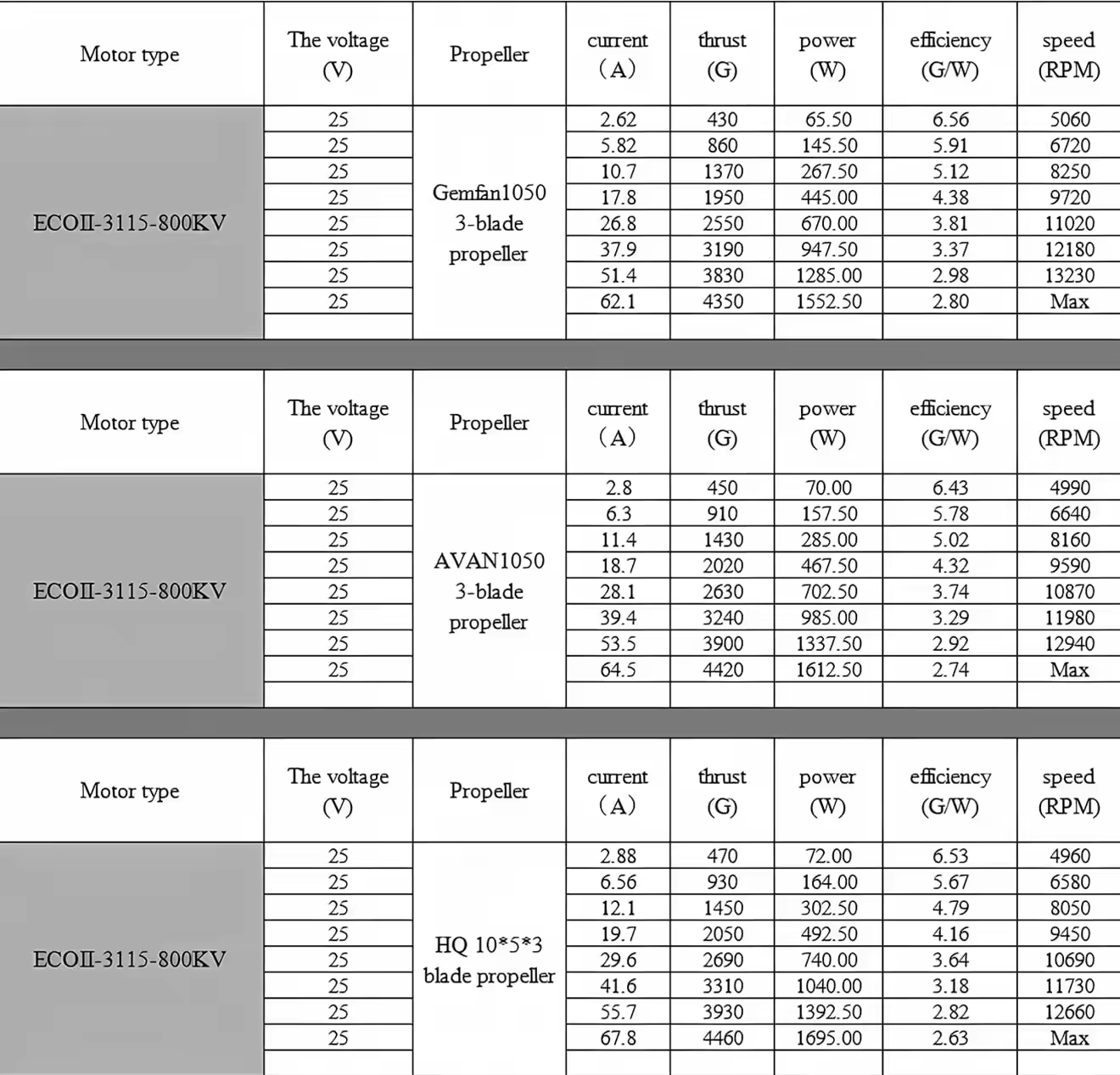
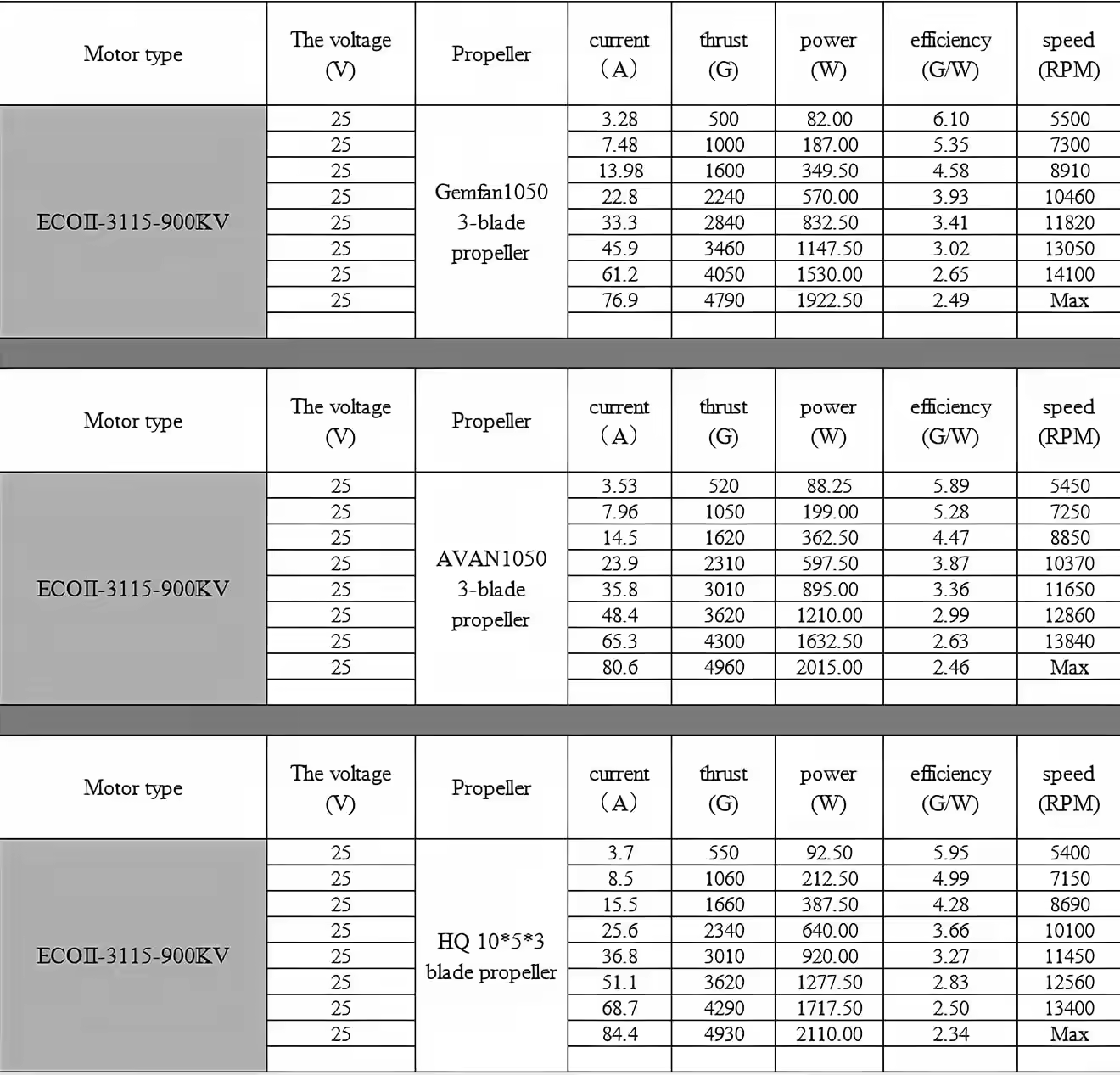
The different KV versions have different current requirements. EMAX's published specifications list peak current figures ranging from approximately 41A for 400KV to 85A for 900KV, depending on the winding and operating voltage.
| KV | Peak Current* | Max Power* |
|---|
| 400KV | 41A | 1970W |
| 500KV | 49A | 1960W |
| 640KV | 63A | 2016W |
| 900KV | 85A | 2120W |
*Published motor test data. Actual current and power depend on propeller, battery voltage, throttle, airflow, ESC behavior and flight conditions.
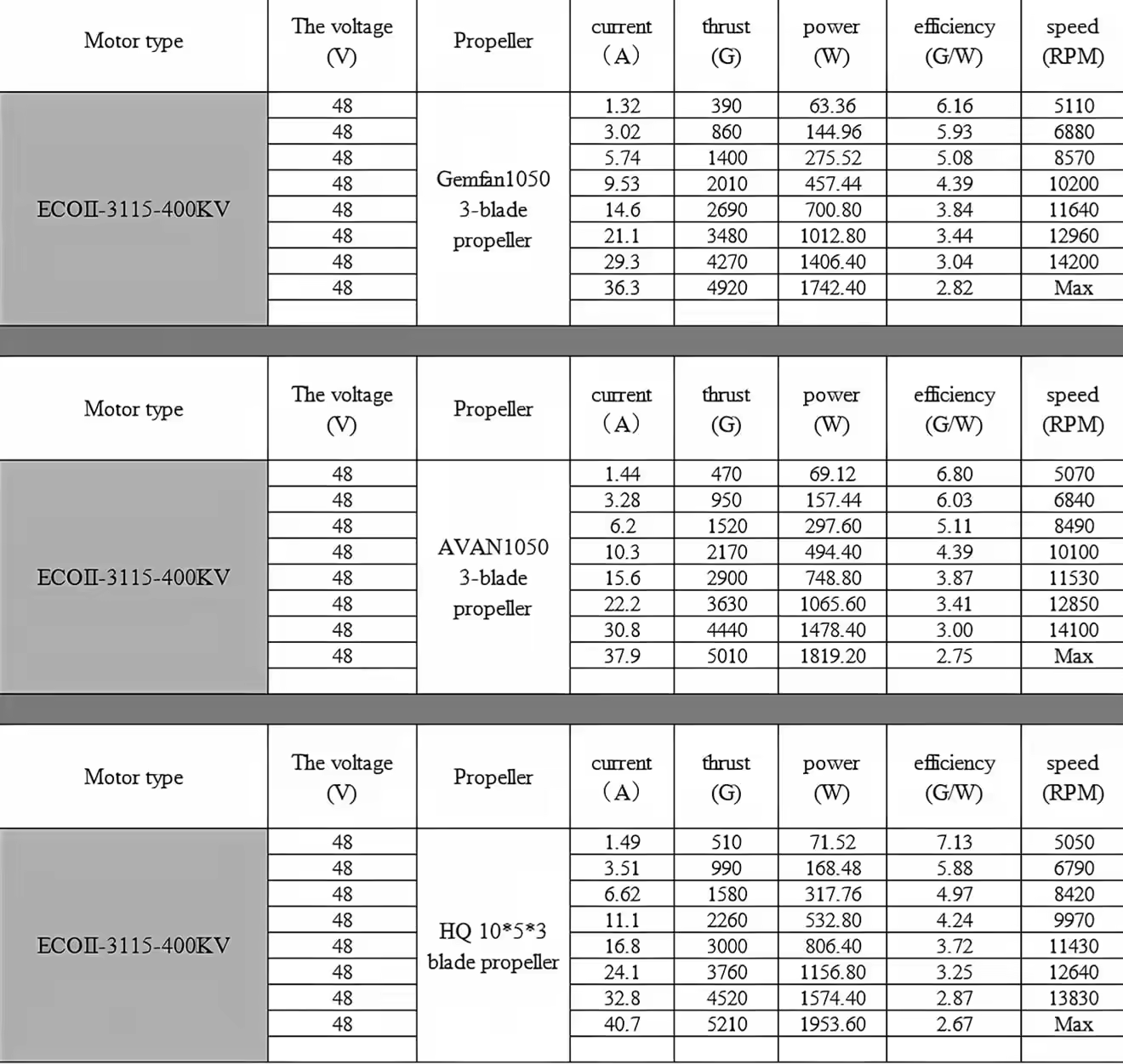
This is especially important when building a 9–10 inch drone. Do not choose an ESC only according to the motor's average flight current. The maximum expected current, propeller load and battery voltage should all be considered, with appropriate safety margin.
For a four-motor aircraft, also remember that the total propulsion current can be substantially higher than the current of one motor.
Long Range vs Cinematic Builds
Long-Range Builds
For long-range flying, the priority is usually efficiency, stable cruising and sufficient thrust reserve rather than maximum acceleration.
Lower-KV versions such as 400KV, 500KV and 640KV are well suited to higher-voltage systems where the motor can drive a larger propeller without requiring an extremely high KV.
A 6–8S 640KV setup is a practical direction for pilots who want a versatile 9–10 inch platform, while 400KV and 500KV are better suited to higher-voltage designs.
Cinematic Builds
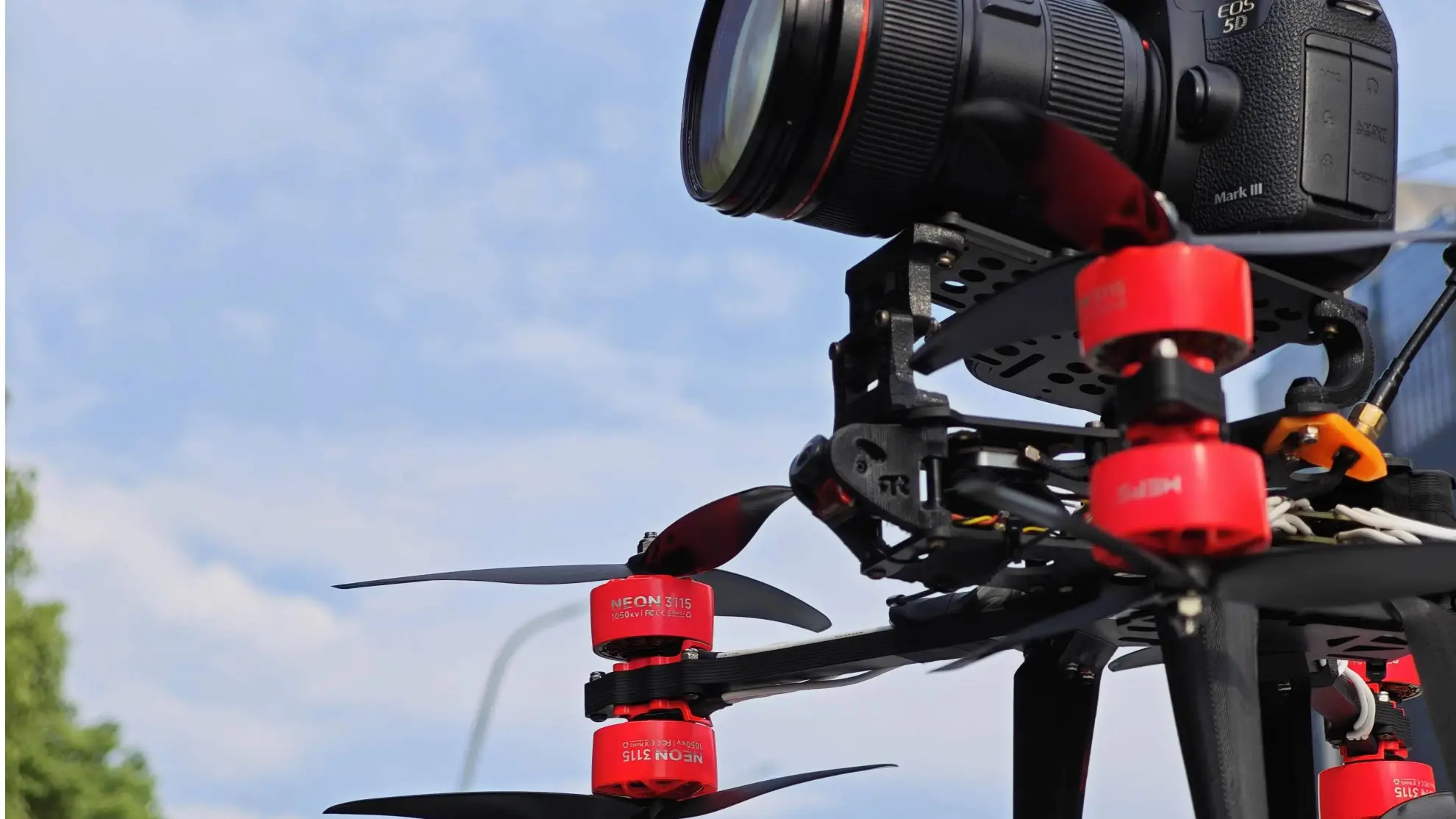
Cinematic drones may carry an action camera, stabilized camera or other additional equipment. In this case, the propulsion system needs enough thrust reserve to handle the increased aircraft weight.
A 640KV, 800KV or 900KV configuration can be considered depending on battery voltage and propeller choice.
The correct choice should be based on the complete aircraft rather than the camera weight alone.
Final Recommendation
The EMAX ECO II 3115 Brushless Motor is a practical choice for pilots moving beyond traditional 5-inch FPV power systems and building 9–10 inch long-range, cinematic or heavier drones.
Its biggest advantage is the wide range of 400KV to 900KV options, allowing the same 3115 motor platform to work with different battery voltages and flight objectives.
For a quick decision:
400KV → 10–12S high-voltage builds
500KV → 8–10S efficient builds
640KV → 6–8S versatile long-range builds
800KV → balanced higher-KV 6S-class builds
900KV → 4–6S cinematic and performance builds
The most important rule is:
Choose the battery voltage first → select the KV → match the propeller → size the ESC for peak current → then verify the complete aircraft's thrust and weight requirements.











 Verified