Buying Guide: How to Choose the Right Fixed‑Wing ESC for Your RC Airplane
Choosing the right Fixed‑Wing ESC (Electronic Speed Controller) is an important step when building an RC airplane power system. Many pilots focus mainly on the motor, propeller, and battery, but the ESC directly affects how the aircraft responds in the air.
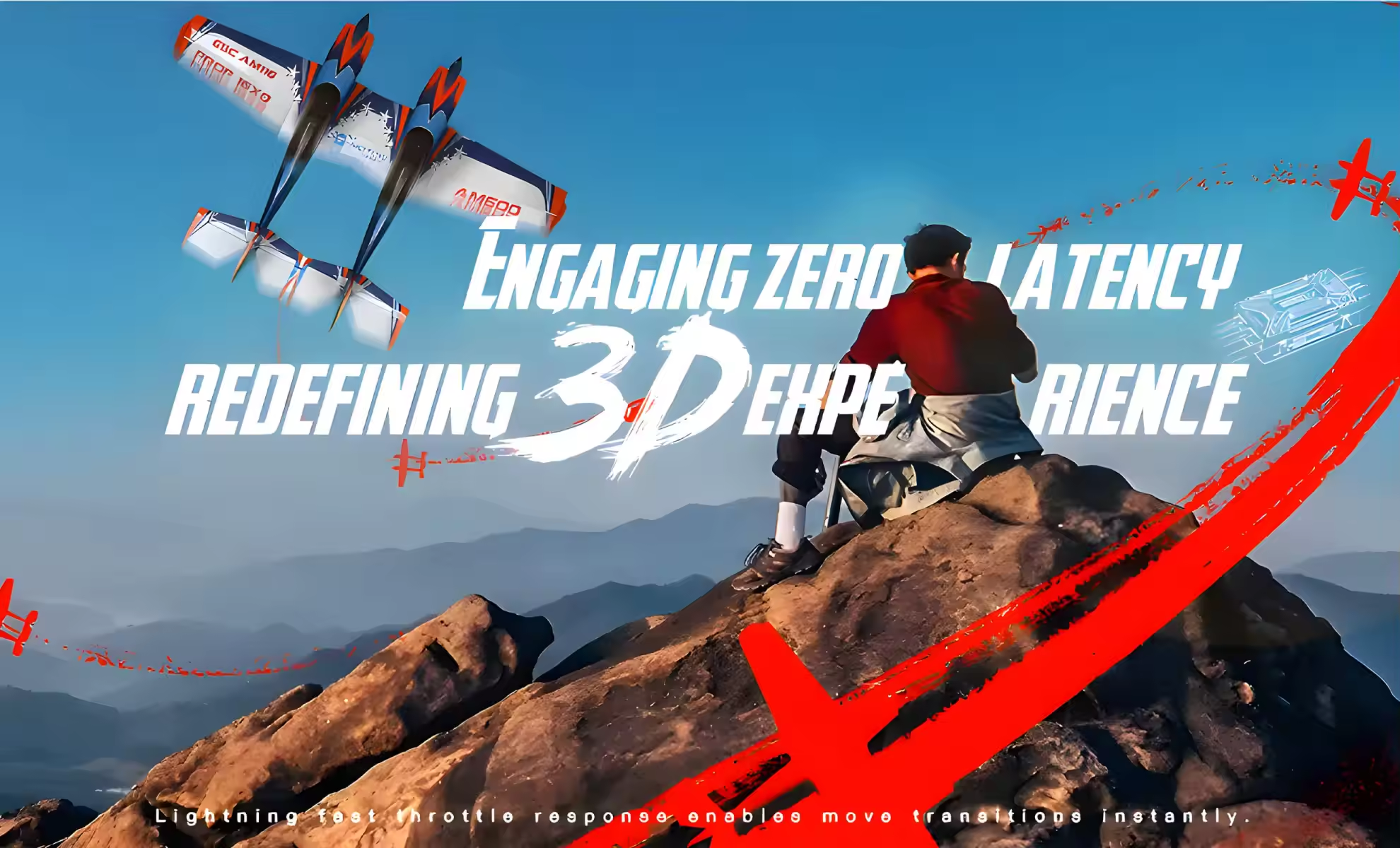
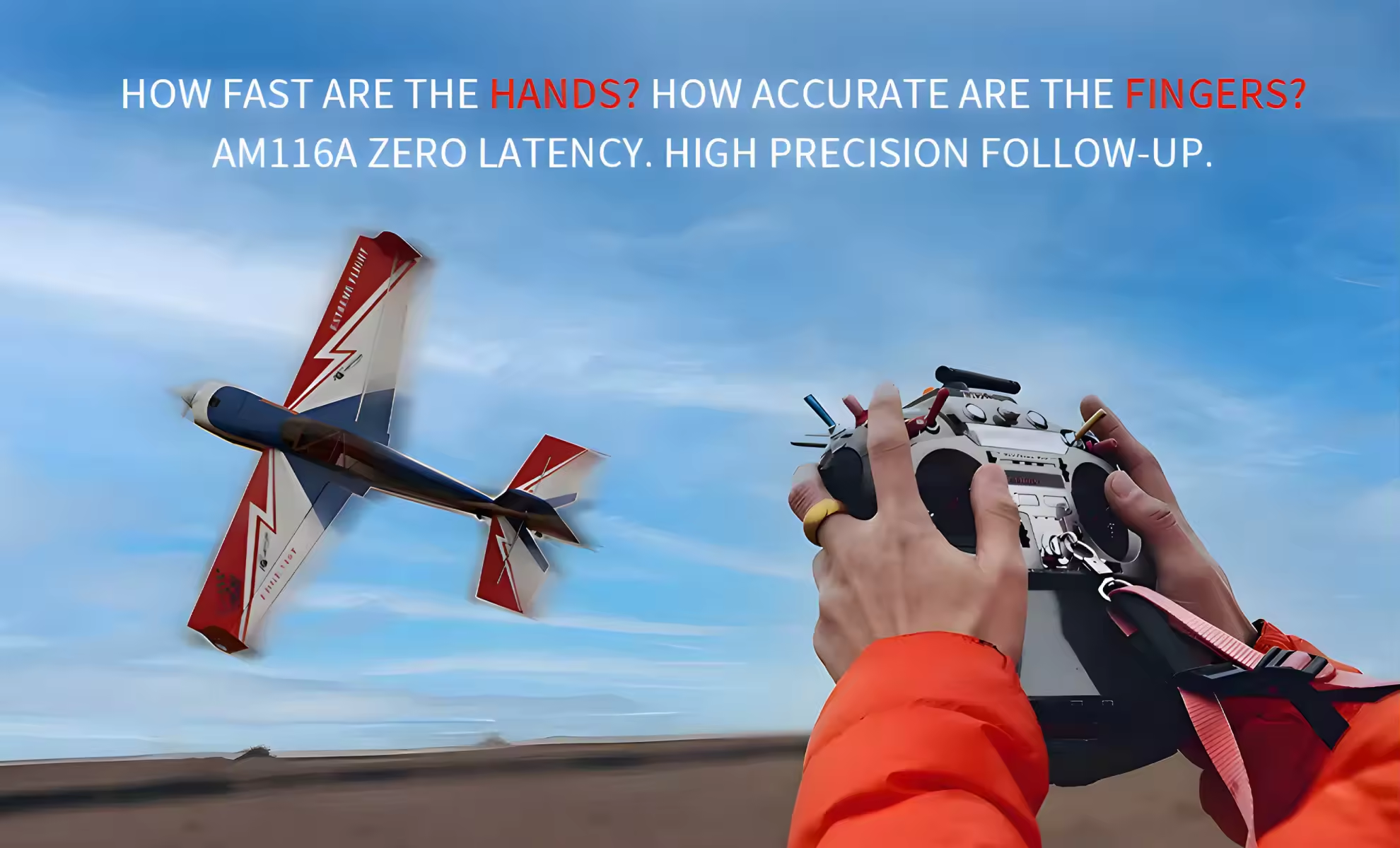
For normal sport flying, a standard RC airplane ESC can provide reliable power control. However, when flying 3D aerobatic aircraft, the ESC becomes much more important because the aircraft requires frequent throttle changes during hovering, torque rolls, knife‑edge flight, and high‑alpha maneuvers.
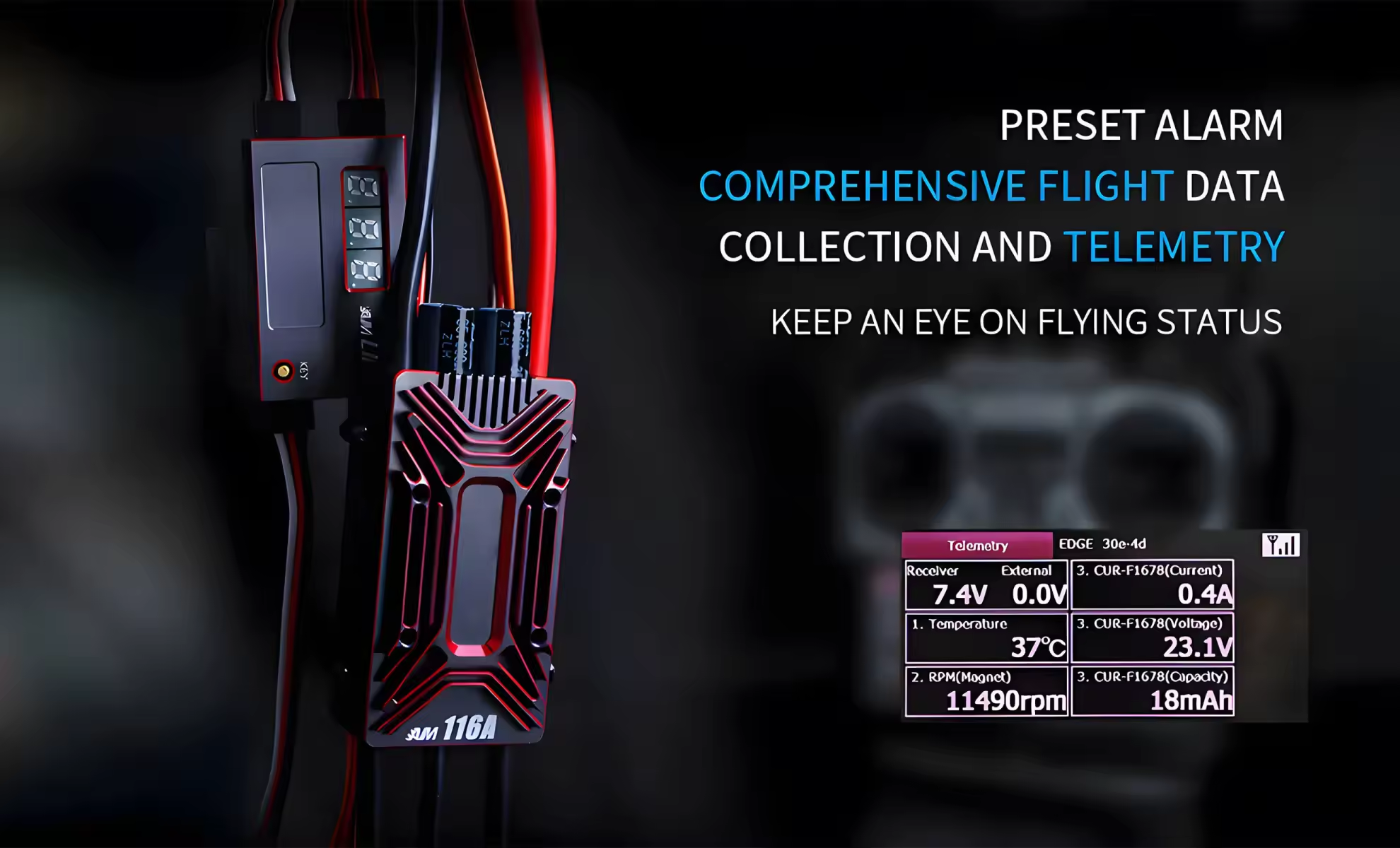
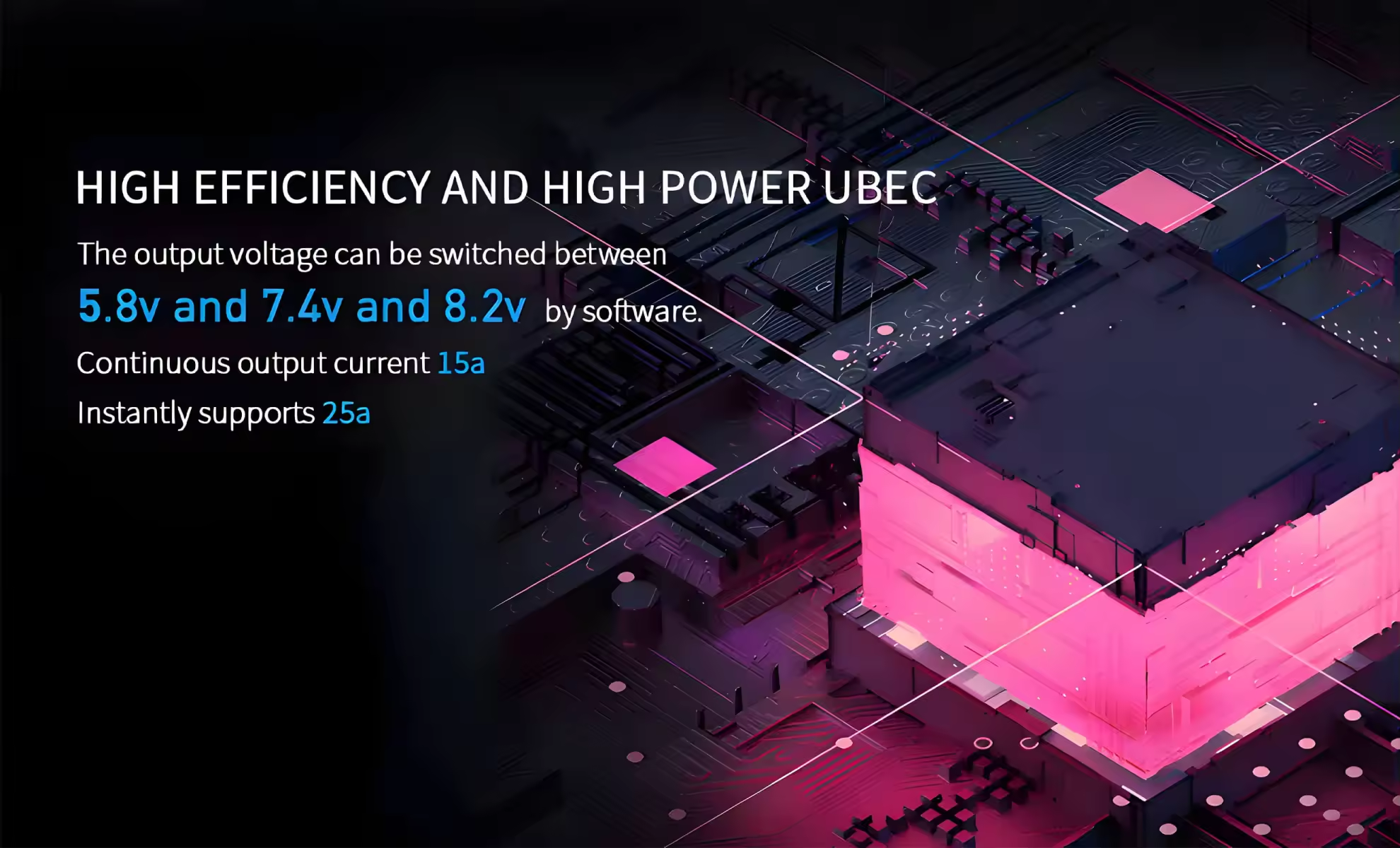
A suitable brushless ESC for RC planes should not only provide enough current capacity, but also deliver smooth throttle response, stable power output, and reliable support for onboard electronics.
What Is a Fixed‑Wing ESC?
A Fixed‑Wing ESC is an electronic speed controller designed specifically for RC airplanes. It regulates power from the battery to the brushless motor and controls motor speed according to the pilot’s throttle input.
Compared with basic ESCs used for casual flying, a high‑performance fixed‑wing ESC is designed for aircraft that demand more precise control. During aerobatic flight, pilots are constantly adjusting throttle input to maintain aircraft attitude and energy.
For example:
● Hovering requires smooth low‑speed throttle control
● Vertical climbs require strong and stable power output
● Torque rolls require fast throttle response
● High‑alpha maneuvers require predictable power changes
A lower‑quality ESC may create problems such as delayed response, motor hesitation, or inconsistent acceleration. For serious aerobatic pilots, ESC performance directly affects flight confidence.
How to Choose a Fixed‑Wing ESC?
The correct ESC choice depends mainly on your aircraft size, motor power, battery setup, and flying style.
| Aircraft Class | ESC Selection Consideration | Suitable Flying Style |
|---|
| Small RC aircraft | Lightweight ESC with basic power handling | Training, casual flying |
| Sport aircraft | Balanced current capability and efficiency | Sport flying, basic aerobatics |
| 50–60 inch 3D aircraft | Faster response and stronger BEC support | Freestyle, advanced aerobatics |
| 60–70 inch 3D aircraft | High‑current competition ESC | Extreme 3D, aggressive maneuvers |
For larger 3D aircraft, choosing an ESC with sufficient power reserve is especially important. A system operating close to its limit may experience reduced efficiency, excessive heat, or unstable performance during high‑load maneuvers.
Why Choose a High‑Performance Fixed‑Wing ESC for 3D Aircraft?
For 3D flying, maximum power is only part of the requirement. The most important factor is how smoothly and predictably that power is delivered.
A high‑performance 3D ESC provides:
● Faster throttle response
● More consistent motor control
● Better performance during rapid throttle changes
● More stable power supply for high‑torque servos
This difference becomes obvious during demanding maneuvers. A pilot needs the aircraft to respond immediately when recovering from a hover or correcting attitude during freestyle flight.
The ESC is not simply a power switch — it is part of the aircraft’s control system.
MEPSKING Expert Flight Experience
To better understand real‑world performance, MEPSKING tested the T‑Motor AM116A ESC with the AM600 power system on an Extreme Flight Laser V2 60‑inch 3D aircraft.
Test setup:
| Component | Setup |
|---|
| Aircraft | Extreme Flight Laser V2 |
| Motor | T‑HOBBY AM600 |
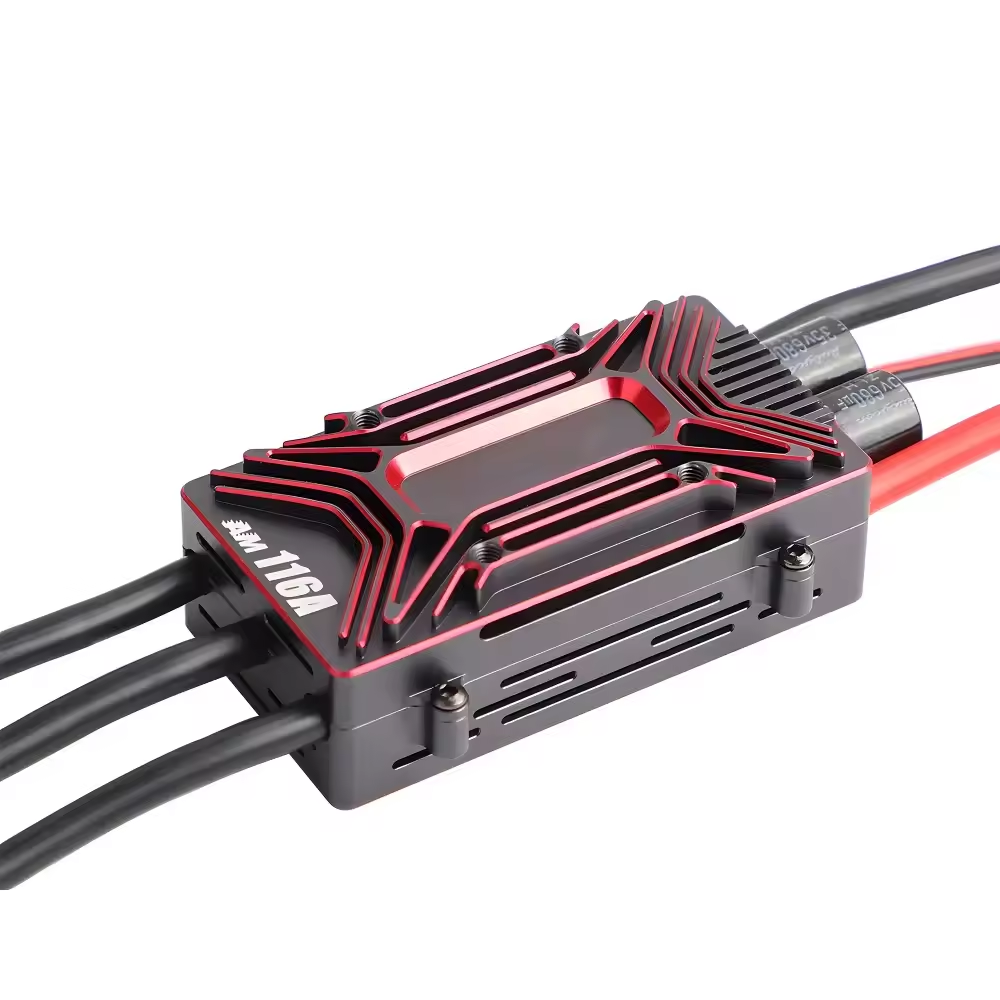
| ESC | T‑HOBBY AM116A |
| Battery | 6S 4000mAh |
| Propeller | T‑HOBBY Hybrid Carbon Fiber Prop |
During bench testing, the system reached approximately 1575W peak power, with stable output around 1500W.
However, the most impressive part was not only the power output. During flight testing, the biggest advantage was the smooth and predictable throttle feeling.
The actual flight feedback:
● Immediate throttle response
● Smooth power increase
● No noticeable motor hesitation
● No abnormal braking feeling
● Stable performance during aggressive 3D maneuvers
For a 60‑inch 3D aircraft, this combination provided strong vertical power while maintaining precise control during freestyle flight.
Recommended Pairing Guide
| Aircraft Setup | Recommended ESC | Recommended For |
|---|
| 48–52 inch 3D airplane | AM66A + AM480 motor | Lightweight freestyle and aerobatics |
| 60 inch Laser / Extra / Slick | AM116A + AM600 motor | Balanced high‑performance 3D flying |
| 67–70 inch aggressive 3D aircraft | AM116A + AM670 motor | Maximum power and competition flying |
T‑HOBBY AM116A vs AM66A: Which One Fits Your Aircraft?
When choosing between different T‑HOBBY fixed‑wing ESC models, the aircraft size and power requirements should be the deciding factors.
| T‑HOBBY AM66A | T‑HOBBY AM116A |
|---|
| Recommended Aircraft Size | 48–52 inch 3D aircraft | 60–70 inch 3D aircraft |
| Current Class | Medium power | High power |
| Main Advantage | Lightweight and efficient | Strong power reserve |
| Typical Use | Freestyle and lightweight aerobatics | Competition‑level 3D flying |
| Best Match | Smaller motor systems | AM600 / AM670 class power systems |
For pilots flying smaller aircraft, a lighter ESC can help maintain better weight balance. For larger aircraft requiring aggressive maneuvers and higher power demand, the AM116A provides the additional power capacity needed.
Who Should Choose T‑HOBBY AM116A?
The AM116A is designed for pilots who need a reliable high‑performance Fixed‑Wing ESC for 3D aircraft.
It is a suitable choice for:
● 60–70 inch aerobatic aircraft
● 6S–8S power systems
● High‑power brushless motors
● Freestyle and competition 3D flying
● Pilots who value smooth throttle control and consistent response
For beginners or pilots flying smaller aircraft, a lower‑power ESC may already meet their needs. But for advanced pilots looking for maximum control and confidence during aggressive maneuvers, a competition‑level ESC becomes a worthwhile upgrade.
Final Buying Recommendation
Choosing a Fixed‑Wing ESC is not just about selecting the highest current rating. The best ESC is the one that matches your aircraft size, motor system, and flying style.
For pilots building a serious 3D aircraft, the T‑HOBBY AM116A provides the combination of:
● Strong power handling
● Smooth throttle response
● Reliable performance
● Better control during demanding maneuvers
A well‑matched ESC and motor system allows your aircraft to perform more predictably, giving pilots more confidence every time they take off.


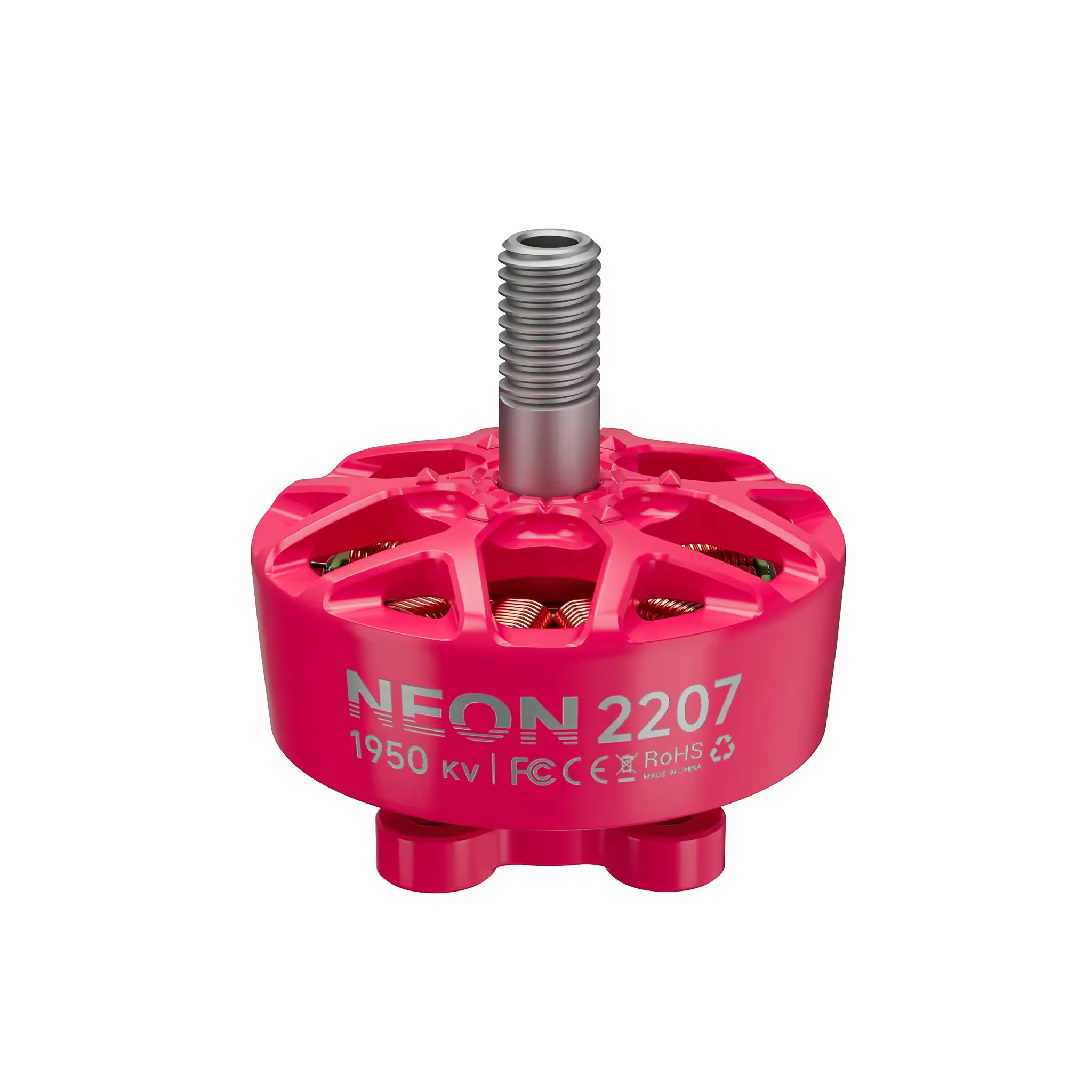
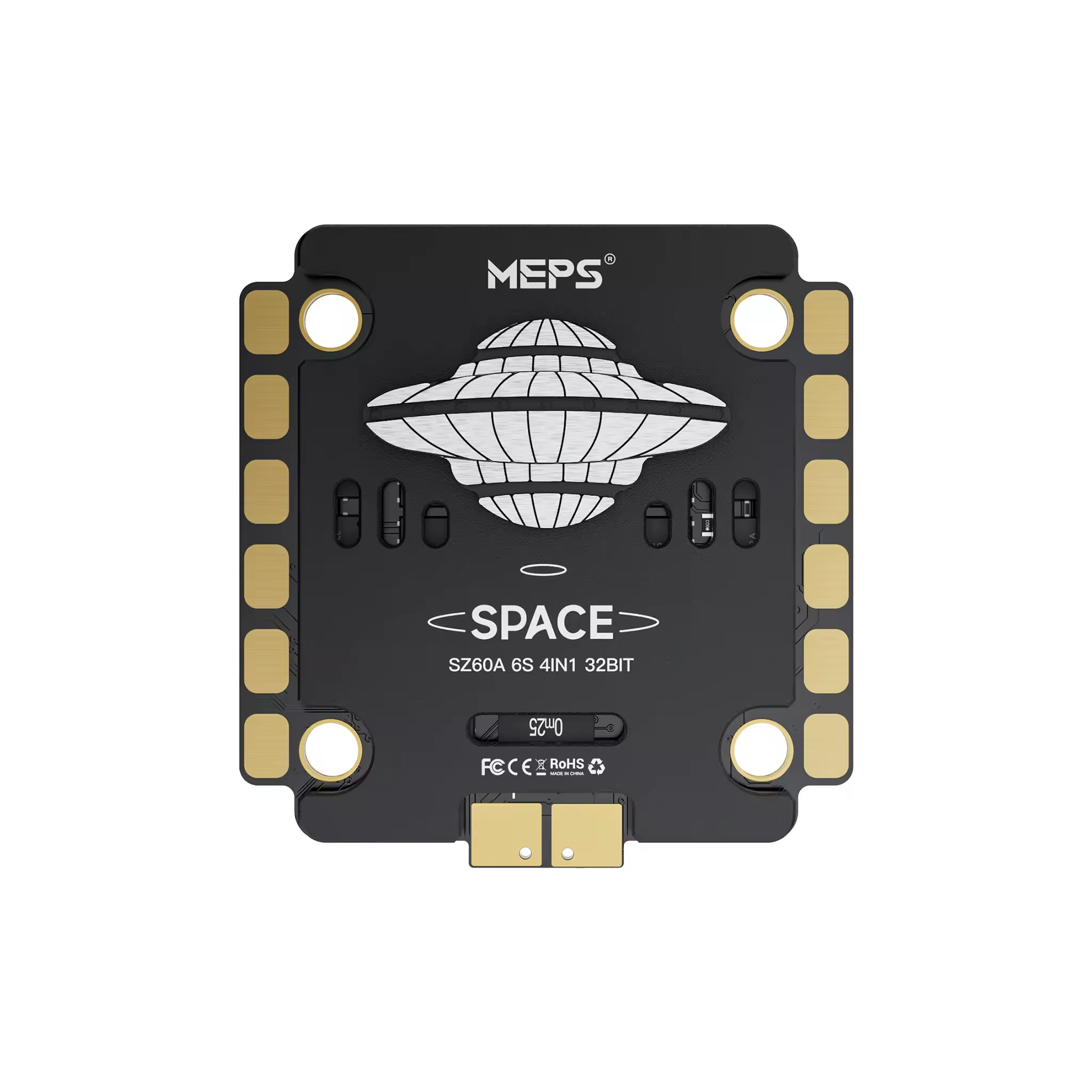
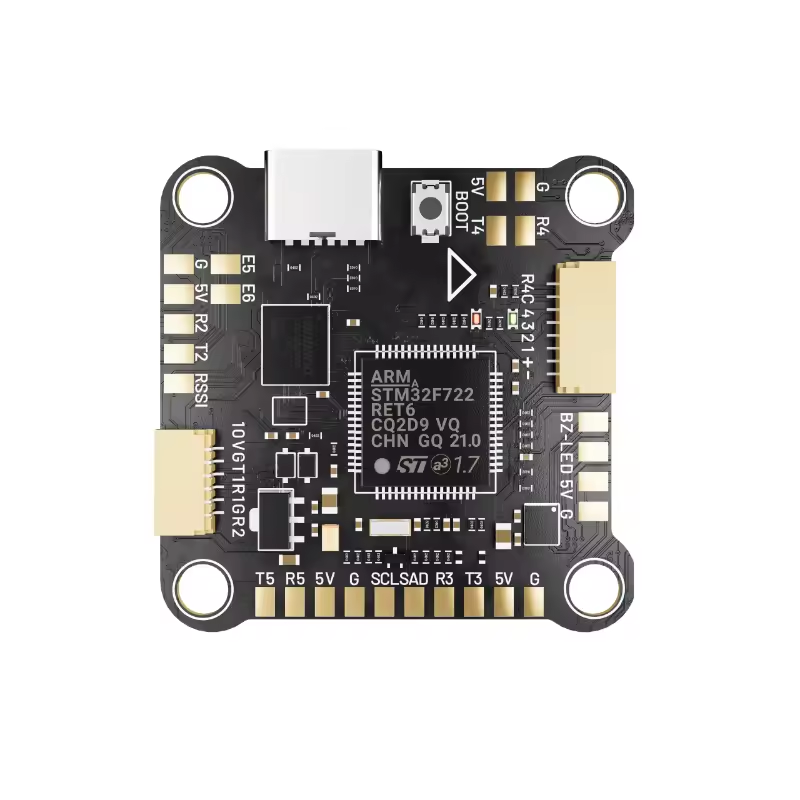
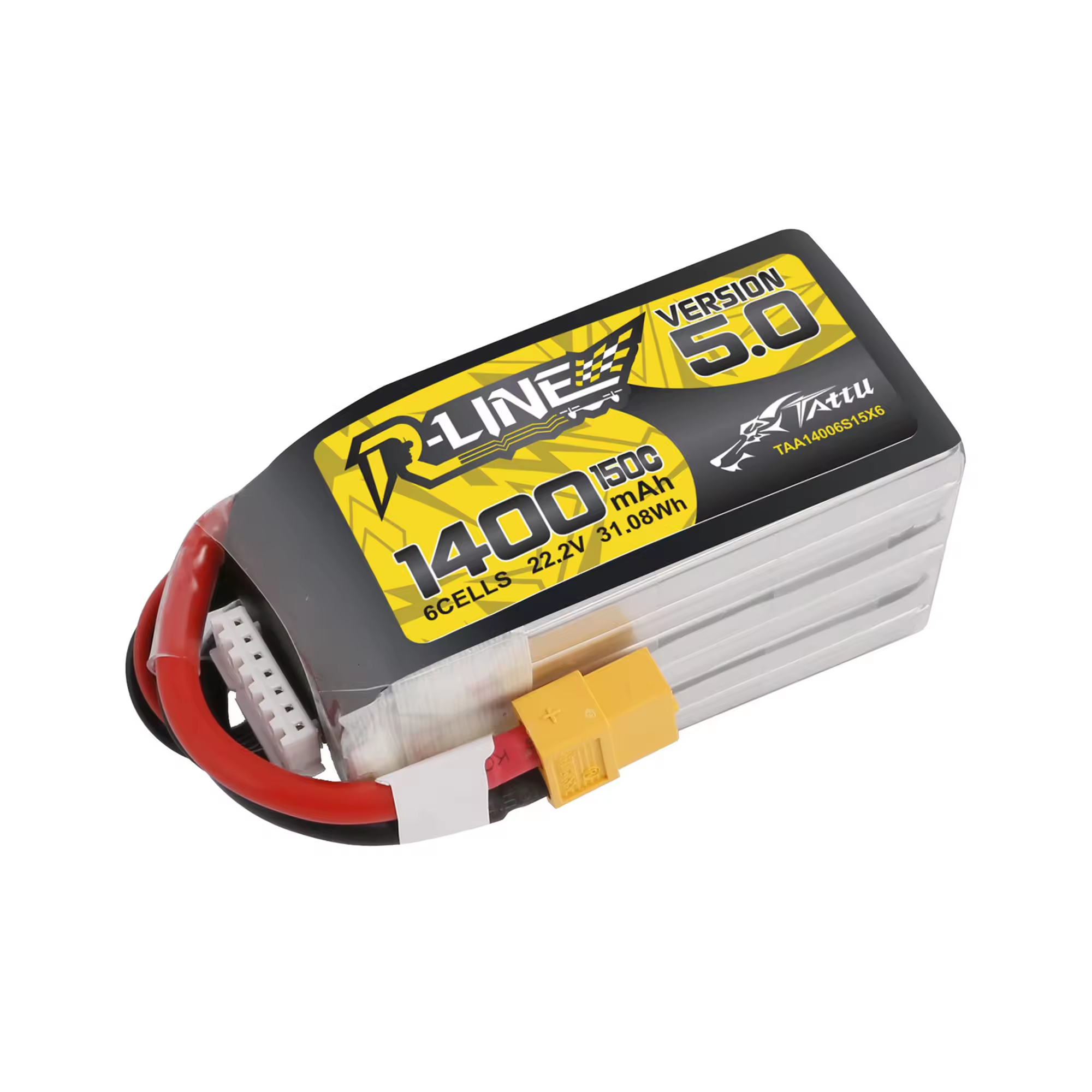
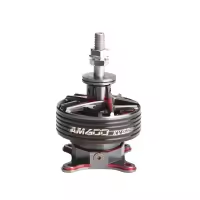 T-HOBBY AM600 Brushless Motor For 60“-64” 3D Fixed Wing Drone525KV$107.10 Save $11.90









 Verified