T-HOBBY AM600 Brushless Motor Buying Guide
Why Choose the T-HOBBY AM600?
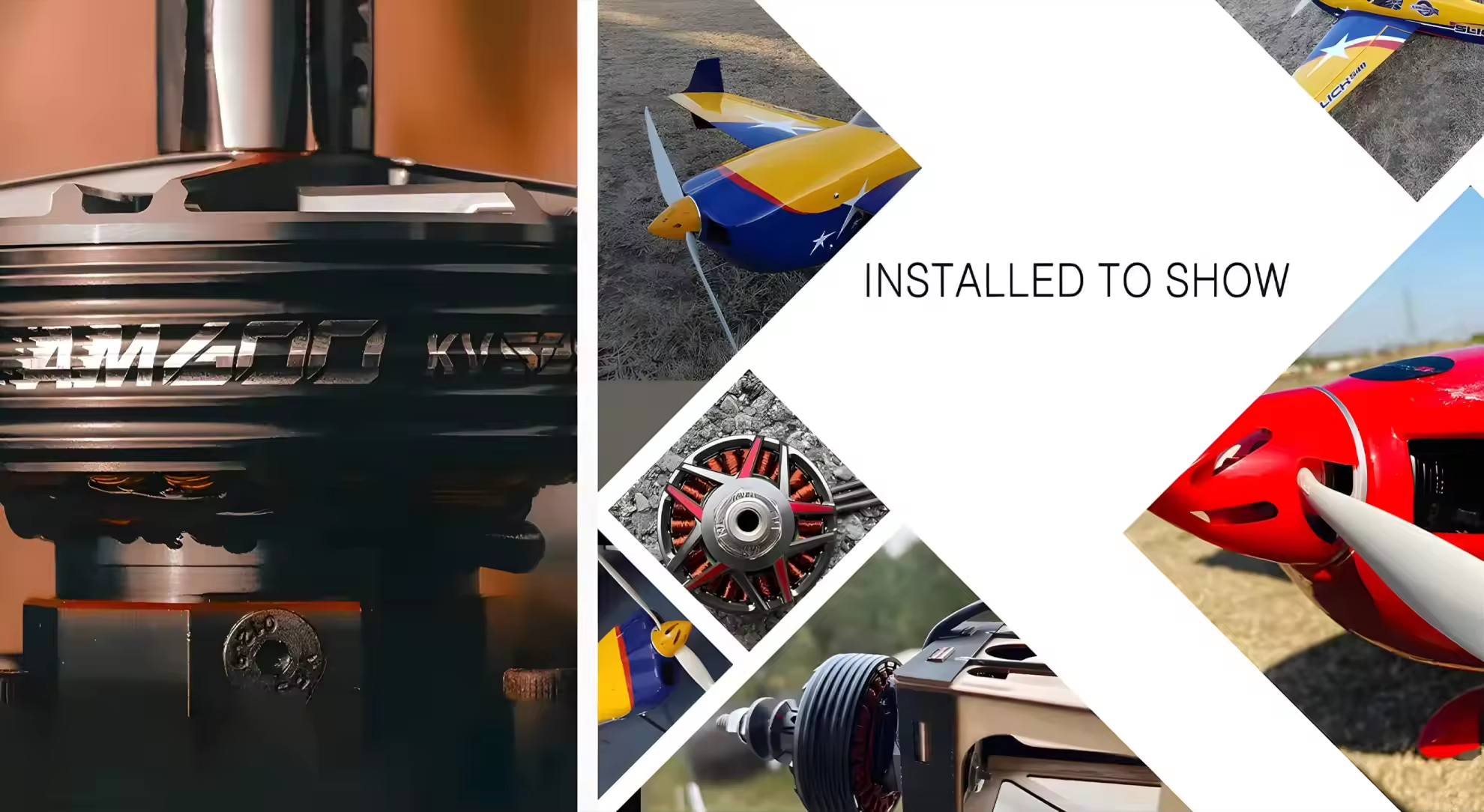
The T-HOBBY AM600 Brushless Motor is designed specifically for 60–64 inch 3D fixed-wing aircraft, where high torque, rapid throttle response and strong thrust are more important than the extremely low weight required by small RC aircraft.
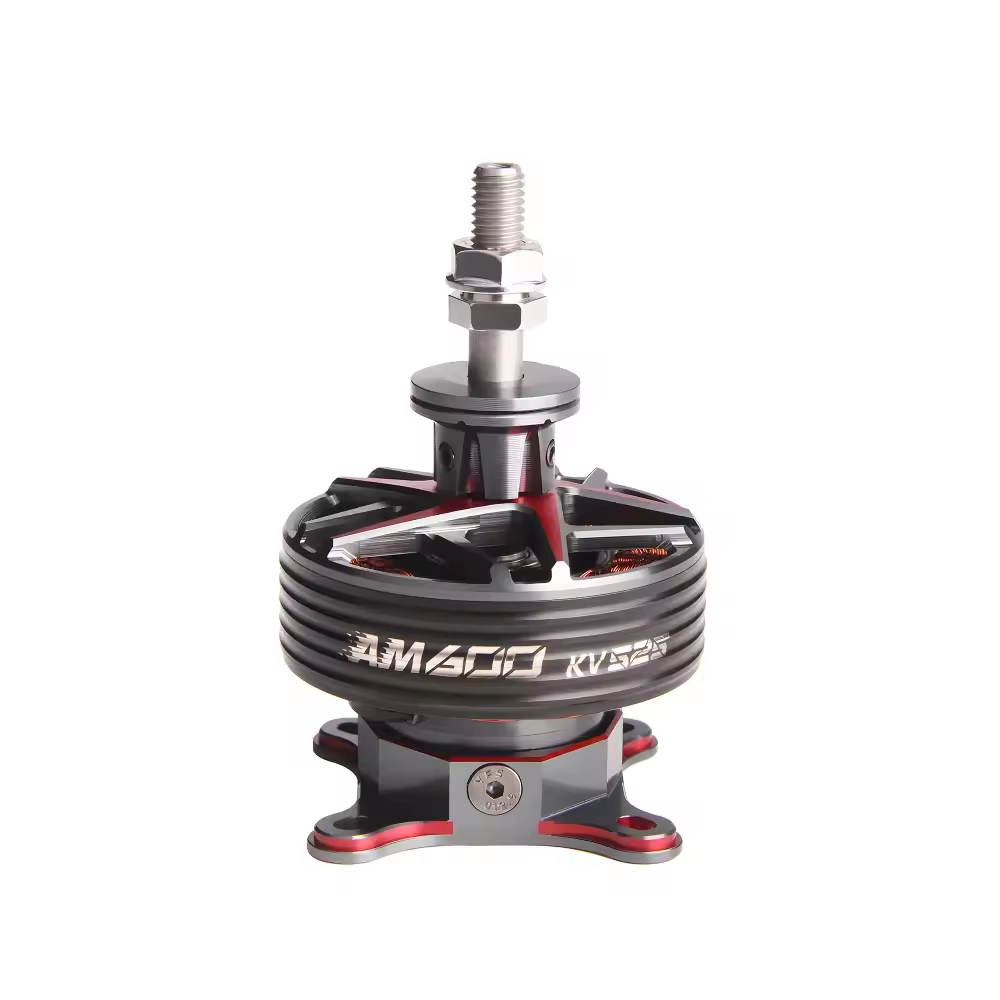
With a lightweight 360g design, large-diameter motor structure and hollow shaft, the AM600 is built to deliver high power without adding unnecessary weight to a large aerobatic aircraft. The motor is available in 525KV and 555KV versions and is designed around 6S power systems.
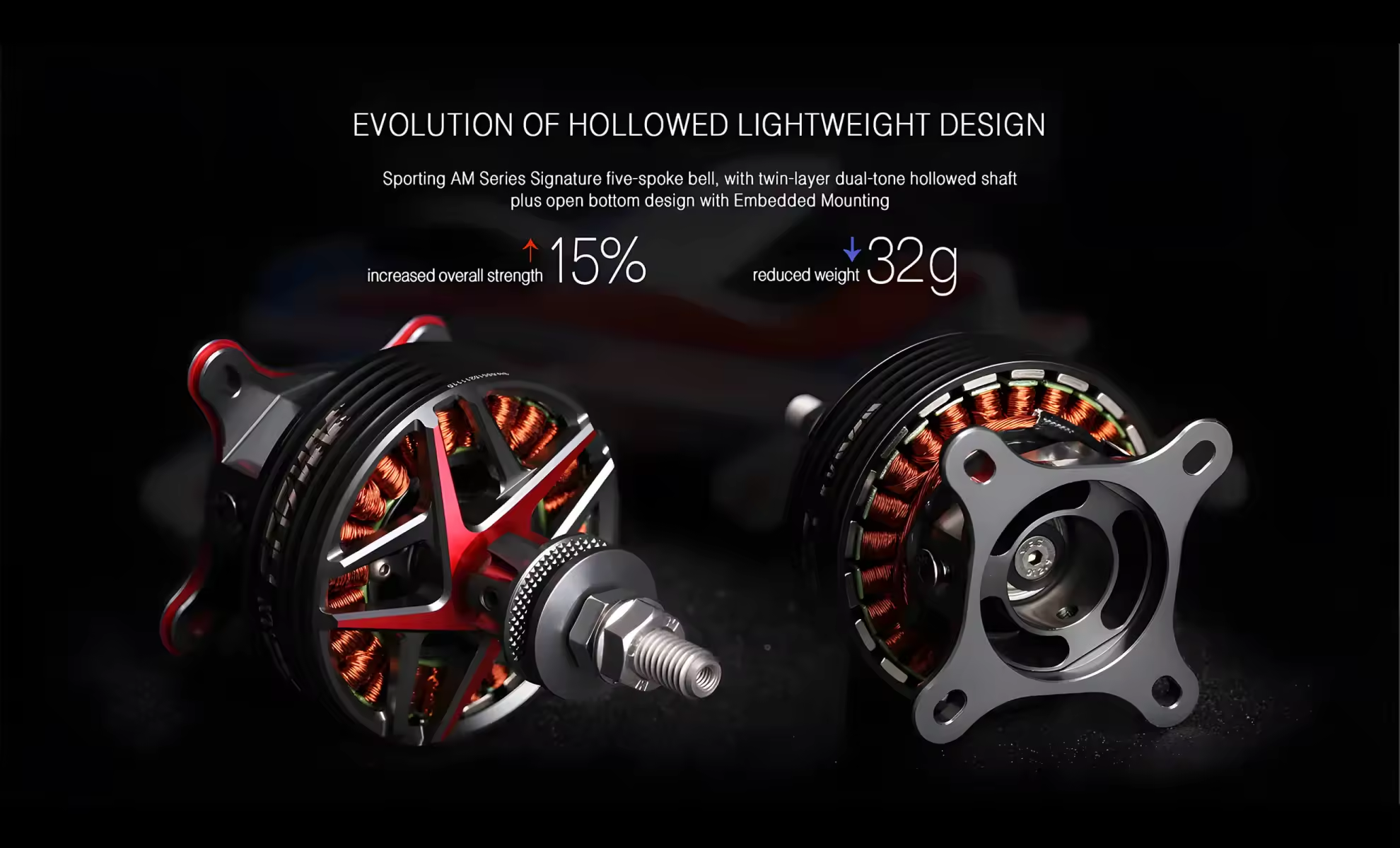
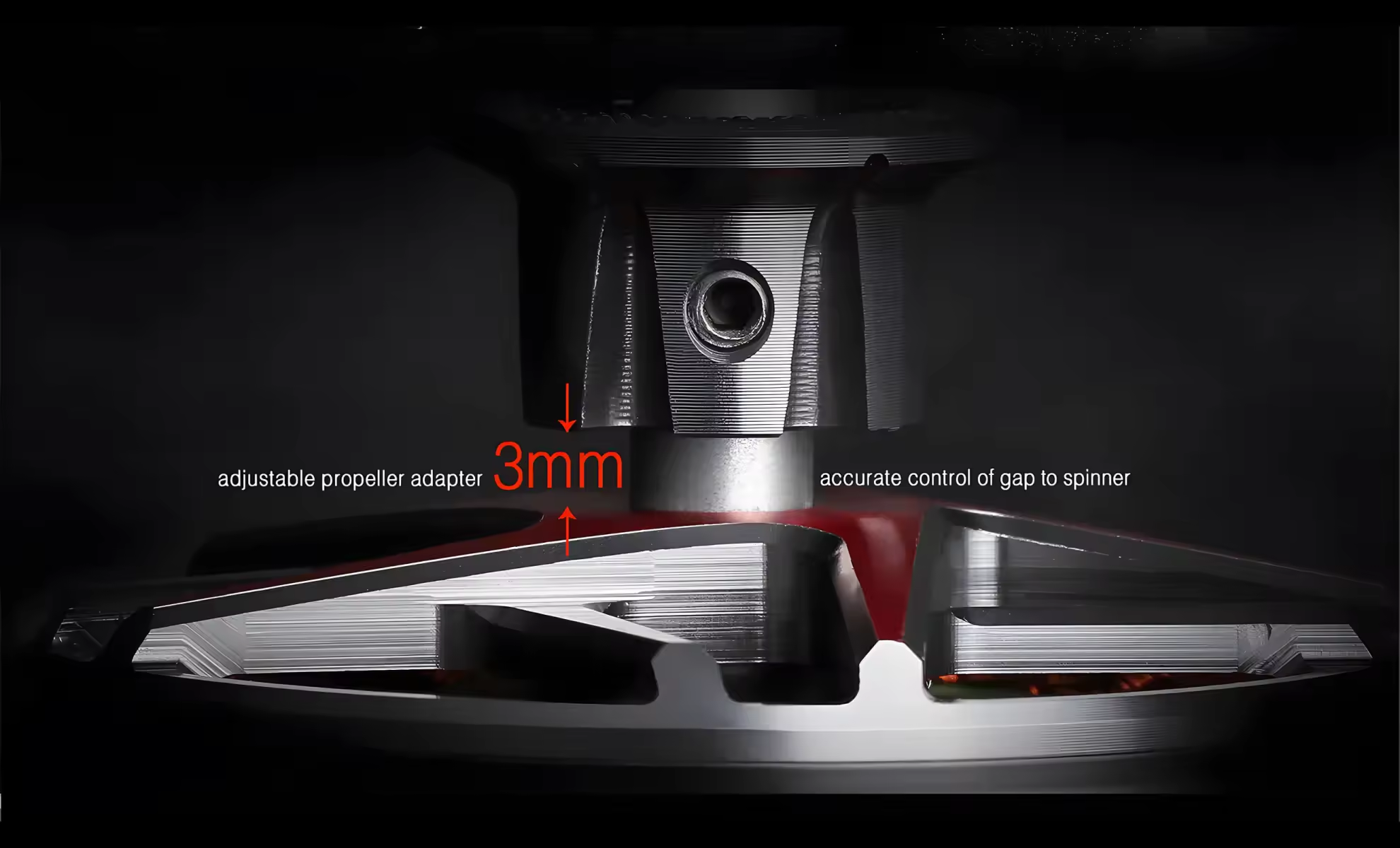
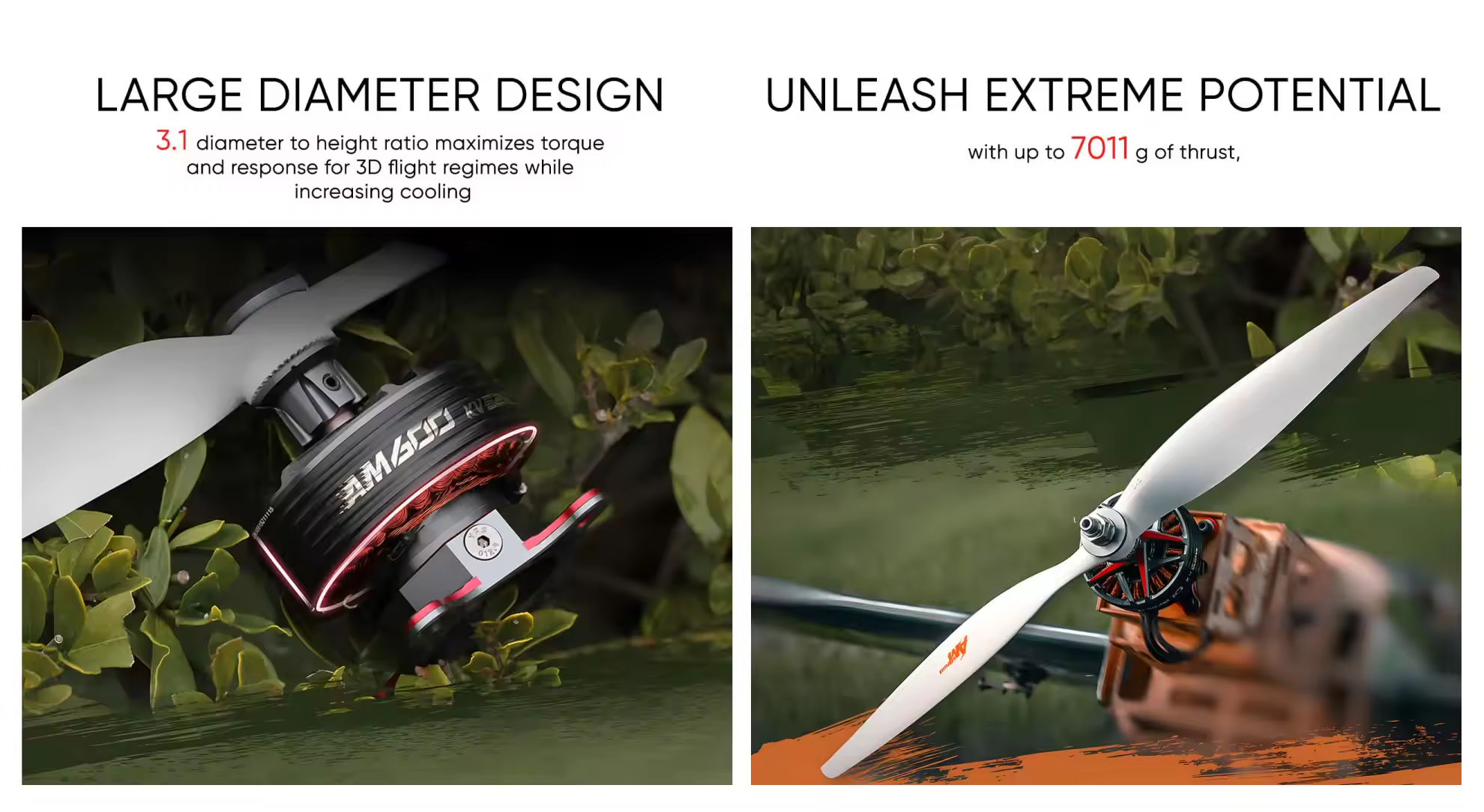
Its large-diameter design uses approximately a 3:1 diameter-to-height ratio, helping provide higher torque and cooling performance. The hollow-shaft construction also reduces weight while maintaining the structural strength required for demanding 3D maneuvers.
Designed for 60–64" 3D Aircraft
The AM600 is not a general-purpose fixed-wing motor. Its main advantage comes from being matched to the power requirements of 60–64 inch 3D planes.
| Application | Suitability | Why |
|---|
| 60–64" 3D Aerobatic Plane | Excellent | Designed specifically for this aircraft class |
| 3D Freestyle Flight | Excellent | High torque and strong thrust response |
| Large Outdoor RC Plane | Good | High-power 6S motor platform |
| 60–64" Sport Plane | Good | Strong thrust reserve |
| Small Fixed Wing | Not Recommended | Motor is too large for lightweight models |
| 5" FPV Drone | Not Recommended | Designed for fixed-wing propeller systems |
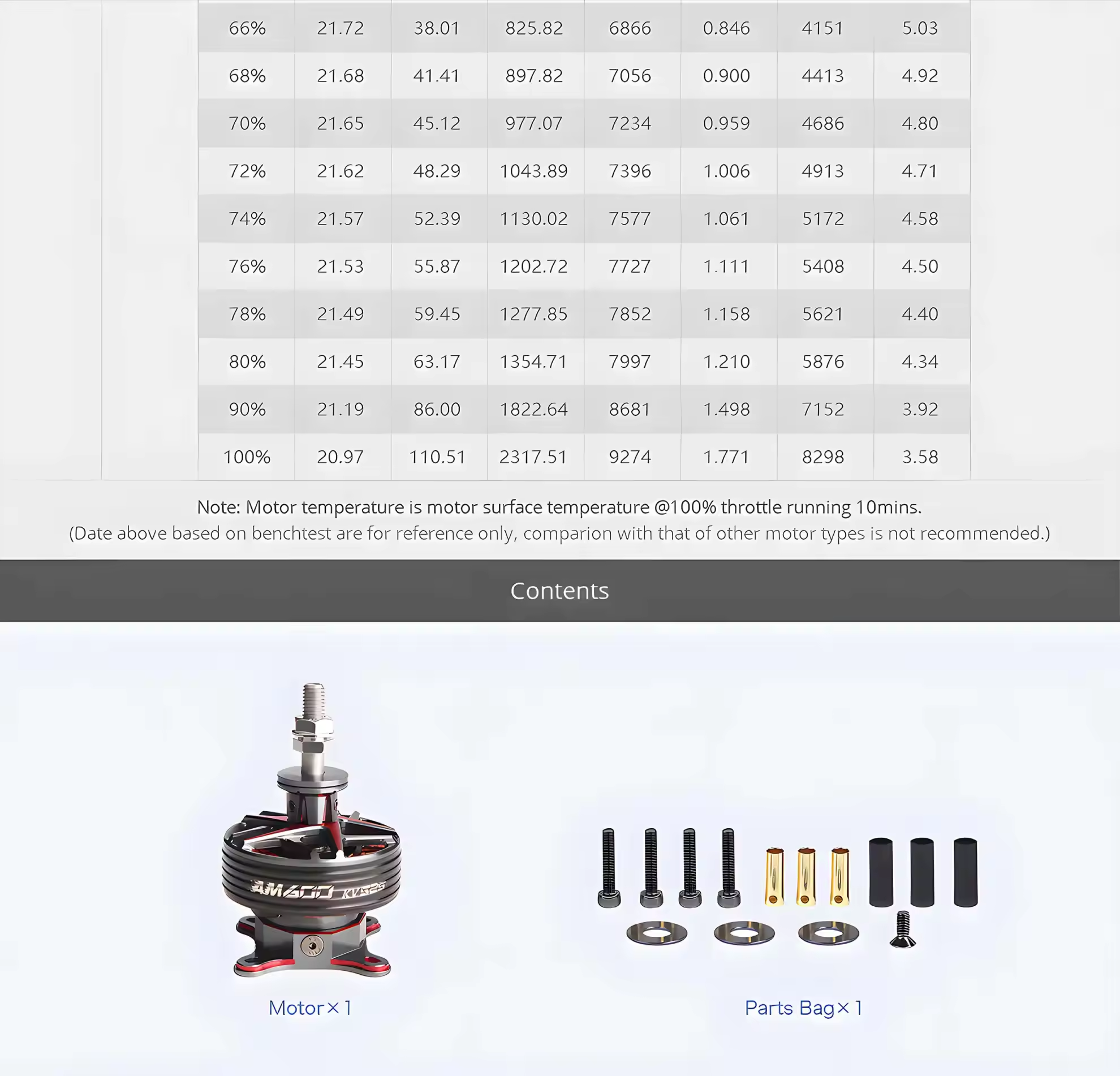
The motor is intended for aircraft in the 60–64 inch class, rather than small fixed-wing models or conventional FPV multirotors. T-MOTOR's published specifications specifically identify this size range and list up to 8298g of thrust with the appropriate setup.
525KV vs 555KV
The AM600 is available in 525KV and 555KV configurations. Both versions are designed around the same 6S power system, so the difference is relatively small compared with choosing a completely different motor class.
| Feature | 525KV | 555KV |
|---|
| Recommended Battery | 6S | 6S |
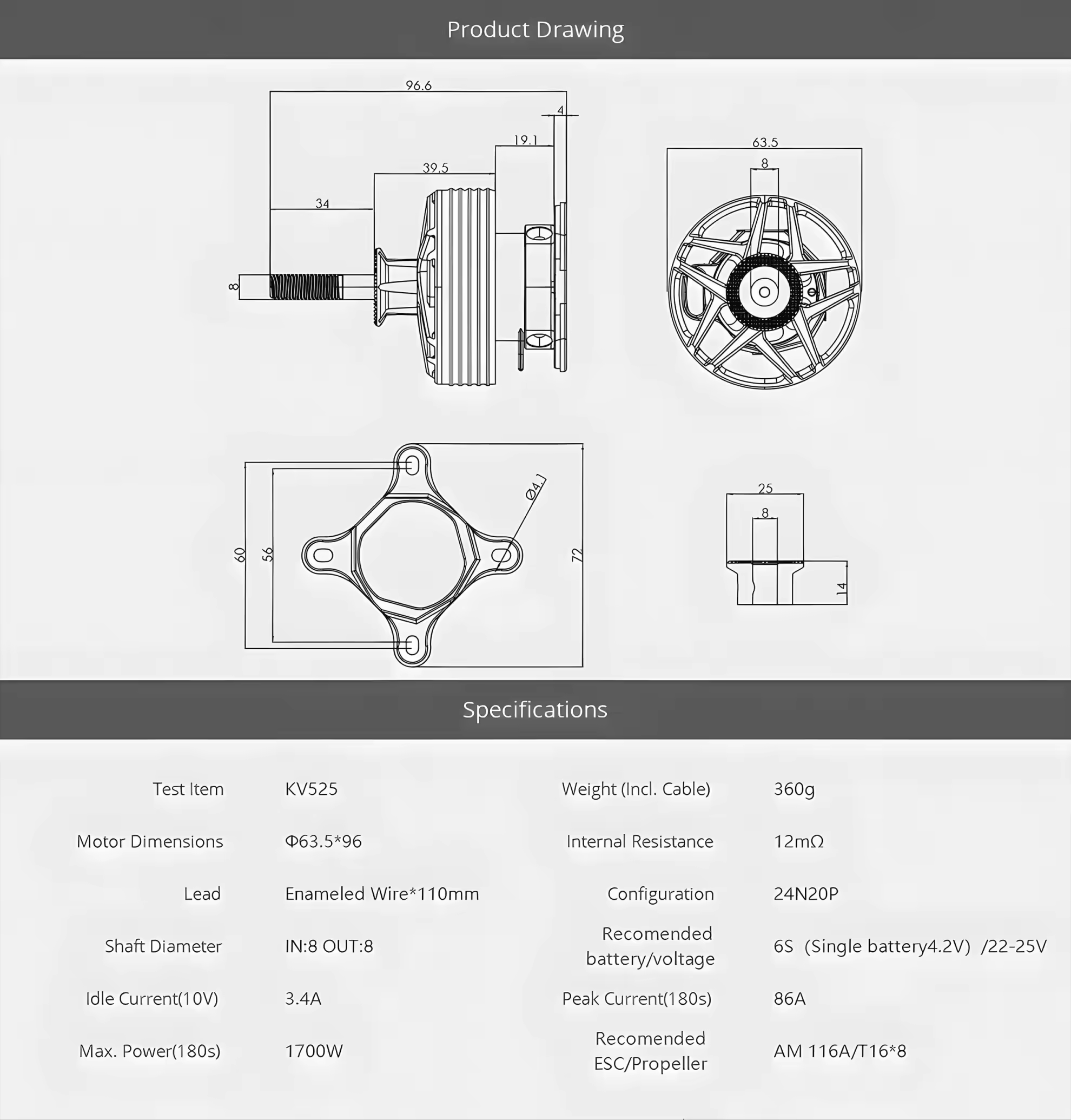
| Motor Weight | 360g | 360g |
| Motor Size | Φ63.5 × 96mm | Φ63.5 × 96mm |
| Peak Current | 86A | 86A |
| Max Power | 1700W | 1700W |
| Recommended ESC | AM116A | AM116A |
| Recommended Prop | T16×8 | T16×8 |
| Best Direction | Balanced 3D setup | Slightly higher-RPM response |
Both versions use the same basic power-system recommendations, so the choice should be based on the desired motor response and the specific aircraft setup rather than treating them as completely different power classes.
For pilots who want a more conservative and balanced starting point, 525KV is the straightforward choice. The 555KV version is useful when slightly higher motor speed is preferred within the same 6S platform.
6S Power System
The AM600 is designed around a 6S battery, with the published recommended operating voltage listed at approximately 22–25V. The motor's published specification lists an 86A peak current and 1700W maximum power under the specified test conditions.
This means the battery and ESC should be selected as part of the same power system.
For a typical AM600 installation:
6S Battery → AM116A ESC → AM600 Motor → T16×8 Propeller
The ESC should not be selected based only on the motor's average flight current. The AM600 can reach high current levels under heavy propeller load and high throttle, so adequate current margin is important.
Why the AM116A ESC Is the Natural Match
T-HOBBY specifically recommends the AM116A 3D Fixed-Wing ESC for the AM600. The AM116A is a 116A 3–8S fixed-wing ESC, giving it the current capacity needed for this motor class.
| Component | Recommended |
|---|
| Motor | T-HOBBY AM600 525KV / 555KV |
| Battery | 6S |
| ESC | AM116A |
| Propeller | T16×8 |
| Aircraft | 60–64" 3D fixed wing |
Using a matched ESC simplifies the power-system design and provides more appropriate current headroom than choosing a smaller fixed-wing ESC based only on nominal battery voltage.
8.3kg Thrust: What Does It Mean?
The AM600 is specified for up to 8298g of thrust with the appropriate propeller and power-system configuration.
However, maximum thrust should not be interpreted as a guaranteed flight condition for every installation.
Actual thrust depends on:
KV version
Battery voltage
Propeller
Throttle
ESC configuration
Battery voltage sag
Motor temperature
Aircraft setup
For this reason, the 8.3kg figure is best used as a reference for the motor's power capability, rather than as the expected thrust of every AM600 build.
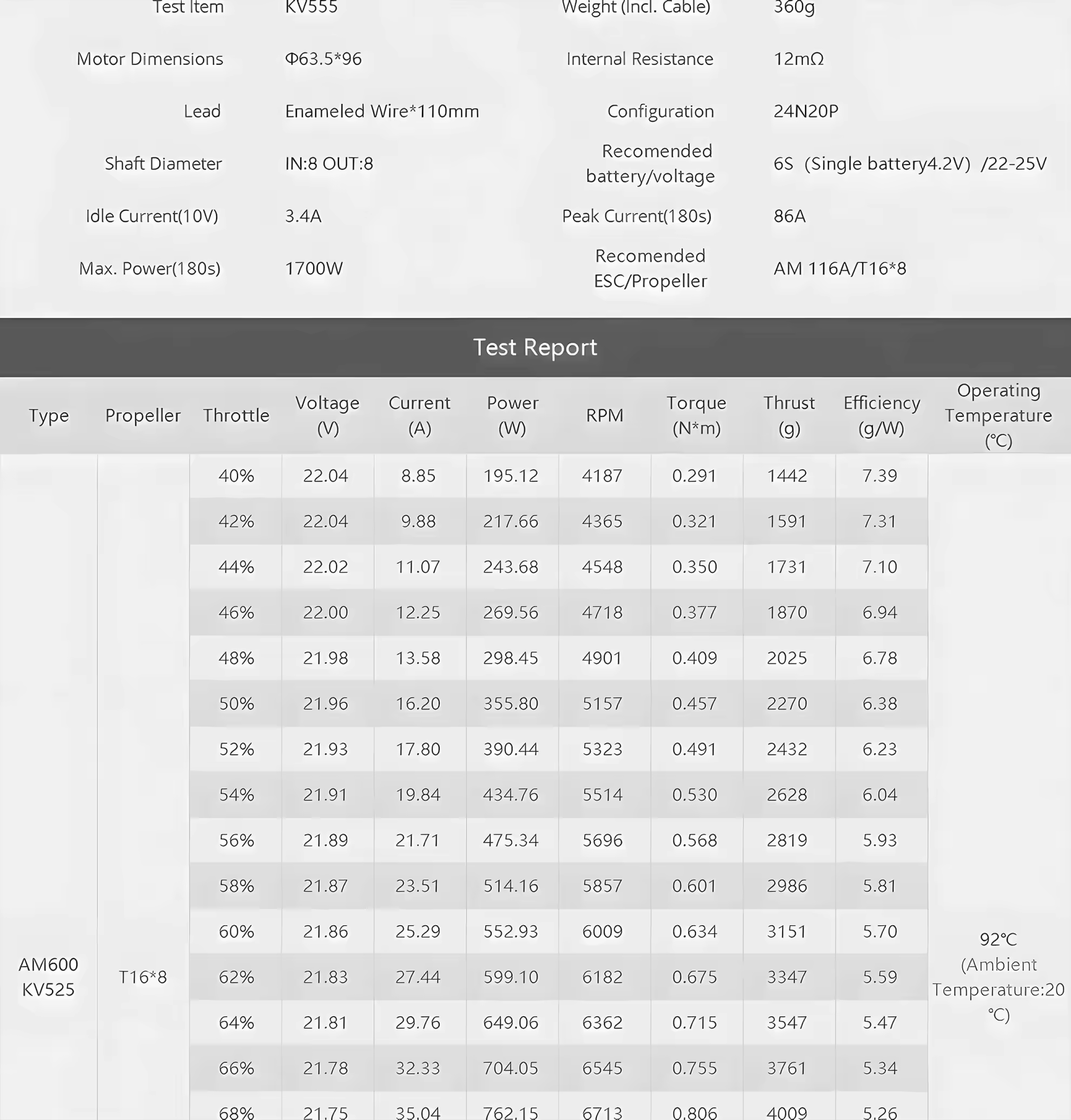
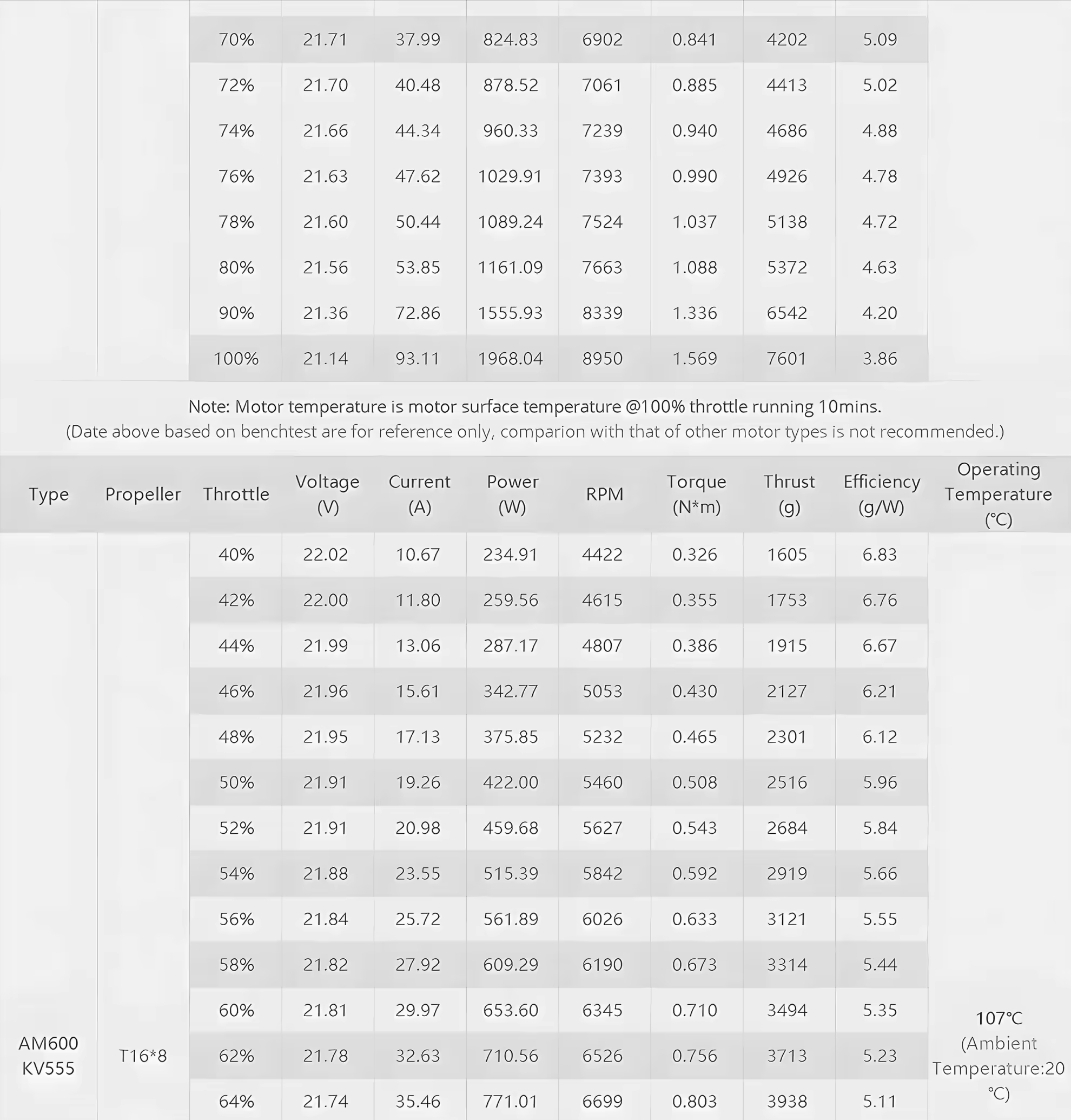
The published test data for the 525KV version also shows the motor producing 1442g thrust at 40% throttle with a T16×8 propeller at 22.04V, demonstrating how thrust changes with throttle and operating conditions.
Lightweight Design for Large 3D Models
A 360g motor may sound heavy compared with small FPV motors, but for a 60–64 inch 3D aircraft, motor weight must be evaluated against the total aircraft and required power.
The AM600's hollow-shaft construction reduces unnecessary mass while retaining the structure needed for high-power operation. T-MOTOR states that the updated hollow design reduces weight by 32g while increasing overall strength by 15% compared with its predecessor.
This makes the motor particularly useful when the aircraft needs both:
High thrust + controlled overall weight
rather than simply choosing the largest available motor.
How to Build an AM600 Power System
| Part | Recommended Choice |
|---|
| Aircraft | 60–64" 3D fixed wing |
| Motor | AM600 525KV / 555KV |
| Battery | 6S |
| ESC | AM116A |
| Propeller | T16×8 |
| Primary Goal | 3D aerobatics / high thrust |
This combination is particularly suitable for pilots who want a ready-to-match power system rather than independently selecting a motor, ESC and propeller.
For a new build, start with the recommended AM600 + AM116A + T16×8 combination and only change the propeller or power-system parameters after confirming the resulting current, temperature and aircraft performance.


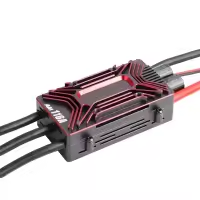 T-HOBBY AM116A 3D Brushless ESC For Fixed Wing CompetitionAM116A$141.55 Save $7.45
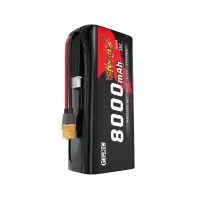 GEPRC Storm IRT21700-40T 6S2P 8000mAh Li-Ion BatteryStorm IRT21700 40T 6S2P 8000mAh Li Ion battery$145.03 Save $2.96
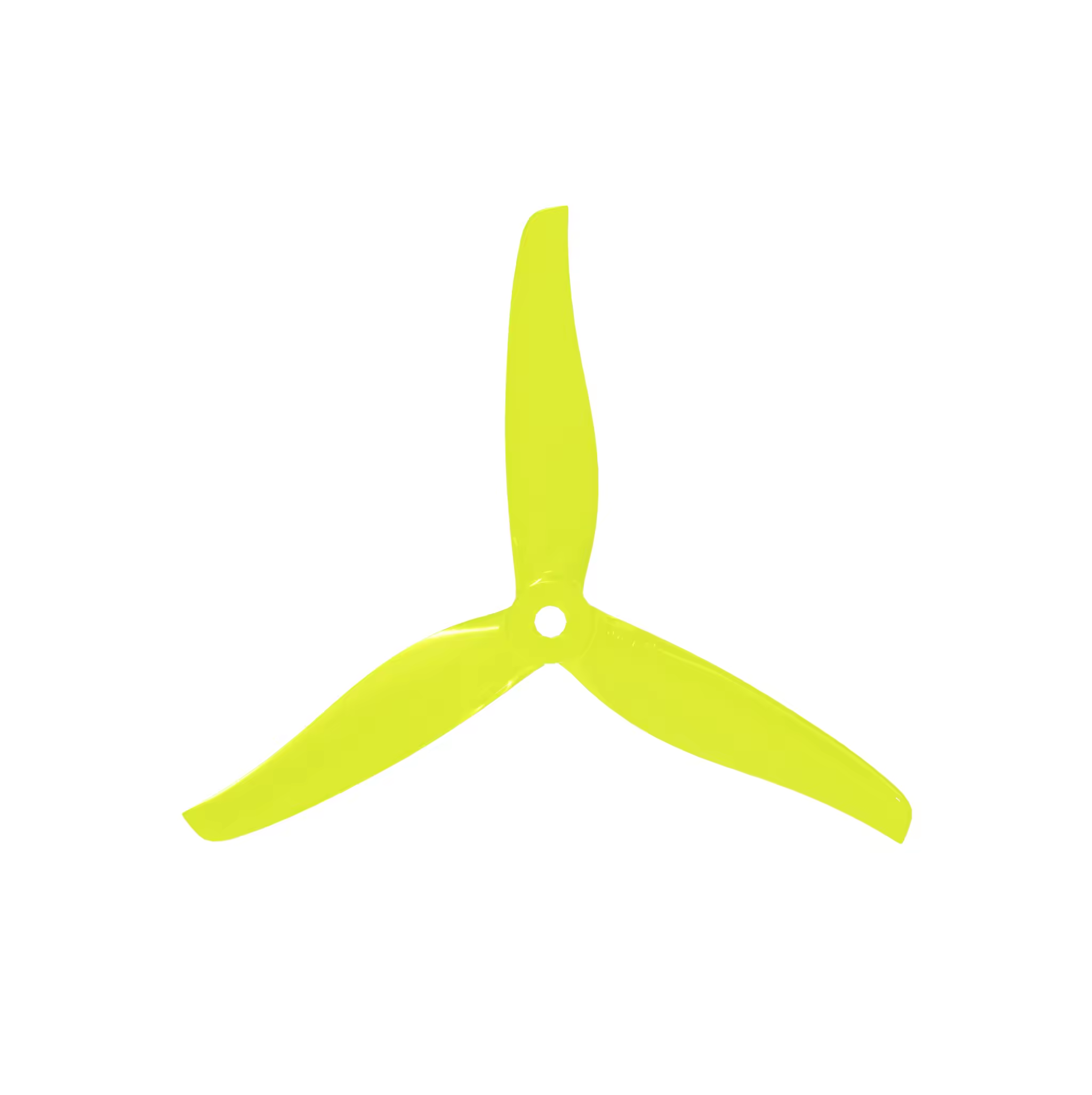
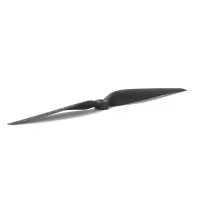 T-HOBBY TS16*8 Black Carbon polymer Propellers for Outdoor Fixed Wing Planes16*8 Black / 1 pc$6.55 Save $0.57










 Verified