If you fly FPV quads for racing, freestyle, or manual cinematic flying, Betaflight is usually the best choice. If you want GPS-assisted long-range flying or a simpler fixed-wing experience, INAV is often the better fit. If you need full autonomous missions, if you want the short answer first:
- Use Betaflight if you care most about stick feel, racing, freestyle, cinewhoops, and manual FPV flying.
- Use INAV if you want GPS features like Return-to-Home, Position Hold, and waypoint-style navigation without stepping into a full autopilot ecosystem.
- Use ArduPilot if you need real autonomy, mission planning, deep failsafes, broad vehicle support, or professional UAV workflows.
That is the real decision most pilots are trying to make when they compare Betaflight vs INAV vs ArduPilot. They are not asking which firmware has the longest feature list. They are asking which one best matches the aircraft they are building and the way they actually plan to fly it.
As someone who looks at this from an FPV pilot’s point of view, I think of the three like this:
- ArduPilot is for pilots who want maximum mission capability, not minimum setup time
- Betaflight is for pilots who care most about manual flight performance
- INAV is for pilots who want GPS help without full autopilot complexity
If you are still choosing hardware, start with a solid FPV flight controller for quads, a compact 20×20 mini FC, or a fixed-wing controller that supports INAV and ArduPilot.
What is Flight Controller Firmware?
Flight controller firmware is the software that turns a flight controller board into an actual aircraft system.
The hardware gives you the processor, gyro, UARTs, barometer support, GPS connections, motor outputs, and receiver inputs. The firmware decides how all of that behaves in the air.
Firmware controls:
- sensor processing
- stabilization
- motor output logic
- radio input handling
- flight modes
- failsafes
- navigation behavior
- mission features
That is why choosing firmware matters so much. You are not just picking a menu layout. You are choosing how your aircraft thinks and flies.


Betaflight vs INAV vs ArduPilot at a Glance
| Firmware | Best For | Main Strength | Main Weakness | Best Aircraft Types |
|---|---|---|---|---|
| Betaflight | FPV racing, freestyle, cinewhoops, manual quads | Fast response, strong tuning, huge FPV ecosystem | Less capable than INAV or ArduPilot for autonomous workflows | FPV quads |
| INAV | Long-range FPV, GPS cruising, fixed-wing hobby builds | GPS features with a simpler learning curve than ArduPilot | Less advanced than ArduPilot for deep autonomy and mission logic | Long-range quads, fixed-wing, some rovers |
| ArduPilot | Autonomy, mapping, research, VTOL, professional UAV work | Deep mission control, wide vehicle support, advanced failsafes | More setup complexity and more parameters to manage | Multirotors, planes, VTOL, rovers, boats |
The Real Question Behind “Betaflight vs INAV vs ArduPilot”
Most users comparing these firmwares are really trying to answer one of these questions:
- Which firmware is best for freestyle FPV?
- Which firmware is best for long-range FPV?
- Do I need GPS Rescue, or do I need full Return-to-Home?
- Is ArduPilot overkill for my quad?
- Can INAV give me enough navigation without ruining manual flight feel?
- If I already fly Betaflight, is it worth switching?
That is how this comparison should be framed. It should not be framed as a simple “which one is better” article, because the answer changes depending on aircraft type and pilot intent.
What Betaflight Is Best At?
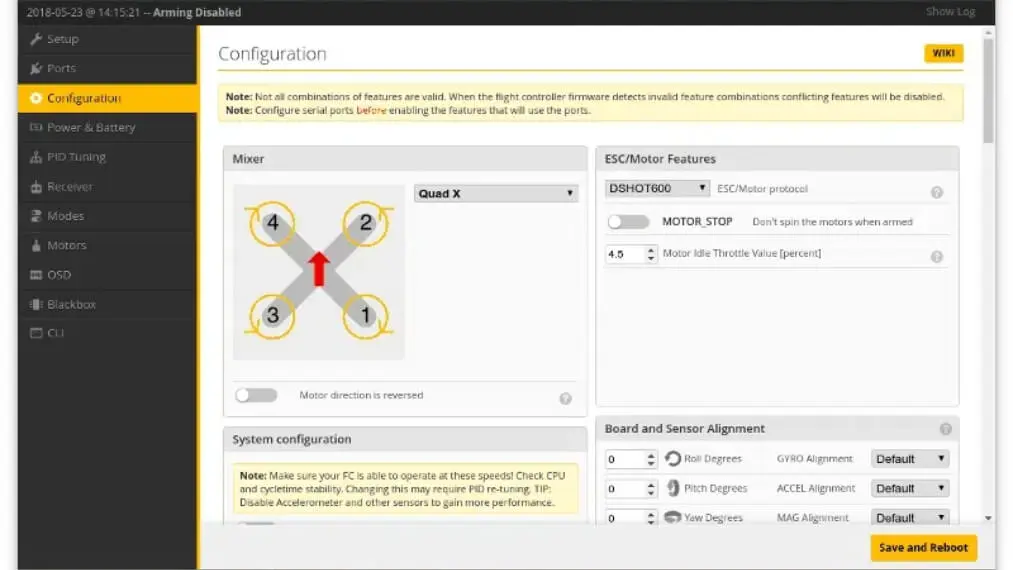
Betaflight is the most common firmware in the FPV quad world. If I am building a 5-inch freestyle quad, a race quad, or a manual cinewhoop, I am almost always starting with Betaflight.
That is because Betaflight still feels the most natural for manual quad flying. It is designed around quick response, acro performance, and the kind of tuning workflow FPV pilots actually use.
Use Betaflight if your priority is:
- racing
- freestyle
- manual cinematic flying
- acro training
- the strongest FPV ecosystem and tuning community
From a pilot’s perspective, Betaflight is the easiest answer when the aircraft exists primarily to be flown manually.
Why pilots choose Betaflight:
- Strong manual flight performance for quads
- Huge community and tutorial base
- Excellent support for racing and freestyle setups
- Broad support across F4, F7, H7, and AT32-based FPV boards
- Mature tooling and setup workflow
Betaflight Quick Answer
- Best firmware for freestyle FPV: Betaflight
- Best firmware for racing FPV: Betaflight
- Best firmware if stick feel matters most: Betaflight
For a manual quad build, a racing stack like the Flywoo GOKU F722 Pro Mini V2 45A stack or a versatile board like the MEPS SZ F7 HD Flight Controller makes sense for Betaflight-focused builds.
What INAV Is Best At?
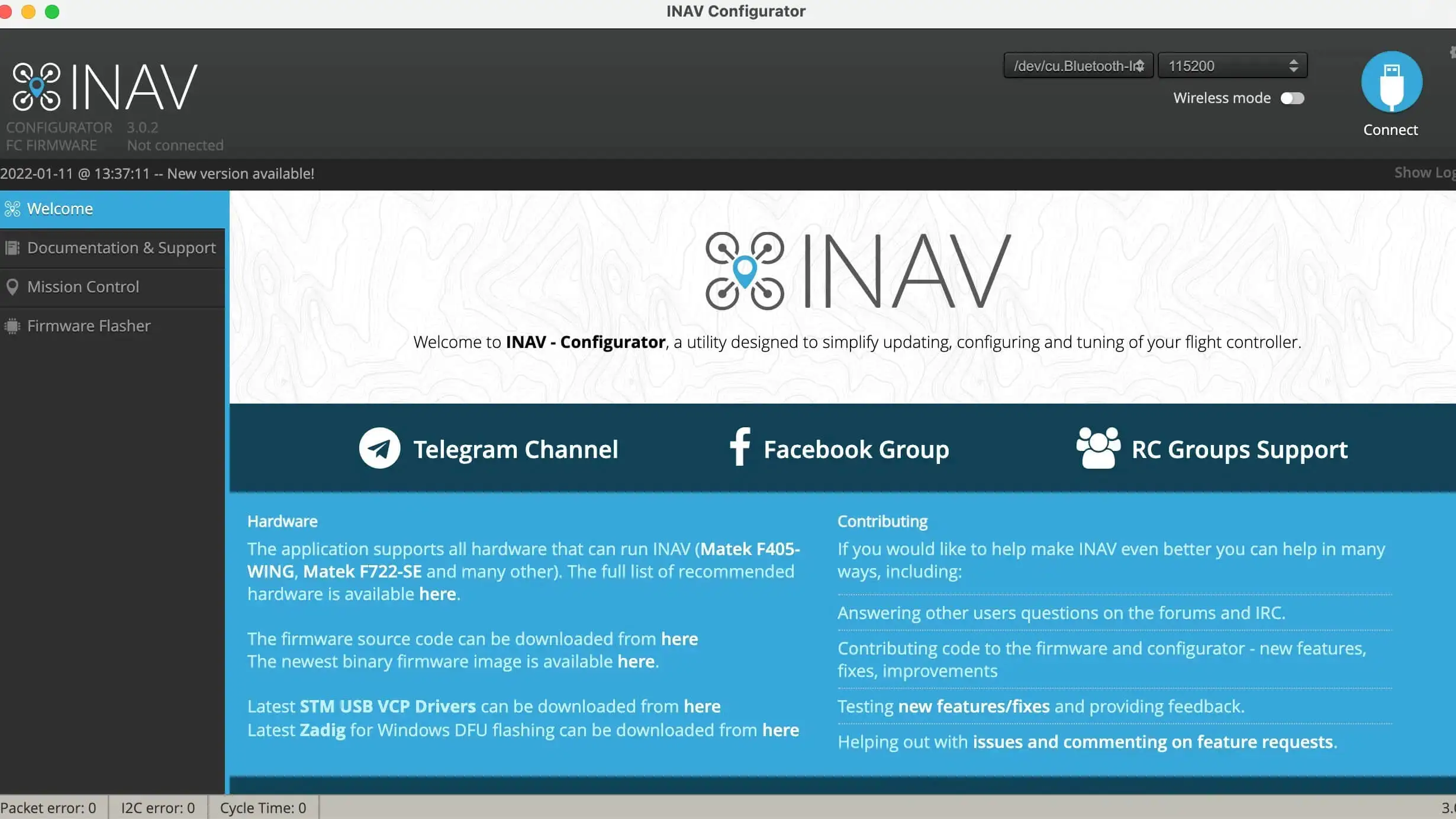
INAV makes the most sense when you still want a hobby aircraft feel, but you also want meaningful GPS features.
This is where a lot of 7-inch long-range builds, GPS cruisers, and fixed-wing hobby aircraft land.
Use INAV if your priority is:
- Return-to-Home
- Position Hold
- waypoint-style GPS navigation
- safer long-range FPV
- fixed-wing flying without diving fully into ArduPilot
From a pilot perspective, INAV is the firmware I recommend when someone says:
“I still want to fly the aircraft myself, but I want the GPS and navigation side to be much stronger than Betaflight.”
INAV Quick Answer
- Best firmware for hobby long-range FPV: INAV
- Best firmware for fixed-wing hobby builds: INAV
- Best firmware for GPS features without full autopilot complexity: INAV
If you are building a GPS-equipped cruiser, pairing INAV with a reliable GPS like the GEPRC GEP-M10 GPS Module is a practical starting point. For more long-range build planning, this related guide is worth linking internally: Long Range FPV Drone Guide: Build, Tips & Best Accessories.
What ArduPilot Is Best At?
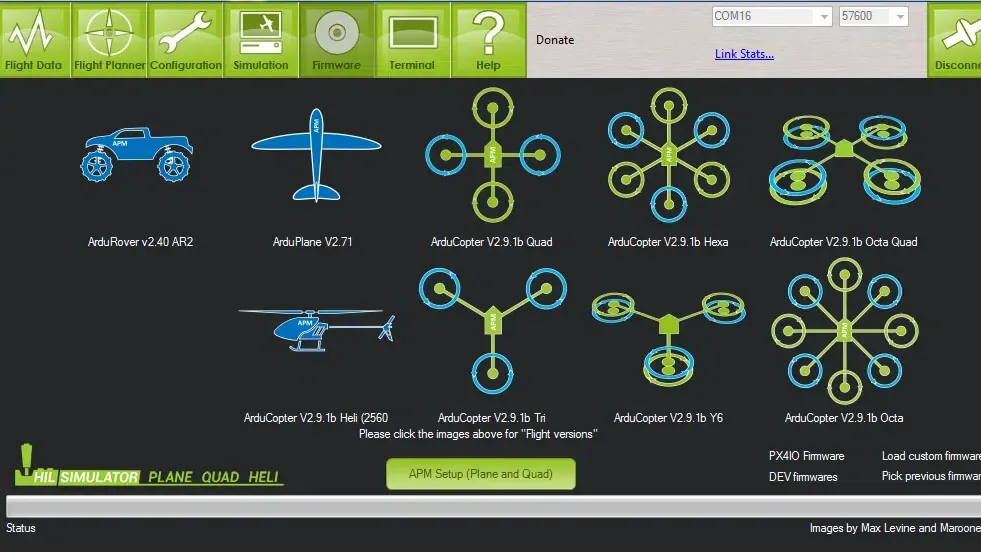
ArduPilot is not just “another FPV firmware.” It is really an autopilot platform.
That is why it shines when the aircraft is doing more than just being flown manually. If the project involves missions, automation, survey work, telemetry systems, or non-standard airframes, ArduPilot starts making a lot more sense.
Use ArduPilot if your priority is:
- waypoint missions
- autonomous flight
- mapping and survey work
- VTOL platforms
- complex fixed-wing logic
- research, inspection, or professional UAV use
From a pilot perspective, ArduPilot is the right answer when the aircraft is part of a larger system, not just a fun FPV build.
ArduPilot Quick Answer
Best firmware for waypoint missions: ArduPilot
Best firmware for VTOL and complex aircraft: ArduPilot
Best firmware for advanced autonomy: ArduPilot
For fixed-wing and hybrid aircraft, something like the SpeedyBee F405 Wing Mini is a better hardware match than a typical Betaflight race board.ce.
Comparison of Betaflight, Ardupilot and INAV
Flight characteristics: ArduPilot and INAV are known for their reliability and stability while also being known for their lack of agility and as such, the performance and responsiveness prioritizing firmware Betaflight reigns supreme for FPV and cinematic applications. For all autonomous applications, ArduPilot and INAV are the right choices, with INAV having formidable performance in fixed wing, with ArduPilot filling the gaps with INAV as the best choice for autonomous multirotors.
| Feature / System | Betaflight | INAV | ArduPilot (ArduCopter) |
|---|---|---|---|
| Primary Use | FPV racing & freestyle | GPS-assisted FPV & mid-range cruising | Professional & autonomous drone use |
| Flight Modes | Manual, Angle, Horizon, Acro | Angle, Horizon, Acro, GPS modes | Full GPS modes, Auto, Loiter, RTL etc. |
| GPS Navigation | Limited (basic failsafe/OSD) | Yes (with RTH, Waypoint, Loiter) | Advanced (missions, geofencing, etc.) |
| Autonomous Features | Minimal | Moderate | Extensive (fully autonomous missions) |
| Tuning Complexity | Moderate (mainly for racing) | Moderate (adds GPS tuning) | High (many parameters) |
| Hardware Support | F4, F7, H7 flight controllers | Same as Betaflight | Broad, includes Pixhawk, CUAV, Matek |
| Target Audience | FPV racers, freestyle pilots | Long-range, cruiser pilots | Surveyors, researchers, and commercial UAV |
| Firmware Size | Lightweight | Moderate | Heavy |
| Documentation | Good (FPV-focused) | Good | Extensive |
| Community Support | Huge (FPV world) | Growing | Very large (multi-vehicle community) |
Betaflight vs INAV: Which One Should FPV Pilots Choose?
This is probably the most common real-world comparison.
If you mostly care about manual flight feel, Betaflight wins.
If you care more about GPS-assisted flying, INAV wins.
That sounds simple, but here is the practical way I look at it:
Choose Betaflight when:
- the aircraft is mainly for freestyle or racing
- you want the sharpest manual control
- you do not need full navigation logic
- GPS Rescue is enough for your safety strategy
Choose INAV when:
- you want proper Position Hold and Return-to-Home behavior
- you fly longer distances and want more GPS tools
- you are building a fixed-wing aircraft
- you want navigation features without the overhead of ArduPilot
Betaflight vs INAV Quick Answer
- Betaflight is better for manual FPV performance.
- INAV is better for GPS-assisted hobby flying.
INAV vs ArduPilot: Which One Should GPS and Fixed-Wing Pilots Choose?
This comparison matters most for pilots building aircraft around navigation.
Choose INAV when:
- you want something lighter and simpler
- your aircraft is a hobby FPV cruiser or hobby fixed-wing platform
- you want navigation features, but not a full mission ecosystem
Choose ArduPilot when:
- you need real mission planning
- you want deeper failsafes and more vehicle logic
- you are building VTOL, research, or professional systems
- you need room to expand into more advanced workflows later
INAV vs ArduPilot Quick Answer
- INAV is the better choice for simpler GPS-assisted hobby builds.
- ArduPilot is the better choice for advanced autonomy and professional-style aircraft systems.
ArduPilot vs Betaflight: Which One Should You Use?
This one is usually easier to answer.
If the aircraft is an FPV quad first and foremost, Betaflight is the better fit.
If the aircraft is an autopilot platform first and foremost, ArduPilot is the better fit.
Choose Betaflight when:
- you want the best freestyle or racing feel
- you want a faster and simpler quad setup path
- you care more about manual flying than mission logic
Choose ArduPilot when:
- you need Auto, Loiter, RTL, Guided, or mission workflows as core features
- you are building for utility, not just manual fun
- you need broader aircraft and sensor support
ArduPilot vs Betaflight Quick Answer
- Betaflight wins on FPV flight feel.
- ArduPilot wins on autonomy and mission depth.
Which Firmware Should Beginners Choose?
For most beginners, the right answer depends on the aircraft type and the real goal.
If the beginner is building a normal FPV quad for freestyle, racing, or general acro flying, I would still start them on Betaflight.
If the beginner is building a GPS cruiser or a fixed-wing aircraft and wants Return-to-Home and Position Hold early on, INAV is usually the better first step.
I would not usually recommend ArduPilot as a first firmware unless the beginner already knows they want autonomous missions or a more professional UAV workflow.
Beginner Quick Answer
- First freestyle quad: Betaflight
- First long-range hobby build: INAV
- First mission/autopilot project: ArduPilot
If you are still choosing the board itself, this internal guide can help: How to Choose Flight Controllers for FPV Drones of Different Sizes.
Which Firmware Is Best for Different Use Cases?
| Use Case | Best Firmware | Why |
|---|---|---|
| FPV freestyle | Betaflight | Best stick feel, tuning depth, and acro performance |
| FPV racing | Betaflight | Fast response and mature racing ecosystem |
| Cinewhoop | Betaflight | Strong manual control and excellent quad support |
| Long-range FPV quad | INAV or Betaflight | INAV for more GPS features, Betaflight for manual feel |
| Fixed-wing hobby flying | INAV | Good GPS tools with less complexity |
| Fixed-wing advanced autonomy | ArduPilot | Better mission depth and vehicle logic |
| VTOL and hybrid aircraft | ArduPilot | Best support for complex vehicle behavior |
| Mapping and research | ArduPilot | Strong mission, telemetry, and autonomy ecosystem |
Hardware Support and Build Planning
Before choosing firmware, make sure your hardware matches your goals.
For Betaflight quad builds, look for modern F4, F7, H7, or AT32 boards with good gyro support and enough UARTs for your receiver, VTX, GPS, and peripherals. A compact option like the T-Hobby Mini F7 Flight Controller works well for smaller FPV builds, while a full-size option like the T-HOBBY F7 HD+F55A-Pro-II-30.5×30.5 Stack suits larger performance quads.
For INAV or ArduPilot builds, especially fixed-wing or long-range platforms, think beyond the FC alone. GPS quality, barometer behavior, available UARTs, power layout, and airframe type matter more. That is why a board designed for wings, like the SpeedyBee F405 Wing Mini, is often the smarter choice than forcing a racing quad FC into a navigation-heavy build.
If your project is a long-range quad, add a quality GPS and review a broader setup guide like Understanding and Extending FPV Drone Range.
A Pilot’s View on Flight Feel
This is where spec-sheet comparisons usually fail.
On actual FPV quads, Betaflight still feels the most “locked in” for aggressive stick work. That is why most serious freestyle and racing pilots stay there.
INAV is not bad to hand-fly, but it is not where I would go if my only goal were to build the most fun manual acro quad possible. It makes more sense when navigation features matter enough to justify the trade.
ArduPilot can absolutely fly a multirotor manually, but that is not what most pilots choose it for. Its strength is not “best manual feel per minute of setup.” Its strength is system capability.
Data-Backed Notes That Support the Comparison
A strong comparison should not rely on opinion alone. Here are a few verifiable data points from official project sources that support the practical differences between these platforms.
Data Point 1: Betaflight GPS Rescue Is Still Framed as a Safety Feature, Not a Full Navigation Stack
Betaflight’s official GPS Rescue 4.5 guide describes GPS Rescue as “an advanced safety feature” that can autonomously fly the craft home after RC or video link loss, and it also warns that setup must be done carefully or “the quad will drop and crash in a true signal loss failsafe.” The same guide recommends 8k4k instead of 8k8k when GPS Rescue is enabled because GPS processing is CPU-intensive, and it recommends 10Hz GPS at 57600 baud as the practical rescue setup baseline.
This supports the real-world advice FPV pilots give: Betaflight’s GPS tools are useful, but Betaflight is still not a full navigation-first firmware.
Source: Betaflight GPS Rescue 4.5 guide
Data Point 2: INAV 9.1.0 Shows Its Development Priorities Clearly
The official INAV 9.1.0 release notes state that the release focused on reliability improvements, safety fixes, and GPS accuracy, and that since 9.0.1 it added 46 fixes, 76 new features or enhancements, and 19 new hardware targets.
That lines up with how pilots actually use INAV: it is a navigation-heavy hobby firmware that keeps pushing GPS and platform support without turning into a full enterprise autopilot stack.
Source: INAV 9.1.0 official GitHub release notes
Data Point 3: ArduPilot’s Copter Flight Modes Show Just How Deep the Autonomy Layer Goes
ArduPilot’s official Copter flight modes page lists dedicated modes such as Auto, Guided, Loiter, RTL, SmartRTL, Follow, and ZigZag, and explicitly notes that several of those require valid positioning data before takeoff.
That is a very different philosophy from Betaflight’s rescue-oriented GPS feature set. It confirms that ArduPilot is built around a true autopilot model rather than just adding emergency GPS behavior to a manual FPV stack.
Source: ArduPilot Copter flight modes documentation
Hardware Planning Matters More Than Most Comparison Articles Admit
A lot of “which firmware should I use?” problems are really hardware-planning problems.
For Betaflight builds, I want:
- a modern F4, F7, H7, or AT32-based FPV board
- enough UARTs for receiver, VTX control, GPS, and peripherals
- reliable gyro implementation
- blackbox support if I care about tuning
For INAV builds, I care more about:
- GPS quality
- barometer performance
- enough UARTs
- power stability
- whether the board layout actually suits a navigation build
For ArduPilot builds, I think even more broadly:
- vehicle class
- telemetry path
- GPS and compass quality
- sensor expansion
- mission-planning workflow
- whether the board was really intended for autopilot use
This is why a race-oriented quad FC can be perfect for Betaflight, acceptable for some INAV quads, and the wrong answer for a serious ArduPilot project.
What Is the Latest Stable Version?
If you keep a “latest stable version” section, it should be updated to the current state.
As of July 10, 2026:
- Betaflight GitHub releases list
2025.12.5as Latest, released on June 28, 2026. The release page also shows4.5.5on the same date for the 4.5 branch. - INAV GitHub releases list
9.1.0as Latest, released on July 9, 2026. - ArduPilot’s GitHub release list shows
Copter-4.6.3,Plane-4.6.3,Rover-4.6.3, andTracker-4.6.3in the current stable release list. The Copter and Plane 4.6.3 entries state they were released as stable on November 4, 2025.
Firmware support changes over time, so always confirm the latest stable release and target support before flashing your board.
My Practical Recommendation
If a pilot asked me this question at the field, I would answer like this:
- If you fly 5-inch freestyle or race quads, use Betaflight
- If you fly a 7-inch GPS cruiser or hobby fixed-wing, start with INAV
- If you are building around missions, autonomy, survey, VTOL, or advanced vehicle logic, use ArduPilot
That is the cleanest way to make the decision.
FAQs
Is INAV Better than Betaflight?
INAV is better for GPS-assisted flying and fixed-wing navigation. Betaflight is better for pure FPV performance, racing, and freestyle.
Betaflight – The Go-To FC Firmware for Racing and Freestyle FPV Drones
The best option will rely on your unique requirements as a drone pilot because both INAV and Betaflight have advantages and disadvantages. Betaflight is a superior option if you’re a racing or freestyle FPV drone driver who needs total control over the operation of your drone. You may adjust your drone’s behavior to your preference with Betaflight’s sophisticated capabilities, which include custom PID tuning and black box logging.
INAV – The Best FC Firmware for Navigation and Autonomous Flights
However, INAV is a preferable option if you want to use your drone for autonomous flights or navigation. For drone pilots who want to explore new areas or record footage from unusual angles, INAV’s RTH and waypoint navigation tools are immensely helpful. Furthermore, INAV’s barometer and GPS capabilities provide more accurate flying and improved control in general.
Why Betaflight Is the Best All-Around for Most FPV Pilots
Pros:
- Most widely supported (works on nearly all F4/F7 flight controllers)
- Massive user base and tutorials
- Regular updates and new features (e.g., RPM filtering, PID enhancements)
- Great configurator UI for tuning and setup
- Supports all major flight modes: Acro, Angle, Horizon
Cons:
- Not designed for full GPS navigation
- May require manual tuning for best performance
Is ArduPilot better than Betaflight?
ArduPilot is better for autonomous missions and advanced vehicle support. Betaflight is better for manual FPV flying.
Is INAV easier than ArduPilot?
For many hobby users, yes. INAV is usually easier to set up for GPS-assisted FPV and fixed-wing flying, while ArduPilot offers more depth and complexity.
Which firmware is best for long-range FPV?
INAV is often the best balance for hobby long-range FPV. Betaflight can still work well for pilots who want a more manual quad experience, while ArduPilot is stronger for more advanced autonomy.
Which firmware is best for freestyle FPV?
Betaflight is the best choice for most freestyle FPV builds because it is designed around manual quad performance and gives the best overall stick feel.
What Boards does Betaflight Not Support Anymore?
Betaflight no longer supports old F1 flight controllers (like Naze32) and many F3 boards. Newer firmware mainly supports F4, F7, and H7 boards.
STM32 F3-Based Flight Controllers
Because modern Betaflight features quickly exceeded the 256KB flash limit on F3 chips, support for STM32 F3 FCs was dropped after Betaflight version 4.0. You’ll still connect and fly—but only if you stay on 4.0 or earlier. Upgrades beyond that won’t be available, and many features have been stripped to squeeze the firmware into limited memory. Affected boards include popular models like SPRacingF3, Omnibus F3, AIORACERF3, ChebuzzF3, FuryF3, and the F3 Discovery variant.
FrSky SPI Receivers: Deprecated Protocol Support
While Betaflight will still compile code for boards with built-in FrSky SPI receivers, the development team has stopped actively maintaining this feature due to complexity and lack of support from FrSky. Starting around v4.5, these boards will technically work—but without any bug fixes or official support. If you rely on these integrated receivers, it’s best to migrate to UART-based protocols like SBUS or FPort, or switch to a more supported option such as ExpressLRS.
| Unsupported or Deprecated | What You Need to Know |
| STM32 F3-based FCs | Dropped support after v4.0—limited to older firmware versions only. |
| F3 Targets (e.g., SPRacingF3) | Need legacy Betaflight 4.0 or older to remain functional. |
| FrSky SPI Receiver Protocol | Still compiles but not maintained—use UART options instead. |
You can check the blog to know what boards Betaflight does not support anymore, why F1 and F3 controllers were dropped, and which modern FCs you should upgrade to for the best performance.
Final Verdict: Betaflight, INAV, or ArduPilot?
All three are strong firmware platforms, but they solve different problems.
Choose Betaflight if you want the best all-around firmware for FPV quads, especially for freestyle, racing, and manual cinematic flying.
Choose INAV if you want GPS-assisted flying, long-range safety features, or a simpler fixed-wing experience without the overhead of a full autopilot stack.
Choose ArduPilot if autonomy is the priority and you need advanced missions, wider vehicle support, or a platform that can scale into professional UAV workflows.
If you already know your direction, here is a simple hardware path:
- For wing and hybrid builds, start with a fixed-wing FC that supports INAV and ArduPilot
- For FPV quad builds, browse a proven F7 HD flight controller or a compact 20×20 mini FC
- For long-range support, add a dependable GPS module
If you are interested in testing more flight controllers or FPV components in real-world scenarios, you can also join the MEPSKING Vine Voice. It allows pilots to receive FPV gear for free in exchange for sharing authentic reviews, helping the community make better hardware choices.