
An FPV drone can cost less than $100 for the aircraft alone or more than $1,000 for a high-end build, but that is not the number a beginner should budget around. A complete FPV setup also needs a radio controller, compatible goggles, batteries, a charger, spare parts, and sometimes soldering tools.
For a U.S. beginner starting from zero, a realistic total budget is:
| Entry path | Realistic startup cost | What it includes | Best for |
| Simulator-first | $65-$130 | Entry ELRS radio, radio batteries, and a simulator | Learning Acro before risking hardware |
| Analog tiny-whoop RTF kit | $220-$350 | Drone, basic radio, basic goggles, batteries, and charger | Lowest-friction first flights |
| Modular tiny-whoop setup | $350-$700 | Better reusable radio and goggles plus a BNF whoop | Beginners who expect to stay in FPV |
| 5-inch analog setup | $700-$1,100 | Drone, radio, analog goggles, charger, batteries, tools, and spares | Freestyle pilots who want repairable equipment |
| 5-inch digital setup | $900-$1,500 | Digital drone, compatible goggles, radio, charger, batteries, tools, and spares | Pilots who value image quality |
| Premium or long-range setup | $1,500+ | Higher-end goggles, radio, GPS, batteries, antennas, recording gear, and redundancy | Experienced pilots with a defined mission |
KEY TAKEAWAY: The drone is often only one-third to one-half of the first-year FPV budget. The video ecosystem and reusable ground equipment usually have a larger effect on total cost than the frame or motors.
How We Calculated These FPV Costs
Prices in this guide were checked on July 24, 2026, using official manufacturer and retailer listings available to U.S. buyers. They are shown in U.S. dollars before sales tax and shipping. Temporary sales can move individual prices by 10% to 40%, so exact product prices are labeled as snapshots while buying recommendations use broader ranges.
The detailed DIY example uses first-party MEPSKING listing prices for the stack, motors, propellers, and battery, plus current official prices for RadioMaster and DJI equipment. Non-branded line items such as tools and analog goggles are planning allowances, not claimed test results.
The article separates three costs that are often mixed together:
Ownership cost: Props, arms, motors, batteries, antennas, and upgrades purchased after the first flight.
Aircraft cost: Parts installed on the quad, plus one flight battery.
Startup cost: Aircraft, radio, goggles, charger, tools, and enough batteries to fly a session.
What Determines the Cost of an FPV Drone?
The largest FPV cost drivers are the video system, aircraft size, whether the drone is prebuilt, and how much reusable equipment the pilot already owns.
Video system
Analog is usually the lowest-cost option. The camera, VTX, antenna, and entry-level goggles can cost far less than a premium digital ecosystem. Digital systems such as DJI, Walksnail, and HDZero improve image quality or transmission behavior, but the goggles create a significant upfront cost.
Drone size and mission
A 1S tiny whoop uses small batteries, inexpensive frames, and an all-in-one electronics board. A 5-inch freestyle quad needs a larger carbon frame, four larger motors, a high-current ESC, and 4S or 6S batteries. A long-range build adds GPS, larger batteries, carefully selected antennas, and often more expensive recovery or redundancy equipment.
RTF, BNF, PNP, or DIY
- RTF, or Ready-to-Fly, usually includes the drone, radio, goggles, battery, and a basic charger. Check the box contents because “RTF” is not perfectly standardized.
- BNF, or Bind-and-Fly, includes a built drone and receiver. You normally provide a compatible radio, goggles, battery, and charger.
- PNP, or Plug-and-Play, usually omits the radio receiver. You install your own receiver and provide all ground equipment.
- DIY means buying and assembling the airframe components yourself. It offers the most control, but the first build also requires tools, soldering supplies, setup time, and troubleshooting.
Component quality and repairability
Paying more does not automatically produce a better beginner quad. A widely supported frame with replaceable arms may cost less to own than a lighter frame with unavailable spares. An accessible USB port, documented FC/ESC pinout, and common motor size can save more money than a small performance upgrade.
If you want a more detailed FPV product recommendation, you can read this article: Choosing the Right FPV Drone for Different Budgets: From Beginner to Pro
What Does an FPV Drone Cost by Type?
These ranges cover the aircraft, not the complete ground setup, unless the product is specifically sold as an RTF kit.
| FPV drone type | Typical aircraft cost | Complete startup range | Main cost driver |
| 65-75 mm analog tiny whoop | $90-$170 BNF | $220-$600 | Whether the radio and goggles can be reused later |
| 2-3.5-inch micro freestyle | $150-$350 | $450-$900 | Analog versus digital video and sub-250 g weight target |
| Cinewhoop | $220-$600 | $600-$1,300 | Digital video, ducts, action camera, and batteries |
| 5-inch analog freestyle | $250-$500 | $700-$1,100 | Goggles, batteries, charger, and tools |
| 5-inch digital freestyle | $350-$700 | $900-$1,500 | Air unit and compatible goggles |
| 5-inch racing quad | $250-$600 | $750-$1,300 | Lightweight components, batteries, props, and race spares |
| 7-inch long-range quad | $450-$900+ | $1,100-$2,000+ | GPS, antennas, video link, batteries, and recovery risk |
RTF Beginner Kit Cost
Ready-to-Fly is referred to as RTF. RTF drone kits come with everything you need to get going, including the drone, a radio controller, a receiver, a battery and a charger. A lot of RTF kits also come with FPV goggles. It provides you with peace of mind and eliminates the need for additional purchases. Even though the equipment is basic in nature and of low quality, it will get you started on a tight budget.
Reference price:
- For $200, you may purchase a simple model that is ideal for learning the ropes as an entry-level experience.
- FPV drones with stronger construction and better cameras may sometimes be purchased for $300 to $500.
Most usable analog beginner kits sit around $220 to $350. For example, BETAFPV listed the Cetus X FPV Kit at $309.99 when this guide was checked. It includes a 2S whoop, LiteRadio 3 transmitter, VR03 analog goggles, batteries, and charging equipment.
BNF Drone Cost
A BNF tiny whoop commonly costs $90 to $180, while a 5-inch BNF can range from roughly $250 for a budget analog model to more than $700 for a premium digital build. BNF pricing includes factory assembly, testing, and tuning, but not necessarily the receiver option, battery, or compatible goggles.
When comparing BNF prices, verify four items: receiver protocol, video system, battery cell count, and whether antennas are included. A lower-priced PNP model may become more expensive after adding and installing a receiver.
Three Sensible Ways to Start FPV
Route 1: Buy a radio and use a simulator first
This is the lowest-risk entry path. A RadioMaster Pocket M2 with internal 2.4 GHz ExpressLRS was listed at $64.99, and many FPV simulators cost $0 to about $30. Add the radio’s required batteries and the practical starting cost is about $75 to $115.
Simulator time does not teach LiPo handling, field repairs, or judging real-world distance, but it can prevent many early crashes. It also lets the pilot confirm that Acro mode is enjoyable before buying goggles and a drone.
Route 2: Buy an analog RTF tiny-whoop kit
Budget about $220 to $350. This route gives the fastest path to a complete first-person-view experience. It is a reasonable choice for a pilot who values convenience more than long-term equipment reuse.
Route 3: Build a modular setup around reusable equipment
Buy a good ELRS radio, choose the video ecosystem deliberately, and add a BNF or DIY aircraft. This costs more on day one, but the same radio, goggles, charger, and tools can support multiple future drones.
For most committed beginners, reusable ground equipment is where paying once makes sense. Frames, props, motors, and batteries are consumable; a comfortable radio and compatible goggles can remain useful for years.
How Much Does It Cost to Build An FPV Drone?
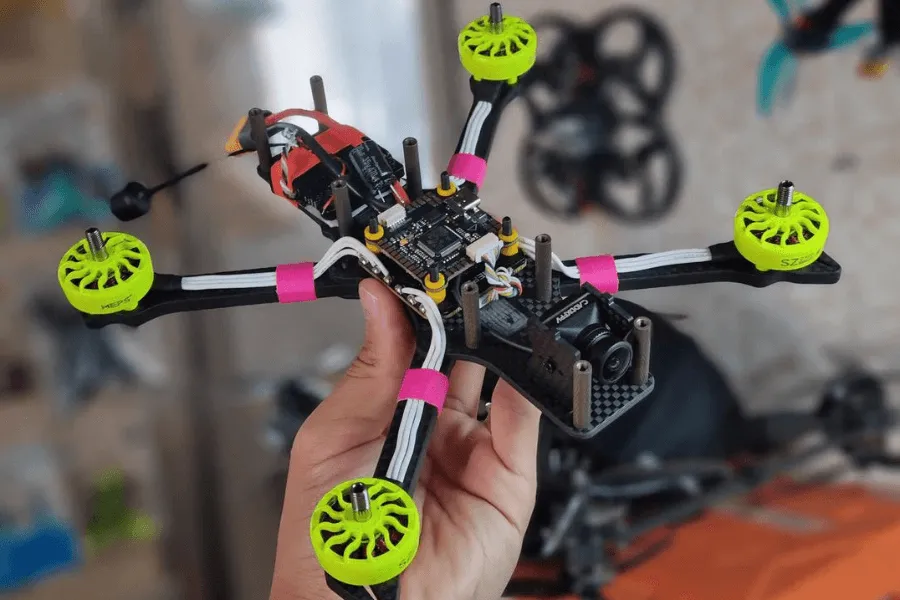
A DIY 5-inch FPV drone normally costs about $250 to $500 for an analog aircraft or $350 to $700 for a digital aircraft. A beginner starting with no radio, goggles, charger, batteries, or tools should plan closer to $700 to $1,500 for the complete system.
DIY is not automatically cheaper than buying a BNF quad. The value of DIY is that you choose every component, understand the wiring, and can repair the aircraft without reverse-engineering someone else’s layout.
If you want to diy FPV drone, check out our FPV Parts to help you select most of the components.
Detailed DIY 5-Inch FPV Drone Cost Breakdown
The table below is for a conventional 6S, 5-inch freestyle quad. The ranges are realistic planning numbers, not maximum possible prices.
| Component | Budget range | Typical range | Premium range | What changes the price |
| Carbon-fiber frame | $30-$45 | $45-$70 | $70-$120 | Arm thickness, hardware, TPU, replaceable parts, brand |
| FC and 4-in-1 ESC stack | $60-$85 | $85-$130 | $130-$200 | Processor, current rating, BECs, blackbox, connectors, warranty |
| Four motors | $40-$60 | $60-$90 | $90-$140 | Materials, bearings, crash durability, weight, brand |
| Two prop sets | $8-$12 | $12-$20 | $20-$30 | Number of sets, material, specialty racing props |
| ELRS receiver | $12-$20 | $20-$30 | $30-$45 | Antenna style, diversity, telemetry, frequency band |
| Analog camera | $18-$25 | $25-$40 | $40-$70 | Dynamic range, low-light performance, size |
| Analog VTX | $20-$35 | $35-$60 | $60-$100 | Output power, cooling, connector, mounting, reliability |
| Video antenna | $10-$15 | $15-$25 | $25-$40 | Connector, gain, durability, brand |
| Capacitor, lead, strap, wire, buzzer, hardware | $15-$25 | $25-$40 | $40-$70 | Buzzer type, spare hardware, TPU, wire quality |
| One 6S battery | $25-$32 | $32-$45 | $45-$60 | Capacity, cells, weight, discharge performance |
| Analog aircraft total | $238-$354 | $354-$550 | $550-$875 | Does not include radio, goggles, charger, tools, tax, or shipping |
The premium total is not a recommendation for a beginner. It shows how quickly boutique parts, high-output video hardware, and extra accessories can raise the cost of the aircraft without necessarily making it easier to learn.
1. Frame: budget $30-$80
The frame sets the prop size, stack mounting pattern, camera width, battery location, and available space for the video transmitter. For a first 5-inch build, prioritize replaceable arms and common 30.5 x 30.5 mm or 20 x 20 mm electronics mounting.
Check whether the price includes TPU antenna mounts, action-camera mounts, battery pads, straps, and spare hardware. A $40 frame can become a $65 purchase after adding parts that another kit includes.
2. Flight controller and ESC: budget $60-$150
Most modern 5-inch builds use a Flight Controller and ESC stack. The current MEPS F7 60A Thunder Titan stack was listed at $64.99 when checked. That is a sale price and should not be treated as the permanent market price.
For a beginner, documentation and electrical compatibility matter more than buying the most expensive processor. Verify:
- The stack fits the frame mounting pattern and available height.
- The ESC supports the intended 4S or 6S battery.
- The FC-to-ESC harness pinout matches both diagrams.
- The FC has enough UARTs for the receiver, GPS, and digital video control.
- The BEC provides the voltage and current required by the camera or air unit.
- The USB connector remains accessible after assembly.
Do not buy an FC and ESC only because the plugs fit. Different pinouts can put battery voltage onto a signal or 5V pin and destroy the electronics on first power-up.
Check this blog if you want to know more about Flight Controller and ESC: How to choose fpv drone flight controller. What is ESC: Comprehensive Guide for Electronic Speed Controller

3. Motors: budget $40-$100 for four
A 5-inch 6S freestyle build commonly uses 2207 or 2306 motors in roughly the 1,700-2,000KV range. Four MEPS SZ2306 V2 motors at the checked price of $12.90 each cost $51.60.
Do not select a motor by KV alone. Use thrust-table data for the exact motor, propeller, and voltage. Check current draw at high throttle against the ESC and battery. Also verify motor mounting holes and screw length; screws that reach the copper windings can ruin a motor before the quad flies.
Builder’s budget rule: buy one spare motor if the model may become hard to find. Mixing motor models later can create different response, weight, and tuning behavior.
Check this blog if you want to know more about FPV motor: How to choose FPV drone motor a detailed guide 2026

4. Propellers: budget $10-$25 initially
Props are the cheapest recurring FPV expense and the first part most beginners damage. The MEPS SZ5145 eight-piece listing was $4.90 when checked, so two packs provide four complete quad sets for $9.80.
Start with a moderate-pitch tri-blade recommended for the motor. Aggressive high-pitch props increase current draw and heat. Keep several complete clockwise/counterclockwise sets in the field bag.

5. Radio receiver: budget $15-$35
The receiver must match the radio protocol and frequency band. A 2.4 GHz ExpressLRS receiver requires a 2.4 GHz ExpressLRS transmitter or module. The word “ELRS” alone does not make 2.4 GHz and 900 MHz hardware cross-compatible.
UART-based ExpressLRS receivers normally use CRSF, with receiver TX wired to FC RX and receiver RX wired to FC TX. Reserve a full UART and follow the specific board diagram.
6. Video system: budget $55-$125 for analog or $109-$229 for DJI O4 aircraft hardware
An analog setup needs a camera, VTX, antenna, and compatible analog goggles. A practical aircraft-side allowance is $55 to $125.
DJI listed the O4 Air Unit at $109 and the O4 Air Unit Pro at $229. Both include their camera and transmission hardware, but they still require compatible DJI goggles. DJI listed Goggles N3 at $229 when checked.
Important electrical detail: DJI specifies a 3.7-13.2V input range for the standard O4 Air Unit. A fully charged 6S LiPo reaches 25.2V, so the standard O4 must not be connected directly to 6S battery voltage. Use a correctly rated regulated BEC and follow the FC and DJI wiring diagrams.
Check this blog if you want to know more about FPV camera: Best FPV Drone Camera: Top 8 Factors
7. Batteries: budget $25-$45 each
A common 5-inch 6S freestyle battery is approximately 1,050-1,500mAh. The example MEPS listing for a 6S 1,480mAh pack was $37.99.
One battery is enough to test the build, not enough for a satisfying field session. Four batteries at $38 each cost about $152. Capacity, weight, voltage sag, and physical fit matter more than buying the largest mAh number.

8. Small parts: budget $25-$50
Small items are easy to omit from a spreadsheet:
- XT60 battery lead and silicone wire.
- Correct low-ESR capacitor.
- Battery straps and non-slip pad.
- Heat-shrink tubing and zip ties.
- Buzzer, antenna mounts, and TPU protection.
- Spare M2/M3 screws, nuts, gummies, and standoffs.
- Receiver and video antennas if not included.
Shipping several forgotten $5 items separately can erase the savings from choosing a cheaper motor.
The Cost of FPV Drone–Other Parts
- Radio Controller : To operate an FPV drone while in flight, pilots utilize a radio transmitter, which is a portable gadget. The cost of a radio transmitter can vary from $50 to $300 based on the brand and capacity.
- FPV Goggles: To view the camera’s live video stream, utilize FPV goggles. FPV goggles range in price from $100 to $700, depending on functionality and quality.
Extra Cost Factors of Fly FPV Drones
Recognize the additional expenses that come with owning an FPV drone before you go up in the sky. not only the cost of the drone, but also the total outlay for the full experience. Let’s dissect the fundamentals.
FPV Simulator
Over time, purchasing an FPV simulator can result in cost savings. Basic versions of simulators start at $0 and go up to about $30 USD. They offer a risk-free setting where you may hone your flying abilities before handling a real drone, possibly saving expensive mistakes.
FPV Simulator Recommendation:
- DRL (Drone Racing League) Simulator
- Liftoff
- Velocidrone
- Phoenix RC Simulator
- AeroSIM RC
- Uncrashed
- Real Drone Simulator
Check this blog if you want to know more about the simulator: What’s Free & Best FPV Drone Simulator for Beginner 2026?
Maintenance/Repair
Damage to FPV drone parts is unavoidable, so one of the few things you’ll have to spend on is repairs, and if a part is damaged, you’ll need to get it replaced. Maintenance is also very important in order to prolong the life of the airplane, so this part of your expenses is also less.
Tools: Here are some of the tools you’ll need
- Soldering iron and solder
- A set of hex screwdrivers (e.g., 1.5mm, 2mm, 2.5mm) for M2/M3 bolts:
- An M5 (8mm) nut spinner or socket ratchet for the propeller nut (or you can just use your big pliers)
- Wire Cutters
- Cable ties
- Electrical Tape
- Multimeter
- Smoke stopper
Put together, it should all come to around $100.
Upgrade
Adding accessories to your drone, such as FPV goggles, cameras, or lenses, can enhance its performance. For instance, the DJI FPV Goggles may increase your spending by several hundred dollars. Prior to making a purchase, always evaluate whether an upgrade would have a major impact on your flight experience.
Upgrade factors to consider:
- FPV Goggles cost a few hundred bucks.
- Lenses and Cameras: Expensive, variable, high-quality cameras
Real-Price Example: A Budget 5-Inch Analog Build
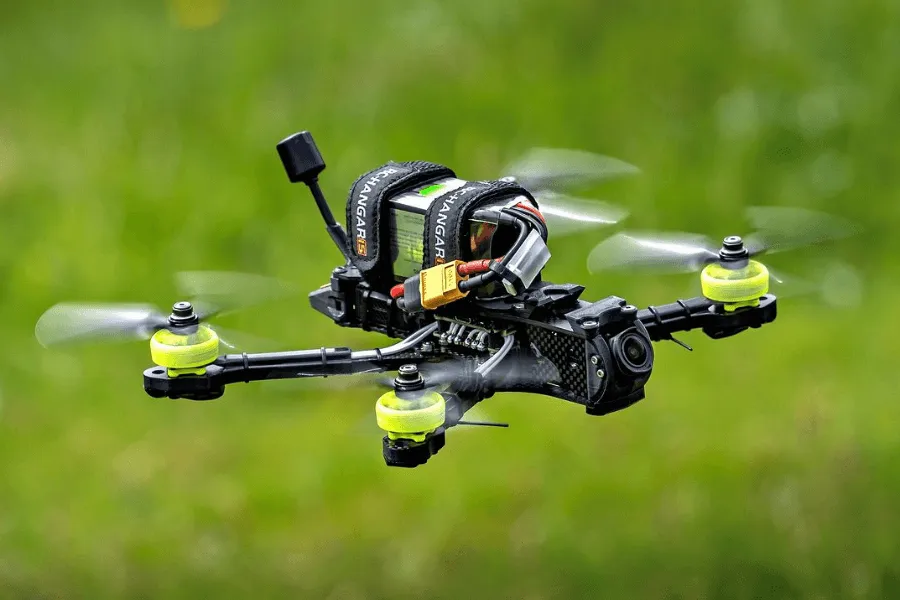
This example uses checked first-party MEPS prices where available and transparent planning allowances for the remaining parts. It is a cost model, not a claim that these exact parts have been flight-tested together. Confirm all specifications before ordering.
| Item | Price used | Basis | Compatibility check |
| 5-inch carbon frame | $45.00 | Planning allowance | 30.5 mm stack, 5-inch props, camera fit |
| MEPS F7 60A stack | $64.99 | Checked listing price | 6S support, FC/ESC pinout, UARTs |
| Four MEPS SZ2306 V2 motors | $51.60 | 4 x $12.90 | Correct KV for 6S and selected prop |
| Two eight-piece prop packs | $9.80 | 2 x $4.90 | Two CW and two CCW props per set |
| 2.4 GHz ELRS receiver | $20.00 | Planning allowance | Matches 2.4 GHz ELRS radio |
| Analog FPV camera | $25.00 | Planning allowance | Camera width and voltage |
| Analog VTX | $35.00 | Planning allowance | Legal channel/power, cooling, mounting |
| Video antenna | $15.00 | Planning allowance | Frequency, connector, polarization |
| Capacitor, lead, strap, buzzer, wire, hardware | $30.00 | Planning allowance | Voltage rating and physical protection |
| One 6S 1,480mAh battery | $37.99 | Checked listing price | XT60, dimensions, weight |
| Aircraft total | $334.38 | Sum of line items | Before tax and shipping |
Changing the analog camera, VTX, and antenna allowance ($75 total) to the $109 DJI O4 Air Unit raises this example to $368.38. Using the $229 O4 Air Unit Pro raises it to $488.38. The frame, BEC, mounting, cooling, and goggles must support the selected digital system.
FPV Drone DIY Cost by Drone Style
| FPV Drone Type | Common Size | Main Use | DIY Cost (USD) | Cost Notes |
|---|---|---|---|---|
| Tinywhoop | 65mm / 75mm | Indoor, training | $80 – $150 | Lowest cost, AIO FC, mostly analog |
| Cinewhoop | 3″ / 3.5″ | Cinematic filming | $250 – $450 | Motors, ducts, stability raise cost |
| 5 Inch Freestyle | 5″ | Tricks, freestyle | $300 – $500 | Best value, most flexible setup |
| 5 Inch Racing | 5″ | Track racing | $350 – $600 | Performance-focused components |
| 7–8 Inch Long Range | 7″–8″ | Mountain / distance | $500 – $900+ | Batteries, GPS, HD links add cost |
Tinywhoop (Best Budget & Beginner Choice)
Estimated Cost: $80 – $150
Typical components:
- AIO flight controller + ESC
- 1S / 2S batteries
- Lightweight plastic frame
- Mostly analog FPV systems
Perfect for learning Acro mode and indoor flying. Crashes are cheap, but wind resistance and image quality are limited.
Cinewhoop (Cinematic Entry Point)
Estimated Cost: $250 – $450
Key cost drivers:
- High-torque 3″–3.5″ motors
- Ducted frame and strong structure
- Often carries a GoPro or a naked camera
Smooth footage comes at a price. Motors, frames, and vibration control push costs higher than freestyle builds.
5 Inch Freestyle (Best Value Overall)
Estimated Cost: $300 – $500
Typical setup:
- 2207 / 2306 motors
- Separate FC + ESC
- Analog or digital FPV
- Widely available spare parts
Great balance of performance, repair cost, and flexibility. Ideal for most FPV pilots.
5 Inch Racing (Performance First)
Estimated Cost: $350 – $600
What increases the cost:
- Lightweight, high-KV motors
- Strong ESCs
- Short battery life due to aggressive flying
7–8 Inch Long Range (Most Expensive & Risky)
Estimated Cost: $500 – $900+
Cost drivers:
- Large motors and props
- High-capacity Li-ion or LiPo batteries
- GPS, long-range FPV systems
- Strong frames
Long-range flying is rewarding, but failure costs are high — losing the drone often means losing everything.
Digital FPV Systems Cost (DJI & Walksnail)
Upgrading from analog to digital FPV is one of the biggest cost jumps in an FPV build.
Digital FPV System Upgrade Cost (Drone Side Only)
| Digital FPV System | Air Unit Cost | Typical Total Upgrade |
|---|---|---|
| DJI O3 / O4 Air Unit | $180 – $230 | $200 – $260 |
| Walksnail HDZero / Avatar | $120 – $170 | $140 – $200 |
What Digital FPV Adds:
- HD video feed
- Better penetration and clarity
- Higher latency than analog (varies by system)
- More weight and power draw
Digital FPV also requires compatible goggles, which typically cost $300 – $800, and are not included in the drone build cost.
Should You Build or Buy Your First FPV Drone?
If you’re new to the world of FPV drones, you may be debating whether to purchase or construct your first drone. Each of the solutions has benefits and drawbacks. Here are some things to think about.
| Choice | Pros | Cons |
|---|---|---|
| Build DIY | Full customization, cheaper long-term | High learning curve |
| Buy Prebuilt | Plug-and-play, saves time | Less flexible, higher repair cost |
| RTF Kit | Best for beginners | Low performance ceiling |
Tip: Beginners can start with RTF + simulator → transition to DIY later.
Final Thoughts: FPV on a Budget vs. Going Pro
There’s an FPV setup for every budget:
| Budget | Setup Type | Ideal For |
|---|---|---|
| $200–$300 | RTF Kit | Absolute beginners |
| $400–$800 | Prebuilt | Hobbyists |
| $800–$1800+ | DIY Custom Build | Long-term FPV pilots |
Managing FPV costs is always a balance between performance and budget. If you want to reduce trial-and-error expenses while gaining hands-on experience with new components, consider joining the MEPSKING Vine Voice.
This community-driven reviewer initiative allows selected pilots to test FPV products for free, including motors, ESCs, and other essential parts. It’s a practical way to explore different gear options without increasing your FPV budget.
Learn more: MEPSKING Vine Voice

FAQs
Q1: Is it cheaper to build or buy an FPV drone?
A: Building a DIY FPV drone is usually cheaper in the long run. From a professional FPV pilot’s perspective, a DIY FPV drone gives you far better control over your FPV drone cost. You can choose parts that match your budget and flying style, avoid paying extra for factory labor or bundled components you don’t need, and replace or upgrade parts individually as you progress.
While a pre-built FPV drone may seem convenient at first, repairs and upgrades often cost more over time. In contrast, the cost to build an FPV drone is more flexible—you can start simple, learn faster, and improve performance step by step without buying an entirely new drone.
For most pilots, especially beginners and racers, DIY FPV drones offer the best value per dollar.
Q2: Can I build a drone under $500?
A: Yes, especially if you already have a radio + goggles. Use analog VTX systems and budget-friendly parts.
Q3: What’s the lifespan of FPV drone parts?
A: Batteries last ~100 cycles. Motors & ESCs can last years with proper care. Frames survive multiple crashes depending on quality.
Q4: Are DJI FPV drones worth the cost?
A: For cinematic flying and ease-of-use, yes. But freestyle/racers may prefer modular builds for repair and customization.