
Choosing the right FPV flight controller is one of the most important steps in any drone build. A good FPV drone flight controller makes the build easier to wire, easier to tune, easier to repair, and more reliable in the air. A bad one can turn even a strong motor-and-ESC combo into a frustrating build.
If you want the short answer first, here it is:
- For most 5-inch freestyle and racing drones, an F7 flight controller with 30.5×30.5mm or 20x20mm mounting, 4 to 6 UARTs, a reliable gyro, 16MB or more blackbox, and a clean 5V/9V BEC is the safest choice.
- For tiny whoops and ultralight builds, an AIO flight controller is usually the best option because weight matters more than expandability.
- For 7-inch long-range FPV or GPS-heavy builds, choose an F7 or H7 FC with more UARTs, better power filtering, and enough pads for GPS, buzzer, VTX, receiver, and peripherals.
- If you are a beginner, do not over-focus on raw MCU speed. Focus on fit, wiring layout, UART count, repairability, and firmware support.
That is how experienced FPV builders usually think about flight controllers in the real world.
If you want to browse actual options while reading, start with the FPV Flight Controller collection.
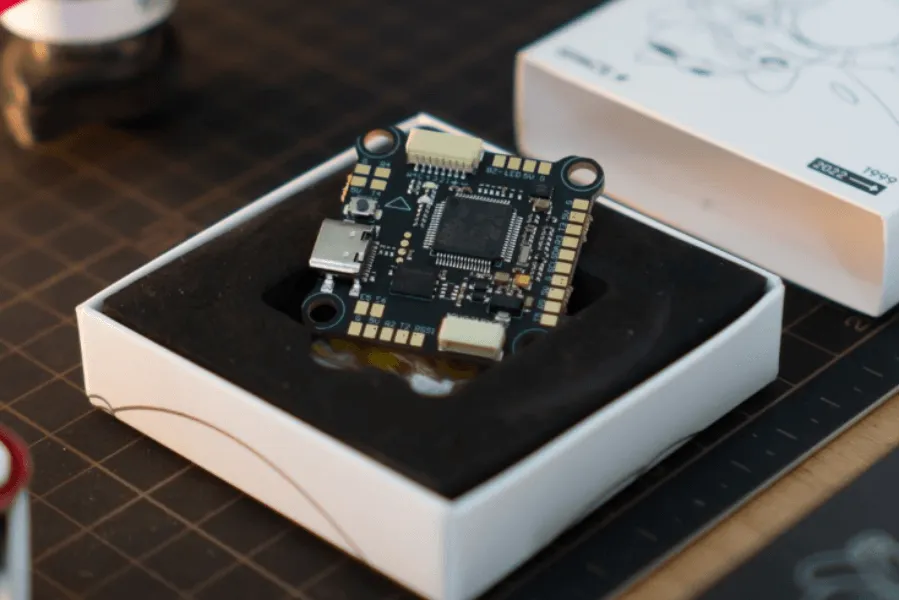
What Is an FPV Flight Controller?
The flight controller, often called the FC, is the brain of the drone. It reads data from the gyro and other sensors, processes your stick inputs, runs the firmware, and sends commands to the ESCs and motors.
A modern FPV flight controller usually manages:
- gyro and accelerometer data
- receiver input
- ESC protocol output
- OSD data
- VTX control
- GPS and rescue functions
- blackbox logging
- LEDs, buzzer, and other peripherals
In a practical build, the flight controller is also the wiring hub. That is why choosing the right drone flight controller is not just about performance. It is also about how cleanly the whole build comes together.
How to Choose Flight Controller for Drone Builds?
When experienced pilots choose an FPV flight controller, we usually do not start with the processor. We start with the build itself.
Ask these questions first:
- What size drone am I building?
- Analog or digital video?
- Do I need GPS?
- How many peripherals will I connect?
- Do I want an AIO or a separate FC + 4-in-1 ESC stack?
- Is this a build I may need to repair often?
That process matters because the best flight controller for a 1S whoop is not the best flight controller for a 6S freestyle quad, and neither is right for a 7-inch long-range platform.
Step 1: Match the FC Size to the Frame
This is the first thing I check in every build.
Common FPV flight controller mounting sizes include:
- 30.5×30.5mm for many 5-inch and larger builds
- 25.5×25.5mm for compact stacks and some cinewhoops
- 20x20mm for lighter 3-inch to 5-inch builds
- AIO boards in whoops, micros, and ultralight builds
A common mistake is treating “AIO” as a size. It is not. AIO means the FC and ESC are integrated into one board. AIO boards can come in different mounting formats.
| Flight Control Hole Pitch(mm) | Frame size | Screw sizes |
|---|---|---|
| General:30.5mm | 5-inch and larger builds | M2/M3 |
| Mini:25.5mm | 3-inch to 5-inch builds | M2/M3 |
| AIO:20mm | Under 2″ / Under 100mm | M1/M2/M3 |
My practical rule:
- For a 5-inch freestyle quad, I usually prefer a 30.5×30.5 stack if space allows, because it is easier to wire, easier to cool, and easier to repair.
- For a 3-inch or compact 5-inch, 20×20 can save weight.
- For tiny whoops and sub-250 micros, an AIO usually makes more sense.
If you want a standard full-size option, the MEPS SZ F7 Analog Flight Controller is a good example of a classic 30.5×30.5 FPV FC layout.
If you want an AIO route, a board like the MEPS F411 1S 15A AIO is more relevant for compact builds.
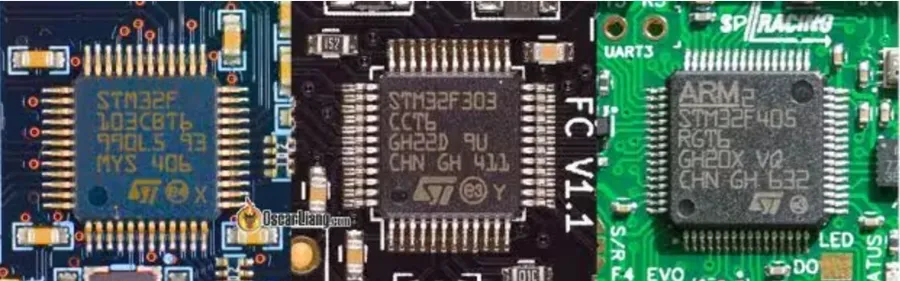
Step 2: Choose the Right MCU: F4, F7, or H7?
The MCU matters, but less than beginners often think.

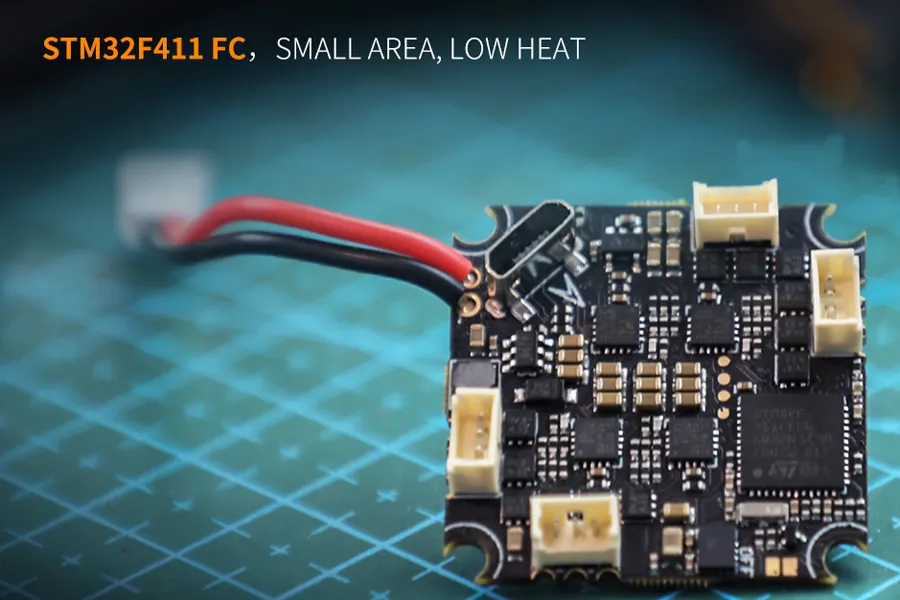
F4 Flight Controllers
F4 boards still work fine for many builds. If the board has the features you need and runs the firmware you want, an F4 can still fly well.
Good for:
- simple freestyle builds
- budget builds
- smaller drones with limited peripherals
Less ideal for:
- complex digital + GPS + telemetry setups
- long-term flexibility
- builds where you want extra headroom
F7 Flight Controllers
For most FPV pilots in 2026, F7 is the sweet spot.
Why I still recommend F7 for most builds:
- plenty of processing power
- broad Betaflight support
- enough UART flexibility for modern builds
- strong compatibility with digital systems
- better long-term headroom than many F4 boards
If you build 5-inch freestyle quads often, F7 is usually the safest recommendation.
Examples include:
H7 Flight Controllers
H7 boards are great, but most pilots do not need them unless they already know why.
H7 makes more sense when:
- the build is complex
- you want maximum future headroom
- you run more peripherals
- you care about advanced tuning, logging, or special use cases
If you are asking “Do I need H7?”, the honest answer is usually no. A good F7 will handle most FPV needs very well.
Step 3: Pay Attention to the Gyro, Not Just the MCU
A lot of pilots obsess over F4 vs F7 and ignore the gyro. In practice, the gyro often affects flight feel more than people expect.
Common gyros and IMUs in FPV FCs include:
- MPU6000
- ICM42688
- BMI270
- ICM20602
From a builder’s perspective:
- MPU6000 still has a very strong reputation for noise tolerance and predictable behavior
- ICM42688 is common on modern FCs and works very well when the board design is clean
- BMI270 can also fly well, but the board implementation matters
The real lesson is this: do not buy a board by gyro name alone. A well-designed FC with good filtering, layout, and power regulation matters more than chasing one sensor on a spec sheet.
Step 4: Count Your UARTs Before You Buy
This is where many builds go wrong.
A modern FPV drone flight controller may need UARTs for:
- receiver
- GPS
- digital VTX link
- telemetry
- smart audio or tramp control
- blackbox-related peripherals or expansion
My recommendation:
For a simple analog freestyle build:
- 4 UARTs are often enough
For a digital freestyle or long-range build:
- 5 to 6 UARTs are much more comfortable
If you plan to run GPS, digital VTX, ELRS receiver, buzzer, and maybe extra telemetry, buying the FC with more UARTs now saves headaches later.
This is one reason I usually prefer a well-equipped F7 for 5-inch and 7-inch builds.
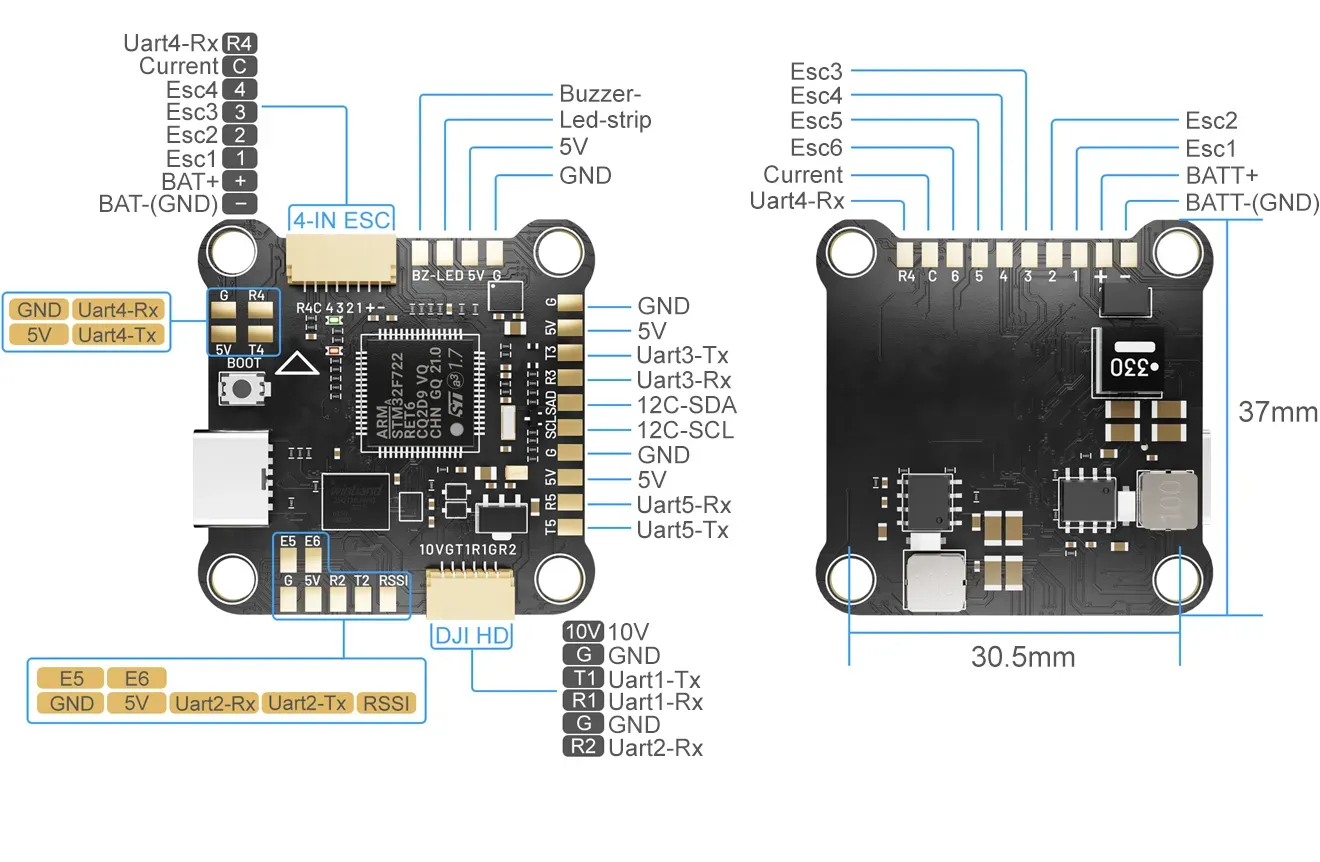
Step 5: Check the BECs and Power Layout
This is one of the most underrated parts of choosing a drone flight controller.
The FC is not just processing data. It is also distributing clean power to sensitive devices such as:
- receiver
- GPS
- camera
- VTX
- buzzer
- LEDs
Look for:
- a stable 5V BEC
- a 9V BEC if you use equipment that benefits from it
- clean filtering for digital video systems
- enough current output for all connected devices
My practical advice:
- For analog builds, a stable 5V rail is often enough.
- For digital builds, especially DJI or Walksnail, I strongly prefer a board with a clean layout, proper filtering, and enough power headroom. A noisy FC can turn a nice digital setup into a troubleshooting session.
Step 6: Think About Repairability
This is a very “real pilot” factor that many generic buying guides ignore.
When I choose an FPV flight controller for a freestyle quad, I care a lot about:
- solder pad size
- pad spacing
- logical pad placement
- whether the USB port is protected
- whether the board is easy to remove and reinstall
- whether the manufacturer provides a clear wiring diagram
A board that is slightly heavier but easier to repair is often the smarter choice for a quad that will crash.
This is one reason many pilots still like full-size stacks for 5-inch builds. They are easier to build, inspect, and repair after hard impacts.
Step 7: Blackbox Matters More Than Most Beginners Think
If you tune your quad, blackbox logging is extremely useful.
For beginners, blackbox is not mandatory on day one. But if you want to:
- troubleshoot oscillations
- clean up propwash
- diagnose weird mid-throttle behavior
- compare tune changes properly
Then onboard blackbox storage becomes valuable.
My rule:
- For a casual beginner build, onboard storage is nice to have
- For freestyle, racing, and long-range tuning, I prefer at least 16MB, and 32MB is even better
The iFlight BLITZ F7 V1.2 is a good example of a board that gives more serious logging headroom for advanced pilots.
Step 8: Choose Based on Drone Type, Not Marketing
This is the most useful rule of all.
Best FPV Flight Controller for a 5-Inch Freestyle Drone
What I look for:
- F7 MCU
- 30.5×30.5 or 20×20 mount
- good gyro reputation
- 4 to 6 UARTs
- blackbox
- reliable 5V and 9V power rails
- clean pad layout
- digital VTX plug if I plan to run HD
Good examples:

Best FPV Flight Controller for Tiny Whoops and Micros
What matters more:
- low weight
- integrated ESC
- clean AIO design
- enough current for your motors
- correct mounting pattern
- easy receiver and VTX integration
Good example:
Best FPV Flight Controller for 7-Inch Long-Range Drones
What I prioritize:
- F7 or H7
- more UARTs
- GPS-friendly layout
- blackbox
- clean power filtering
- enough pads for buzzer, GPS, receiver, VTX, and extras
- a stable current sensor and voltage readout
If a long-range build is your goal, the FC should feel more like a system hub than just a “brain board.”
Best Flight Controller for Fixed-Wing or INAV/ArduPilot Builds
This article is mainly about FPV multirotors, but if you are building fixed-wing, VTOL, or an autonomy-focused platform, use a board made for that workflow instead of forcing a freestyle FC into the job.
A better example is a dedicated wing board like the SpeedyBee F405 Wing App Flight Controller.
Common Mistakes When Choosing an FPV Flight Controller
- Buying by MCU name only
- Ignoring mounting size
- Running too few UARTs for the planned setup
- Choosing an AIO for a build that would be easier to repair as a stack
- Ignoring BEC quality on digital builds
- Picking the lightest FC even when durability matters more
- Buying a “feature-rich” board with a bad pad layout
- Overbuying H7 when a solid F7 would be enough
My Personal Buying Advice as an FPV Builder
After years of building, repairing, tuning, and crashing FPV quads, my advice is simple:
If you are building a normal 5-inch freestyle quad, buy a solid F7 flight controller with enough UARTs, onboard blackbox, clean power, and a layout you can actually solder comfortably. That choice solves more problems than chasing the fanciest spec sheet.
- If you are building a whoop, save weight and use an AIO.
- If you are building long-range, buy for peripherals and power stability first.
- If you are a beginner, prioritize compatibility and wiring simplicity over theoretical performance.
That is how I would choose an FPV drone flight controller for myself.
Final Verdict
The best FPV flight controller is not the one with the fastest chip on paper. It is the one that fits your frame, supports your peripherals, powers your system cleanly, and makes the build reliable and repairable.
For most pilots in 2026:
- F7 is the best all-around choice
- AIO is best for whoops and ultralight builds
- 30.5×30.5 stacks are still excellent for durable 5-inch quads
- more UARTs and cleaner power usually matter more than chasing top-end MCU specs
If you want to compare real options, browse the FPV Flight Controller category, then pair this article with your related guide: FPV Drone Flight Controllers Explained: F1, F3, F4, F7, H7.
FAQ
What is the best FPV flight controller for beginners?
For most beginners, a reliable F7 flight controller with a common mounting size, enough UARTs, and a clear wiring layout is the best choice. It gives you room to grow without making the build too complicated.
Is F4 or F7 better for an FPV drone flight controller?
F7 is usually the better all-around choice in 2026 because it offers more headroom and flexibility for modern peripherals. F4 can still work well for simpler builds.
How many UARTs do I need on a drone flight controller?
For a simple analog build, 4 UARTs can be enough. For digital builds or GPS-equipped quads, 5 to 6 UARTs is usually more comfortable.
Should I choose an AIO flight controller or a separate stack?
Choose an AIO for tiny whoops, micros, and ultralight builds. Choose a separate FC + ESC stack for easier repairs, better heat handling, and more robust 5-inch or larger builds.
Does the gyro matter on an FPV flight controller?
Yes, but not in isolation. The gyro matters, but overall board design, filtering, power quality, and layout often matter just as much in real flight performance.