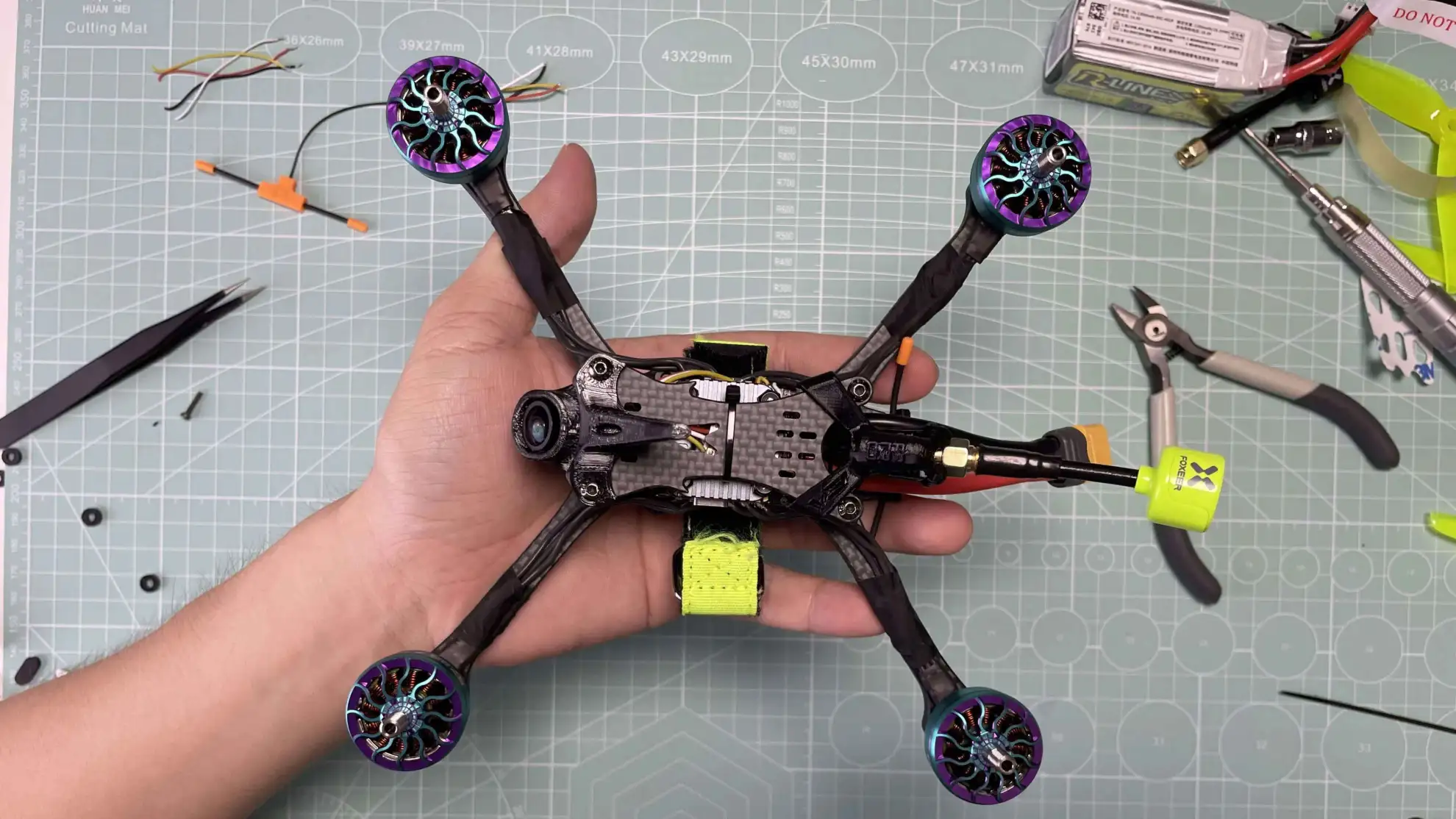
Buying Guide: RCINPOWER GTS V4 2207 1960KV/2040KV Motor
Which RCINPOWER GTS V4 2207 Should You Buy?
The RCINPOWER GTS V4 2207 is aimed at pilots who want a lightweight 2207 motor without giving up the power normally expected from a 5‑inch 6S setup.
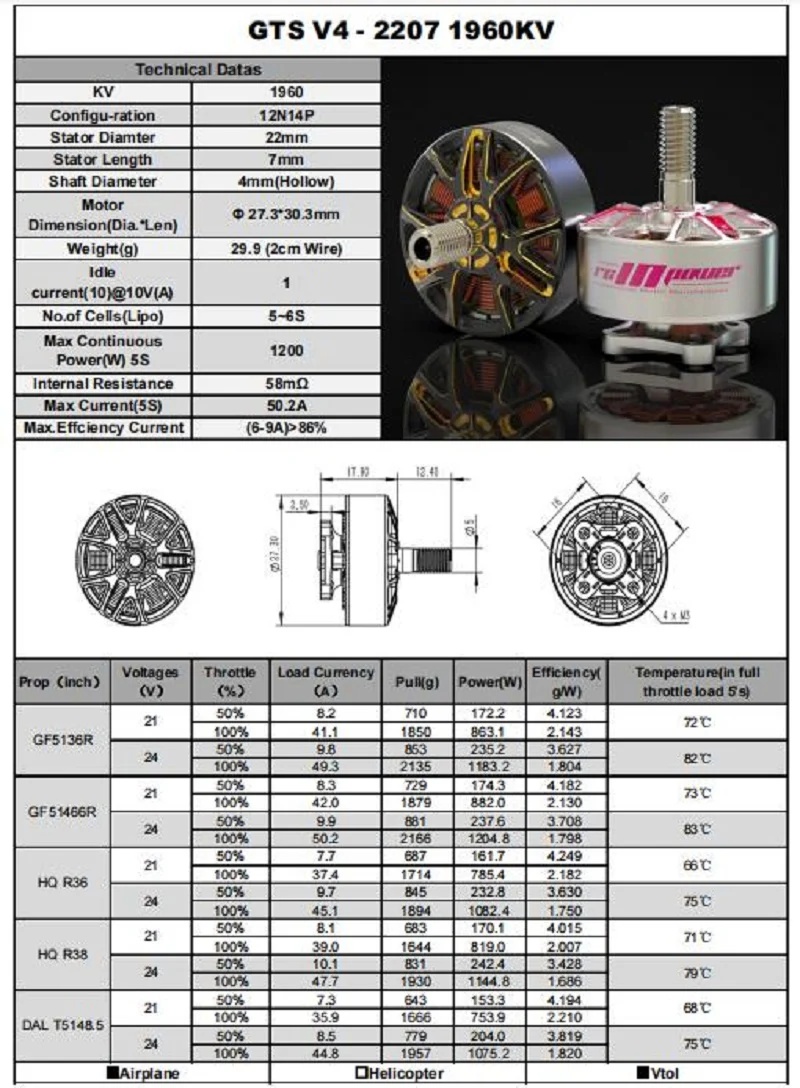
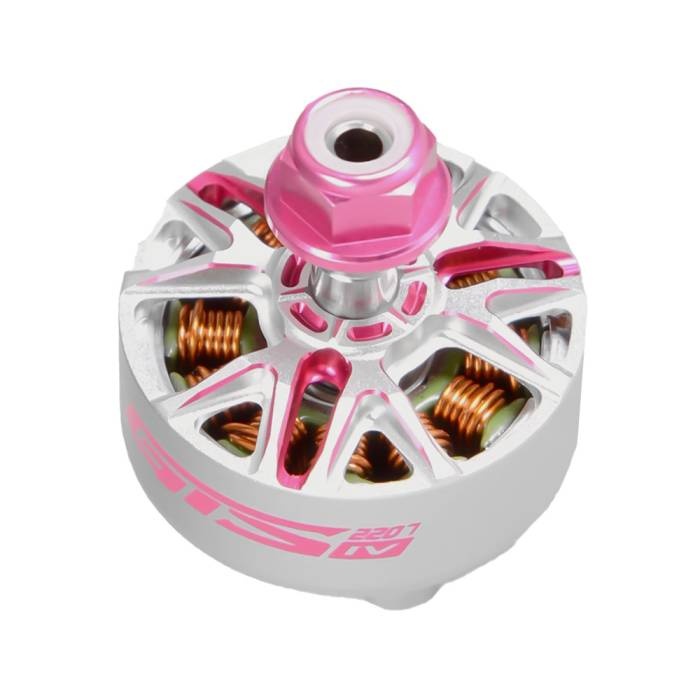
The motor uses a 22×7mm stator and weighs approximately 29.9g with a short 2cm wire. That puts it noticeably below the 35g weight of the MEPS SZ2207 V2, while the motor remains in the same general 2207 class. The GTS V4 also uses a hollow 4mm shaft and a one‑piece bell design, helping reduce unnecessary mass around the motor.
There are two versions:
1960KV is the better choice for pilots who want a balanced 6S setup with controlled power delivery and efficiency.
2040KV is the more aggressive option. It provides higher RPM at the same battery voltage and is better suited to pilots who want stronger acceleration and a more responsive throttle feel.
For most 5‑inch 6S freestyle builds, both versions are viable. If you are building a lightweight freestyle quad and prefer smoother power management, start with 1960KV. If you want a more aggressive response for racing or high‑performance freestyle, choose 2040KV.
What Does the GTS V4 Performance Look Like?
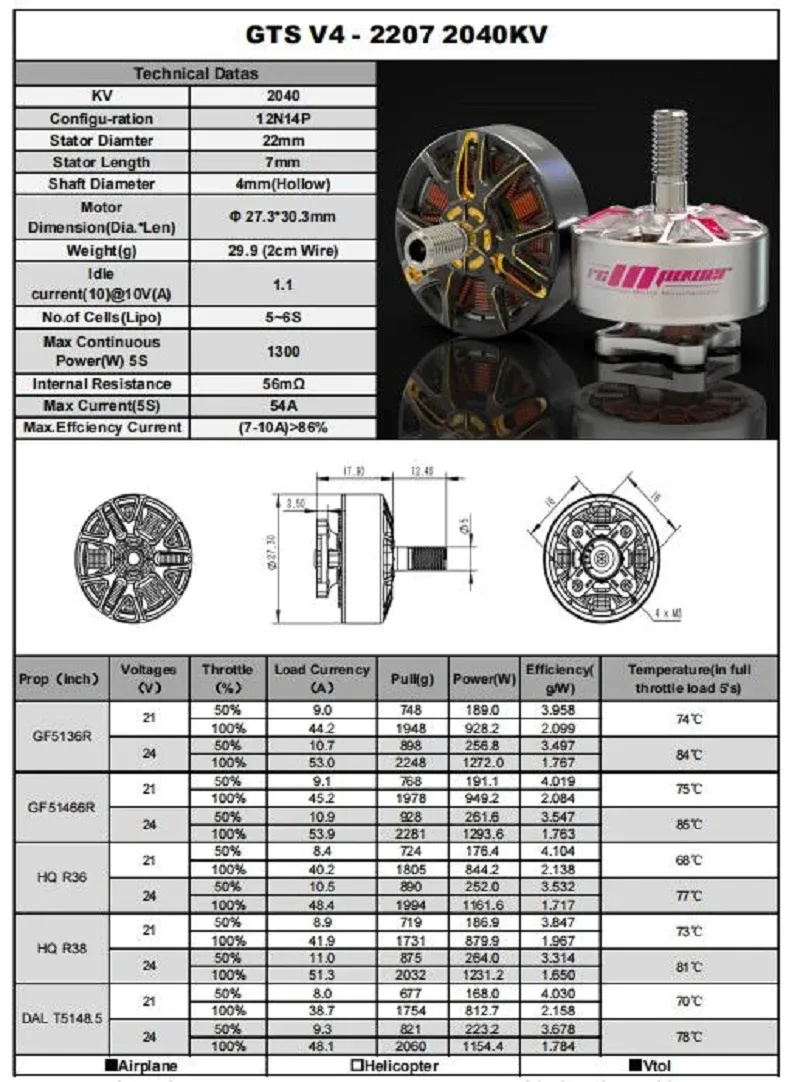
The published specifications already show that the GTS V4 is designed as a high‑output 5‑inch motor. The 1960KV version is rated at up to 1200W continuous power at 5S, while the 2040KV version reaches 1300W. The 2040KV motor has a specified maximum current of 54A and an internal resistance of 56mΩ. RCINPOWER also specifies more than 85% efficiency in the 7–10A operating range for the 2040KV version.
There is also independent testing available for the GTS V4. KremerFPV published a dedicated “GTS V4 2207 – Overview & Thrust Tests” video, which makes this motor easier to evaluate than products that only have manufacturer specifications.
Additional published test data for the 2040KV version shows a maximum thrust of approximately 2281g with a GF51466R propeller at 24V, with approximately 1293.6W power consumption. With an HQ R36 propeller at the same voltage, the motor reaches approximately 1994g thrust and 1161.6W. These figures are test‑specific and should not be treated as universal maximum thrust values because propeller design, battery voltage and test equipment significantly affect the result.
This is important for a buyer because the GTS V4 is not simply a lightweight motor designed to save a few grams. Its weight reduction is paired with enough power capability for serious 5‑inch 6S builds.
RCINPOWER GTS V4 2207 vs MEPS NEON 2207 V2 vs MEPS SZ2207 V2
These three motors are close enough in size to be natural alternatives, but they have different design priorities.
| Feature | RCINPOWER GTS V4 2207 | MEPS NEON 2207 V2 | MEPS SZ2207 V2 |
|---|
| Stator | 22×7mm | 22×7mm class | 22×7mm class |
| KV Options | 1960 / 2040KV | 1950 / 2050 / 2550KV | 1750 / 1950 / 2750KV |
| Main 6S Options | 1960 / 2040KV | 1950 / 2050KV | 1750 / 1950KV |
| Weight | 29.9g | Lightweight design | 35g incl. cable |
| Shaft | 4mm hollow | Solid stainless steel | 5mm |
| Configuration | 12N14P | 12N14P | 12N14P |
| Main Positioning | Performance / lightweight | Freestyle | Racing |
| Best Use | 5" 6S racing & freestyle | 5" freestyle | 5" racing |
| Main Advantage | Low weight + high output | Crash resistance + value | Stable thrust + racing focus |
The RCINPOWER GTS V4 has the clearest advantage in weight. At 29.9g, it is about 5.1g lighter than the 35g MEPS SZ2207 V2. Across four motors, that difference can reach approximately 20g before considering other components.
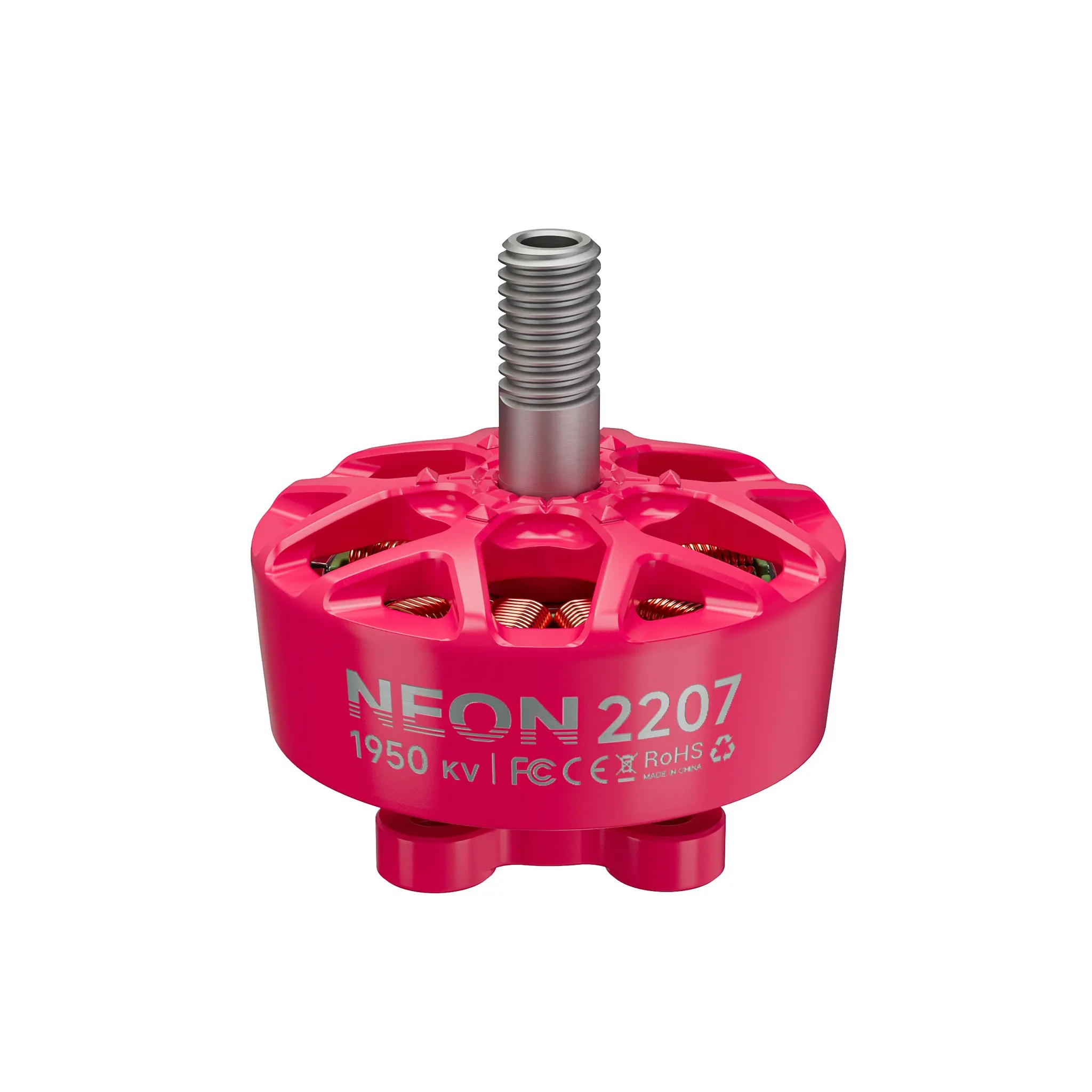
The MEPS NEON 2207 V2 takes a different approach. It is positioned as a performance/value freestyle motor with an aluminum integrated bell, optimized electromagnetic winding, reinforced construction and improved cooling. It is available in 1950KV, 2050KV and 2550KV versions, allowing pilots to use either 6S‑oriented or 4S‑oriented setups. MEPS testing lists the NEON 2207 V2 at approximately 1722g maximum thrust, 1047W maximum power and 43.4A peak current in its published test configuration.
The MEPS SZ2207 V2 is more clearly focused on racing. Its 1950KV version is rated for 6S and has a 35g weight, 5mm shaft, 64mΩ internal resistance and a published maximum power of 1024.7W. MEPS testing with the SZ4942 propeller shows approximately 1480g thrust at full throttle in that test configuration.
Therefore, there is no single winner.
Choose GTS V4 if reducing motor weight and maximizing power‑to‑weight performance are your priorities.
Choose NEON 2207 V2 if you want a more freestyle‑oriented motor with strong crash resistance, multiple KV choices and a value‑focused design.
Choose SZ2207 V2 if your priority is racing‑oriented throttle response, stable thrust and a conventional 5mm shaft.
GTS V4 1960KV vs 2040KV: Which KV Is Better?
The difference between 1960KV and 2040KV is relatively small, but it is still meaningful when selecting a 6S propulsion system.
At the same voltage, the 2040KV motor theoretically targets a higher unloaded RPM than the 1960KV version. The trade‑off is that the higher‑KV motor can demand more current when paired with the same propeller.
RCINPOWER specifies:
1960KV: 58mΩ internal resistance, up to 1200W continuous power at 5S, maximum current listed at 50.2A.
2040KV: 56mΩ internal resistance, up to 1300W continuous power at 5S, maximum current listed at 54A.
For a typical 5‑inch 6S build:
Choose 1960KV when:
● You prefer smoother throttle control.
● Efficiency is important.
● The quad is relatively heavy.
● You use higher‑pitch or heavier propellers.
● You want a balanced freestyle setup.
Choose 2040KV when:
● You want stronger acceleration.
● You fly aggressively.
● Racing response is important.
● The build is relatively lightweight.
● Your ESC has enough current headroom.
The 2040KV version is not automatically “better.” The higher KV only becomes an advantage when the rest of the propulsion system can use the additional RPM without excessive current draw and heat.
6S Battery and Propeller Selection
For the GTS V4 1960KV and 2040KV, 6S is the natural starting point because RCINPOWER specifies both versions for 5–6S LiPo systems.
For a normal 5‑inch freestyle build, a moderate‑pitch tri‑blade propeller is a good starting point. If you use an aggressive high‑pitch propeller, motor current can rise substantially, particularly with the 2040KV version.
A useful setup logic is:
1960KV + 6S + moderate‑pitch 5" prop = balanced freestyle
2040KV + 6S + lightweight/moderate‑pitch 5" prop = aggressive freestyle/racing
If the quad is already heavy because of a large battery, HD video system or reinforced frame, the 1960KV version can make more sense. If the aircraft is built around a lightweight racing frame, the 2040KV version can take better advantage of the lower overall mass.
Always check motor current against the ESC rating. A motor capable of more than 50A peak current should not automatically be paired with a low‑rated ESC simply because the average flight current is lower.
Application Scenarios
5‑Inch FPV Racing
The GTS V4 2040KV is particularly attractive for racing‑oriented builds where acceleration and low motor weight matter. The hollow shaft and 29.9g motor weight help reduce the mass of the propulsion system.
For pilots who want a more conservative racing setup, 1960KV can provide a smoother response while maintaining strong 6S performance.
5‑Inch Freestyle
For freestyle, the 1960KV version is an excellent balanced choice. It provides enough power for punch‑outs and recovery while giving the pilot more control over throttle response.
The 2040KV version is better for pilots who want a more aggressive freestyle setup and do not mind increased power consumption.
Lightweight 5‑Inch Builds
This is where the GTS V4 has one of its clearest advantages. At approximately 29.9g, it is lighter than the 35g SZ2207 V2. A four‑motor setup therefore has approximately 20g less motor weight before accounting for other differences.
On a lightweight 5‑inch quad, reducing motor mass can improve the overall power‑to‑weight ratio and make rapid direction changes feel more responsive.
Installation and Compatibility
The GTS V4 2207 uses a standard 2207‑class motor mounting arrangement and a 4mm hollow shaft. The motor body is approximately 27.3×30.3mm and uses a 22×7mm stator.
Before installation, check the following:
● Frame compatibility: Confirm that the frame supports the motor's mounting pattern and provides sufficient clearance around the 27.3mm motor body.
● Screw length: Do not use excessively long screws. Screws that extend too far into a brushless motor can contact the stator or windings and cause permanent damage.
● Propeller mounting: The GTS V4 uses a 4mm hollow shaft, so verify that the propeller mounting hardware is compatible with the shaft and supplied motor hardware.
● ESC rating: The 2040KV version is specified for up to 54A maximum current, so choose an ESC with sufficient current headroom for your selected battery and propeller.
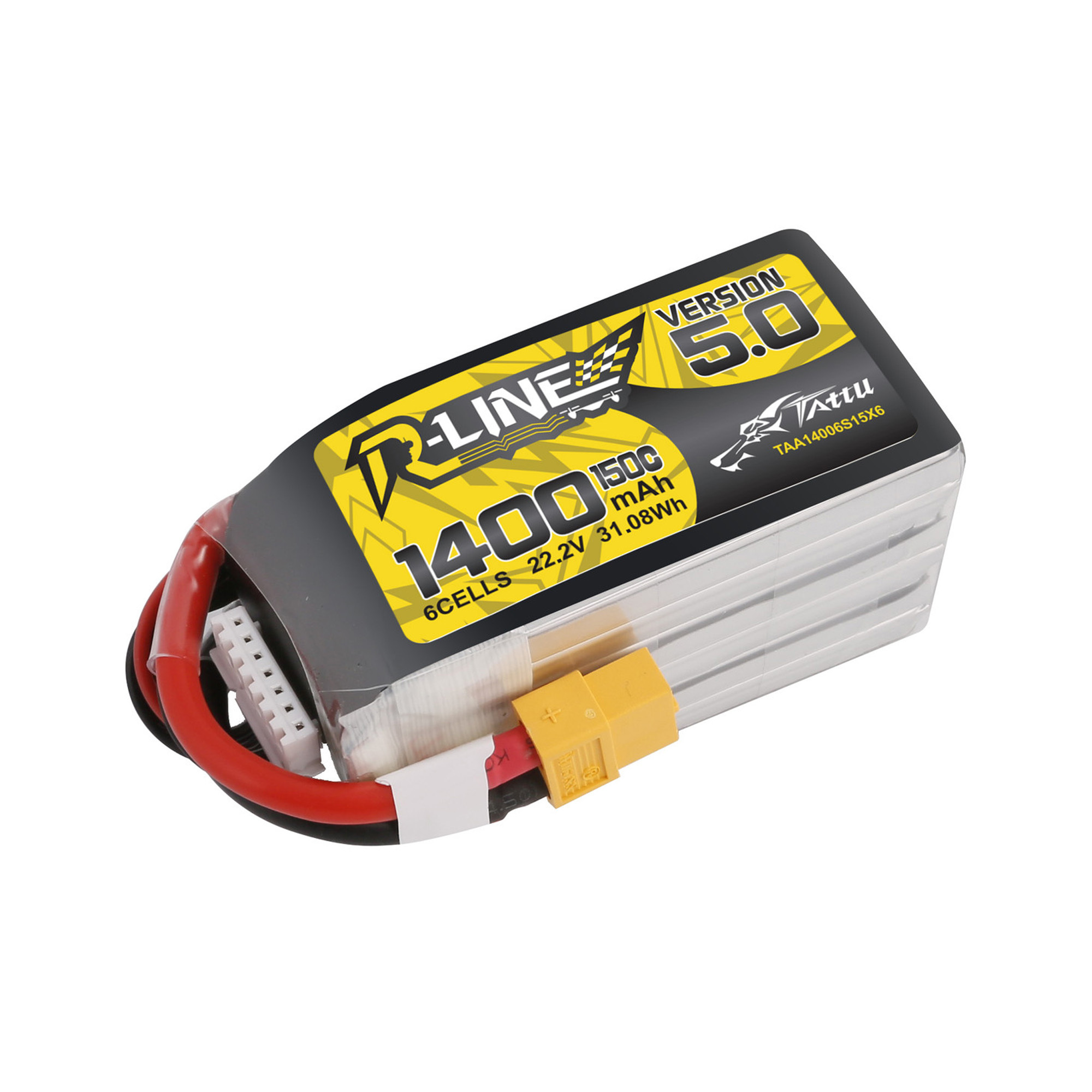
● Battery: Both versions are specified for 5–6S LiPo. Do not select battery voltage based on KV alone; the ESC, motor, propeller and FC power system must all support the selected voltage.
Which 2207 Motor Should You Buy?
If you are choosing between these three motors for a 5‑inch build, the decision can be simplified:
Buy the RCINPOWER GTS V4 2207 if: You want the lightest motor of the three, high power capability, a hollow shaft and a performance‑oriented 6S setup.
Buy the MEPS NEON 2207 V2 if: You primarily fly freestyle, want a crash‑resistant motor and value multiple KV options and strong price‑to‑performance.
Buy the MEPS SZ2207 V2 if: You are building a racing‑oriented 5‑inch quad and prefer a conventional 5mm shaft, stable thrust characteristics and a durable motor designed around racing use.
For most lightweight 6S performance builds, the GTS V4 2040KV is the aggressive choice. For balanced freestyle, the GTS V4 1960KV is easier to recommend.
The key difference is therefore not simply thrust. The GTS V4's strongest selling point is its 29.9g lightweight construction combined with high 5S–6S power capability, while NEON 2207 V2 emphasizes freestyle durability and value, and SZ2207 V2 focuses more directly on racing performance and stable high‑load operation.




 MEPS NEONCORE 60A 4-In-1 FPV ESC-30.5x30.5mmNEON 60A ESC$63.04 Save $1.95
 MEPS SZ4942 3-Blade Propeller for 5 inch FPV LightweightClear Grey / 8pcs$4.51 Save $0.39
 CNHL Black Series V2 1300mAh 6S 130C LiPo Battery XT60 for FPV6S1P 1300mAh XT60$30.71 Save $1.28