
If you’re serious about drone racing, motors are not just another part of your build — they are the heart of your entire racing setup. The difference between average lap times and winning heat after heat often comes down to your choice of FPV racing drone motors.
FPV racing drone motors must deliver explosive torque through tight gates, maintain high RPM on long straightaways, and respond instantly to Betaflight PID commands. This is precisely why experienced racers focus on racing drone motors that excel in torque output, lightweight construction, and high KV performance.
In this guide, I’ll recommend three racing motors suitable for pilots from beginners to experts. I’ll also walk you through what actually makes the best FPV racing motors, how experienced pilots choose racing drone motors, and what technical details truly matter when you’re pushing your quad at race pace.
This isn’t a spec-sheet summary. This is how racers really choose motors.
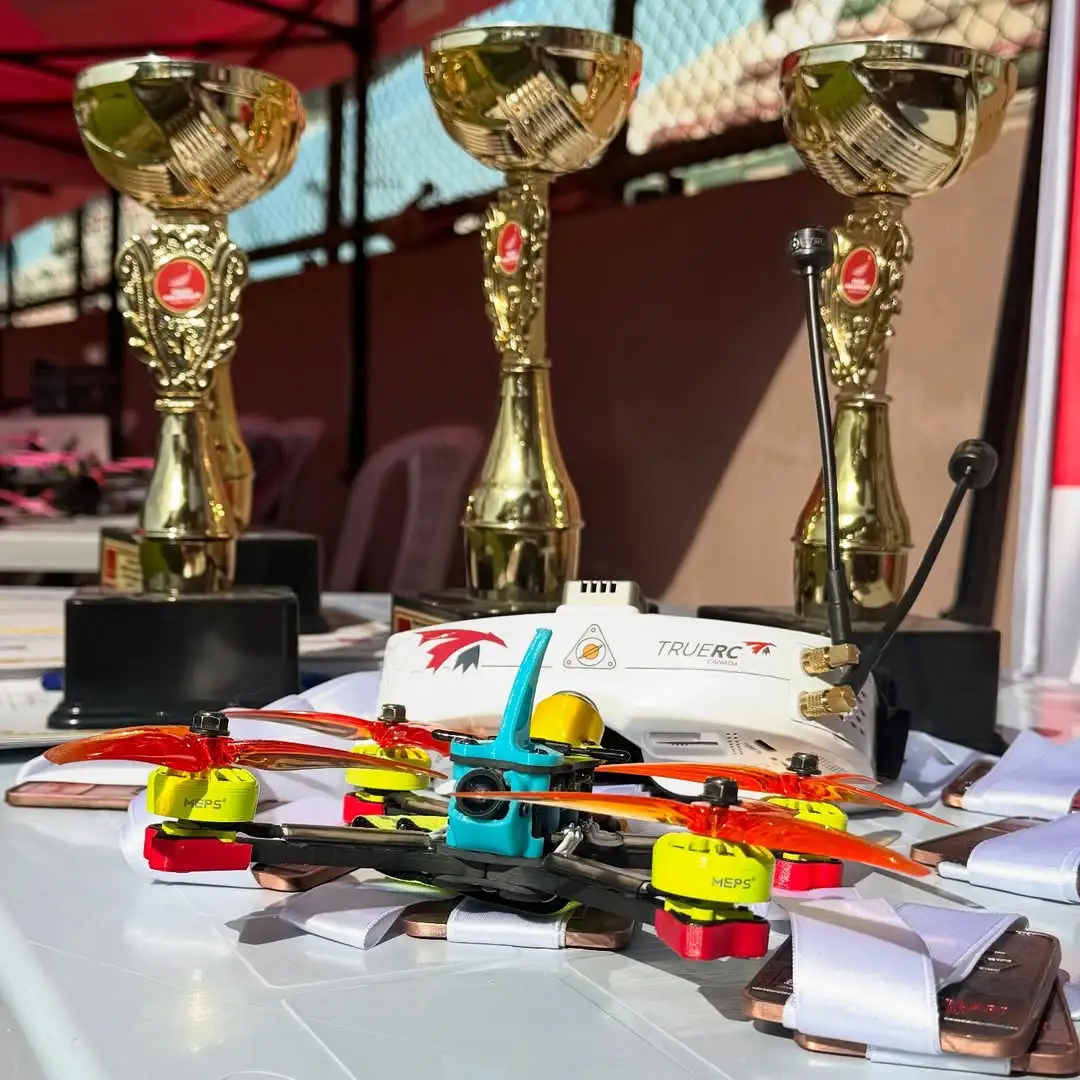
Best FPV Racing Motors by Skill Level
Instead of listing random brand models, it makes more sense to categorize racing drone motors by pilot level.
Click here to see the collection of FPV Motors.
Best Budget FPV Racing Motors (Beginner Racers)
Ideal for pilots entering local races:
- Affordable to replace
- Good throttle response
- Moderate durability
- Slightly heavier bells
Perfect for learning gate discipline and racing lines without destroying expensive hardware.
MEPS SZ2207 V2 Motor
As a drone racing enthusiast, the MEPS SZ2207 V2 perfectly caters to pilots seeking powerful performance without spending big money. It fits perfectly in the category of best budget FPV racing motors for beginner and intermediate racers. Only $12.9.
Feather:
- Responsive throttle: Doesn’t feel lazy off the gate — great for tight courses and exits.
- Balanced torque: Smooth power throughout the throttle range, which helps in race scenarios.
- Good heat behavior: Doesn’t get too hot in typical 5″ race setups when matched with decent ESCs and props.

On the track, these motors feel:
- Predictable — great for building confidence
- Not overly aggressive — easier to control than some high-KV racing motors
- Strong enough — lots of pickup without making tuning complicated
For drone racing beginners looking to upgrade from entry-level motors, the MEPS SZ2207 V2 is one of the best budget FPV racing motors on the market. Delivering outstanding speed, smooth throttle response, and authentic track performance, it is the ideal choice for racing enthusiasts seeking reliable power and control.
Best Mid-Range Racing Drone Motors (Club Racers)
For pilots racing weekly:
- Better heat resistance
- Lighter rotating mass
- Cleaner throttle
- Improved efficiency on 6S
This is the sweet spot for most competitive pilots.
T-HOBBY F60PRO V 2207.5 Racing Drone Motors
From the perspective of a drone racer, if you seek speed, responsive throttle control, and stable performance on the track, the T-HOBBY F60PRO V 2207.5 is undoubtedly a reliable choice.
Key Features
- 2207.5 stator: A proven size for 5″ racing quads
- High-performance design: Built for racing, not cinematic flying
- Strong magnets & smooth bearings: Helps with clean power delivery
- Multiple KV options: Easy to match with 4S or 6S race setups

The first thing you notice is how quickly the quad responds when you punch the throttle. When you’re coming out of a gate or onto a straight, this motor gives you zero hesitation — very important in a split-second race situation.
In the air, the F60Pro V feels snappy and responsive. Throttle response is instant, which really helps when:
- Exiting tight corners
- Accelerating out of the gates
- Pushing hard on straights
Power delivery stays smooth at high RPM, so the quad feels predictable even when you’re flying aggressively.
If you’re seeking top-tier FPV racing drone motors, the T-Hobby F60PRO V is a wise choice. Its design philosophy prioritizes extreme racing performance over durability, precisely what professional racers crave.
Best Pro-Level FPV Racing Motors
Built for:
- National-level events
- Back-to-back finals
- Extreme thermal stress
- Ultra-high RPM stability
These motors deliver maximum performance, but they demand perfect builds and setup discipline.
FIVE33 2207 CHAMPS EDITION
The design philosophy behind the FIVE33 2207 Champion Edition motor is clear: pure pursuit of speed. With a 2070KV rating, this motor is crafted for pilots who have already pushed the limits and crave that extra performance edge on high-speed tracks.
Feather:
- High 2070KV output: Noticeably faster than the standard 1960KV version
- 2207 stator: Ideal balance of torque and RPM for 5″ racing
- Designed for wide-open tracks: Long straights and high top-end speed
The FIVE33 2207 Champion Edition delivers explosive throttle response with a powerful punch. Acceleration bursts instantly, and the motors maintain strong traction even at high RPMs. On large racecourses, this characteristic provides a significant advantage when sustaining full throttle for extended periods.
Compared to low-KV racing drone motors, the Champion Edition motors may seem less forgiving, but they offer more direct control and precise feedback—a trait that will appeal to seasoned drone racing pilots.
One smart advantage of the Champs Edition is flexibility:
- You can limit motor output in Betaflight for tighter, technical tracks
- Then unlock full power for fast, open courses with long straights
You can’t turn a low-KV motor into a high-KV one—but with this motor, you can do both.
What Makes FPV Racing Drone Motors Different From Freestyle Motors?
The short answer: racing motors are built for speed and response, not comfort. While freestyle pilots care about smoothness and cinematic throttle, FPV racing drone motors are tuned for:
- Explosive acceleration out of corners
- Instant throttle response
- High sustained RPM under load
- Minimal rotating mass
- Heat resistance in multi-heat races
Freestyle motors forgive mistakes. Racing drone motors expose every one of them.
In drone racing, you’re constantly transitioning from zero to full throttle, slamming gates, and pushing motors beyond what most freestyle pilots ever experience. That’s why racing motors feel “nervous” compared to smooth freestyle motors — and that’s exactly what you want on track.
5 Inch Racing Drone Motors Configuration
Motor Sizes: 2205, 2206, 2207, 2208, 2306, 2308
Optimal KV Range:
- 4S: 2,500-3,000 KV for racing applications
- 6S: 1,900-2,300 KV for racing applications
Stator Dimensions: 22-23mm diameter, 5-8mm height
Motor Weight: 25-35g typical (2207: 28-32g, 2306: 30-35g)
Mounting Pattern: 16mm x 16mm or 16mm x 19mm (M3 screws). Note: Both patterns are supported by modern 5″ frames
Pole Configuration: 12-14 poles (6-7 pairs) common for racing
Recommended Propellers: 5″ (127mm) tri-blade for racing
Total Build Weight: 250-300g dry weight
Battery Configuration: 4S 1300-1500mAh, 6S 1000-1300mAh LiPo
How Do Racers Choose the Best FPV Racing Motors?
Choosing the best FPV racing motors differs significantly from choosing motors for freestyle or cinematic flying. In the world of drone racing, pilots prioritize instant acceleration, rapid throttle response, lightweight construction, and durability robust enough to withstand race crashes.
The following four factors truly define the quality of high-performance racing drone motors:
Raw Speed & Acceleration
In drone racing, efficiency is secondary. What matters most is instantaneous thrust delivery.
Racing is a constant cycle of:
- Hard braking into gates
- Explosive punch-outs on exit
- Full-throttle sprints between obstacles
At no point are you cruising for efficiency. This is why racing drone motors are engineered to prioritize burst power over endurance efficiency.
Why Racing Focuses on Instant Thrust Instead of Efficiency?
High-efficiency motors aim for smooth power delivery and extended flight endurance. Racing motors, however, pursue:
- Rapid peak RPM attainment
- Maximum torque output within milliseconds of throttle input
- Explosive acceleration even under heavy prop load
This is exactly what gives elite pilots the ability to gap rivals out of corners.
14-Pole vs. 12-Pole: Magnetic Circuit Structure and Response Characteristics
12-Pole Motors:
- Faster circuit switching speed
- More aggressive throttle response
- Higher maximum RPM potential
14-pole motor:
- Smoother power delivery
- Slightly superior efficiency compared to 12-pole
- Greater operational tolerance at mid-throttle
Top-tier FPV racing motors predominantly adopt 12-pole designs for a simple reason: they respond more instantly to minute throttle inputs, directly translating to sharper cornering control and faster lap times.
Throttle Response
Fast throttle response is critical in drone racing.
Modern Betaflight setups run:
- High loop rates
- High PID frequencies
- Very aggressive throttle inputs
If the motor reacts slowly, the quad feels loose and inconsistent. High-quality racing drone motors respond instantly, which gives:
- Cleaner corner exits
- Better gate control
- More consistent lap times
High KV motors dominate racing because they:
- Spin faster
- Deliver sharper throttle feel
- Provide stronger acceleration on straights
Typical setups:
- 4S racing: 2500–3000KV
- 6S racing: 1900–2300KV
Weight Matters in Drone Racing
In racing, every gram counts.
Even a 1g difference per motor affects:
- Acceleration
- Direction changes
- Battery voltage sag
- Overall agility
That’s why the best FPV racing motors use:
- Lightweight aluminum bells
- Hollow steel or titanium shafts
- Optimized internal structures
Lighter motors = faster response, quicker transitions, and better race performance.
Durability vs Pure Performance
Here’s the reality of FPV racing drone motors: Racing pilots often sacrifice motor lifespan for peak performance.
Racing motors run:
- Extremely high RPM
- High current
- High temperatures
This pushes components to their limits. Bearing wear accelerates, and shaft loads multiply—yet competitive pilots willingly pay this price for faster lap times.
Shaft material matters:
- Standard steel: strong but can bend
- Hardened steel: better impact resistance
- Titanium: strongest and lightest, but expensive
True racing drone motors balance:
- Raw power
- Low weight
- Just enough strength to survive race crashes
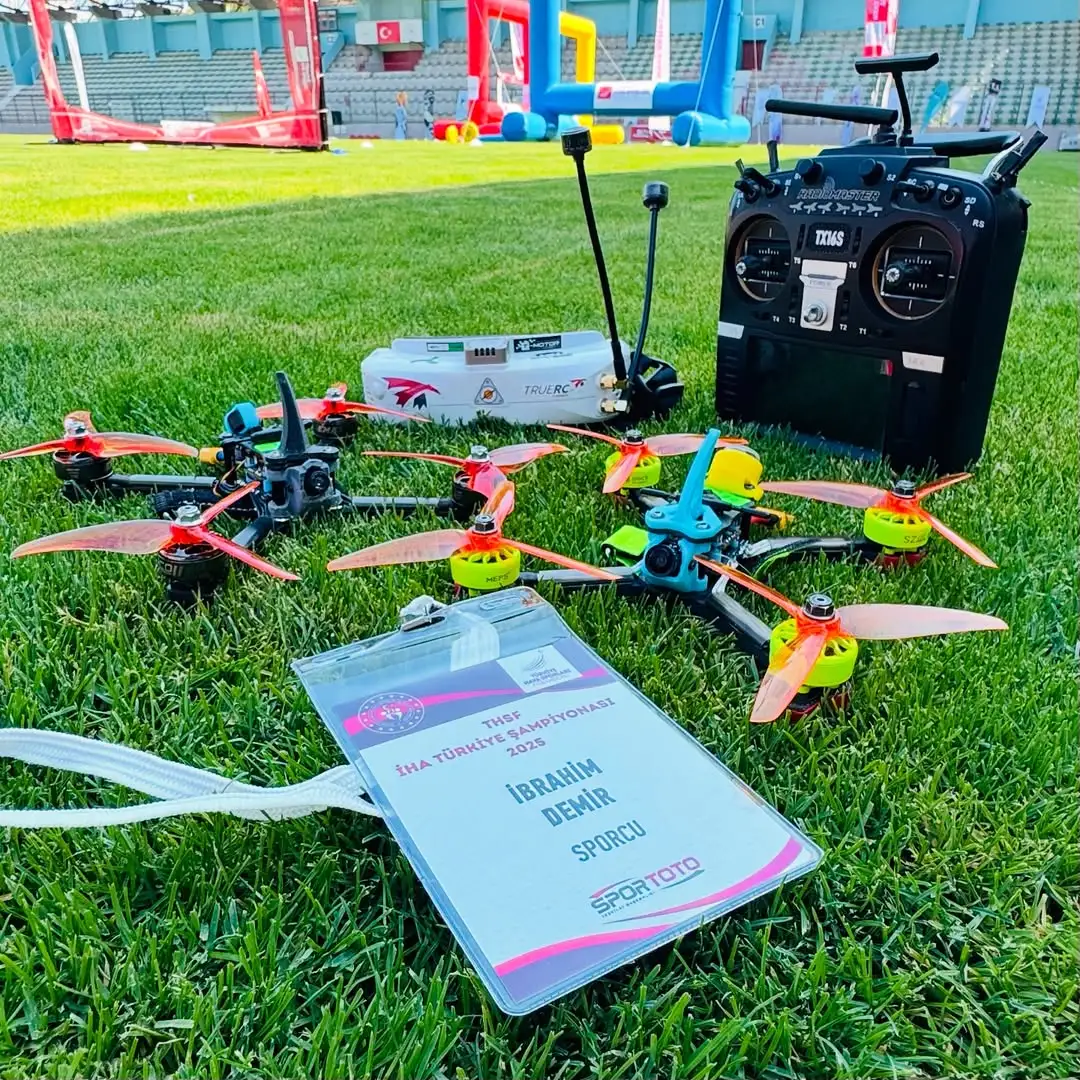
Motor Size & KV for Racing Drones
Motor size and KV determine the personality of your racing quad.
Common FPV Racing Motor Sizes
| Motor Size | Typical Use |
| 2205 | Lightweight 5” race builds |
| 2206 | Balanced race setups |
| 2207 | High-power technical tracks |
| 2306 | Professional-level racing |
Most modern FPV racing drone motors fall into the 2207 and 2306 motors because they provide the best balance of torque, RPM, and durability.
KV Selection for Racing Drone Motors
- 4S Racing Builds: 2500–3000KV
- 6S Racing Builds: 1700–2300KV
Higher KV gives you:
- Faster top-end RPM
- More aggressive throttle
- Higher ESC and battery stress
Lower KV offers:
- Better efficiency
- Smoother throttle control
- Less heat buildup
For most modern drone racing, 6S with 1750–1950KV racing drone motors is the current competitive standard.
Check the blog to learn more about choosing FPV motor: How to Choose FPV Drone Motor A Detailed Guide
Internal Motor Technology That Separates the Best from the Rest
Top-tier best FPV racing motors share several key engineering traits:
- N52H or N54 Arc Magnets – Higher magnetic strength = faster response
- Titanium or Hardened Hollow Steel Shafts – Strong and lightweight
- High-Temperature Copper Windings – Prevent power drop in long heats
- Japanese High-Speed Bearings – Stable RPM under extreme loads
- Precision Balanced Bells – Reduced vibration at high RPM
These aren’t marketing buzzwords. These details directly affect how your quad feels at full throttle and whether your motors survive an entire race season.
Propeller, ESC & Battery Matching for Racing Motors
| Component | Race-Proven Choice |
| Motors | High-performance FPV racing drone motors (2207 / 2306 racing type) |
| ESC | 55A–65A 4-in-1 (low resistance) |
| Propellers | 5″ low–mid pitch (track dependent) |
| Battery | 6S 1000–1300mAh, 110C+ |
| Goal | Fast throttle response, minimal voltage sag |
Racing on Tight & Technical Tracks (Indoor / Multi-Gate)
Focus: Control, recovery speed
- Motors: Racing-tuned FPV racing drone motors
- ESC: 55A
- Props: Low pitch
- Battery: 6S 1000–1100mAh
✔ Smooth throttle
✔ Faster gate recovery
✔ Lower heat buildup
Racing on Medium Flow Tracks (Most Race Events)
Focus: Balance of speed and control
- Motors: Standard racing drone motors
- ESC: 55A–60A
- Props: Mid pitch
- Battery: 6S 1100–1300mAh
✔ Consistent lap times
✔ Strong punch-outs
✔ Stable voltage
Racing on High-Speed Open Tracks
Focus: Top-end speed
- Motors: High-output best FPV racing motors
- ESC: 60A–65A
- Props: Mid–high pitch
- Battery: 6S 1300mAh (high discharge only)
✔ Strong straight-line speed
✔ Acceptable heat levels
⚠ Requires good cooling and tuning
FAQs
What are some common mistakes when choosing FPV Racing Motor?
Many pilots slow themselves down without realizing it:
- Using freestyle motors for racing
- Running too high KV on undersized ESCs
- Ignoring motor temperatures between heats
- Choosing heavy steel-shaft motors for tight tracks
- Over-propping high-KV racing motors
Every one of these mistakes costs consistency — and consistency wins races.