
Choosing the appropriate charger is very important to ensure effective and safe flying of FPV (First Person View) drones. A suitable charger not only enhances battery life but also makes them readily available for use whenever needed. In this article, we will discuss the types of FPV batteries, how to choose the right one, power considerations, and when you can charge multiple batteries.
What FPV Charger Do You Actually Need?
Before choosing a charger, you should first understand your flying style and battery setup. Different FPV pilots have different charging requirements.
| FPV Pilot Type | Recommended Charger |
|---|---|
| Tinywhoop pilot | Compact 1S/2S charger |
| Beginner 5-inch pilot | 4S/6S LiPo charger |
| Freestyle pilot | 100W+ smart charger |
| Racing pilot | Fast dual-channel charger |
| Professional pilot | High-power multi-battery charging setup |
For most 5-inch FPV drones, a charger that supports 1S-6S LiPo/LiHV batteries with 100W+ output is the most practical choice because it allows future upgrades.
A beginner may start with a 4S battery, but many modern 5-inch freestyle and racing builds use 6S batteries, so choosing a charger with enough voltage and power headroom is a better long-term investment.
Understanding FPV Battery Types and Charging Requirements
It is paramount to know what kind of battery will be used in charging when selecting the charger for an FPV drone. This helps in determining which would be the best battery charger for that. Generally, there are two types of FPV drone batteries: LiPo (Lithium Polymer) and Li-ion (Lithium Ion). Each of these types possesses unique characteristics that affect the choice of a charger. If you want more information about FPV batteries, you can check this article.
👉 Explore the collection of FPV Charger on MEPSKING.
LiPo Batteries
LiPo batteries are the standard choice for freestyle, racing, and cinematic FPV drones.
- These are usually found in most FPV drones due to their high discharge rate (C-rate), which in turn makes them suitable for high-power performance applications or instances.
- They take up less space, thus making them lightweight so as to enable supplying large amounts of current within a short duration required by such powered-by gliders during acceleration time.
- Lithium polymer requires proper management during charging since they are too vulnerable to over-charging and excessive heat.
Charging requirements:
- Must be balanced charged
- Typical charge voltage: 4.20V per cell
- Storage voltage: ~3.80V per cell
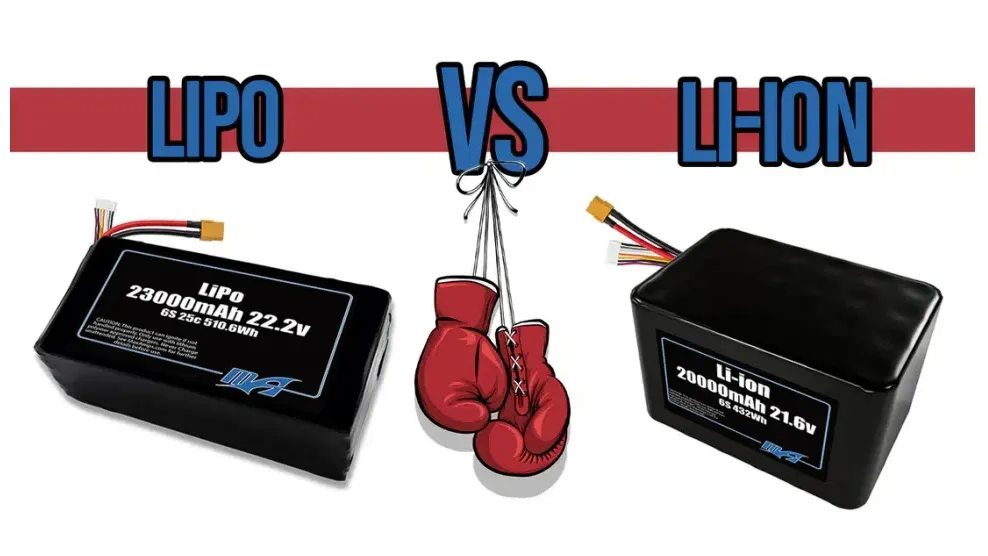
Li-ion Batteries
Li-ion packs are popular in long-range and endurance FPV builds since they can store a lot of energy and release it gradually over time.
- Li-ion batteries weigh more and have lower discharge rates (C-rate), leading to them being more appropriate for less power-consuming applications.
- You can use various chargers with Li-ion batteries, thus making them convenient to handle.
Charging requirements:
- Lower charge current than LiPo
- Charger must support Li-ion chemistry mode
- Often charged at 0.5C–1C
Other Battery Types (LiFe, NiMH, NiCd)
Although less common in FPV drones, some pilots still use LiFe or NiMH batteries for transmitters or accessories. A multi-chemistry charger provides flexibility and reduces the need for multiple devices.
Key Considerations in Choosing a Charger
Battery Type Compatibility
First things first, your charger has to work with both LiPo and Li-ion batteries. The best modern chargers also come equipped with settings for various types of cells, including LiFe or even NiMH, which can be very helpful if you have different kinds of batteries.
Number of Cells (S)
For instance, FPV drones may use a battery with a variety of cells, usually ranging from 2S to 6S (where S stands for “series”, referring to serially linked cells). The charger must support this cell count in your power source.
Most FPV drones use:
- 2S–3S (whoops, micro drones)
- 4S–6S (freestyle and racing)
Your charger must support the maximum cell count you plan to fly; future upgrades may require replacing it.
Charging Current, Power, and C-Rate Explained
Another important factor is the charging current. In general, the recommended rate for charging LiPo Batteries is 1C, where C represents the capacity of the battery expressed in Ah (ampere-hours).
Thus, charging a battery with a capacity of 1500mAh (1.5Ah) should take place at 1.5A current flow across its terminals.
The device allows charging at higher currents than those approved by the manufacturer’s specifications, but doing so may damage it; hence, there’s a need to check battery pack conditions before doing so.
Higher-power chargers allow:
- Parallel charging setups
- Faster charging
- Charging multiple batteries
Cell Balancing
When cell balancing occurs within one battery pack, all its respective cells possess equal charge levels, preventing cell overcharging or individual cell deep discharges. For optimal performance, a good charger should have an internal expedite mechanism
Safety Features
A proper FPV charger should include:
- Over-charge protection
- Short-circuit protection
- Temperature monitoring
- Time limits
- Storage and discharge modes
These features protect both your batteries and your home.
Display and User Interface
A transparent display elucidating important details like voltage, current, charged capacity, and charging time is valuable. A good user interface is an important factor in simplifying its use for those who are not familiar with it.
Portability and Power Supply
Think about whether you want a portable charger that can also be powered by an external source like a car battery, or do you want it plugged into your house’s mains supply instead?
Charger Power
Among the factors that must be kept in mind when selecting a charger for FPV drones is the charger’s power. The charger’s wattage (W) determines how fast batteries can be charged.
– High-Power Chargers: such chargers can charge batteries at incredible speeds, and this is important, especially if you want to recharge several batteries within one flight session. A 200W charger can charge numerous batteries concurrently with a high current.
– Low-Power Chargers: their affordability makes them suitable for those who do not require a lot of power for their battery charging needs. They might not be able to support a big capacity or multiple batteries without waiting for long periods.
Charging Multiple Batteries Simultaneously
Charging Multiple Batteries At Once. Many FPV drone pilots own several batteries and prefer charging them all together to save time. In this case, a multi-channel charger or a device with the function of parallel charging becomes compulsory.
– Multi-Channel Chargers: These devices possess multiple independent ports for charging, thus allowing different batteries to be charged concurrently yet separately. This is effective for managing batteries that are at different charging levels or with differing technical specifications.
– Parallel Function Chargers: These types of chargers enable the connection of more than one battery in parallel, thereby making it possible to charge them all at once as if they were one single unit. The advantages of this method include efficiency, but it should also be noted that all batteries must start out with similar voltages so that there will be no balancing issues later on.
Additional Functions and Safety
An excellent FPV drone battery charger should additionally possess various safety and utility characteristics like;
– Cell Balancing: Very vital for LiPo batteries, this feature guarantees that all the cells in the battery have equal voltage; thus avoiding overcharge or excessive discharge scenarios that can damage your battery.
– Overcharge and Short-Circuit Protection: These are features that help safeguard both the charger and batteries from being harmed while charging because of mistakes made during the whole process.
– Storage Mode: Some of these chargers have a setting that charges or discharges the battery to a safe offline level for long-term storage, hence extending its lifespan.
AC Charger vs DC Charger: Which One Should You Choose?
FPV chargers are usually divided into two categories:
AC Charger
AC chargers have a built-in power supply and can connect directly to a wall outlet.
Advantages:
- Easy to use
- No additional power supply required
- Great for beginners
- Perfect for home charging
Disadvantages:
- Usually lower maximum power
DC Charger
DC chargers require an external power supply.
Advantages:
- Higher output power
- Better for advanced pilots
- Suitable for parallel charging
Disadvantages:
- Requires additional equipment
For beginners and casual pilots: An AC charger is usually the easiest choice.
For experienced pilots who charge many batteries every day: A high-power DC charger provides more flexibility.
Single Channel vs Dual Channel FPV Chargers
Another important choice is whether you need single or dual-channel charging.
Single Channel Charger
A single-channel charger can charge one battery at a time.
Advantages:
- Lower price
- Simple operation
- Suitable for beginners
Dual Channel Charger
A dual-channel charger has two independent charging outputs.
Advantages:
- Charge two batteries simultaneously
- Save preparation time
- Better for frequent flying
For pilots who own multiple 4S or 6S packs, a dual-channel charger can significantly reduce waiting time.
Many FPV pilots choose models such as HOTA D6 Pro because dual-channel charging and higher output make it suitable for daily FPV battery management.
Purchase Recommendations
When it comes to buying a charger for LiPo and Li-ion batteries for FPV drones, choosing the right model can make a big difference in terms of performance and safety. Here are some of the best chargers available on the market, each with its own distinctive features:
iCharger 308 Duo: This versatile charger comes equipped with two channels, allowing it to charge up to eight cells at once. It also features advanced settings ideal for professional users who desire more control over their batteries. A high charge current of 30A will meet the demands of large battery packs requiring rapid replenishment within minutes. It is also one of the best-featured devices in terms of internal discharge and data logging. Designed for comfortable operation during long flights, this dual-channel option has been constructed with durable materials enabling repeated use over time.
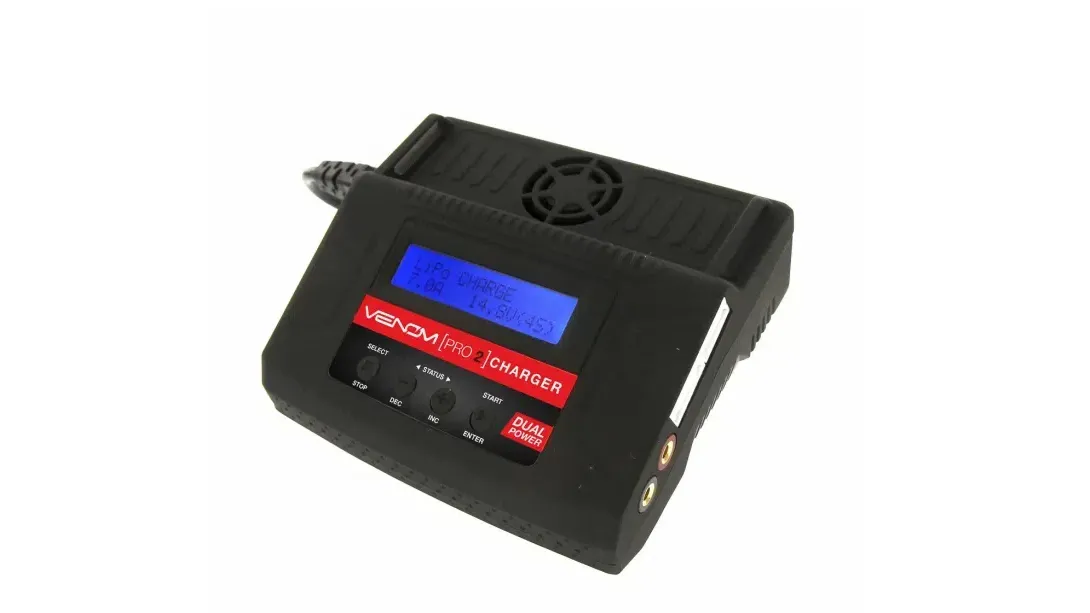
Venom Pro: This is another option that works perfectly with different types of batteries, including LiPos, among others. What sets these chargers apart is their ability to support multiple formats and chemistries, so you might want to consider whether you need something like that or not when choosing a charger. The most common features include an adjustable charge rate, an integrated power supply, and a USB port, which allows users to charge small devices such as phones or tablets when needed. Its battery terminals are compatible with Tamiya connectors, allowing easy attachment even by beginners.
•Hitec X4: Perhaps one can say Hitec X4 should be selected over others because it offers a cost-effective solution compared to Benchtop models, since they don’t charge NiMH but only Li over longer periods, due to which they are not very cheap. The concept behind this charger is unique; it has four charging slots allowing users to power up various batteries simultaneously, thus saving time, especially during extended trips done with multiple planes where there is a lack of sufficient electrical power sources. This product also has an attractive design, which makes it convenient to store and take along when travelling. Additionally, since the packaging is not very bulky, it does not take up much space or weight
•SkyRC B6AC: This is another popular model that has a maximum charging current of 6A yet offers extensive compatibility options for different battery types, such as Lithium (LiPo), Nickel-Cadmium (NiCad), Nickel-Metal Hydride (NIMH), and Lead Acid batteries. It does come with an automatic cell balancing feature, which takes care of all the cells simultaneously.
Frequently Asked Questions (FAQ)
Is fast charging bad for FPV batteries?
Fast charging increases heat and stress. While some batteries support higher C-rates, 1C remains the safest option for long-term use.
Can I use one charger for all my FPV batteries?
Yes, as long as it supports the correct battery chemistry and cell count.
How do I know if my charger is powerful enough?
Calculate total wattage based on battery voltage × charge current × number of batteries.
Conclusion
Several factors determine how to select the best charger for FPV drones; they range from the type of batteries in use, the need for having multiple cell pack chargers, and their power specifications. Getting a quality charger improves drone performance and enhances battery life as well as safety. When given serious thought, it is possible to get a good charger that will suit your FPV flying requirements.