Buying Guide: T-Hobby F411 1S 6A AIO
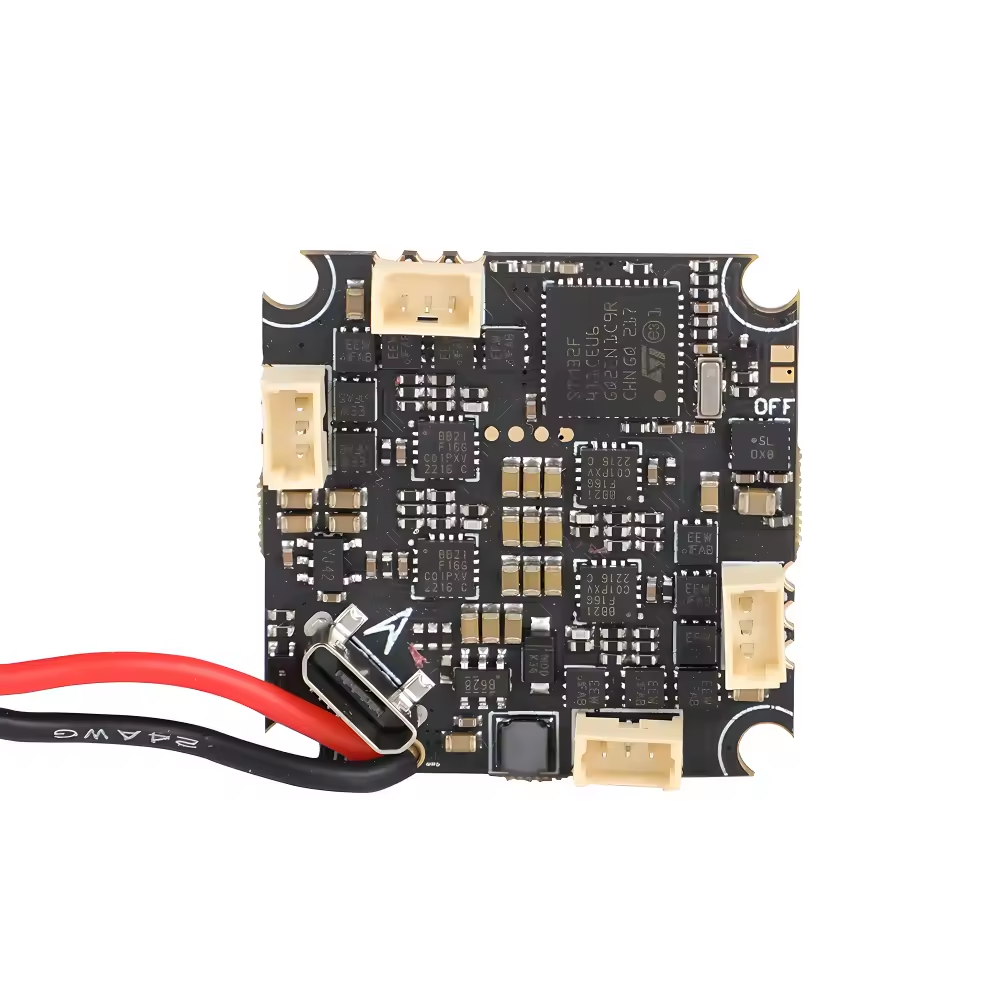
The T-Hobby F411 1S 6A AIO is built for pilots who want a compact analog Tiny Whoop without installing a separate ESC, receiver and video transmitter. It combines an STM32F411 flight controller, BMI270 gyro, 6A Bluejay ESC, SPI ELRS 2.4GHz receiver, 50mW analog VTX and OSD on one 6.7g board. It is a strong buying choice for lightweight 1S indoor builds where simple wiring matters more than maximum ESC current.
MEPSKING Expert Build-Bench Assessment
From the Fractal 65 build, our expert assessment is that the AIO has clean pad labeling, useful plug-in motor connectors and correctly sized soft-mount grommets. Initial power-up was successful, and the Bluejay ESC could be inspected and configured through ESC Configurator. The board is feature-dense and well suited to a clean analog Whoop build.
That particular build did not produce valid flight-test data. Excess paste flux contaminated the small motors, while some propellers contacted the duct supports. Motor behavior improved after cleaning with isopropyl alcohol, showing why these symptoms should not be treated as an AIO failure. Our practical verdict is positive on integration and build quality, but careful soldering, motor condition and propeller clearance determine the final result.
What Changes with the Right Motor, Prop and Battery?
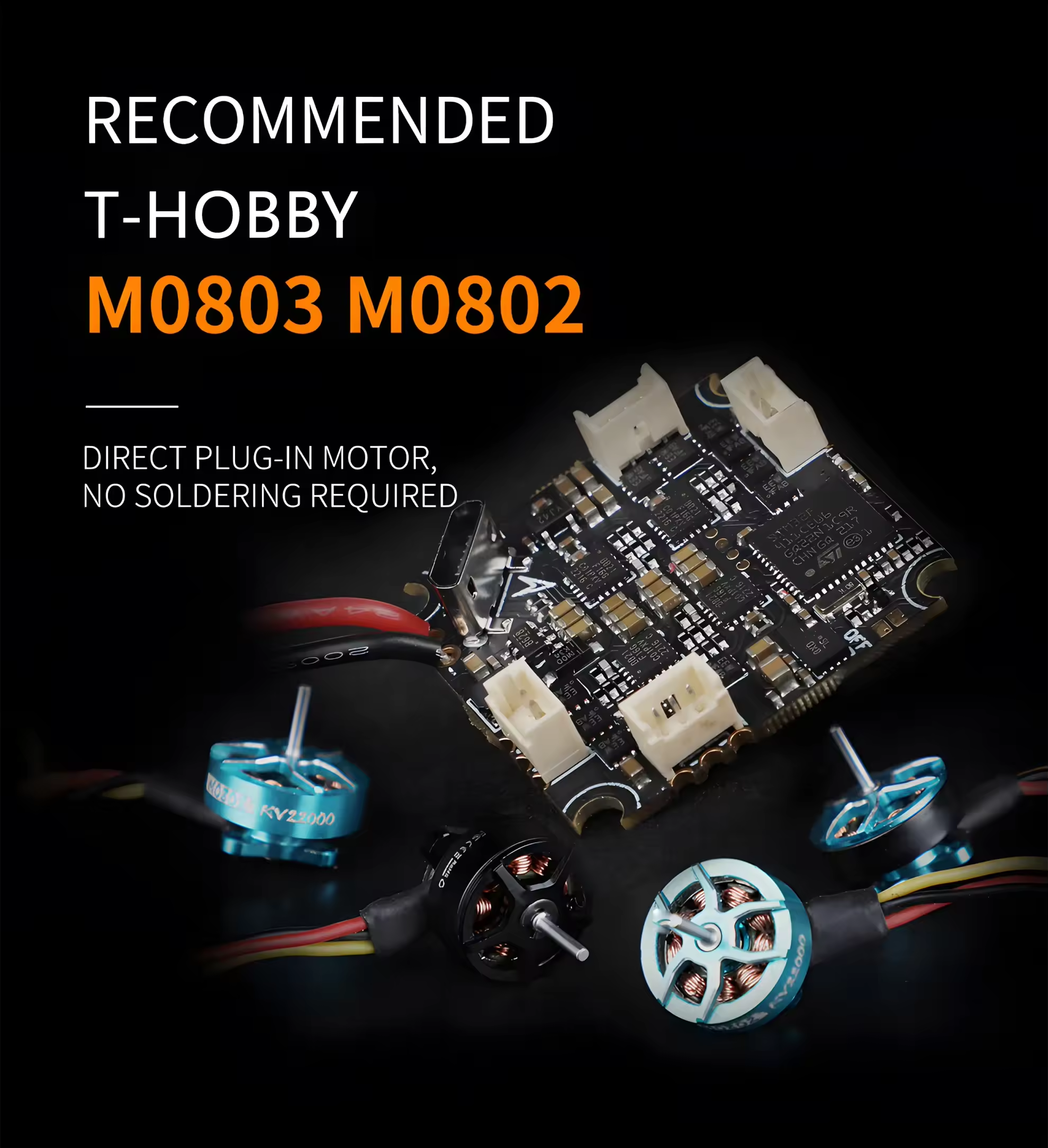
For a responsive 65mm indoor build, pair the AIO with the T-Hobby M0802 II 27000KV motor, lightweight MEPS SZ1218 Tiny Whoop propellers and a 300mAh 1S BT2.0 LiHV battery. This combination prioritizes low weight, fast direction changes and strong indoor throttle response.
For a smoother 65–75mm setup with more low-throttle control, the T-Hobby M0803 II 22000KV motor is the more forgiving option. A larger 450–550mAh 1S battery can extend flight time on a 75mm build, but the extra battery weight will make a 65mm Whoop feel less agile.
T-Hobby F411 AIO vs a Higher-Current 1S AIO
| Comparison | T-Hobby F411 1S 6A | BETAFPV Matrix 1S 4IN1 |
|---|
| Best For | Complete analog 1S build with minimal external parts | Higher-current build with more expansion flexibility |
| ESC Rating | 6A continuous / 7A peak | 12A continuous / 18A peak |
| Radio and Video | SPI ELRS, 50mW analog VTX and OSD onboard | 4IN1 version has OSD but requires external RX and analog VTX |
| MCU / Gyro | STM32F411 / BMI270 | STM32G473 / ICM42688P |
| Buying Decision | Choose for the simplest complete analog Whoop build | Choose Matrix 4IN1 for more ESC headroom |
Installation Checks Before the First Flight
● Use 1S power only and confirm the 25.5 × 25.5mm M2 mounting pattern, 29.5mm board outline, USB access and battery-wire clearance.
● Keep the AIO soft-mounted and prevent components from touching the frame or mounting hardware.
● The camera connection is soldered directly to the CAM, 5V and GND pads; there is no camera plug.
● Save a Betaflight CLI backup before flashing. Because the ELRS receiver is SPI-based, its supported ELRS generation is linked to the installed Betaflight version.
● Do not assume that a working onboard current sensor is available. Use battery voltage and a flight timer, or configure a calibrated virtual-current estimate where supported.
● Test motor startup and direction without propellers, use flux sparingly, clean residue and verify complete propeller clearance before arming.
Who Should Buy It?
Buy the T-Hobby F411 AIO if you are building a 1S analog 65–75mm Whoop and want ELRS, VTX, OSD and ESCs on one board. Choose a higher-current or more expandable AIO if you need 2S support, motors that can exceed 6A per channel, additional UARTs or a video system beyond the integrated 50mW analog VTX.

















 Verified