
What is a Whoop Drone?
A Whoop Drone is a tiny indoor FPV drone designed for safe, precise flying in tight spaces.
In the FPV community, Whoop Drones are often called Tiny Whoops, a term that comes from a US-based brand that originally popularized this style of micro FPV drone. Today, pilots commonly use “Whoop Drone” and “Tiny Whoop” to describe the same category.
A Whoop Drone is a small indoor FPV drone that typically features:
- 65mm or 75mm frame wheelbase
- Protective propeller guards (also called ducts)
- 31–40mm propellers
- 1S or 2S LiPo battery power
- Ultra-lightweight design for controlled indoor flight
Because the propellers are fully enclosed, a Whoop Drone is much safer than open-prop FPV drones, making it ideal for indoor FPV drone flying around people, furniture, and narrow spaces.
Why choose Tiny Whoop Drone?
- Size: Their small size makes them perfect for indoor flying between shelves, beneath desks, and into buildings.
- Efficient: With a small battery that can last up to four minutes of flying, they are efficient.
- Acrobatic Performance: Because of their strength-to-weight ratio, they can perform rolls, flips, and quick climbs.
- Convenience: Because of their sturdy, ducted architecture, they can withstand most knocks from walls.
- Price: Inexpensive to buy and maintain. Even the more expensive bundles offer excellent value.
- Easy to buy: In the field of first person virtual reality, there aren’t many that are available and readily operational.
- Easy to build: Even if all you want to do is fly and not tinker, they are genuinely incredibly entertaining.
Best Tiny Whoop Kit 2026
Best 65mm Tiny Whoops
NewBeeDrone Acrobee65 BLV4
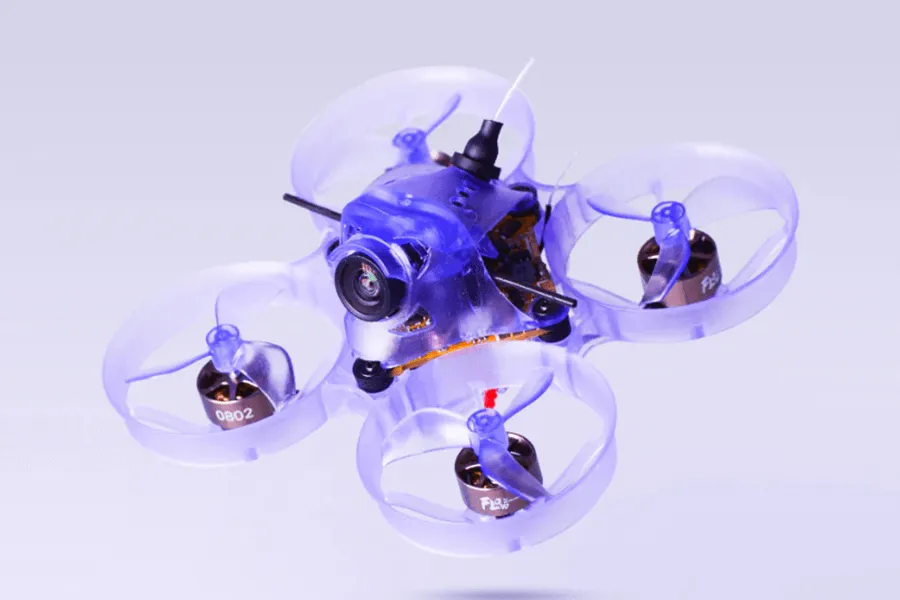
For beginners, NewBeeDrone offers a feature-rich little whoop FPV drone called the AcroBee65 BLV4. This model has an important benefit that originates from the company. The California-based company NewBeeDrone is renowned for providing exceptional customer service, which is crucial for novices. It comes with improvements, including BlueJay ESC, ExpressLRS, and a stronger frame. Its disadvantages include its greater weight and its antiquated PH2.0 battery connector.
Mobula6

The Happymodel Mobula6 is undoubtedly among the greatest pilots I have used for indoor flights. It is a trustworthy partner for exploring indoor areas because of its small size, agility, and control. It offers great value for the money when batteries and accessories are included. With a wheelbase of 65mm and propellers that measure 31mm, the Mobula6 is among the tiniest Tiny Whoops on the market. Although the current version, which is available with ExpressLRS and has an even higher range and overall performance, came with the FrSky D8 protocol initially.
Best 75mm Tiny Whoops
Happymodel Mobula7
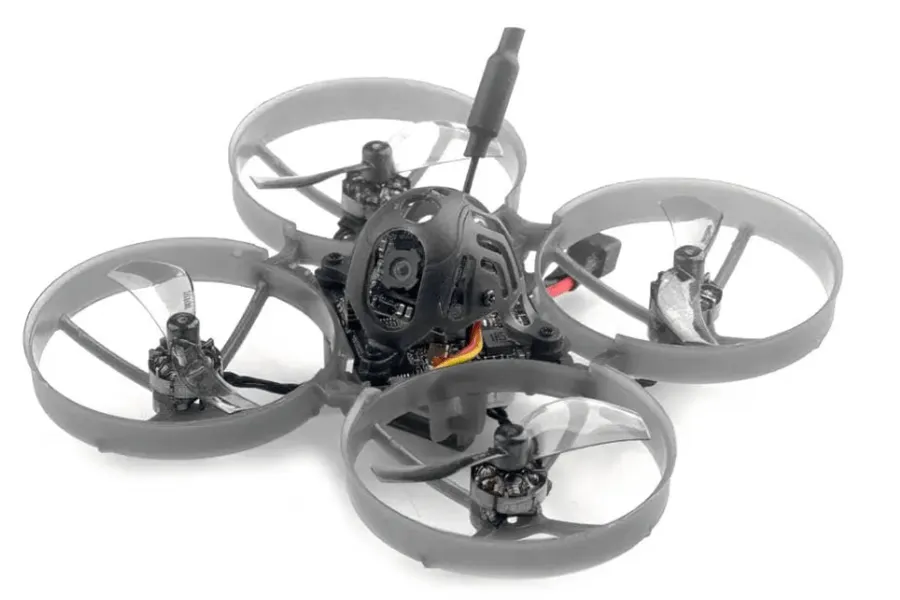
The Mobula7 builds upon the successful features of the Mobula6, increasing the motor spacing from 65mm with 1.2’’ props to 75mm with 1.6’’ props. This improves its power, speed, and run duration, making it a better option for large indoor locations like warehouses, combined with larger motors and batteries. The trade-off is that it loses some of the agility that Whoops are known for, which makes it considerably more difficult to fly in cramped interior areas and gives crashes a lot more velocity.
BATEFPV AIR 75
The BATEFPV AIR 75 is one of the most impressive 1S 75mm Tiny Whoops currently available, especially if you care about weight, efficiency, and real-world flight performance. With an ultra-light 21g dry weight
Powered by 0802 23000KV motors and 40mm bi-blade props, the BATEFPV AIR 75 offers strong punch and fast throttle response without killing flight time. On a 1S 450mAh battery, it consistently delivers 5.5 to 6 minutes of flight
Video performance is another strong point. The onboard camera provides cleaner and sharper image quality than the Mobula7
In flight, the BATEFPV AIR 75 feels fast, nimble, and extremely responsive
Bottom line:
If you’re looking for a high-performance 75mm Tiny Whoop with excellent efficiency, long flight time, and sharp FPV video, the BATEFPV AIR 75 is one of the best choices in its class and offers outstanding value for its price.
Parts Recommendation for Best Tiny Whoops
LiPo Batteries
1S VS 2S Tiny Whoop Batteries
Similar to the motors that were previously explained, one of these has greater power than the other. The battery’s cell count is indicated by the letters 1S and 2S. More power is proportional to more cells. Due to their low power, 1S batteries are slower, quieter, and safer.
For activities like racing and performing stunts, 2S batteries provide additional power. For heavier whoops, 2S batteries are practically necessary to maintain them in the air and supply adequate power.
How to Choose the LiPo Batteries for Tiny Whoops
Because of their tiny size, tiny whoops are perfect for flying inside, past shelves, beneath desks, and other small spaces. They therefore require compact LiPo batteries with significant energy. For greater power and capacity at a lighter weight, the majority of micro whoops use LiHV batteries, which are also compatible with LiPo batteries. LiHV batteries need to be your go-to choice. Your little whoop drone is powered by batteries through a connection. As most micro whoops have a PH2.0 port, make sure the batteries you buy are compatible before making your purchase.
LiPo Batteries Recommendation for 65mm Tiny Whoops
Here I would like to recommend Tattu 1S 300mAh (BT2) and BetaFPV 1S 300mAh (BT2).
LiPo Batteries Recommendation for 75mm Tiny Whoops
Here I would like to recommend Emax 1S 450mAh (PH2) and Tattu 2S 450mAh.
Brushless Tiny Whoop Motor
How to Choose the Motor for Tiny Whoops
Because of their tiny size, tiny whoops are perfect for flying inside, past shelves, beneath desks, and other small spaces. They therefore require compact LiPo batteries with significant energy. High KV motors are definitely capable of being fully utilized by seasoned pilots, but they may be intimidating to novice and intermediate pilots. I would advise starting with at least 26,000 KV motors rather than purchasing low KV motors, and if needed, taming the power with a throttle or motor output limitations.
Motor Recommendation for 65mm Tiny Whoops
MEPS Motor 0802
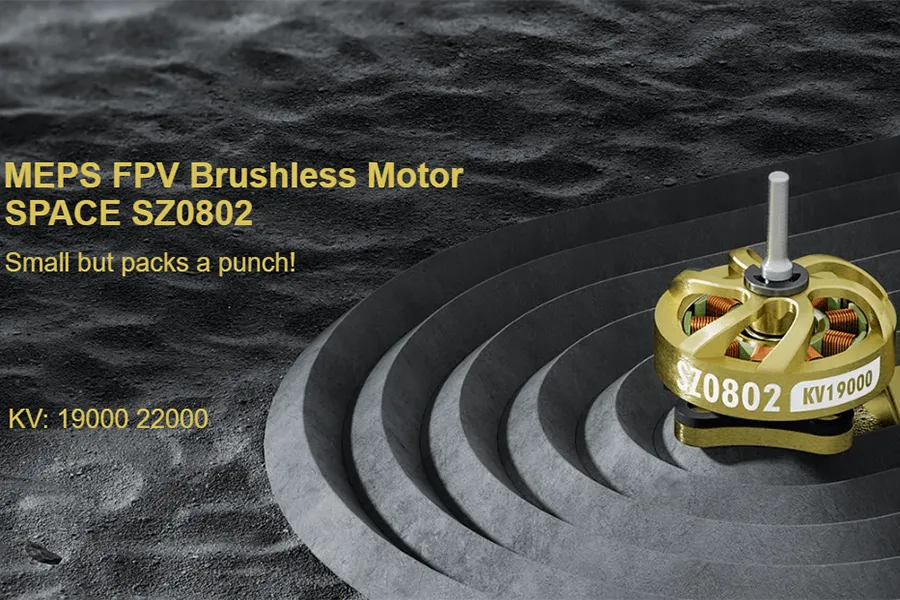

The MEPS 0802 has exceptional power and thrust capabilities, with a flawless dynamic balance design. It employs the Uni-Bell structural design, which offers excellent crash resistance without increasing weight, great dependability, and reasonably priced explosive power and thrust for FPV pilots. A set of washers, a C-clip, and mounting screws are included with every motor. It’s perfect for tiny whoop and delivering high thrust for its size and better overall efficiency that lasts longer and performs more consistently.
T-Motor M0802 Micro Motor
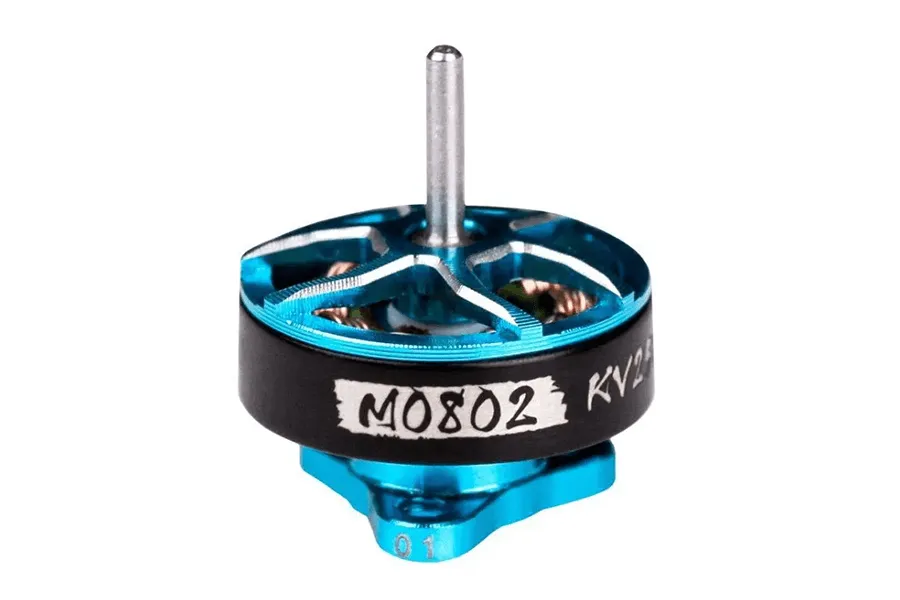
The T-Motor M0802 micro motors are exceptionally well-built. They work well with both 65mm and 75mm 1S. For optimal flexibility, choose the higher 25000KV version since you can always boost power by leaving the motor output at default or decreasing it for longer flight times and efficiency.

Motor Recommendation for 75mm Tiny Whoops
Flywoo ROBO 1002 Motor
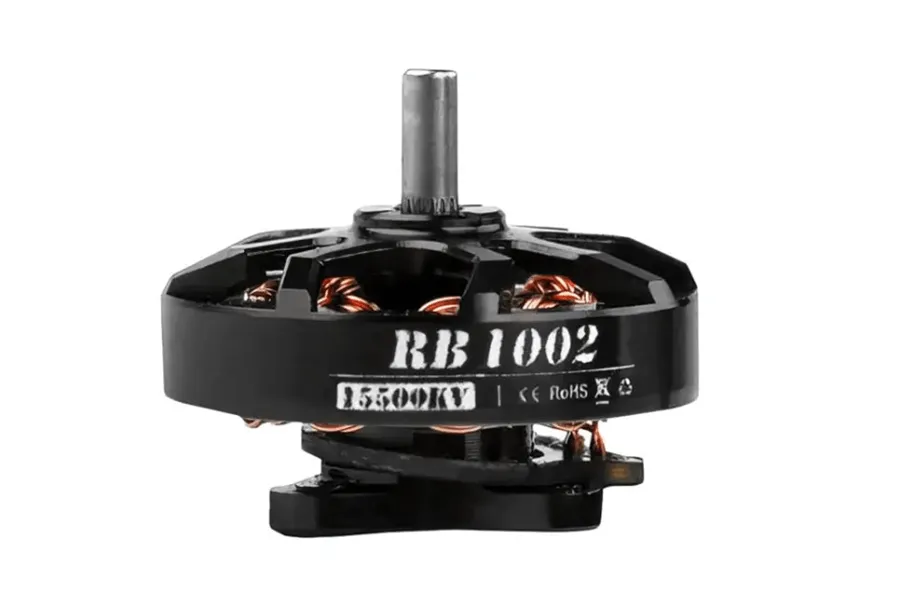
In case you want to construct a 75mm Tiny Whoop, the 1002 motors are an excellent option. Here I would recommend the Flywoo ROBO 1002 Motor, which is a lightweight, smooth, and powerful motor made for 1-2S drones.
For a more detailed overview on motor choosing, check out this guide: How to choose fpv drone motor a detailed guide
Propeller
How to Choose the Propeller for Tiny Whoops?
How to Choose the Right Propeller for Tiny Whoops?
From an experienced FPV pilot’s perspective, choosing the right Tiny Whoop propeller directly affects control, efficiency, and flight feel. Focus on the following factors:
Blade Count
- 2-blade props offer better efficiency and longer flight time
- 3-blade props provide more grip and stability, ideal for indoor racing
Pitch
- Lower pitch improves throttle control and reduces motor stress
- Higher pitch increases top-end speed but shortens flight time
- Most Tiny Whoops perform best with low to medium pitch
Diameter
- Tiny Whoop propellers typically range from 31mm to 40mm
- Choose diameter based on frame size:
- 65mm frames → 31–35mm props
- 75mm frames → 40mm props
Material & Weight
- Lightweight props improve responsiveness
- Slightly flexible materials absorb impacts better in crashes
Motor KV & Battery Compatibility
- High-KV motors (e.g. 23,000KV on 1S) require lighter, lower-load props
- Oversized or aggressive props can cause overheating and voltage sag
Smoothness & Vibration
- Better props allow cleaner Betaflight tuning and PID performance
- Smooth-running props reduce gyro noise
Propeller Recommendation for 65mm Tiny Whoop
Gemfan 31mm Props 1208 3-Blade
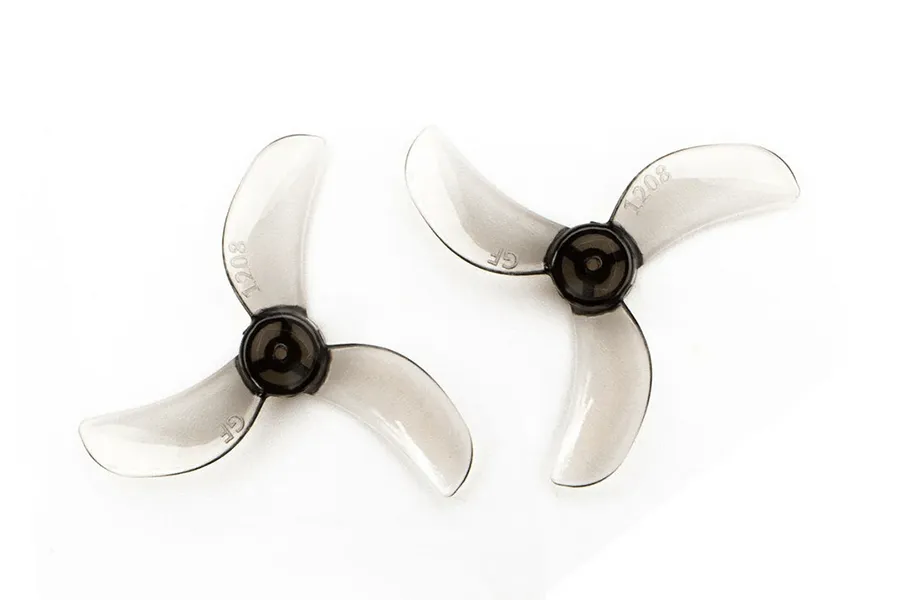
The majority of racers choose these new Gemfan tri-blades since they are nearly as light as the amazing 1210 bi-blade prop and have more grip from an extra full blade. These also work well with high KV motors for excellent run time and PID loop performance because of their pleasant low pitch.
Propeller Recommendation for 75mm Tiny Whoop
Gemfan 1608 Props
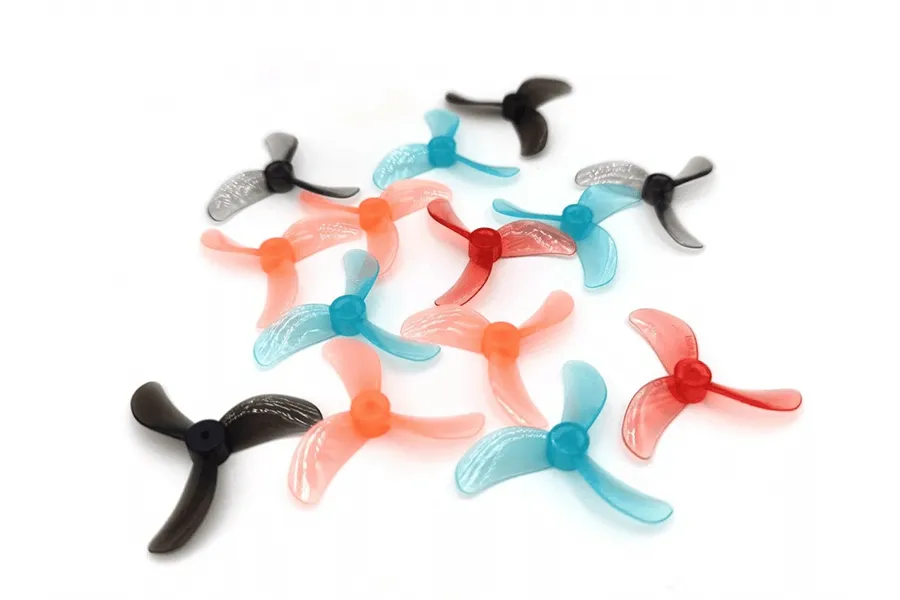
With amazing oomph and grip, these Gemfan 1608 props really come to life on high KV 1002 motors. They require not just a larger stator capacity than 0802s but also more than 20,000kv on 1s, which makes our recommended Flywoo 1002 23,500kv motor an excellent fit.
For a more detailed overview on propeller choosing, check out this guide: Tutorial Propellers: Choose Best Suitable Propellers for Your FPV
Frame
At first, the Blade Inductrix, an FPV camera, and upgraded motors and batteries were the only ways to construct a Tiny Whoop. However, because Tiny Whoops have grown so popular, there are now a ton of different frames available, giving you a ton of options to customize your device or save money.
65mm: Here I recommend the BETAFPV METEOR65, the most robust and second-lightest frame available is produced by BetaFPV and comes in a wide range of colors. And it also sells hand-dyed versions of the frame.
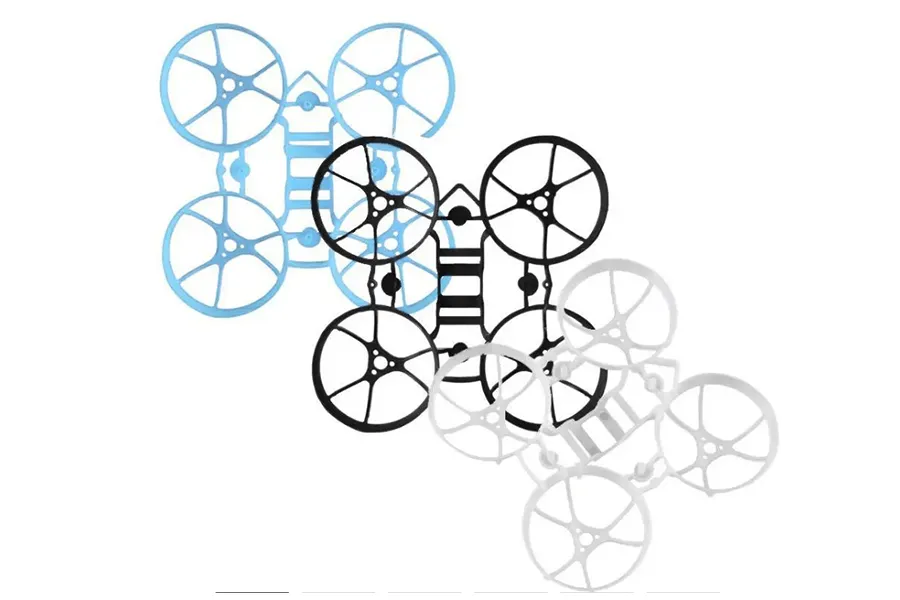
75mm: Here I recommend the Happymodel 75mm V4 Frame. This is the improved, more robust V4 75mm frame for the Happymodel Moblite7 and Mobula7. It weighs 5.4g instead of 4.4g and has a thicker frame. The V4 also has a lower FC mount position so that the USB port is no longer blocked.

Battery Chargers
Vifly WhoopStor V3
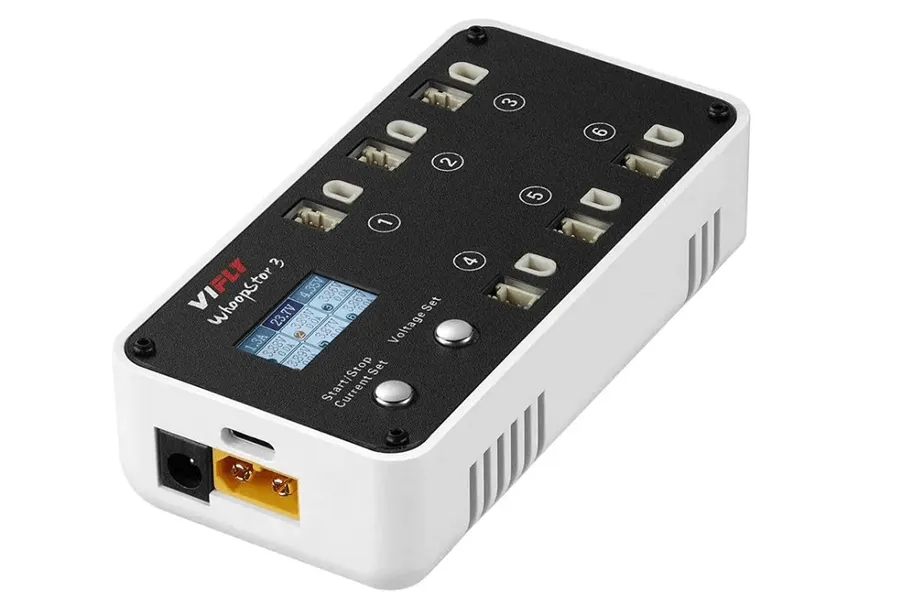
For people who fly little whoops and require a reliable and easy-to-use charging option, the VIFLY WhoopStor V3 is a cost-effective purchase. It is a significant upgrade over its predecessor, including notable improvements that make battery charging and storage more flexible and user-friendly. For individuals who frequently fly 1S micro drones, such as mini whoops, the charger’s combination of faster charging speeds, a sleeker design, better thermal handling, and user-friendly controls makes it an extremely tempting tool.
Flight Controller
BETAFPV F4 1S 5A AIO FC Board
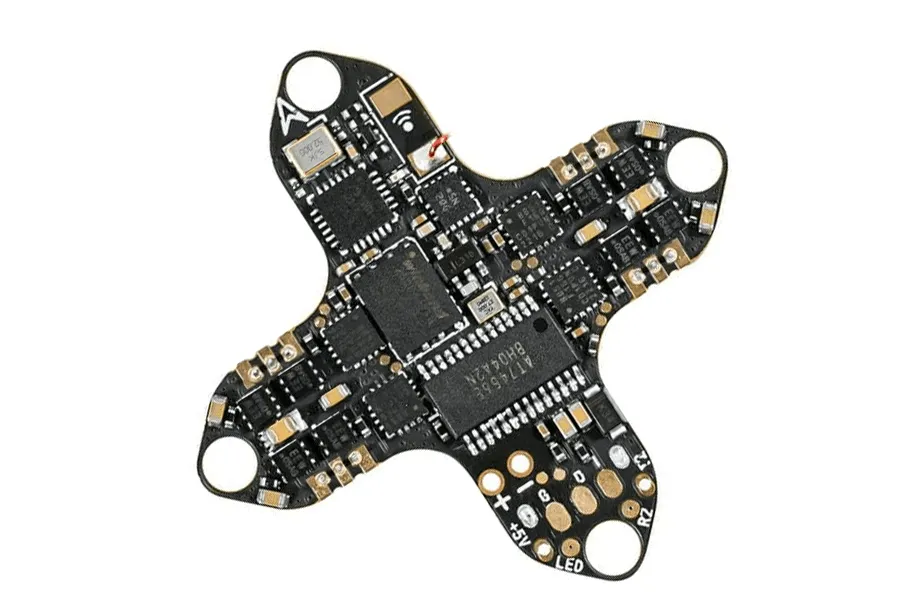
The BetaFPV F4 FC is the lightest AIO with low-latency ELRS on board and has been just as dependable as the other well-liked options from Happy Model.
Goggles
Recommended to choose EMAX Transporter 2 FPV Goggles for Racing Drone. The Transporter 2 FPV Goggle has a detachable screen that can be paired with the E8 Transmitter for a customized flying experience. It includes a powerful receiver to provide pilots with a clean video feed and features a built-in DVR for recording FPV flights. This allows users to review their flights or share the recorded footage with others.
- Made of high-quality pc material, which is durable and has a long service life.
- Easy to install and use, with a simple design that can be easily installed on your helmet.
- Detachable screen for customizable flying experiences.
- Built-in DVR allows users to record FPV flights.
Receiver
Recommended to choose BETAFPV Receiver ExpressLRS Lite
- Ultralight ELRS Lite receiver has a 2.4GHz Flat SMD ceramic antenna. A solid flat antenna without irregular parts can withstand crashes, making the receiver not so fragile. Perform well in control, range, and stability, bringing a good flight experience to pilots.
- New lite receiver with a flat antenna features a 3mm extra-thin board and 0.53g lightweight, which requires less assembly space on drones with limited space.
- ExpressLRS is an open-source RC link for RC applications, based on Semtech LoRa SX127x or SX1280 hardware for RX and TX respectively. This makes ExpressLRS one of the fastest RC links available while still offering long-range performance.
- BETAFPV ELRS Lite receiver is based on the ExpressLRS project, an open-source RC link for RC applications that aims to achieve the best possible link performance in both speed, latency, and range suitable for ELRS TX module, etc.
- The Lite receiver comes with the official major release V1.1.0 protocol and no Binding Phrase included. The Lite receiver could enter binding status by powering on/off three times.
Radio Controller
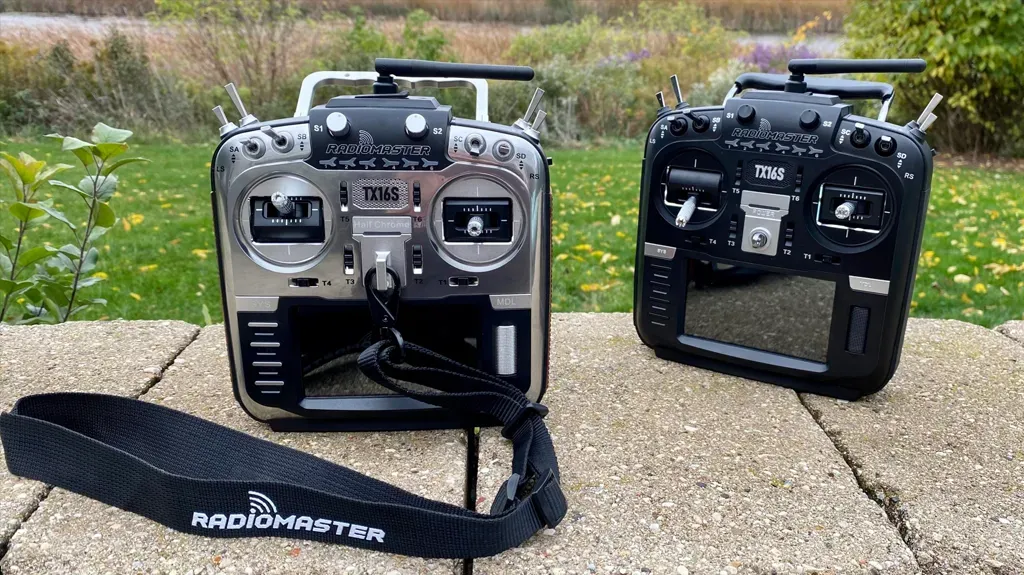
It is recommended to choose RadioMaster TX16S MKII Radio Controller, a Radio Transmitter that supports analog or digital signals for sensitive control and a comfortable feel.
Why do you recommend this remote control? Because it can also satisfy beginners to advance to more flight experience, it can be used as a whole process from beginner to professional.
- RadioMaster TX16S MKII V4.0 ELRS ExpressLRS or Multi-protocol JP4IN1 Version Hall Gimbals Transmitter Remote Control
- lmproved internal circuitry and optimized power supply. New charge circuitry with integrated reverse-polarity protection. Optimized charge lC, better balancing, and USB-C charge current management. Rear-mounted audio jack provides headphone output.
- V4.0 Gimbal improved centring and temperature stability (Same circuitry as AG01). Optional high/low rear grips are included for improved ergonomics. Improved S1/S2 knobs with clear centre-detents. Improved LS/RS Sliders with a smoother feel and better centre.Detents. Redesigned battery cover for improved battery access. Retooled body shell with improved fit and finish. Trainer socket changed to standard TRS 3.5mm socket.
- Rear DlY Socket added for personalised mods. Improved internal plastics for better longevity. Available ELRS and 4in1 versions.
Camera
It is recommended to choose CADDX Ant Analog Camera, which has clear images and a wide field of view.
- High-performance camera designed specifically for FPV racing and freestyle drones.
- Features a 1/3″ CMOS sensor with a 2.1mm lens, providing a wide field of view and excellent low-light performance.
- Incorporates 3D DNR, which gives you a full clarity image.
- Available in 4:3 or 16:9 camera ratios.
- 14×14 Mounting Pattern, weights only 2g.
VTX
It is recommended to choose HGLRC Zeus Nano VTX, which has strong anti-interference ability and stable image transmission.
- Ultra small size, reduces installation space.
- Unique mounting design, compatible with 16mm, 20mm, and 25.5mm mounting holes.
- With a built-in microphone, transmission of audio and video in real-time makes you feel the wind and waves.
- Slim boomerang shape, unique mount design, brings a wider scope of application.
Tiny Whoop Parts Compatibility Table
| Component | 65mm Tiny Whoop | 75mm Tiny Whoop | Notes |
|---|---|---|---|
| Frame | 65mm ducted frame | 75mm ducted frame | Choose the frame size before selecting other components. |
| Motor Size | 0702 / 0802 | 0802 / 1002 | Larger frames benefit from slightly larger motors for improved thrust. |
| Motor KV | 23,000–30,000KV | 19,000–23,000KV | Higher KV improves responsiveness, while lower KV generally increases efficiency. |
| Propellers | 31mm (1.2″) | 40mm (1.6″) | Prop size must match the frame and motor combination. |
| Battery | 1S 260–300mAh (up to 450mAh) | 1S 450–550mAh | Larger batteries provide longer flight time but add weight. |
| Battery Connector | BT2.0 / A30 (recommended) | BT2.0 / A30 (recommended) | Modern low-resistance connectors deliver better power than PH2.0. |
| Flight Controller | 1S AIO F4/F411/F405 | 1S AIO F4/F411/F405 | Most 1S AIO flight controllers support both frame sizes. |
| ESC Rating | 5A–12A | 5A–12A | Select an ESC that matches your motor size and flying style. |
| FPV Camera | Nano / Whoop Camera | Nano / Whoop Camera | Analog and HD systems are both available depending on your build. |
| Canopy | 65mm Whoop Canopy | 75mm Whoop Canopy | Verify compatibility with your FPV camera and VTX. |
| Recommended Flying Style | Indoor racing, tight spaces, beginner practice | Indoor & light outdoor freestyle | 65mm offers maximum agility, while 75mm provides better stability and longer flight times. |
Quick Compatibility Tips
- 65mm Tiny Whoops are optimized for 31mm propellers, 0702–0802 motors, and 1S 300mAh batteries, making them the best choice for indoor racing and technical flying.
- 75mm Tiny Whoops typically use 40mm propellers, 0802–1002 motors, and 1S 450–550mAh batteries, offering better efficiency, longer flight time, and improved outdoor performance in calm conditions.
- Most 1S AIO flight controllers, FPV cameras, and receivers can be shared between 65mm and 75mm builds, making frame upgrades relatively simple. The primary components that change are the frame, propellers, motors, and battery capacity.
FAQ: Tiny Whoops & Indoor FPV Drones
Is it legal to fly a drone indoors?
Yes, flying an indoor FPV drone is generally legal—but regulations still apply depending on where the drone is flown.
In the United States, FAA rules mainly govern outdoor airspace. If you are flying a tiny whoop drone entirely indoors, such as inside your home or a private warehouse, FAA airspace rules typically do not apply.
However, if you are piloting a drone outdoors while standing indoors, FAA regulations still apply exactly the same as if you were outside. This includes:
- Maintaining visual line of sight (VLOS)
- Avoiding people and restricted areas
- Following recreational or Part 107 rules
Best practices for flying a drone from indoors
If you control a drone outdoors while operating from inside, extra precautions are required.
Best practices include:
- Use a spotter outside to maintain visual contact
- Ensure a clear signal path (walls, metal, and concrete weaken radio and video links)
- Set Return-to-Home (RTH) correctly, even on small drones
- Fly only in open, obstacle-free areas
- Check wind conditions, especially for lightweight drones
For most pilots, flying fully outdoors with clear visibility—or flying a true indoor FPV drone like tiny whoops—is safer and more reliable.
Why are prop guards important for indoor flight?
Prop guards are essential for safe indoor FPV flying.
Tiny whoop drones use ducted prop guards, which:
- Protect people, pets, and furniture
- Reduce prop damage during crashes
- Allow pilots to bounce off walls instead of breaking parts
This design is exactly why tiny whoops are the most popular indoor FPV drones, especially for beginners and practice sessions.
How can one minimize interference when flying drones indoors?
Indoor interference is common, but it can be reduced with the right setup.
Effective ways to minimize interference:
- Fly small, low-power indoor FPV drones (tiny whoops)
- Avoid Wi-Fi routers, microwaves, and metal structures
- Use short antenna paths and quality receivers
- Fly analog video systems for lower latency indoors
Tiny whoop drones are designed specifically to handle indoor environments better than larger FPV drones.
What precautions should be taken when flying drones indoors?
Safety starts with preparation and the right aircraft.
Important indoor flight precautions:
- Clear the room of fragile objects
- Remove pets and bystanders
- Use prop-guarded whoop drones only
- Start with Angle or Horizon mode
- Keep batteries properly charged and monitored
Because indoor spaces are tight, tiny whoop drones are far safer than open-prop FPV quads for indoor flying.
How much does a tiny whoop cost?
Tiny whoops are among the most affordable FPV drones available.
Tiny Whoop Kit / BNF (Bind-and-Fly)
- Price range: $80–$120
- Includes fully assembled drone
- Ideal for beginners
- Examples: BetaFPV, Happymodel, GEPRC
Tiny whoop drones offer the lowest cost of entry into FPV and are perfect as an indoor FPV drone or training platform.
How much does it cost to build a tiny whoop?
Building a tiny whoop typically costs slightly more than buying a kit—but offers full control.
Approximate DIY cost breakdown:
- Frame & props: $10–$15
- Motors: $30–$40
- AIO FC (ESC + VTX): $40–$60
- Camera & receiver: $15–$25
Total DIY cost: ~$120–$150
For most pilots, a tiny whoop kit offers better value unless customization is the goal.
Conclusion
Choosing the best Tiny Whoop comes down to your flying style, experience level, and where you plan to fly. A 65mm Tiny Whoop is ideal for indoor racing, tight spaces, and beginners who want a lightweight, agile drone. If you’re looking for longer flight times and the flexibility to fly both indoors and outdoors, a 75mm Tiny Whoop is often the better choice.
Building or upgrading your Tiny Whoop is just as important as selecting the right drone. Matching the correct frame, motors, propellers, battery, and flight controller ensures the best balance of power, efficiency, and durability. Investing in quality parts also makes future repairs and upgrades much easier.
Whether you’re buying your first Tiny Whoop or optimizing an existing build, MEPSKING offers a wide selection of Tiny Whoop drones, replacement parts, batteries, motors, and accessories to help you get the most out of every flight. Explore our recommended products and start building a Tiny Whoop that perfectly fits your flying goals.