Buying Guide: HOTA T6 300W PD Battery Charger
A compact charger can make a big difference for FPV pilots who regularly travel to flying locations. Unlike larger desktop chargers, a portable charger needs to balance charging power, battery compatibility, input flexibility, and size without taking up unnecessary space in a field bag.
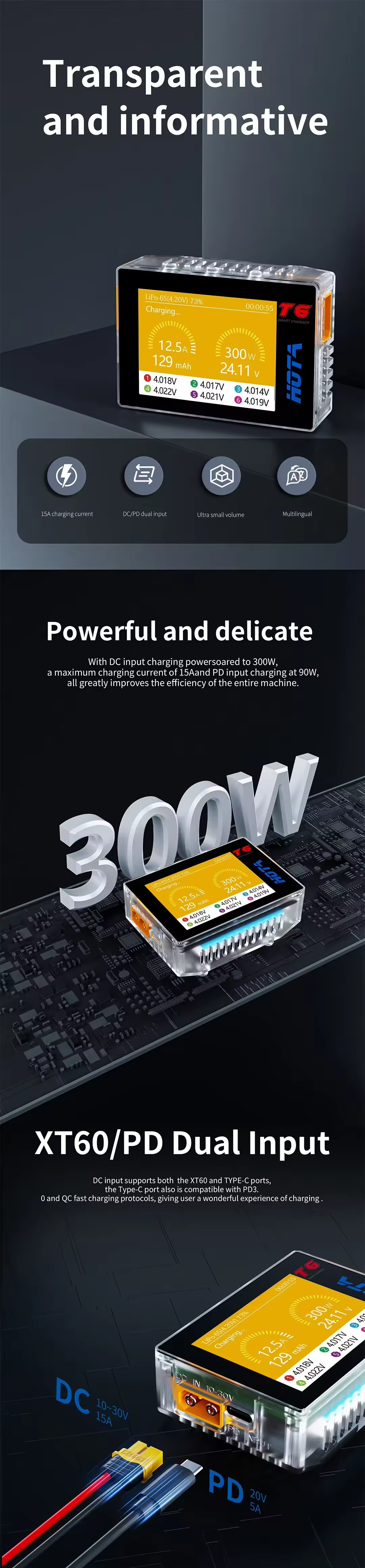
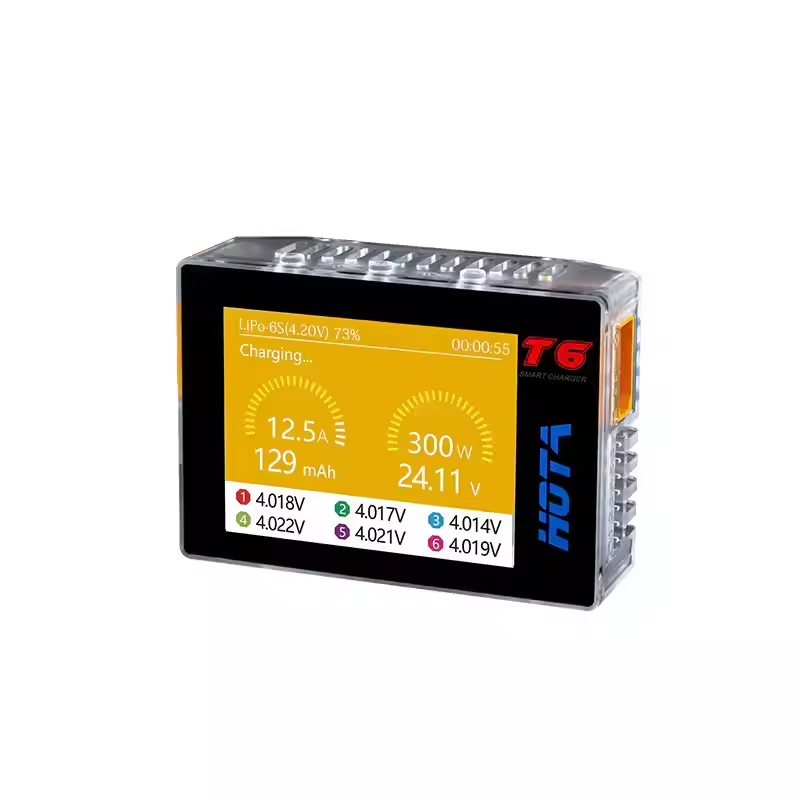
The HOTA T6 is a compact single-channel smart charger designed for FPV and RC users who want a powerful charging solution in a small and lightweight form factor. With up to 300W DC charging power, 15A maximum charging current, 1-6S lithium battery support, and DC/PD input options, it is particularly suited to portable and field charging setups.
Who Is the HOTA T6 Best For?
The HOTA T6 is designed for users who value portability more than charging multiple batteries independently at the same time. Its compact 70.5 × 49.5 × 30.5mm body and approximately 93g weight make it easy to carry alongside FPV batteries and other equipment.
It is particularly suitable for:
● FPV pilots who need a compact field charger
● Pilots mainly charging one battery at a time
● Pilots using common 1-6S LiPo or LiHV batteries
● Travelling FPV pilots with limited equipment space
● Users building a portable charging setup with an external battery or power supply
The Main Advantage: High Power in a Compact Size
The T6 is designed around portability without limiting the charging capability needed for common FPV batteries. It supports up to 300W charging power and a maximum charging current of 15A when powered by a suitable DC source.
For typical 4S and 6S FPV batteries, this provides enough charging capacity for normal and higher-current charging setups, depending on the battery specifications and available input power.
Its approximately 93g weight also makes it significantly easier to transport than a traditional desktop charger with an integrated power supply.
DC Input vs PD Input: What Is the Difference?
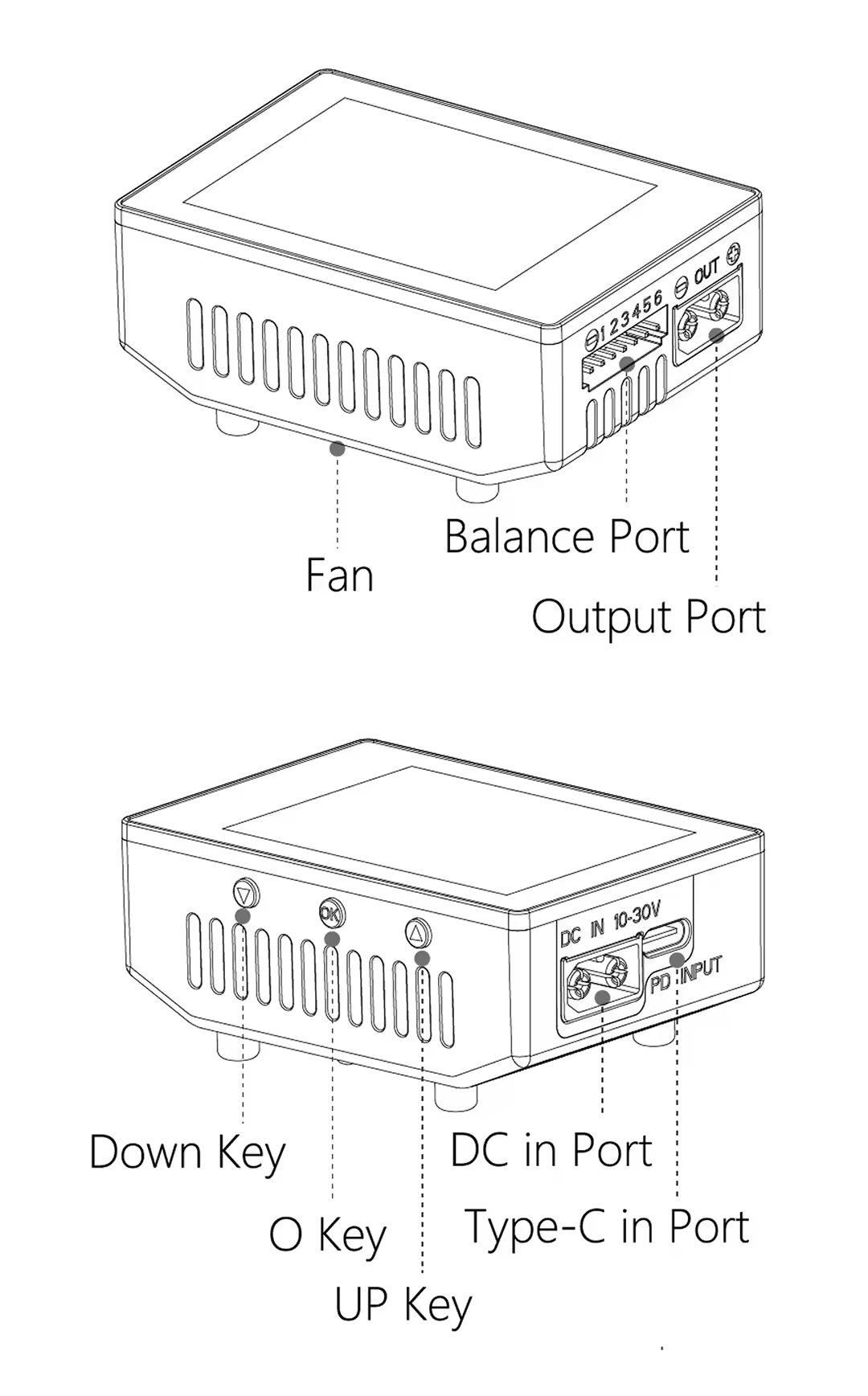
The HOTA T6 supports two different input methods: a standard DC power source and compatible PD/QC USB-C power input. This gives users more flexibility when building a portable charging setup.
DC Input: The charger accepts 10-30V DC input and can deliver up to 300W charging power when paired with a suitable high-power DC source. This is the preferred option when you want to use the T6 at its full performance level.
PD Input: The charger also supports compatible PD 3.0 or QC 20V power sources. This can be convenient when travelling or when a compact USB-C PD power source is easier to carry than a larger DC power supply. PD charging power is limited compared with the maximum 300W DC mode.
If you need maximum charging power, choose a suitable DC power source. If portability and convenience are more important, PD input provides an additional flexible option.
Important: The T6 Does Not Have a Built-In AC Power Supply
Unlike an AC/DC desktop charger, the HOTA T6 cannot be plugged directly into a standard wall outlet without an appropriate external power supply. The charger requires either a compatible DC power source or supported PD/QC input.
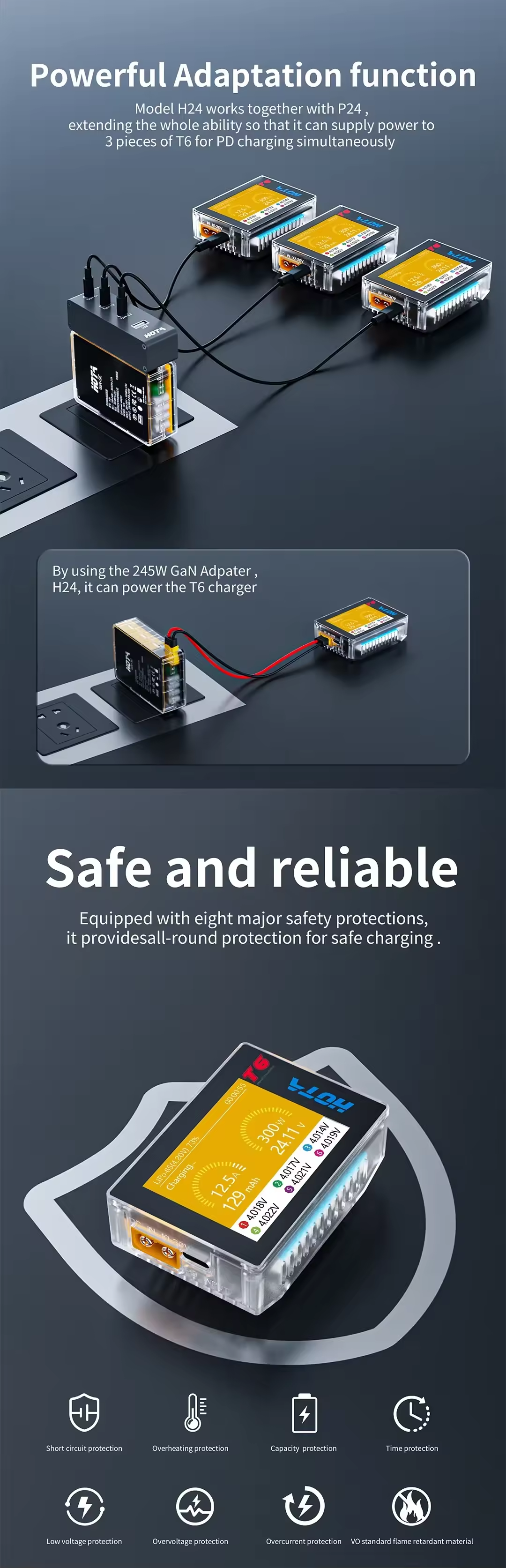
For home use, you can pair it with a suitable DC desktop power supply. For field charging, users may connect it to a compatible external battery or portable power source.
This is an important consideration before purchasing. The T6 is best for users who already have, or plan to build, a compatible portable power setup.
What Batteries Can the HOTA T6 Charge?
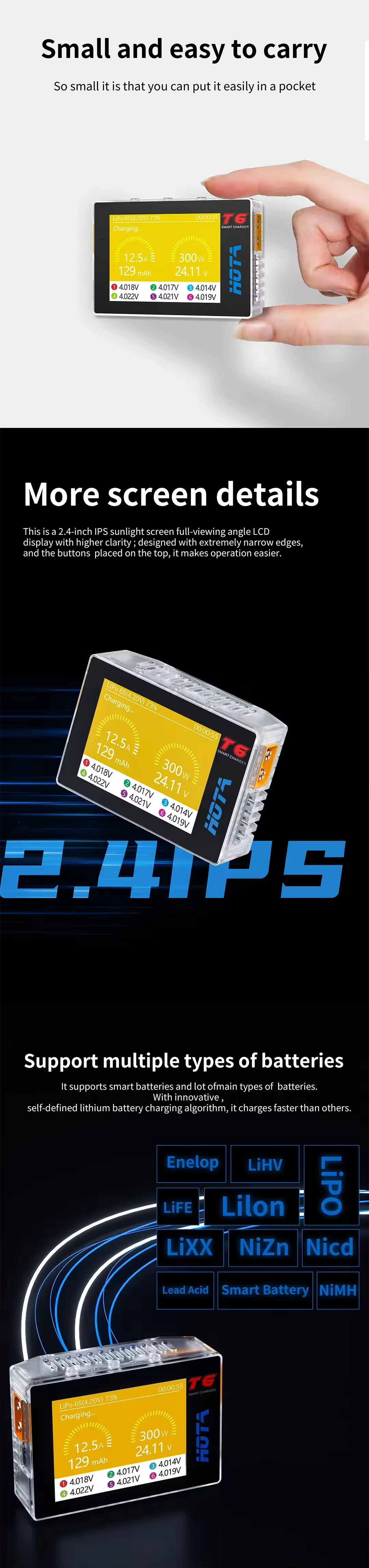
For FPV pilots, the most relevant compatibility range is 1-6S lithium batteries. The T6 supports LiPo, LiHV, LiFe, Li-ion, and other compatible lithium battery types within the supported cell range.
This covers many common FPV battery setups, including small micro-drone batteries, 4S Cinewhoop packs, and 6S batteries used for freestyle and racing drones.
The charger also supports other battery chemistries, including NiMH, NiCd, NiZn, lead-acid batteries, and compatible smart batteries. Always select the correct battery type and cell count before charging.
Is 300W Enough for Your FPV Batteries?
For most individual FPV batteries, 300W provides substantial charging capacity. However, the actual charging speed depends on battery voltage, battery capacity, selected charging current, and the power available from your input source.
A typical 6S FPV battery requires more power than a smaller 2S or 4S pack at the same charging current. As a result, the available wattage becomes increasingly important when charging larger batteries or charging at higher current levels.
For pilots who normally charge one battery at a time, the T6 provides a practical balance between charging performance and portability. Pilots who regularly need to charge several batteries simultaneously may benefit more from a dual-channel or multi-channel charger.
Useful Battery Monitoring Features
The T6 uses a 2.4-inch IPS color display to provide battery and charging information during operation. The charger can display individual cell data and internal resistance information, helping users monitor battery condition during charging cycles.
Monitoring cell voltage and internal resistance can help identify abnormal or aging battery packs before they become unreliable during flight. This can be particularly useful for pilots managing multiple FPV batteries with different levels of wear.
HOTA T6 vs HOTA S6 Ultra: Which One Should You Choose?
The biggest difference between the T6 and S6 Ultra is the intended charging environment. The T6 focuses on portability and flexible external power input, while the S6 Ultra is designed as a more complete dual-channel charging station.
| Feature | HOTA T6 |
HOTA S6 Ultra |
|---|
| Charging Channels | Single | Dual |
| Main Input | DC / PD | AC / DC |
| Maximum Charging Power | 300W | Higher Dual-Channel Power |
| Size and Portability | Extremely Compact | Desktop Charging Setup |
| Best For | Portable and Field Charging | Multiple Battery Charging |
Recommended Field Charging Setup
A practical portable charging setup can include a HOTA T6, a suitable DC power source or high-power PD source, and the required battery charging adapters. This setup can remain compact enough to carry in an FPV backpack or equipment case.
Recommended for: pilots travelling to flying locations, long-range pilots, racers attending events, and users who do not want to carry a large AC/DC charger.
Which HOTA Charger Is Right for You?
Choose the HOTA T6 if: you want the smallest and most portable option, normally charge one battery at a time, and already have a compatible external power source.
Choose a dual-channel HOTA charger if: you regularly need to charge two batteries independently and prefer a more complete desktop or home charging setup.
The T6 is therefore best viewed as a high-performance portable charger rather than a replacement for a large multi-channel charging station. Its main strength is delivering flexible charging capability in a compact package that is easy to take to the field.
Safe Charging Practices
Always confirm battery chemistry, cell count, and charging current before starting a charging cycle. Follow the battery manufacturer's recommended charging rate and inspect batteries for physical damage or abnormal swelling before use.
Use balance charging when appropriate for multi-cell lithium batteries and never leave lithium batteries unattended while charging. The T6 includes multiple protection functions, but correct charger settings and responsible charging practices remain essential.


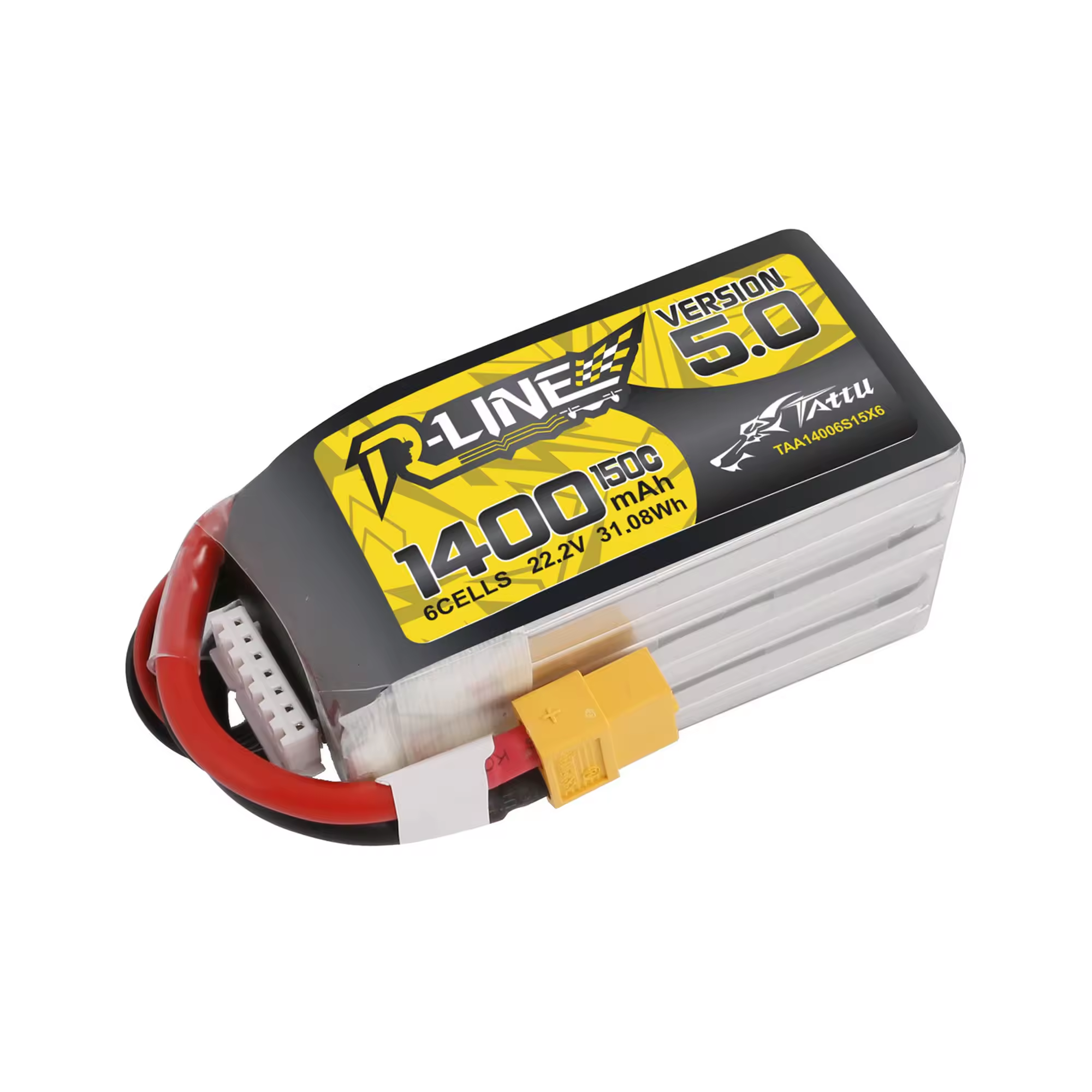

 CNHL Black Series V2 1300mAh 6S 130C LiPo Battery XT60 for FPV6S1P 1300mAh XT60$30.39 Save $1.60