
If you’re choosing between an FPV drone and a normal stabilized drone, the biggest difference comes down to control, flying experience, and use case.
FPV drones offer full manual control and immersive flying, making them ideal for racing, freestyle, and cinematic shots. In contrast, normal drones (like DJI camera drones) are designed for stability, GPS-assisted flight, and high-quality aerial photography.
In this guide, we’ll break down:
– FPV drone vs normal drone differences
– Pros and cons of each type
– Which drone is best for beginners
– Real use cases and buying recommendations
FPV Drone vs Normal Drone: Key Differences (Upgraded Comparison Table)
To make things clearer, let’s break down the differences between FPV drones and normal drones across several factors:
| Feature | FPV Drone | Normal Drone (GPS/Camera) |
|---|---|---|
| Flight View | Immersive first-person view through goggles | Third-person stable view via phone or controller screen |
| Camera Quality | Real-time low-latency FPV feed, lower resolution for recording (unless using HD systems like DJI O3) | High-resolution stabilized cameras (4K–8K) optimized for photography and video |
| Flight Control | Manual or semi-manual; requires skill, no GPS stabilization | GPS-assisted, automated flight modes, stable hover |
| Maneuverability | Extremely agile, capable of tricks and freestyle | Limited maneuverability, focused on smooth cinematic flight |
| Battery Life | Shorter (3–8 minutes for FPV racing drones; 15–20 minutes for cinematic FPV) | Longer (20–45 minutes depending on model) |
| Cost | Can be cheaper to build DIY, but requires additional gear (goggles, radio, batteries) | Higher upfront cost, but ready-to-fly with built-in features |
| Learning Curve | Steep, requires practice in simulators or with training drones | Easy, beginner-friendly, suitable for all skill levels |
| Use Cases | Racing, freestyle, cinematic “through-the-gap” footage | Photography, videography, mapping, surveying |
What are normal Drones?
Normal drones (also known as camera drones or GPS drones) are designed to automatically stabilize themselves during flight. When you release the control sticks, the drone will maintain its position in the air using GPS and onboard sensors, staying stable and level.
This makes them extremely easy to fly, especially for beginners, as the drone can:
- Hover in place automatically
- Maintain altitude and direction
- Return to home with GPS assistance
Unlike FPV drones, normal drones focus on stability and automation rather than manual control and acrobatics.
Key features of normal drones
- GPS-assisted stability – automatic hovering, return-to-home, and precise positioning
- High-resolution cameras – 4K/8K gimbals with advanced stabilization
- Intelligent flight modes – follow-me, orbit, waypoint navigation
- Beginner-friendly – easy to fly, requires less manual skill
- Use cases – travel vlogging, real estate, surveying, professional filmmaking
Well-known models like the DJI Mavic series and Autel EVO Lite are examples of normal drones designed to deliver professional-grade footage with minimal pilot effort.
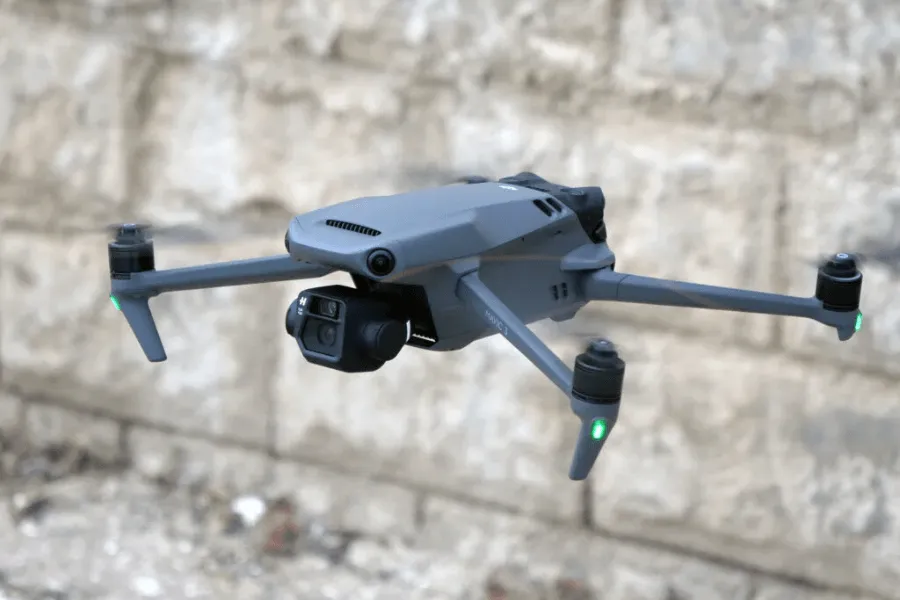
Common Use Cases
Normal drones are widely used across both consumer and professional industries:
- Infrastructure inspection (e.g., solar panels, buildings)
- Travel photography and vlogging
- Real estate photography and videography
- Aerial mapping and surveying
- Search and rescue operations
- Wildlife tracking
- Agricultural applications (spraying, monitoring crops)
Basic setup of normal Drones
Drone and remote control with a screen (or a mobile phone used as a screen). Some models can be autonomously flown using waypoints (by setting points on the map) without the need for the remote control.
What are FPV drones
FPV (First Person View) drones are a type of drone that allows pilots to see a live video feed from the drone’s perspective using FPV goggles. Unlike normal drones, FPV drones are designed for full manual control, offering a more immersive and dynamic flying experience. Here is a detailed guide to FPV drones for beginners.
These drones can operate in multiple flight modes:
- Angle Mode – Fully stabilized, ideal for beginners
- Horizon Mode – Semi-stabilized with limited acrobatics
- Acro Mode – Fully manual control with no stabilization, enabling advanced maneuvers such as flips, rolls, and freestyle flying
In Acro mode, the drone does not auto-level itself. Instead, the pilot has complete control over:
- Pitch
- Roll
- Yaw
This allows FPV drones to perform extreme movements and fly in tight spaces—something normal drones cannot achieve.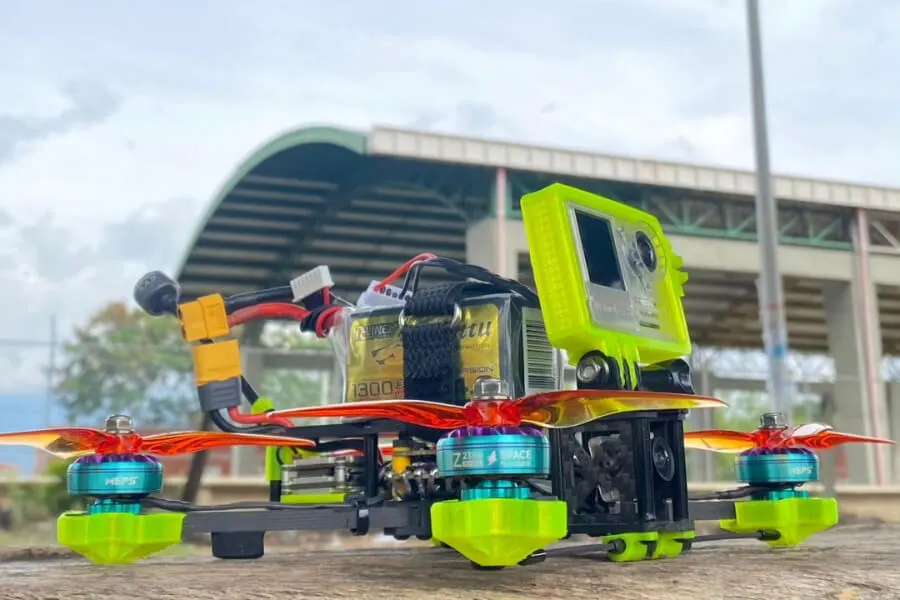
Key Features of FPV Drones
- Immersive FPV experience – Real-time video through goggles
- High agility and speed – Capable of flips, rolls, and freestyle tricks
- Manual control – Requires skill and practice to master
- Highly customizable – Easily upgraded and modified
- Diverse use cases – Racing, freestyle, cinematic shots
FPV drones are widely used by hobbyists, drone racers, and filmmakers who want to capture fast-paced, dynamic, and close-range footage that traditional drones cannot deliver.
The categories of FPV drones
FPV drones generally fall into two main categories:
DIY FPV Drones
DIY FPV drones are fully customizable systems where components can be mixed and matched based on your needs.
They can be:
- Built from scratch
- Purchased as BNF (Bind and Fly)
- Purchased as RTF (Ready to Fly)
Advantages:
- Fully customizable
- Easier to repair and upgrade
- Better performance tuning
DJI FPV Drones
Examples include the DJI FPV and DJI Avata.
These drones are:
- Closed systems (limited customization)
- Easy to use
- Optimized for stability and convenience
However, they have some limitations:
- Less flexibility for upgrades
- Limited tuning options
- May experience issues like propwash in aggressive maneuvers
Tip: Upgrading propellers (e.g., to HQProp 3-blade props) can improve flight performance in some cases.
For recording, external cameras like a GoPro Hero 10 can deliver better video quality than built-in systems, although mounting may require careful setup to reduce vibration.
FPV Flying Requires Skill
Flying FPV drones in Acro mode requires:
- Understanding of drone hardware and software
- Practice in a flight simulator
- Development of muscle memory
Unlike normal drones, FPV flying is not plug-and-play. Beginners are strongly advised to train in simulators before flying in real environments.
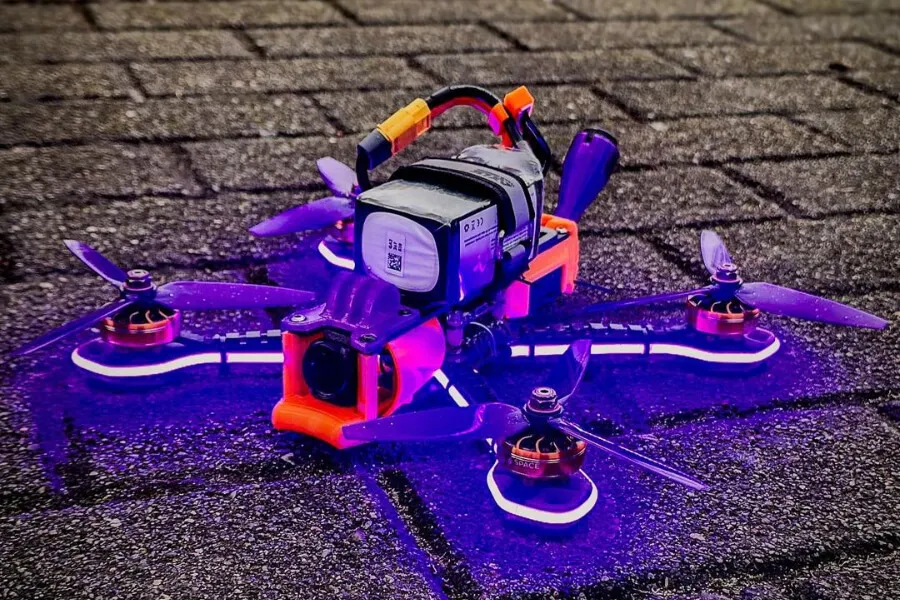
Basic setup of FPV drone
Basic setup: Drone, Remote Control, and Goggles
Internal components of DIY FPV drones: Frame, FC+ESC (flight controller and electronic speed controller) separate stack or FC+ESC on a single electronic board (AIO), motors, command receiver with antenna, video unit (camera, video transmitter, antenna), TPU (thermoplastic polyurethane) prints, GPS, Buzzer; additional components like LEDs, servos, etc., can be added based on your needs. 5-inch FPV drones are the most preferred by pilots. Here, I recommend MEPS 2207 for building your FPV drones.

Note: If you plan to get a DIY FPV drone, it’s advisable to also acquire a soldering iron with accompanying tools so you can modify or repair the drone independently.

What Makes FPV Drones Feel So Different?
The biggest difference between FPV drones and normal drones isn’t just speed—it’s the way they fly.
A normal drone is designed to assist the pilot. GPS positioning, altitude hold, obstacle sensing, and automatic hovering make it easy to capture stable footage with minimal flying experience.
An FPV drone, however, gives the pilot full manual control. Every movement is controlled directly through the transmitter, especially in Acro Mode, where there are no self-leveling or automatic stabilization features. This creates a much more immersive and responsive flying experience.
Many pilots describe FPV flying as similar to piloting a fighter jet, while flying a normal drone feels more like operating a smart flying camera.
If you’re looking for excitement, freestyle tricks, or high-speed cinematic footage, FPV offers a level of freedom that traditional camera drones cannot match.
Can FPV Drones Hover Like Normal Drones?
Yes, FPV drones can hover, but not in the same way as normal drones.
Most consumer camera drones use GPS, barometers, and vision sensors to automatically maintain their position in the air. Once you release the control sticks, the drone stays almost perfectly still.
Most FPV drones rely entirely on the pilot’s control. To keep the drone hovering, you must continuously adjust the throttle and control sticks to compensate for wind and small movements.
Some long-range FPV drones include GPS modules that support features like Return-to-Home or GPS Rescue. However, these functions are designed for safety rather than hands-free hovering and do not replace the precise position hold found on normal drones.
| Hover Feature | FPV Drone | Normal Drone |
|---|---|---|
| GPS Position Hold | Limited | Yes |
| Automatic Hover | No | Yes |
| Pilot Input Required | Continuous | Minimal |
| Best For | Manual flying | Stable aerial photography |
Can FPV Drones Take Photos and Videos?
Absolutely. However, FPV drones capture images differently from normal camera drones.
The built-in FPV camera is optimized for ultra-low latency rather than image quality. Its primary purpose is to provide a real-time video feed for flying.
For high-quality footage, many FPV pilots mount an action camera such as a GoPro or DJI Osmo Action on top of the drone. This setup allows FPV drones to capture dynamic, fast-moving cinematic shots that would be difficult for traditional drones to achieve.
Normal drones, on the other hand, feature integrated cameras mounted on a three-axis gimbal. These cameras are designed for smooth aerial photography, stabilized video, and high-resolution still images.
| Camera Feature | FPV Drone | Normal Drone |
|---|---|---|
| Live Flight View | Excellent | Excellent |
| Built-in Image Quality | Basic | Excellent |
| Camera Stabilization | Electronic or action camera stabilization | Mechanical 3-axis gimbal |
| Best Video Style | Fast, immersive action shots | Smooth cinematic footage |
| Photography | Good (with action camera) | Excellent |
Which Drone Is Easier to Learn?
For most beginners, a normal drone is much easier to fly.
Consumer drones are equipped with intelligent flight features that automatically stabilize the aircraft, maintain altitude, and hover in place. Many new pilots can confidently perform basic flights within their first day.
Learning to fly an FPV drone requires more practice. Most pilots begin with an FPV simulator before flying a real drone. They usually start in Angle Mode, then gradually progress to Horizon Mode and finally Acro Mode, where full manual control unlocks the drone’s maximum performance.
Although the learning curve is steeper, many pilots find FPV flying more rewarding because every maneuver depends entirely on their own skills.
| Learning Aspect | FPV Drone | Normal Drone |
|---|---|---|
| Beginner Friendly | Moderate | Excellent |
| Learning Time | Several weeks | A few hours or days |
| Flight Assistance | Limited | Extensive |
| Crash Risk | Higher | Lower |
| Skill Development | High | Moderate |
How Much Does It Cost to Start Flying FPV?
The cost of getting started with FPV depends on the equipment you choose. Unlike most camera drones, FPV requires several components, including the drone, transmitter, goggles, batteries, and charger.
Here is a general budget guide:
| Budget | Recommended Setup |
|---|---|
| Under $300 | Tiny Whoop starter kit |
| $300–600 | Analog 5-inch freestyle build |
| $600–1,000 | Digital FPV system with HD goggles |
| $1,000+ | Professional cinematic FPV setup |
While the initial investment can be higher than buying a ready-to-fly camera drone, FPV drones are usually easier and less expensive to repair after crashes because individual components such as motors, propellers, and arms can be replaced separately. Here is a detailed guide to the cost of FPV drone.
What are the advantages and disadvantages of normal drones?
The Advantages of Normal Drones
- They are excellent for those who want to start capturing videos and photos without wasting time connecting the drone/remote control or practicing on a simulator or studying to understand how they work, what needs to be done, what should not be done, etc. You turn on the radio, the drone, and you’re ready to fly.
- With the help of sensors, they are very easy to pilot, and often, they can even fly autonomously by setting a trajectory or using the “follow me” function.
- They have excellent battery life (varies by model, averaging around 30 minutes).
- Being closed drones, there’s no need to know how to solder/desolder, bind the drone/remote control, or spend time on various configurations; you simply take the drone and radio, turn them on, and fly.
- They can hover and allow you to move the camera with the gimbal, so you can adjust the camera angle directly from the remote control.
- Thanks to their excellent autonomy, stabilization, and the ability to adjust the camera angle, you can capture time-lapse videos and photos.
- They can be used in multiple applications beyond just capturing videos and photos.
- Almost all models have built-in GPS and an integrated “Return to Home” (RTH) function.
The disadvantages of normal drones
- They are limited in their movements, both in stabilized flight and by the sensors.
- It’s not straightforward, and often it’s impossible to capture shots where you can get close to the subject and immerse yourself in the scene.
- They are slow.
- They are very fragile and could break even with minor crashes, and it’s not possible to repair them independently.
What are the advantages and disadvantages of FPV drones?
The Advantages of FPV Drones
- You have full control of the drone and are not limited by sensors; this allows you to navigate through any gap, approach any obstacle, and fly between obstacles… the only limit is your skill in piloting them.
- They are highly responsive and are used both for fun (e.g., freestyle) and for capturing footage (e.g., cinematic); the footage is entirely different from stabilized drones, offering various perspectives and allowing you to immerse yourself in the scene and capture more details.
- They are very fast, which also allows for capturing footage of racing cars, motocross, etc.
- Often, people build them themselves, which allows them to choose various components and build a drone that reflects all the features they may need.
- They are very durable; there are freestyle models designed specifically for flying in abandoned buildings, and they can withstand severe crashes against concrete.
The Disadvantages of FPV Drones
- They are not easy to use, both in terms of piloting and various configurations, and it’s necessary to know how to solder and understand the setup in order to repair or modify them.
- They have limited endurance, typically around 3-6 minutes with LiPo batteries (some DIY models can use LiIon batteries, which can extend the endurance up to 15 minutes).
- Before starting, it’s necessary to gather information and study to avoid actions that could compromise the drone, the radio, or the goggles.
- They lack a camera movement system, so the camera is manually adjusted before launching the drone, and the camera angle cannot be changed remotely.
FPV Drone or Normal Drone: Which One Should You Choose?
Choosing between an FPV drone and a normal drone depends on your goals, flying experience, and what you want to achieve.
FPV drones offer an immersive, first-person flying experience with full manual control, making them ideal for racing, freestyle flying, and cinematic shots with dynamic movement. However, they require practice and skill to master.
Normal drones (like GPS-enabled camera drones) are designed for stability, ease of use, and high-quality aerial photography. They are perfect for beginners and users who want smooth, automated flying without complex controls.
Choosing between an FPV drone and a normal drone depends largely on your goals and experience level. Here’s a simple breakdown:
- Choose an FPV Drone if:
- You want the most immersive, adrenaline-filled flying experience.
- You are interested in drone racing, freestyle, or creative cinematic FPV shots.
- You don’t mind a learning curve and are ready to invest time in training and repairs.
- You enjoy DIY customization and tinkering with drone parts.
- Choose a Normal Drone if:
- You prioritize photography and videography.
- You want longer flight time and stable GPS-assisted control.
- You are a beginner looking for easy-to-use drones.
- You need drones for professional purposes such as real estate, filmmaking, or surveying.
If you’re new to drones, starting with a normal GPS drone might be the safest path. But if you’re looking for excitement and skill-building, transitio
FAQs: FPV Drone vs Normal Drone
1. What makes FPV drones different from normal drones?
FPV drones provide an immersive first-person flying experience through goggles, while normal drones are designed for stable flight and capturing high-quality photos and videos.
2. Are FPV drones harder to fly than normal drones?
Yes. FPV drones require manual control skills and practice, while normal drones rely on GPS stabilization and automated modes, making them beginner-friendly.
3. Can a beginner start with FPV drones?
It’s possible, but not recommended without practice. Most FPV pilots start with simulators before flying real quads. Beginners may find normal drones easier to learn first.
4. Which drone is better for photography?
Normal drones (camera drones) are better for photography and videography due to their high-resolution stabilized cameras. FPV drones are more for action-packed, immersive footage.
5. Is FPV drone flying legal everywhere?
Not always. Many countries require pilots to maintain line-of-sight with their drones, which FPV goggles don’t allow. Always check your local aviation regulations before flying.
Final Thoughts
Both FPV drones and normal drones bring something unique to the table. FPV drones provide thrill, immersion, and creativity, while normal drones deliver stability, professionalism, and ease of use.
If your dream is to capture breathtaking cinematic FPV shots or experience high-speed racing, FPV drones are the way to go. But if you need reliable aerial footage for travel, business, or filmmaking, normal drones are the better investment.