
Introduction
If you search for “FPV drone programming software,” you will often find articles that mix together flight firmware, drone autopilot platforms, simulator tools, and even AI robotics software. That can be confusing, especially if you just want to build, tune, and fly an FPV quad.
Here is the practical answer from a real FPV pilot’s perspective:
- For most FPV quads, the best FPV drone software is Betaflight.
- For long-range GPS builds and fixed-wing FPV, INAV is often the better choice.
- For autonomous missions, mapping, and advanced vehicle control, ArduPilot is the strongest platform.
- For freestyle pilots who prefer a different flight feel, EmuFlight is still worth knowing.
And beyond firmware, most serious FPV pilots also use supporting software such as ESC configurators, receiver configurators, and blackbox analysis tools.
So the real question is not just “What is the best FPV drone programming software?”
It is “What kind of FPV drone are you building, and what do you want it to do?”
Why Use FPV Drone Programming Software
Let’s introduces the importance of using software to configure and fine-tune FPV drones to optimize their performance.
- flashing firmware to the flight controller
- setting up ports, receiver protocols, and motor direction
- tuning PID values, rates, filters, and OSD
- enabling GPS rescue or waypoint features
- updating ESC firmware
- configuring ExpressLRS receivers and transmitters
- reviewing blackbox logs after flights
The Best FPV Drone Software for Most Pilots: Betaflight
For most FPV quads used in racing, freestyle, cinewhoops, and general manual flying, Betaflight is still the best place to start.
Betaflight is the dominant firmware ecosystem for FPV multirotors because it combines:
- excellent manual flight performance
- deep tuning control
- broad hardware support
- a huge community
- mature tools for setup and troubleshooting
The official Betaflight documentation now refers to the setup tool as the Betaflight App rather than only “Configurator.” As of May 9, 2026, Betaflight’s official docs show the current app generation as 2025.12.1 and note compatibility with recent Betaflight firmware branches.
Why Betaflight is still the default recommendation
As someone who builds and repairs FPV quads regularly, this is why I still recommend Betaflight first for most pilots:
- it is the easiest ecosystem to get help with
- most modern FPV flight controllers support it well
- blackbox, OSD, rates, filters, and presets are mature
- it works for everything from tinywhoops to 5-inch freestyle to many 7-inch manual quads
If your flying is mainly manual FPV, Betaflight is usually the correct answer.
Why Betaflight Works So Well for FPV
Betaflight is not the best because it has the longest feature list. It is the best for many pilots because it is built around what FPV pilots actually care about:
- low-latency control feel
- fast response
- strong tuning tools
- reliable OSD integration
- easy access to CLI for advanced setup
- broad support for modern FCs, digital systems, and receivers
From a real tuning perspective, Betaflight also makes day-to-day FPV maintenance easier. If I build a new 5-inch quad, swap a gyro board, remap resources, configure GPS Rescue, or tune out propwash, Betaflight is still the fastest and most familiar workflow.
Alternatives to Betaflight
While Betaflight is highly popular, other software offers unique features and may be more suited to certain types of users or projects.
INAV
When INAV Is Better Than Betaflight
If your goal is not pure freestyle or racing, Betaflight is not always the best software.
INAV is often the better choice when you want:
- GPS-assisted long-range FPV
- Position Hold
- Return-to-Home
- waypoint missions
- fixed-wing support
- a lighter learning curve than ArduPilot for navigation features
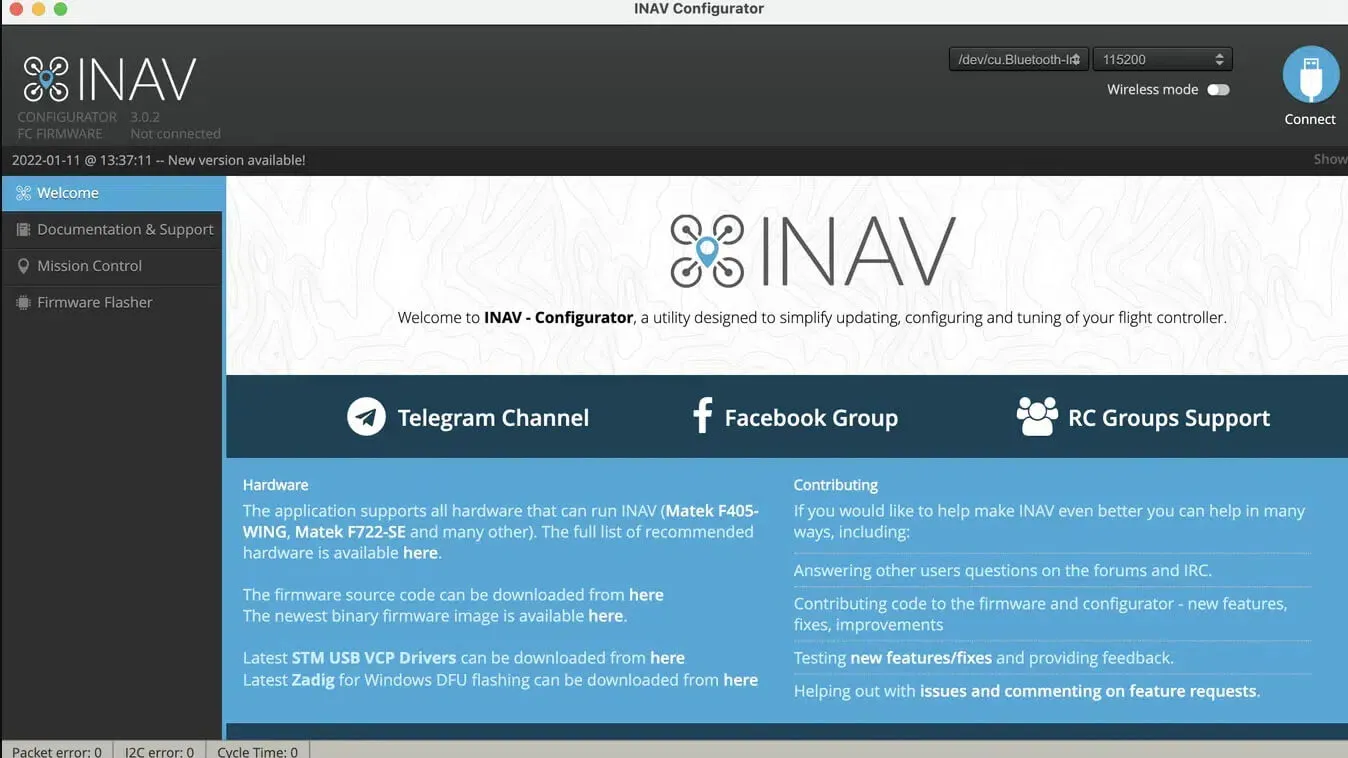
INAV is one of the most important FPV drone software platforms for pilots building long-range cruisers, fixed-wing FPV aircraft, and navigation-focused hobby drones.
As of May 9, 2026, the official INAV Configurator GitHub releases show INAV Configurator 9.0.2 as the latest release for the INAV 9 firmware line.
My Honest Recommendation on INAV
If you are building a 7-inch GPS quad for safe cruising rather than aggressive freestyle, I would seriously consider INAV. It gives you more navigation capability than Betaflight without forcing you into the full complexity of ArduPilot.
That makes INAV one of the best answers for the keyword fpv drone software, especially when the user’s real intent is GPS flying, not racing.
- Cons:
- Less responsive for FPV racing drones.
- Learning curve for pilots unfamiliar with autonomous missions.
ArduPilot
When ArduPilot Is the Right Software
ArduPilot is not the best software for most freestyle or racing quads, but it is one of the best drone programming platforms overall if your focus is autonomy.
ArduPilot is the right choice if you need:
- advanced mission planning
- complex waypoint control
- survey or mapping workflows
- VTOL or hybrid aircraft support
- robust telemetry and failsafes
- ground station software for deep configuration and planning
ArduPilot’s own documentation recommends Mission Planner as the most compatible and closely updated ground control station, while also listing QGroundControl as a strong cross-platform option.
Who should Actually Use ArduPilot?
From an FPV pilot’s point of view, ArduPilot is usually the right answer only if:
- your project is more than a normal FPV quad
- you need autonomous behavior
- you are building fixed-wing, VTOL, rover, or research-style platforms
- you want more mission depth than INAV offers
For normal 5-inch freestyle? No.
For autonomy, mapping, and serious mission work? Yes.
EmuFlight
EmuFlight is still worth mentioning because some freestyle pilots prefer its flight feel.
It is not the mainstream default like Betaflight, and the ecosystem is smaller, but it remains relevant for pilots who want:
- a Betaflight-like workflow with different handling characteristics
- a different tuning style
- a smoother or more relaxed freestyle feel
Pros:
- Smoother flight, especially at lower speeds.
- Highly appreciated by freestyle FPV pilots.
Cons:
- Smaller community than Betaflight.
- Less support for new features or third-party peripherals.
My take on EmuFlight:
EmuFlight is not what I recommend to absolute beginners first. But if you already understand Betaflight and want to experiment with flight feel, it can still be a fun and useful alternative.
Cleanflight
Cleanflight is another open-source flight control software often compared to Betaflight, but it is generally less oriented toward FPV racing and more versatile. Cleanflight was hugely important in the evolution of FPV flight firmware, but for modern FPV drone builds it is usually not the best choice anymore.
- Features:
- Similar to Betaflight, with PID tuning options and flight modes.
- Less focused on FPV racing, better suited for more stable or basic applications.
- Pros:
- Simple interface.
- Suitable for drones that don’t require as fine-tuned adjustments as Betaflight.
- Cons:
- Fewer updates than Betaflight.
- Lacks the advanced features that experienced pilots might need.
The Software Most FPV Pilots Actually Need
This is the part many articles miss.
A real FPV pilot usually does not use only one piece of software. We use a stack.
Flight Controller Firmware Tool
This is your main software:
- Betaflight App
- INAV Configurator
- Mission Planner or QGroundControl for ArduPilot
- EmuConfigurator
ESC Configuration Software
If you build and repair FPV quads regularly, you will also use ESC tools such as:
- BLHeliSuite32
- BLHeli Configurator
- AM32 Configurator
These matter for:
- motor direction
- startup behavior
- PWM settings
- ESC telemetry
- RPM filtering support
Receiver and Link Software
For many modern FPV builds, especially ELRS, you also need:
- ExpressLRS Configurator
- receiver web UI or passthrough tools
- radio setup tools such as EdgeTX Companion
Blackbox and Debug Tools
For tuning and troubleshooting:
- Blackbox Explorer
- Betaflight blackbox logs
- ArduPilot log analysis tools
- OSD and DVR review during diagnosis
If you want to fly well and maintain your own gear, this “software stack” matters more than chasing one magic app.
Which FPV Drone Software Should Beginners Use?
For beginners, I recommend a very simple approach.
- If you are building a normal FPV quad: use Betaflight
- If you are building a GPS long-range hobby quad: use INAV or Betaflight, depending on how much autonomy you want
- If you are building a mapping, research, or advanced mission aircraft: use ArduPilot
If you are trying to learn FPV setup from scratch:
- Do not start with ArduPilot unless autonomy is your actual goal
From a real builder’s perspective, the easiest beginner mistake is overcomplicating software. A lot of new pilots think they need the “most advanced” platform, when what they really need is the one that gets them in the air fastest and teaches them the basics cleanly.
My Recommended Software Path for Different FPV Use Cases
| Use Case | Best Software | Why |
|---|---|---|
| 5-inch freestyle quad | Betaflight | Best overall manual FPV ecosystem |
| FPV racing | Betaflight | Fast response, tuning depth, huge community |
| Cinewhoop | Betaflight | Great quad support and tuning workflow |
| Long-range quad with GPS | INAV or Betaflight | INAV for more navigation, Betaflight for simpler manual feel |
| Fixed-wing FPV | INAV | Better fixed-wing and navigation workflow |
| Advanced autonomous UAV | ArduPilot | Deep mission planning and vehicle support |
| Freestyle pilot chasing a different feel | EmuFlight | Alternative tuning philosophy and handling |
The Biggest Mistakes Pilots Make with FPV Drone Software
Choosing by hype instead of use case: the best software for a racing quad is not the best software for a fixed-wing GPS aircraft.
Confusing “programming” with “coding”: most FPV pilots are configuring and tuning, not writing custom flight code.
Starting with too much complexity: a new pilot with a 5-inch quad usually does not need ArduPilot.
Ignoring the rest of the software stack: firmware alone is not enough. ESC configuration, receiver setup, and log review are all part of real FPV drone programming in practice.
Treating old software as equal to current ecosystems: cleanflight matters historically, but for most new FPV builds it is no longer the strongest default recommendation.
The Rise of Autonomous Drones: The Future of Programming
Beyond traditional performance adjustments, an expanding area in the drone world is autonomous drones. Drone programming software is no longer limited to manual configurations but is evolving toward technologies based on artificial intelligence (AI) and machine learning. These drones can be programmed to perform complex missions independently.
Autonomous Drones and AI
Autonomous systems allow drones to:
- Recognize and avoid obstacles in real time.
- Track moving objects, such as vehicles or people.
- Make intelligent decisions based on environmental conditions, such as weather changes or unexpected obstacles.
- Software like Auterion or AirSim (from Microsoft) already integrates advanced algorithms that allow drones to be used in search and rescue missions, environmental monitoring, and even package delivery.
Advantages of AI-Based Programming
- Time-saving: Drones can be programmed to carry out repetitive tasks without human supervision.
- Increased Safety: With AI, drones can react more quickly to unforeseen events, like sudden obstacles, which enhances safety.
- Applications in Hostile Environments: Autonomous drones can be used in dangerous areas for humans, such as natural disaster sites or high-risk industrial environments.
Challenges of Autonomous Drones
Programming Complexity: Integrating AI into drones requires deep knowledge of algorithms and data management.
Regulation: The use of autonomous drones is still highly regulated in many regions, which slows down their large-scale deployment.
Software Comparison
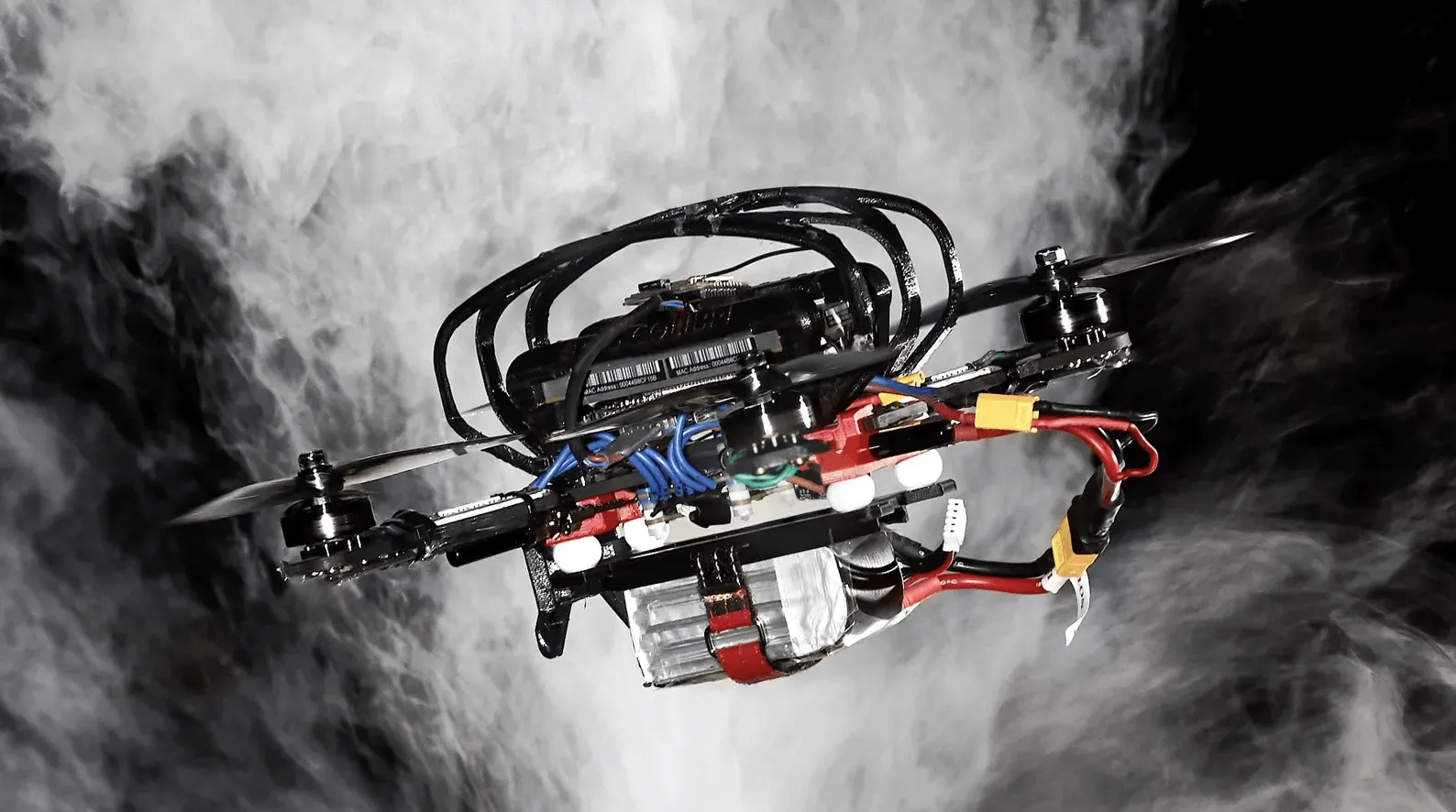
| Software | Drone Type | Key Feature | Difficulty | Community |
| Betaflight | FPV Drones | Advanced PID tuning | Difficult | Very large |
| Cleanflight | Standard Drones | Simplicity | Medium | Moderate |
| INAV | GPS Drones | Autonomous navigation | Difficult | Good |
| EmuFlight | FPV Drones | Smooth flight experience | Medium | Small |
| Auterion | Autonomous Drones | AI integration, complex missions | Difficult | Growing |
Understanding the Differences in Software Choices
When selecting the right software for programming drones, it is essential to evaluate what your needs and priorities are, as each software is tailored for specific use cases and pilot experience levels.
Betaflight – The Choice for Precision and Performance
Betaflight is widely regarded as the go-to software for FPV drone pilots who need precise control over every parameter. Its ability to fine-tune PID (Proportional, Integral, Derivative) settings allows for extreme customization, making it highly desirable for competitive FPV racing or acrobatic flying. However, Betaflight’s complexity can be overwhelming for beginners, as the extensive number of adjustable settings requires a deeper understanding of drone dynamics.
That said, the software benefits from an active and supportive community, which provides resources and advice to help pilots troubleshoot and optimize their drones. This makes Betaflight ideal for those who are serious about pushing the boundaries of performance but may require a learning curve for newer users.
Cleanflight – Simplicity for the Casual User
For pilots seeking a simpler, more streamlined experience, Cleanflight offers a less complicated interface while still providing the essential configuration options for drone programming. It doesn’t have as many advanced features as Betaflight but is perfectly adequate for casual flyers who aren’t involved in high-performance FPV racing. Cleanflight is especially useful for hobbyists flying standard drones for recreational purposes or light-duty applications.
The moderate community support ensures that you have access to sufficient resources to get started and make the most of Cleanflight without diving into the more complex aspects of drone configuration. Overall, it strikes a good balance between ease of use and functionality, making it a suitable choice for drone enthusiasts who prioritize ease over fine-tuned control.
INAV – Designed for Long-Range and Autonomous Flying
INAV sets itself apart by being focused on long-range flying and GPS-based navigation. While Betaflight excels in FPV drone performance, INAV is more aligned with users who need to execute missions involving GPS waypoints, return-to-home functionality, and autonomous or semi-autonomous flight paths. It’s a perfect fit for aerial photographers, surveyors, or long-distance drone pilots who prioritize reliability and precision over agility.
Because INAV is focused on autonomy, it requires a deeper understanding of navigation systems and GPS integration. While this makes it more challenging for inexperienced users, it is one of the best tools available for advanced drone operations that demand flight planning and execution of complex aerial missions. As GPS drones become more prevalent for industrial and professional applications, INAV will likely remain a top choice in these sectors.
EmuFlight – The Go-to Software for Freestyle Pilots
If smoothness in flight is your primary goal, EmuFlight may be the software of choice. Though not as widely known as Betaflight, EmuFlight is steadily gaining a reputation for providing a more fluid and stable flight experience, which is particularly beneficial for freestyle FPV pilots who emphasize creative maneuvers over speed.
While EmuFlight has fewer configuration options than Betaflight, it makes up for it with an emphasis on ease of handling, allowing pilots to enjoy a more predictable and refined experience in the air. This software is suitable for those who want to focus on enjoying the aesthetics of flight and performing smooth acrobatics without worrying about fine-tuning every technical detail. The smaller community means less available support, but the existing user base is enthusiastic and helpful.
Auterion – The Future of Autonomous Drone Operations
For those looking toward the cutting edge of drone technology, Auterion offers advanced tools for programming fully autonomous drones. By integrating artificial intelligence and machine learning, Auterion is designed for mission-critical operations that require a high degree of autonomy, such as environmental monitoring, search and rescue, and industrial inspection. These drones can carry out complex missions with minimal human intervention, making them invaluable in high-risk or inaccessible environments.
Due to the advanced nature of this software, the learning curve is steep, and it’s primarily geared toward professionals in industries that require sophisticated drone applications. However, as autonomous drones become more common, software like Auterion is likely to gain a broader user base, especially with ongoing developments in AI integration. Auterion’s growing community reflects the rise of autonomy in drone operations and the increasing demand for mission-specific software.
Conclusion
If you want the simplest answer:
- Betaflight is the best FPV drone programming software for most FPV quad pilots
- INAV is the best choice for GPS-assisted long-range FPV and fixed-wing hobby builds
- ArduPilot is best for autonomy, mapping, and advanced mission planning
- EmuFlight is a niche but still useful alternative for some freestyle pilots
- Cleanflight is mostly a legacy option today
As someone who flies, builds, solders, tunes, repairs, and re-builds FPV drones, my real-world recommendation is this:
- If your aircraft is a normal FPV quad, start with Betaflight.
- If your aircraft is a GPS-focused cruiser, look at INAV.
- If your aircraft is basically a mission platform, go straight to ArduPilot.
That is the cleanest and most honest answer for most readers searching for fpv drone software.
If you are still choosing hardware, pair the software with a solid FPV flight controller and read this related guide: Betaflight vs INAV vs ArduPilot: Which FC Firmware Is Right for You?
FAQ
What is the best software for FPV drone programming?
For most FPV quads, Betaflight is the best software because it offers the strongest mix of performance, tuning options, community support, and hardware compatibility.
What is the difference between FPV drone software and FPV drone programming software?
In practice, they often mean the same thing. Most pilots use the term to describe firmware and setup tools for configuring, tuning, flashing, and maintaining FPV drones.
Is Betaflight better than INAV?
Betaflight is better for manual FPV flying such as racing and freestyle. INAV is better for GPS-assisted flying, fixed-wing setups, and waypoint-style navigation.
Do FPV pilots still use Cleanflight?
Some do for older legacy hardware, but most new FPV builds in 2026 are better served by Betaflight, INAV, ArduPilot, or EmuFlight.
Do I need coding skills to use FPV drone software?
Usually no. Most FPV pilots do not write code. They use configurators and setup tools to flash firmware, tune settings, configure receivers, and troubleshoot flights.