Buying Guide: Build, Tune & Fly Your First 5-Inch Freestyle FPV
If you're new to 5-inch FPV freestyle, the hardest part isn't learning how to fly—it's knowing how to put the right parts together and set them up correctly.
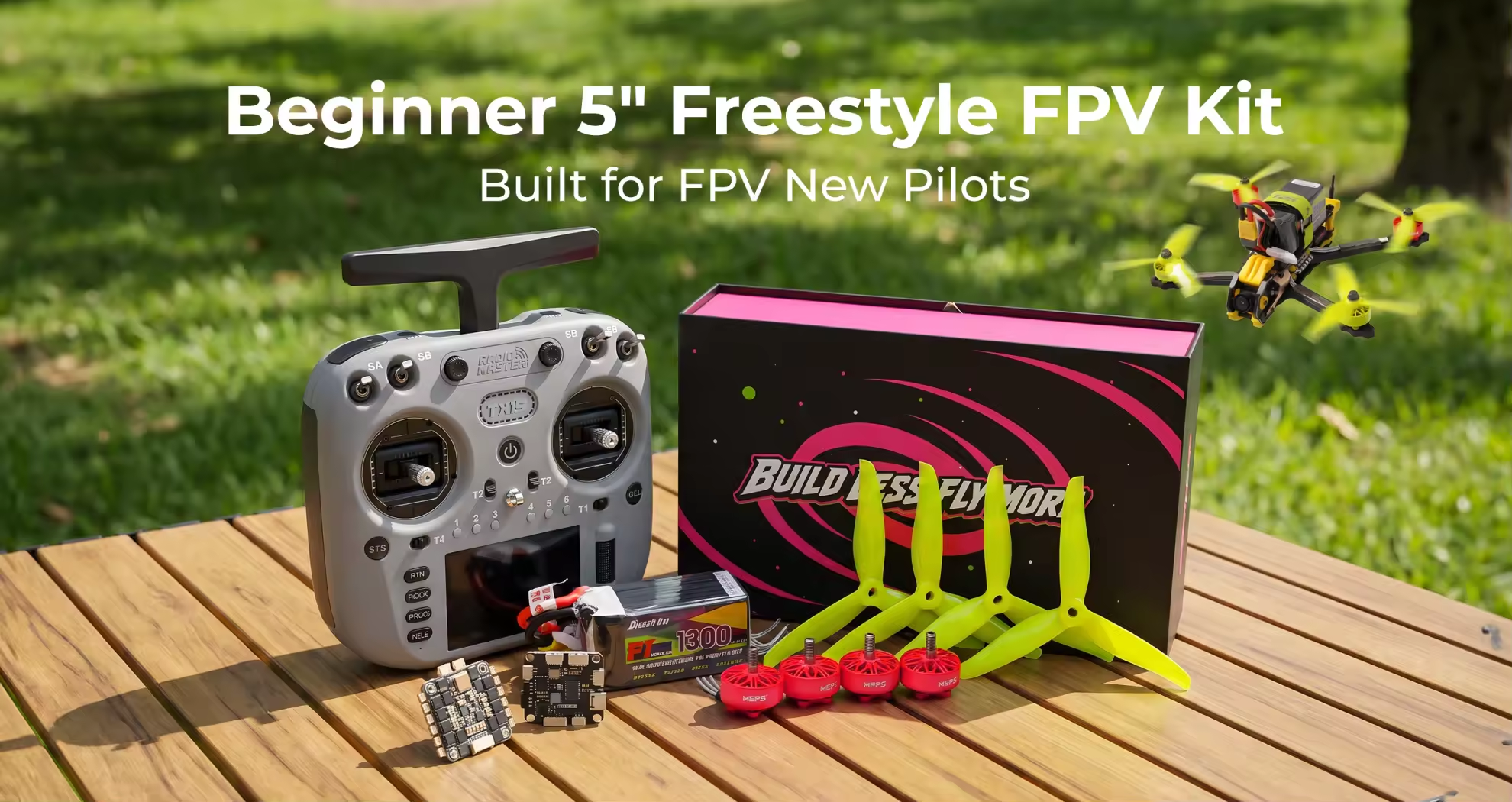
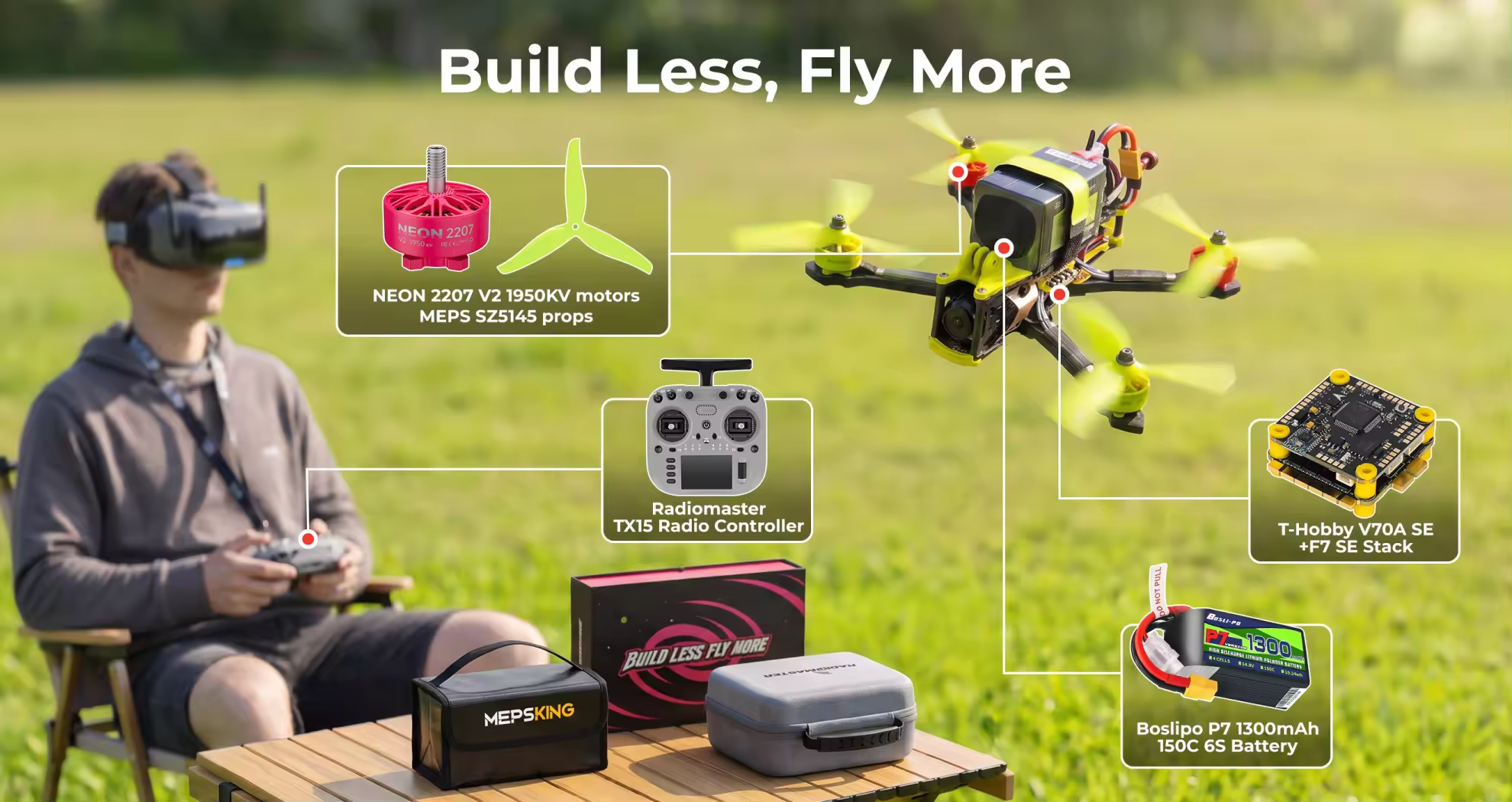
This setup is designed to take the guesswork out of that process. The motor, stack, propeller, battery, and radio are selected to work together as a balanced 6S 5-inch freestyle system, giving beginners a predictable starting point while leaving enough performance to grow into more advanced flying.
1. Why Are These Parts Matched Together?
A good beginner setup is not about choosing the biggest motor or the highest-current ESC. What matters is whether the components work well together.
The Power System
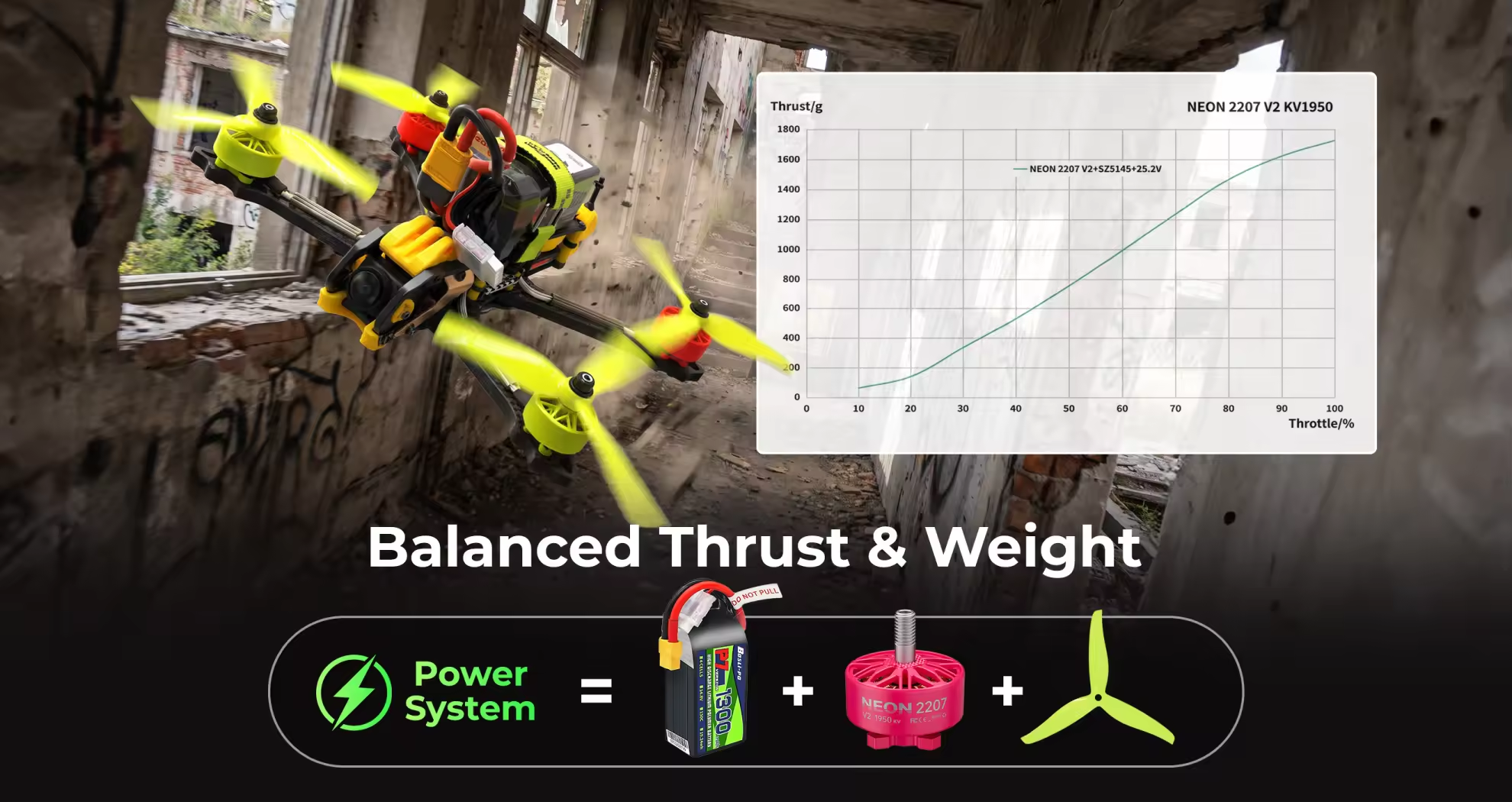
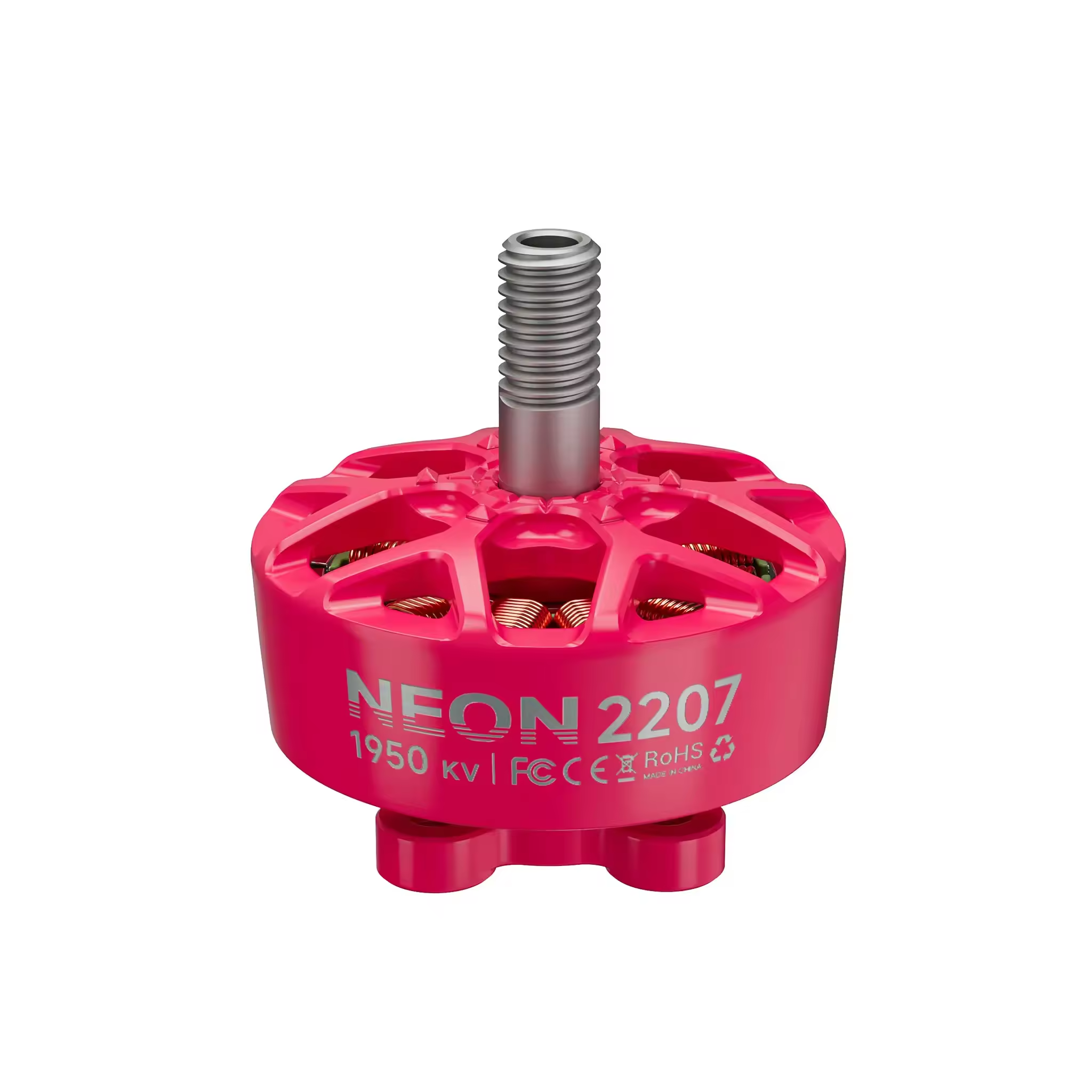
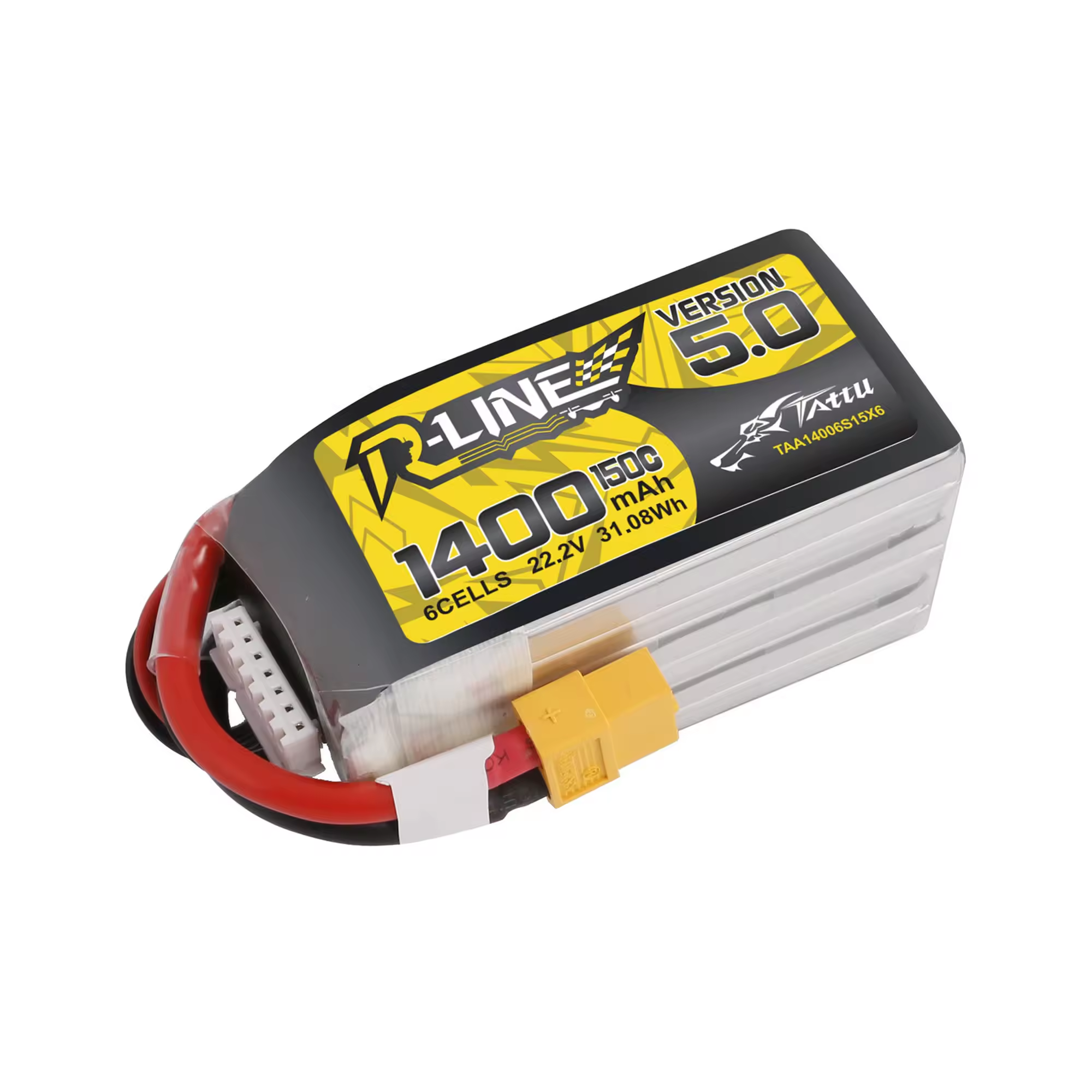
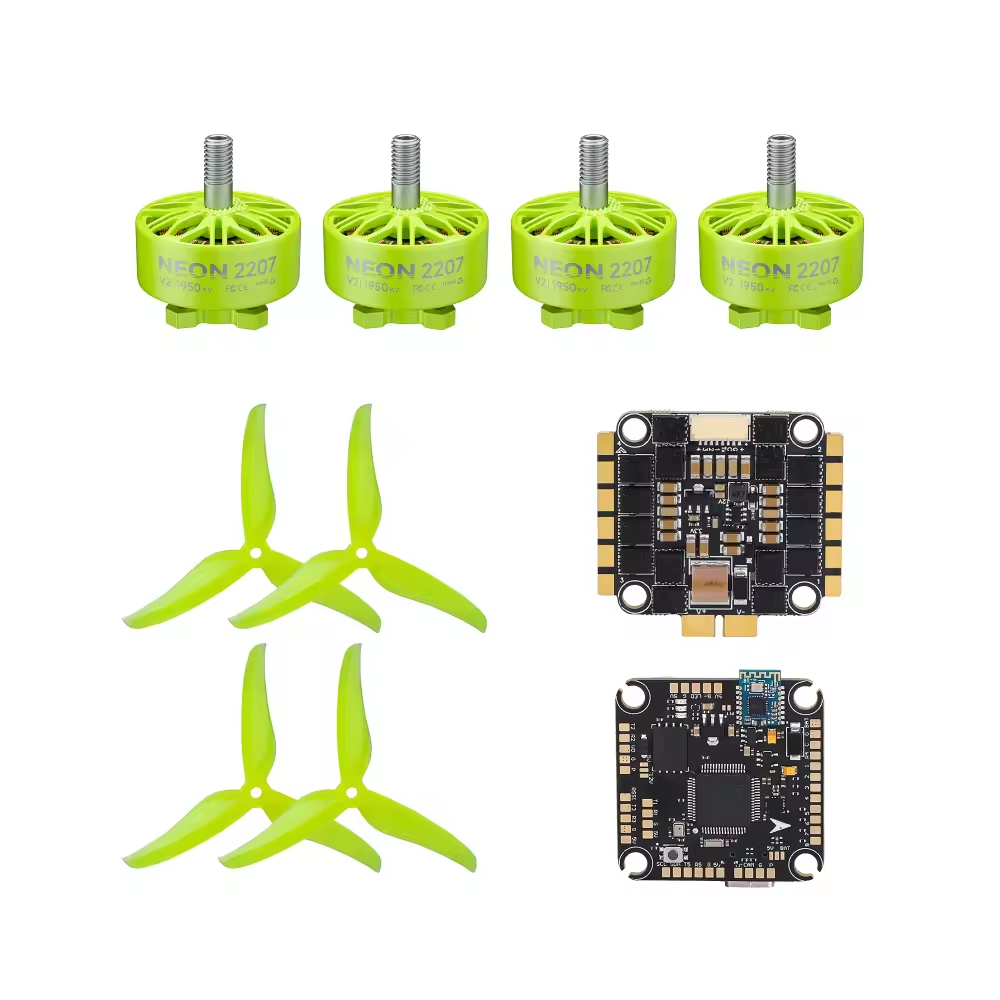
NEON 2207 V2 Motors + MEPS SZ5145 Props + 1300mAh 6S Battery
This combination gives the quad a practical balance of throttle response, acceleration, control, and weight.
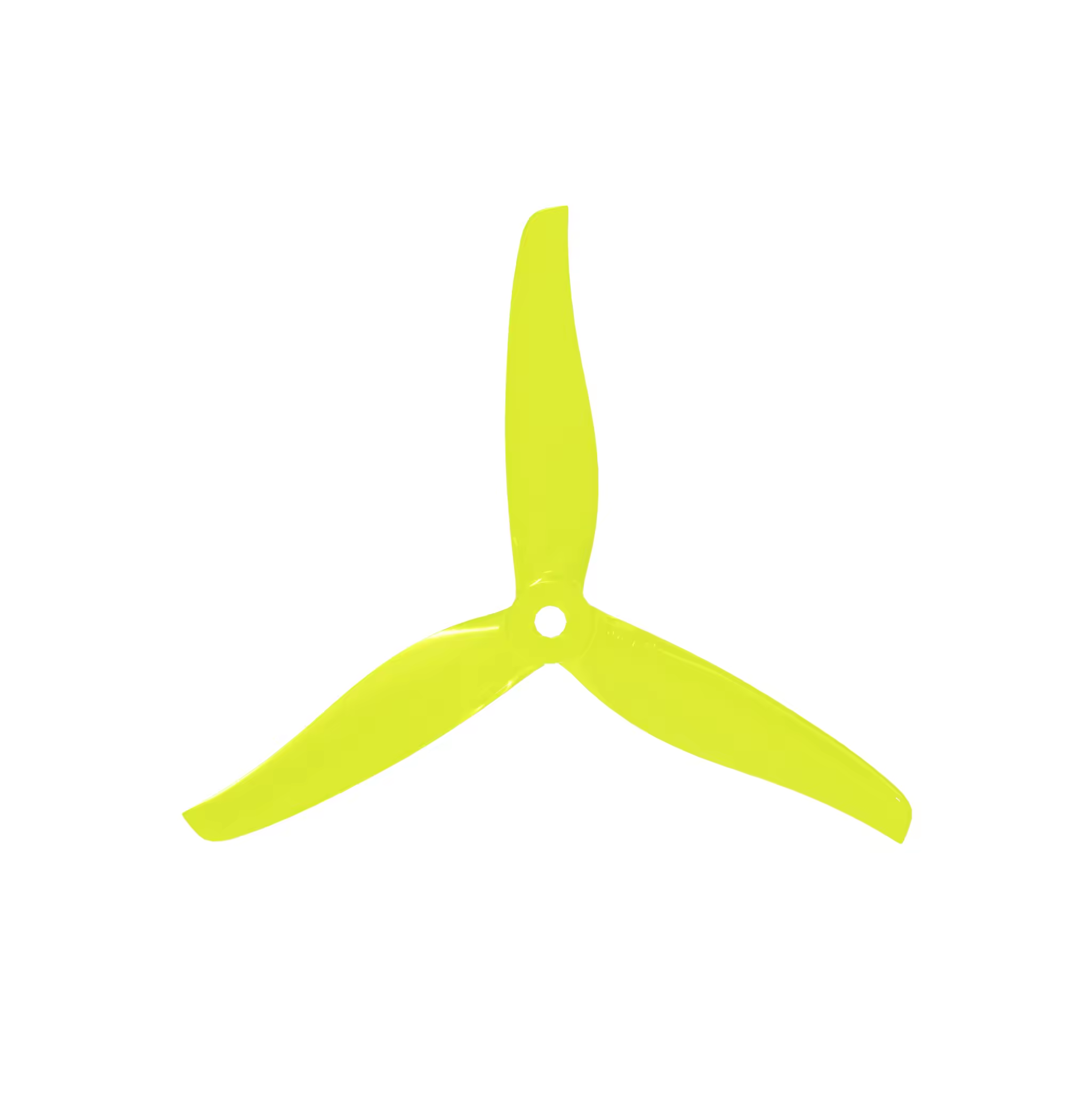
The 2207 motors provide enough torque for a 5-inch freestyle build without making the setup unnecessarily difficult to control. The SZ5145 props give the motors a responsive but manageable load, while the 1300mAh 6S battery provides the voltage and capacity needed for a typical 5-inch freestyle session.
For a beginner, this means you don't have to start by experimenting with different motor/prop/battery combinations.
2. How Should a Beginner Set It Up?
Before changing rates, PID values, or filters, make sure the basic setup is correct.
Step 1: Build the Power System
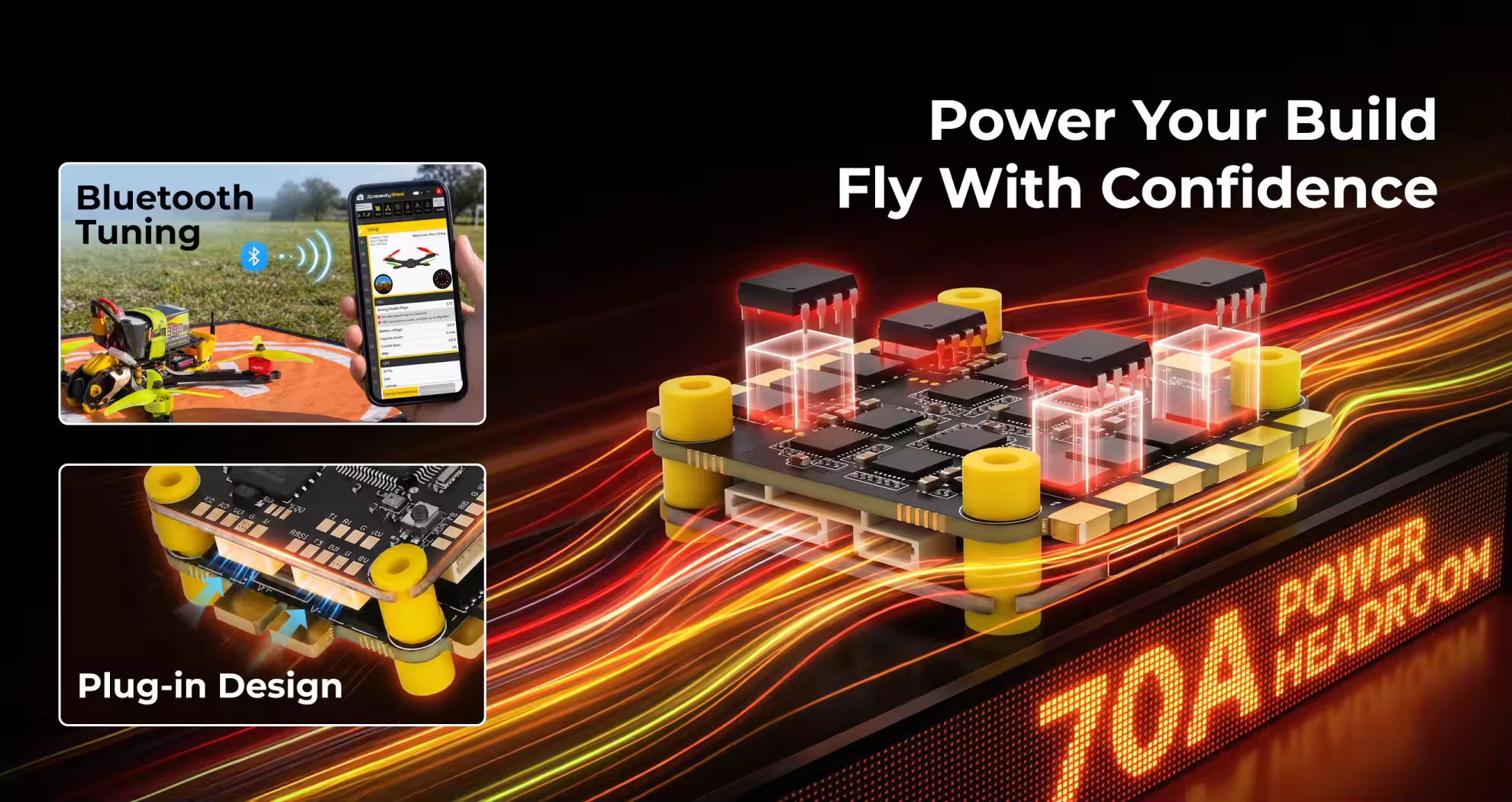
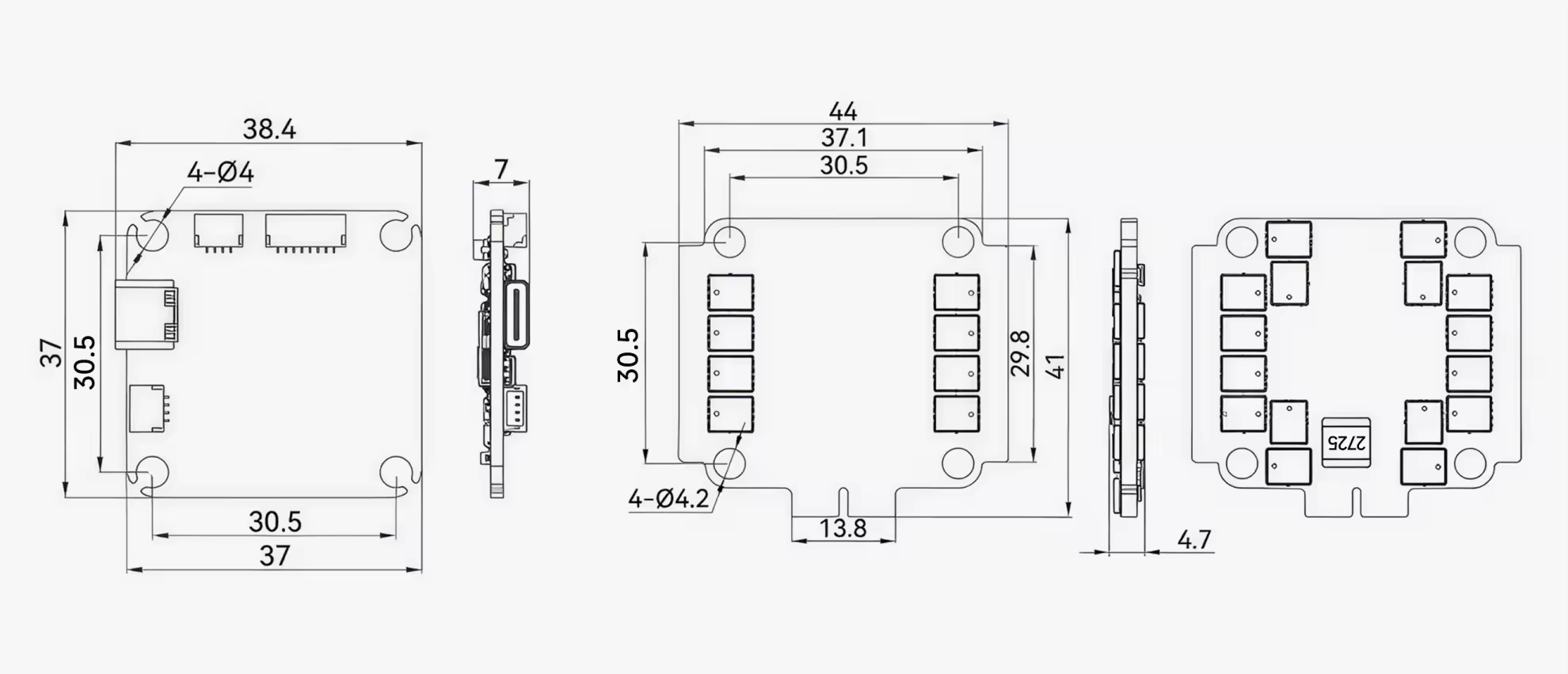
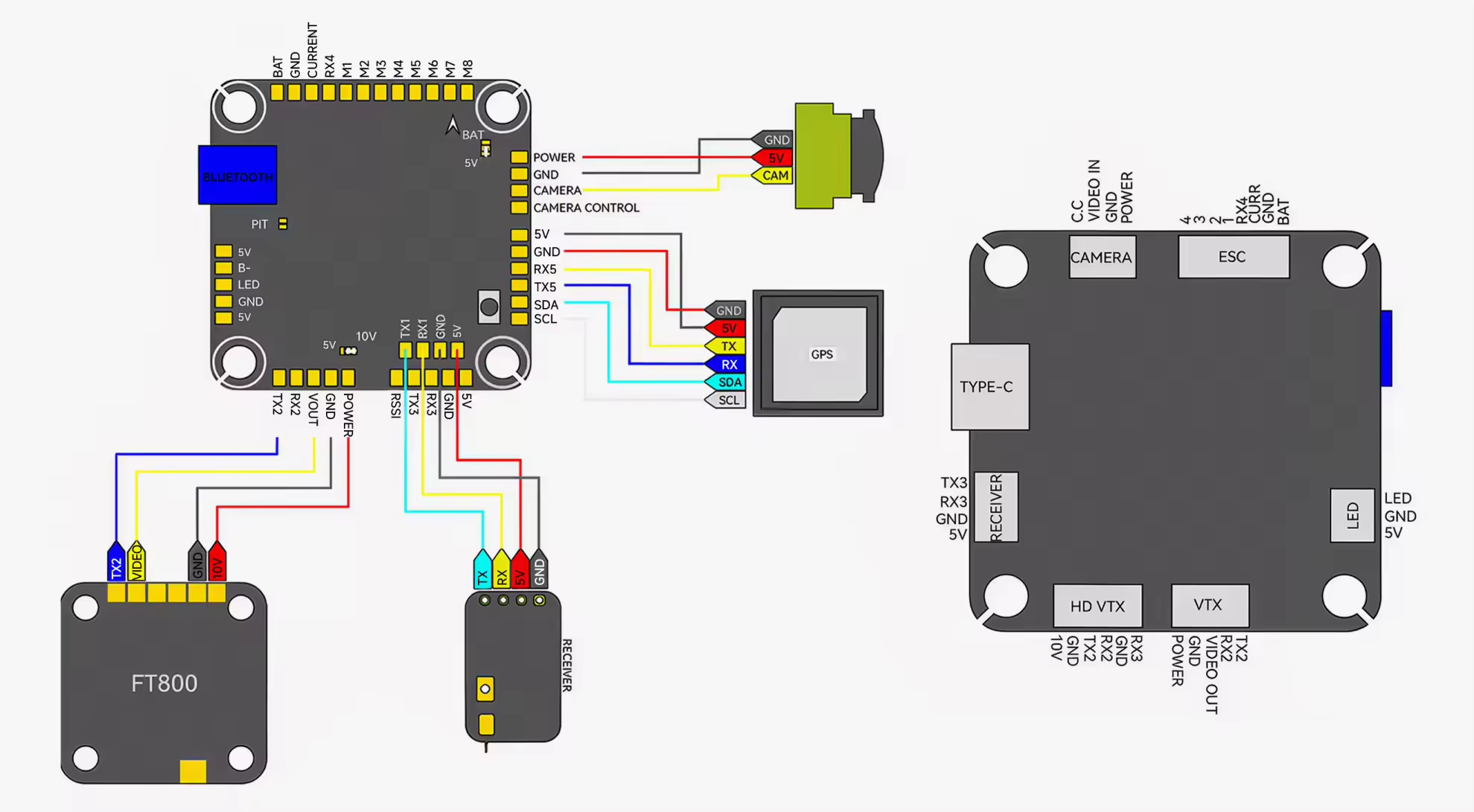
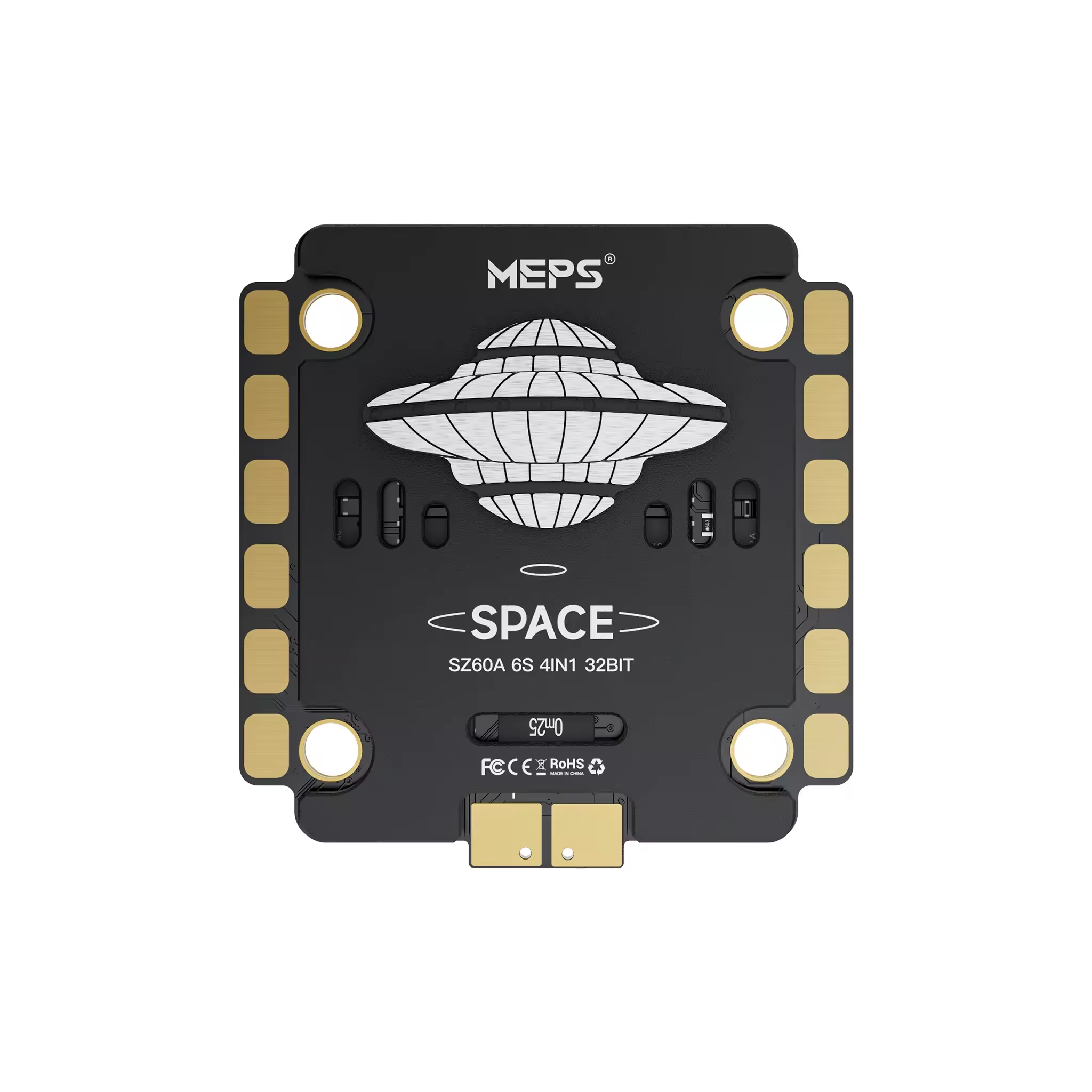
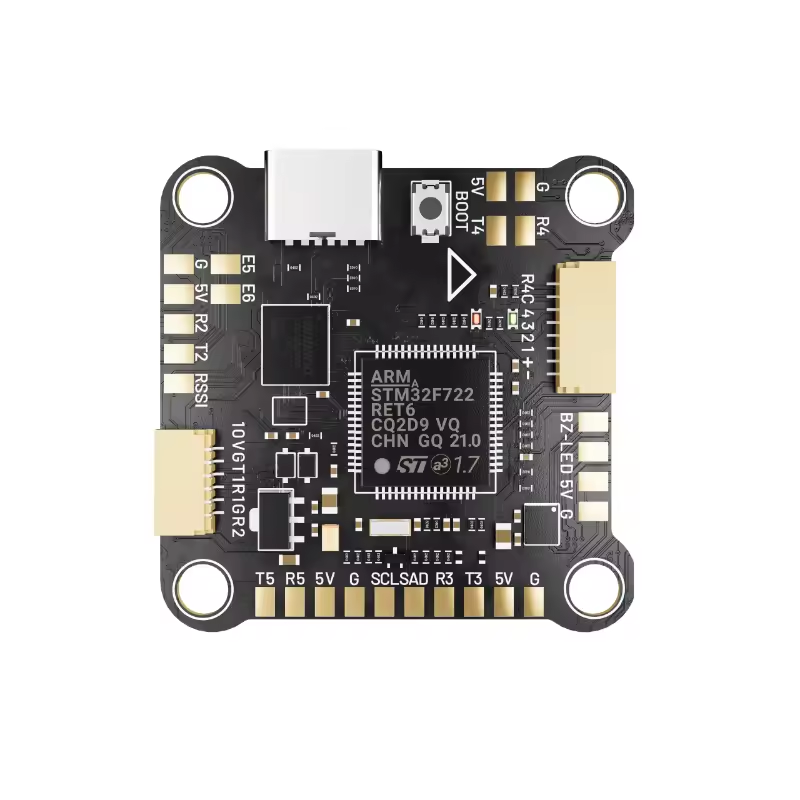
Install the four NEON 2207 V2 motors and the T-HOBBY V70A SE + F7 SE Stack.
Check:
● Motor mounting screws do not touch the motor windings
● Motor wires are securely soldered
● Battery leads are properly soldered
● No exposed solder joints can cause a short
● Propellers are installed in the correct direction
Step 2: Configure the Flight Controller
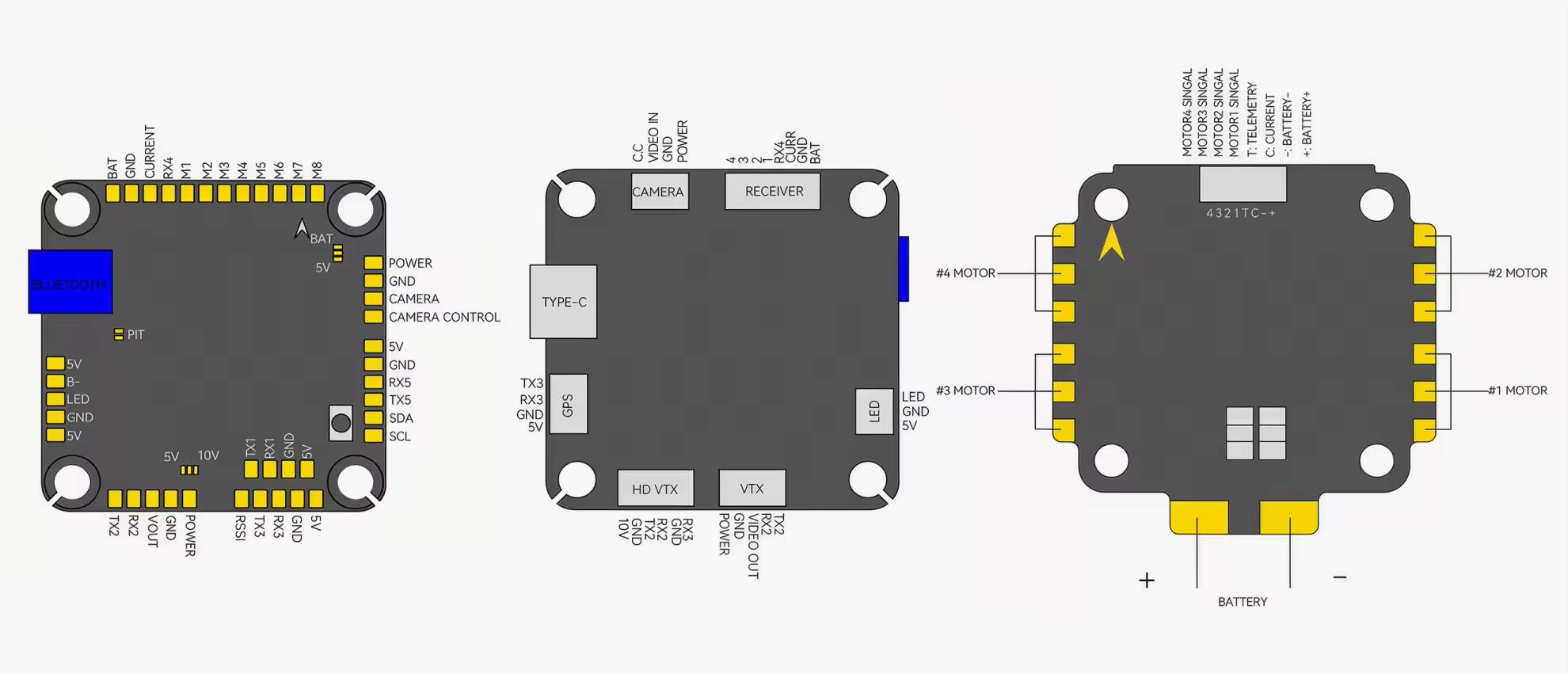
Connect the F7 flight controller to Betaflight and complete the basic setup:
Receiver → Modes → Motor Direction → OSD → Failsafe → Battery Monitoring
Do not start with aggressive tuning.
First make sure the quad:
Arms correctly → Motors spin correctly → Disarms correctly → Shows correct battery voltage → Failsafe works
Only after these basics are confirmed should you move on to flight tuning.
3. How Should Beginners Tune It?
The biggest mistake new pilots make is trying to make the quad feel “fast” before making it feel predictable.
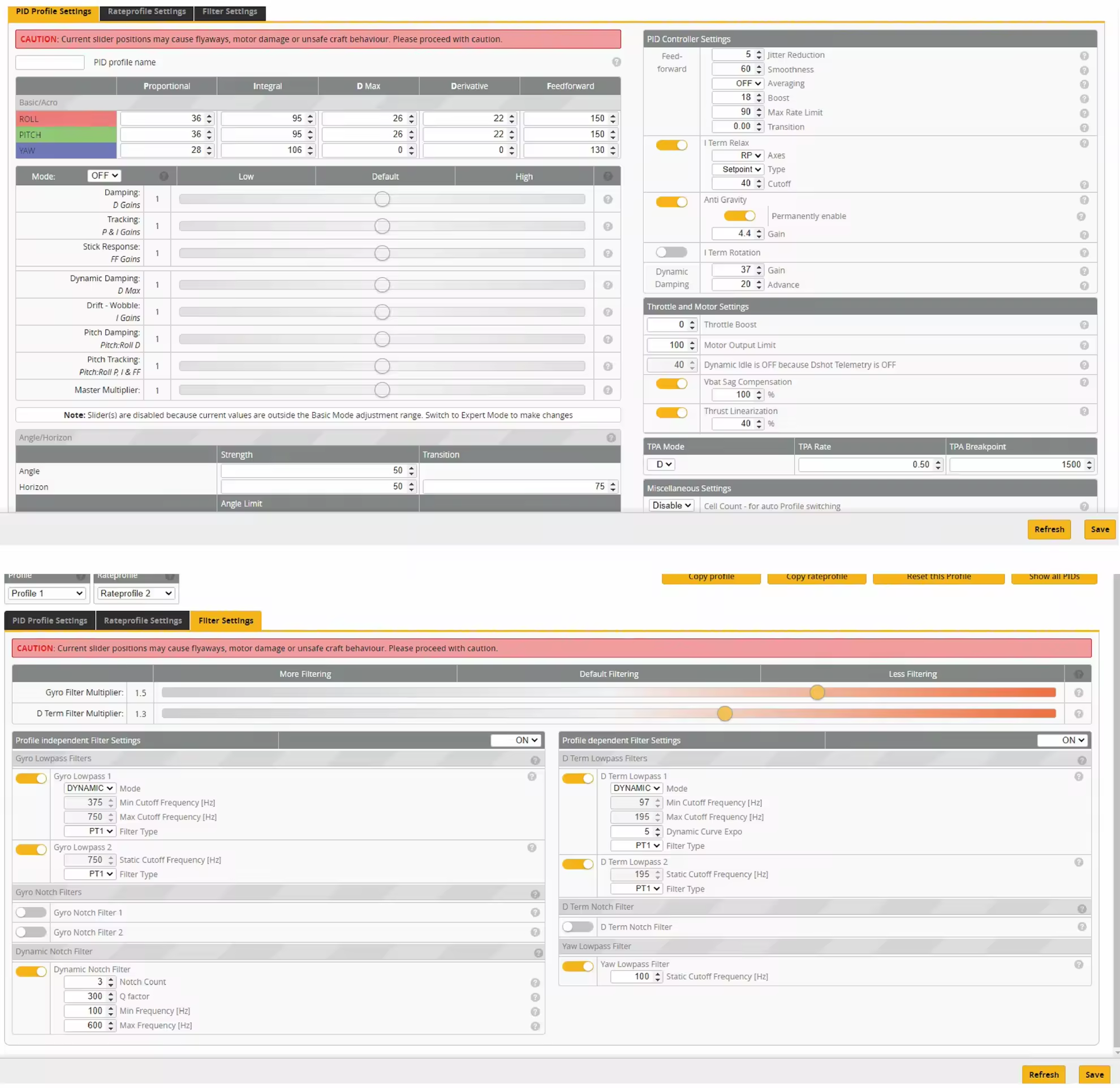
Start With a Stable Baseline
For the first flight, use a proven Betaflight starting configuration rather than immediately changing every PID and filter value.
Your first goal should be:
Smooth throttle + predictable stick response + no excessive vibration
Do a short hover test first.
Listen for unusual motor noise, check whether the quad gets hot, and confirm that it responds normally to your stick inputs.
Then Tune One Thing at a Time
Once the basic flight is stable, make adjustments based on what you actually feel.
What You Feel | What to Check |
Quad feels too sensitive | Lower rates / adjust stick feel |
Response feels too slow | Gradually increase rates |
Bounce-back after flips | Check PID / filtering |
Motors become unusually hot | Check filtering, PID and mechanical vibration |
Throttle feels too aggressive | Adjust throttle curve / expo |
Quad feels smooth but lacks response | Fine-tune rates and filtering |
Don't change five settings at once.
Make one adjustment, fly again, and compare the difference. This is the fastest way for a beginner to understand what each setting actually does.
4. MEPSKING Test: What Does It Feel Like in the Air?
After the setup is correctly configured, the character of this build becomes much easier to understand.
It is not tuned around extreme racing performance or an ultra-lightweight build.
Instead, it aims for a stable, responsive freestyle feel.
Takeoff & Hover
The quad feels predictable when lifting off, making it easier for beginners to practice throttle control.
This is important during the first few flights because small throttle mistakes are much easier to correct when the power delivery is smooth.
Cruising & Basic Practice
At moderate throttle, the setup feels controlled rather than overly aggressive.
This makes it suitable for practicing:
● Straight-line flying
● Turns
● Figure 8s
● Altitude control
● Basic yaw and roll coordination
You can concentrate on learning stick control instead of constantly fighting the quad.
Punch-Outs
When you push the throttle, the 2207 motors have enough power to give the 5-inch quad a noticeable acceleration boost.
This is where the 6S setup starts to show its advantage.
You can begin with short punch-outs and gradually learn how to manage throttle instead of having to use the full power of the system immediately.
Rolls, Flips & Basic Freestyle
Once you become comfortable, the setup has enough responsiveness for basic freestyle movements.
Rolls and flips feel more natural as you increase your rates and become more confident with stick inputs.
You don't need to rebuild the quad every time you learn a new maneuver.
Freestyle Progression
As your skills improve, you can start experimenting with:
Power Loops → Split-S → Dives → Faster Lines → More Aggressive Freestyle
The same basic hardware can continue to support your progression.
5. What Does a Typical Flight Session Look Like?
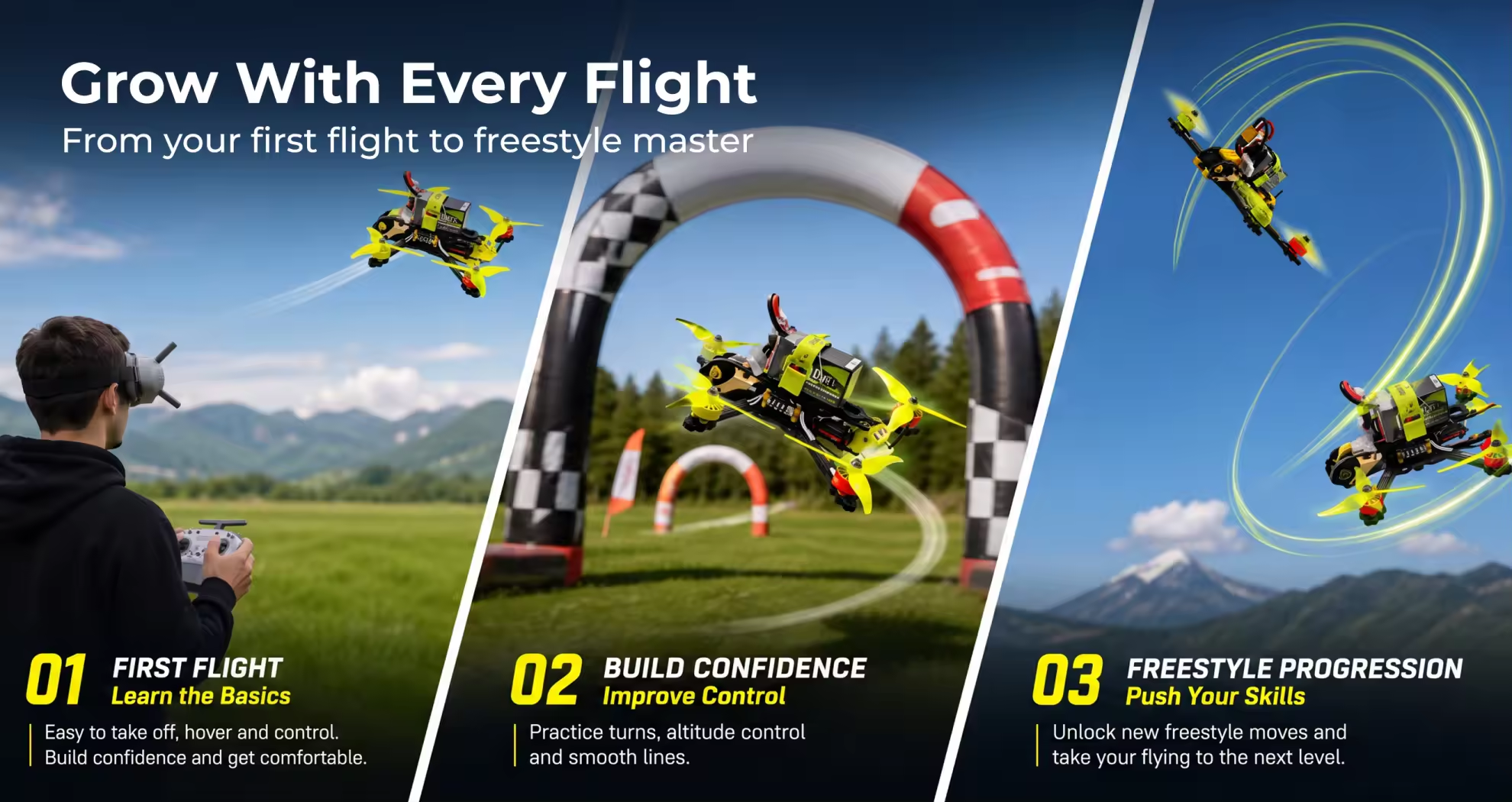
For a beginner, we recommend thinking about your first sessions in stages rather than trying to fly aggressively from day one.
Flight 1–3: Learn the Quad
Focus on:
Takeoff → Hover → Forward Flight → Turns → Landing
Keep the rates comfortable and avoid aggressive freestyle.
Flight 4–10: Build Control
Start practicing:
Figure 8s → Faster Turns → Altitude Changes → Basic Rolls → Basic Flips
At this stage, you will start to understand how throttle and stick movements work together.
After You Build Confidence
Now the quad becomes a freestyle platform rather than just a training tool.
You can gradually increase your rates, experiment with throttle feel, and begin practicing more dynamic maneuvers.
The goal is progression—not maximum performance on day one.
6. Is This Setup Right for You?
Choose This Setup If You:
● Are new to 5-inch FPV freestyle
● Want a matched 6S power system instead of choosing every component yourself
● Want something predictable enough to learn on
● Want enough power to continue practicing freestyle as your skills improve
● Don't want to replace your core setup after a few weeks of learning
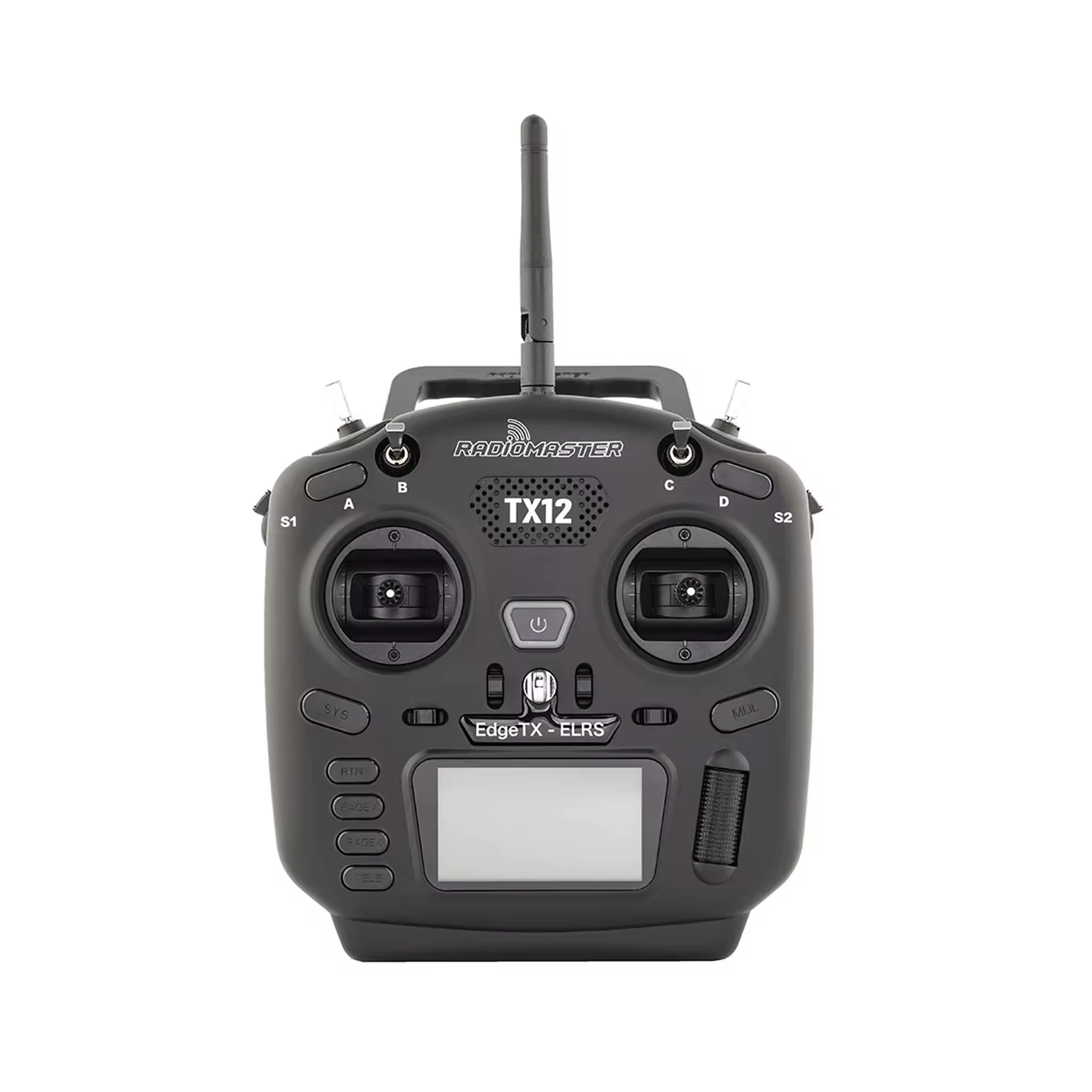
● Want a RadioMaster TX15 that can continue to serve you as your control skills develop
MEPSKING Beginner Takeaway
You don't need the most powerful 5-inch quad to learn FPV. You need one that you can understand, control, and grow with.
Start with stable settings. Learn what the quad feels like. Change one setting at a time. Then gradually push the same build further as your skills improve.
Build it once. Learn on it. Tune it. And keep flying it as you get better.

 Radiomaster 2S 7.4V 6200mAh Lipo Battery for Boxer TX16S2S 7.4V 6200mAh Lipo Battery$42.74 Save $2.25
 Fat Shark Recon V3 FPV Goggles 5.8G Analogue Video HeadsetRecon V3$184.29 Save $5.70