Buying Guide: Boslipo P7 850mAh 95C FPV Battery
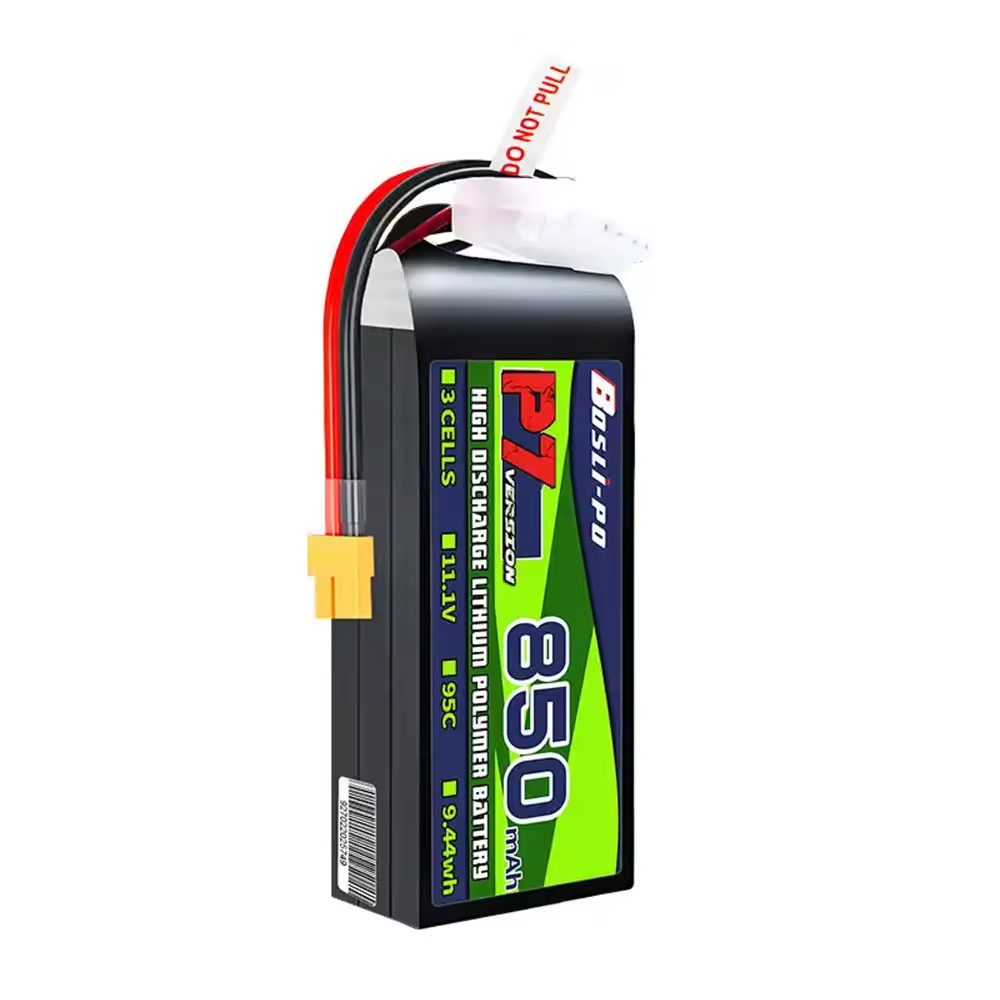
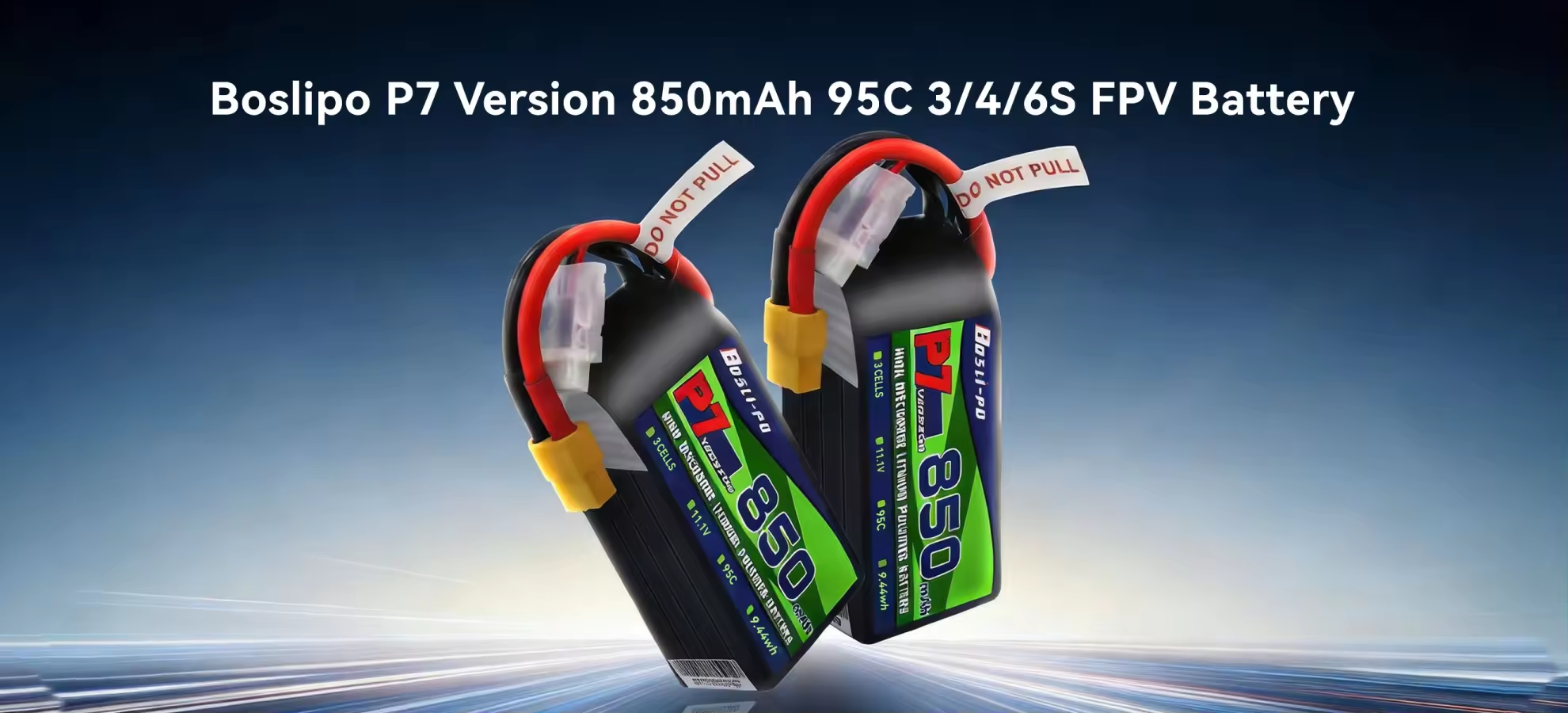
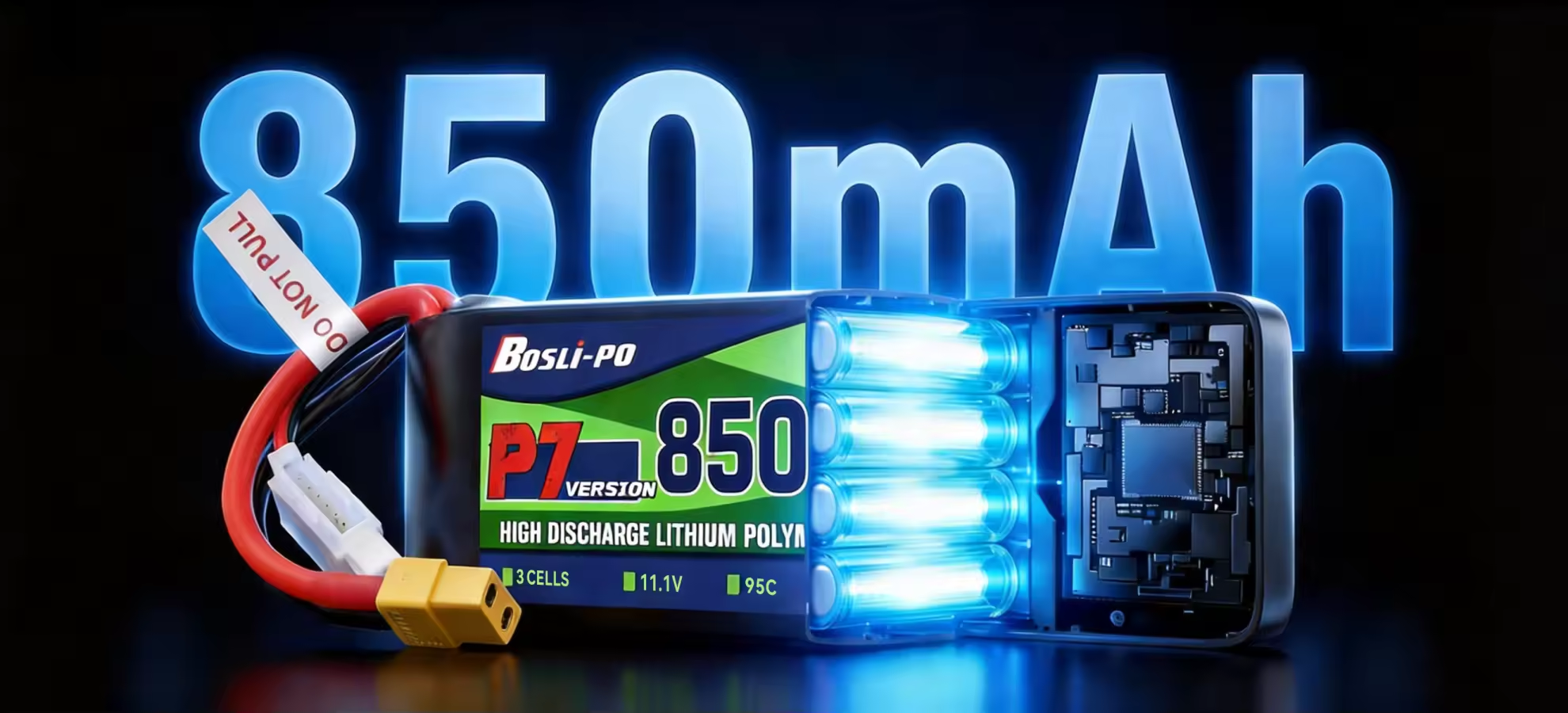
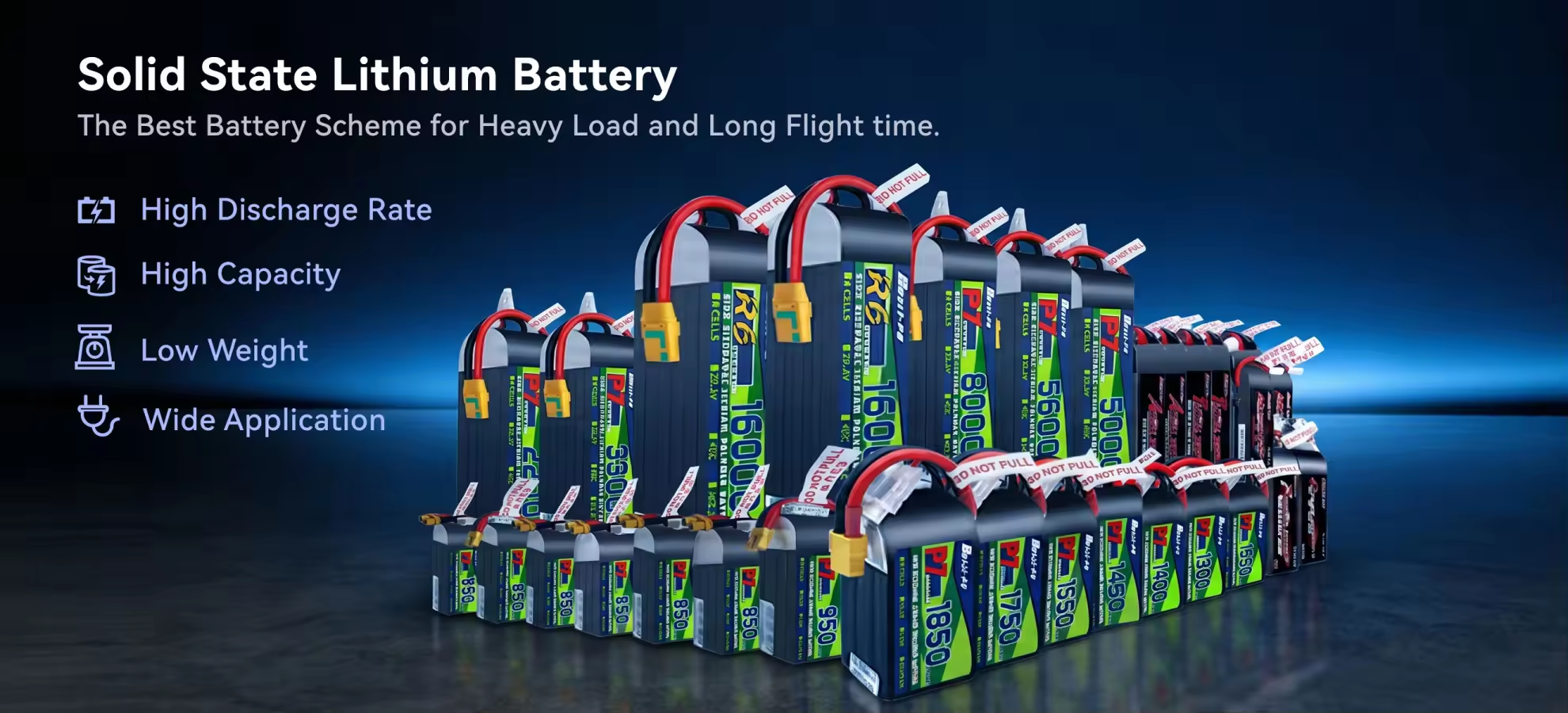
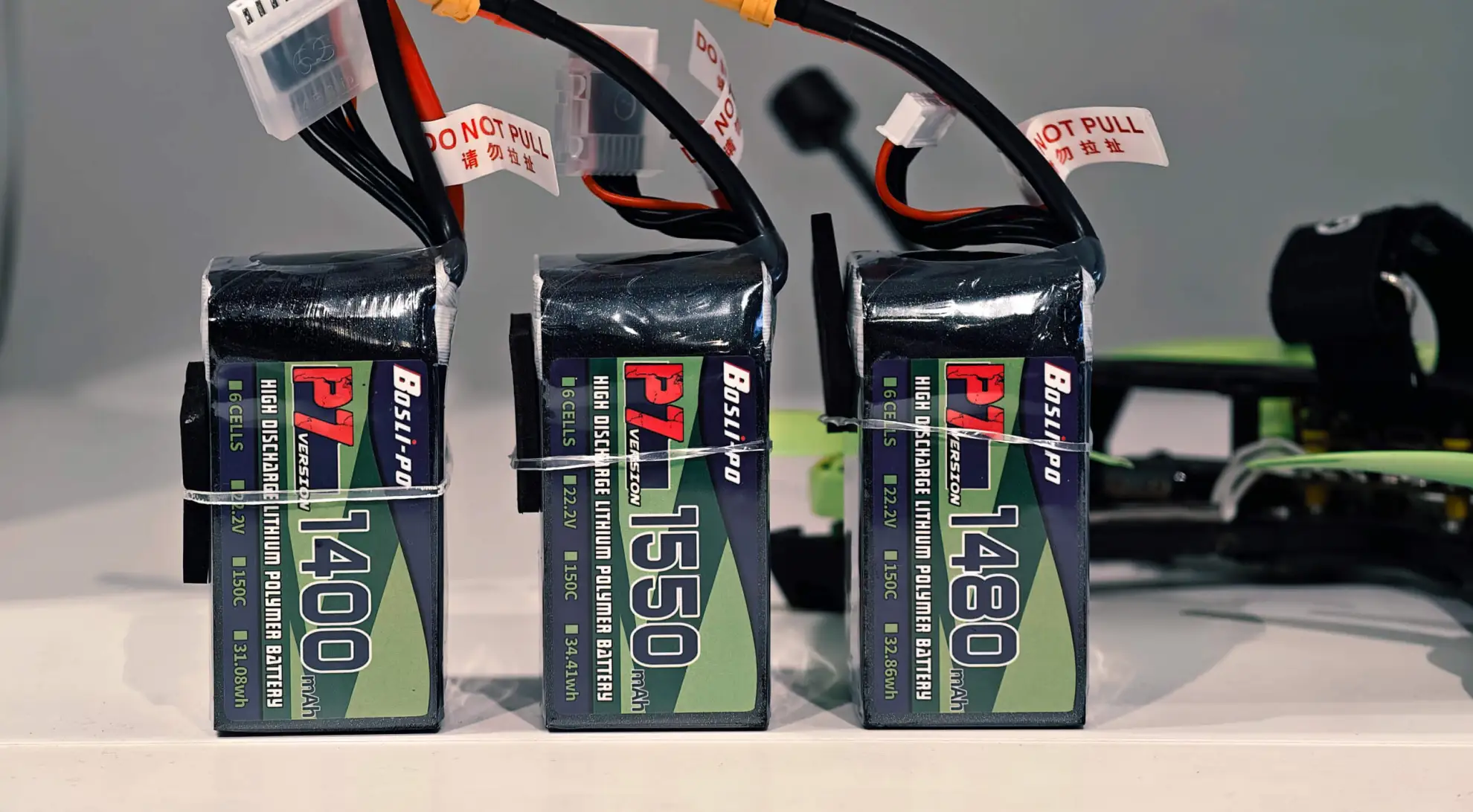
The Boslipo P7 850mAh 95C is a good middle-ground battery for pilots who do not want to sacrifice too much agility for additional flight time. The capacity is large enough for useful flight duration but still compact enough for lightweight FPV builds.
The key is choosing the correct capacity and cell count for your drone.
MEPSKING Expert Flight-Data Assessment
The P7 850mAh is best viewed as a performance-oriented lightweight pack, rather than an endurance battery.
Compared with larger P7 packs, 850mAh keeps the battery relatively compact and reduces the amount of weight carried by the drone. This is particularly useful for freestyle and racing, where additional battery mass can make the quad feel slower during direction changes and throttle transitions.
The 95C rating is also intended for high-current FPV applications. Boslipo offers the 850mAh P7 in 3S 11.1V, 4S 14.8V and 6S 22.2V, all using XT30 connectors.
Which P7 Capacity Should You Choose?
For the same P7 95C series, capacity should be selected according to the drone size and flight priority, rather than simply choosing the largest battery available.
| 650mAh | 850mAh | 950mAh |
|---|
| Lightweight 2.5–3.5" | 3–4" freestyle / racing | Heavier 3.5–5" builds |
| Lightest and most agile | Best balance | Longer flight time |
| ★★★★★ | ★★★★☆ | ★★★☆☆ |
| Shorter | Balanced | Longer |
| Racing / ultralight | Everyday performance | Freestyle / cruising |
| Choose 650mAh for minimum weight | Choose 850mAh for balance | Choose 950mAh when runtime matters more |
The 650mAh version is better when every gram matters. Boslipo positions the 650mAh P7 as a 3S/4S/6S option within its 95C freestyle range.
The 850mAh is the sweet spot when you want enough capacity for practical flight time without turning a lightweight quad into a heavy build.
The 950mAh is the better choice when the drone can comfortably carry the extra capacity and longer flight time is more important than maximum agility.
Which FPV Drone Is the 850mAh Best For?
3-inch FPV:
850mAh is a strong choice for heavier 3-inch freestyle or performance builds. For an ultralight 3-inch racer, 650mAh may provide a more responsive flight feel.
3.5-inch FPV:
This is one of the best applications for the 850mAh pack. It provides a useful balance between battery weight, punch and flight time.
4-inch FPV:
850mAh works well for lightweight 4-inch freestyle and long-range-oriented builds, provided the motor and ESC are matched to the selected voltage.
5-inch FPV:
850mAh can work on lightweight 5-inch builds, particularly when low weight and aggressive response are priorities. However, it is not the typical choice for a heavier 5-inch freestyle quad where a larger 1100–1500mAh pack may provide more practical flight time.
So, in simple terms:
650mAh → lightweight 2.5–3.5"
850mAh → 3–4" performance sweet spot
950mAh → heavier 3.5–5" / longer flight
3S vs 4S vs 6S: Which Version Should You Buy?
Capacity and cell count solve different problems.
3S 850mAh is suitable for lower-voltage builds where smoother power delivery and lower system stress are priorities. It can be useful for smaller or beginner-friendly FPV aircraft.
4S 850mAh is the most versatile choice for many 3–4 inch performance builds. It offers a useful balance between voltage, current demand and motor speed.
6S 850mAh is the performance-oriented option. Higher voltage allows the same power to be delivered at lower current, but the motor KV must be selected specifically for 6S operation.
Do not simply replace a 4S battery with 6S because the connector fits. The motor KV, ESC voltage rating and propeller load must all support the selected cell count.
A useful starting point is:
3S → smaller/lower-power builds
4S → balanced 3–4" setups
6S → high-performance builds with appropriately low-KV motors
The P7 850mAh is officially offered in all three configurations, making it easier to stay within the same battery series when changing builds.
95C: Is It Worth Choosing for FPV?
The 95C rating is most useful when the drone demands high current during acceleration and punch-outs.
For example, a racing quad with aggressive propellers can experience substantial current spikes. A battery with low internal resistance and sufficient discharge capability can help maintain voltage under load.
However, 95C does not automatically mean longer flight time.
Capacity determines how much energy the battery stores, while the discharge rating indicates how quickly it can deliver current.
Therefore:
850mAh + 95C = lightweight high-current performance
rather than:
850mAh + 95C = maximum flight time
This is why the P7 850mAh makes more sense for racing and freestyle than for endurance-focused builds.
Compatibility and Battery Care
● Confirm the drone supports the selected 3S, 4S or 6S voltage.
● Check that the XT30 connector matches the aircraft's power lead.
● Confirm the battery fits the drone's battery tray before ordering.
● Match the battery to the motor KV and propeller combination.
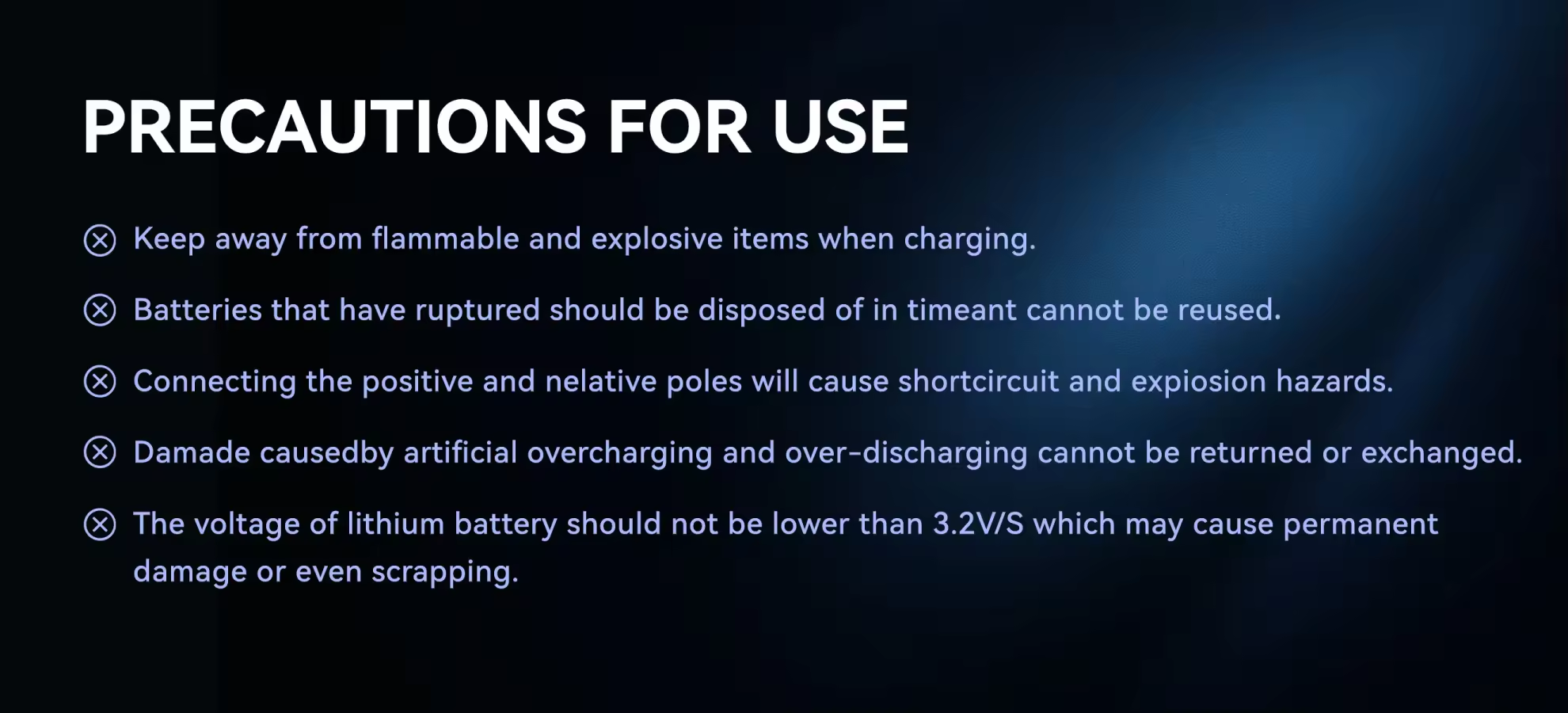
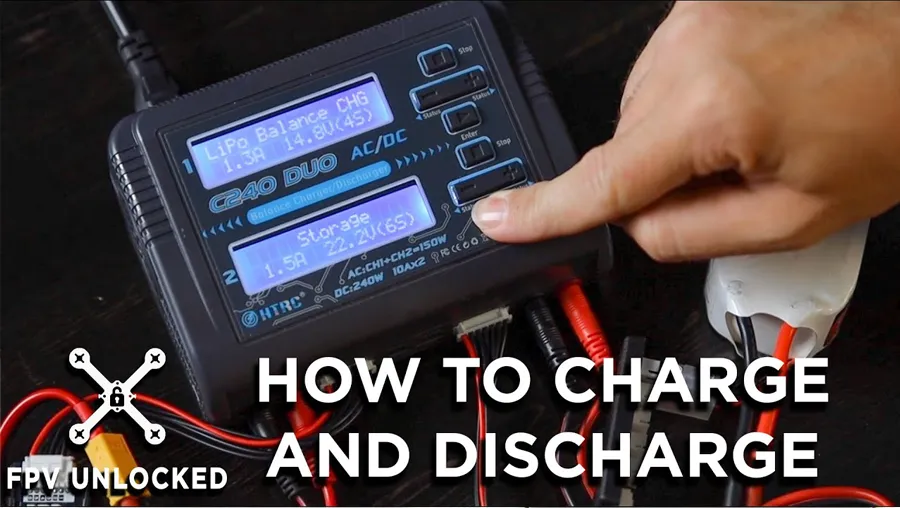
● Use a compatible balance charger and never exceed the manufacturer's maximum charging voltage.
● For long-term storage, Boslipo recommends approximately 3.85V per cell and avoiding extended storage at full charge.
MEPSKING Purchase Verdict
Buy the Boslipo P7 850mAh 95C if you want a lightweight high-discharge battery for a 3–4 inch FPV drone, especially freestyle, racing or compact cinematic builds.
Choose 650mAh when minimum weight and agility are the priority. Choose 850mAh when you want the best balance of weight, punch and usable flight time. Choose 950mAh when your drone can handle the additional weight and longer flight time matters more.
For cell count, 4S is the most balanced starting point for many compact builds, while 6S is better suited to high-performance setups with compatible low-KV motors.
In short: 650mAh for agility, 850mAh for balance, 950mAh for endurance.










 Verified