
Choosing the right power system is one of the most important decisions when building a 5-inch FPV freestyle drone. Your motor, ESC, battery, and propellers need to work together to deliver responsive throttle control, reliable power delivery, and the performance you want from every flight.
For pilots planning a 6S freestyle build, the MEPS NEON 2207 V2 motor paired with the T-HOBBY V70A SE 8S ESC + F7 SE flight controller stack is one combination worth considering. The motor offers 1950KV and 2050KV options for 6S configurations, while the stack provides a 70A continuous-current ESC rating and support for up to 8S LiPo batteries.
This guide explains how to choose the right motor KV, what to look for in an ESC, and how to determine whether this combination suits your 5-inch FPV freestyle build.
What Makes a Good 6S FPV Power System?
A good power system is not simply the one with the highest KV or largest ESC current rating. The goal is to match the components to your frame, propellers, battery, and flying style.
For a typical 5-inch freestyle build, consider these four factors:
- Motor size and KV: Determine how the motor responds to throttle and how it works with your battery voltage and propeller load.
- ESC current rating: Choose an ESC that can handle the current demands of your motors under your intended flight conditions.
- Battery voltage and capacity: A 6S LiPo provides the voltage needed for many modern 5-inch freestyle configurations, but capacity and discharge capability also matter.
- Flight controller features: Check connectivity, firmware support, onboard logging, and the power outputs needed for your FPV electronics.
The MEPS NEON 2207 V2 and T-HOBBY V70A SE address two important parts of this setup: motor performance and ESC/flight-controller capability.
Choose the Right Motor KV for Your 6S Build
Motor KV is one of the first specifications to consider when choosing a motor for a 5-inch FPV drone. It indicates the motor’s approximate unloaded rotational speed per volt, not its power output or thrust by itself.
For a 6S setup, the MEPS NEON 2207 V2 is available in two relevant options: 1950KV and 2050KV.
1950KV vs. 2050KV
| Factor | 1950KV | 2050KV |
|---|---|---|
| Motor speed at the same voltage | Lower | Higher |
| General setup direction | More conservative motor speed | Slightly higher motor speed |
| What to consider | Propeller load and desired throttle response | Current draw, motor temperature, and throttle response |
| Best choice depends on | Your complete setup and flying preferences | Your complete setup and flying preferences |
A higher-KV motor generally has a higher unloaded RPM at the same voltage. However, actual flight performance also depends on propeller pitch, blade count, battery condition, motor design, and total aircraft weight.
Which should you choose?
Consider 1950KV if you prefer to start with a lower-KV option for your 6S build. Choose 2050KV if you want to explore a slightly higher motor-speed configuration. Neither option is universally better, so check the manufacturer’s specifications and test the selected motor with your intended propellers.
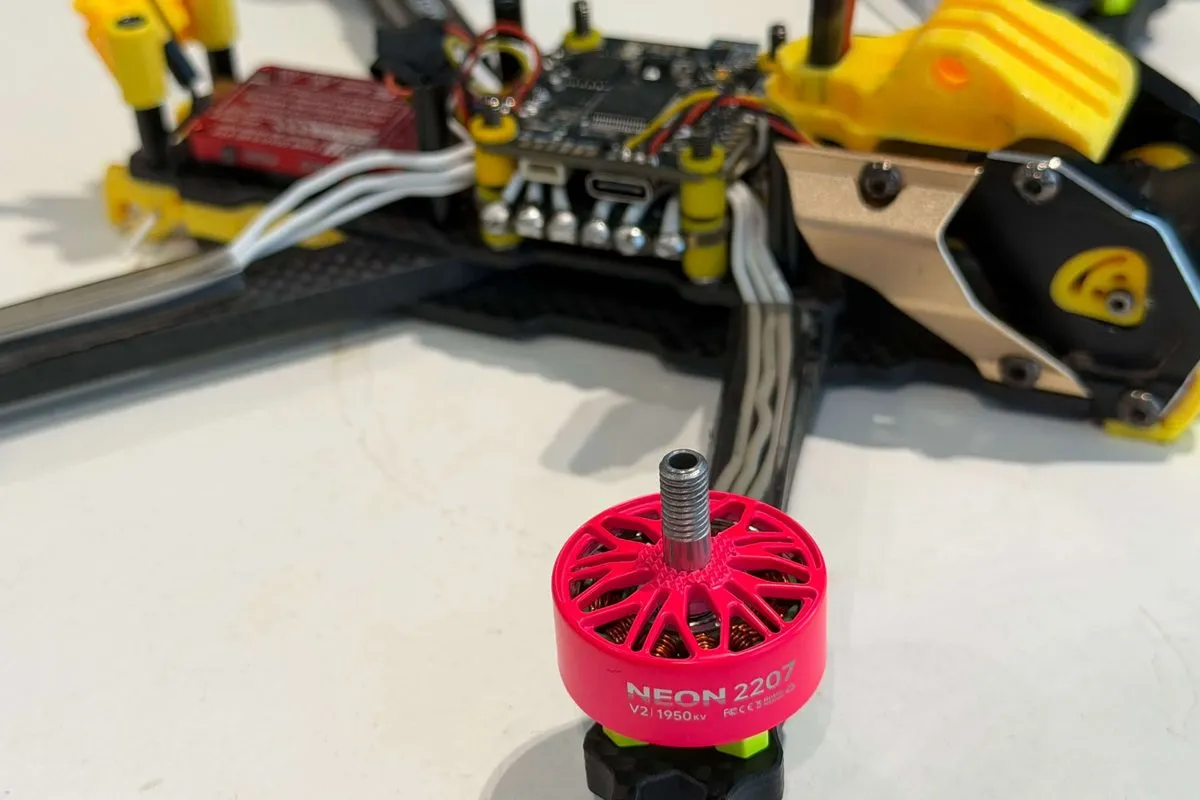
The NEON 2207 V2 is designed for 5-inch freestyle applications and features a reinforced motor structure. Its product page also reports up to 1836g of peak thrust in a specific test configuration using the 2050KV version and MEPS SZ5145 propellers. This figure should be understood as a test result, not a guaranteed thrust value for every build.
Explore the MEPS NEON 2207 V2 Brushless Motor to compare available KV and color options.
Why ESC Current Rating Matters
The ESC controls power delivery from the battery to the motors. Its current rating is an important part of choosing a power system, especially when a freestyle setup may experience substantial current demand during rapid throttle changes and aggressive maneuvers.
The T-HOBBY V70A SE ESC is rated for 70A continuous current and supports up to 8S LiPo input. This gives builders a higher current-rating option for a range of demanding FPV configurations.
Is a 70A ESC suitable for a 5-inch 6S drone?
It can be a suitable option, provided the motors, propellers, battery, and overall build are compatible with the ESC.
A higher ESC current rating does not automatically make a drone faster or more efficient. It provides a current-handling specification that must be considered alongside the actual current drawn by the motors.
Before flying, check:
- The motor manufacturer’s current and voltage recommendations.
- The propeller specifications and expected current draw.
- The ESC’s continuous and peak current ratings.
- Cooling, mounting, wiring, and battery connector requirements.
The NEON 2207 V2 product page reports a peak current draw of 49A in a specific 2050KV test using SZ5145 propellers. That result is useful as a reference for that test configuration, but it should not be treated as the maximum current under every flight condition.
For a complete build, use the motor and ESC specifications together rather than choosing components based on one number alone.
See the T-HOBBY V70A SE 8S ESC + F7 SE FC Stack for full product details.
Does an 8S ESC Work with a 6S Battery?
Yes. An ESC that supports up to 8S can generally be used with a 6S battery, provided 6S is within its supported input-voltage range and the rest of the system is configured correctly.
The T-HOBBY V70A SE supports 4S–8S LiPo batteries, making 6S a supported voltage option.
However, an 8S-rated ESC does not mean you need an 8S battery. The battery voltage should match the motor, propeller, frame, and intended flight performance.
For a 5-inch freestyle build, 6S is a common configuration. The stack’s additional voltage capability can also provide flexibility for future builds, but it does not make every motor suitable for 8S operation.
If you plan to use a different battery voltage in the future, verify that the motor KV, propellers, and every other component are appropriate for that configuration before powering up.
Why Pair the MEPS NEON 2207 V2 with the T-HOBBY V70A SE?
The reason to consider these products together is that they address complementary parts of a 5-inch FPV power system.
MEPS NEON 2207 V2 Motor
The NEON 2207 V2 is designed for 5-inch freestyle drones. Its 2207 motor format, 6S-oriented KV options, and reinforced construction make it a candidate for pilots building a freestyle quad that needs responsive motor control and durable hardware.
T-HOBBY V70A SE 8S ESC + F7 SE FC Stack
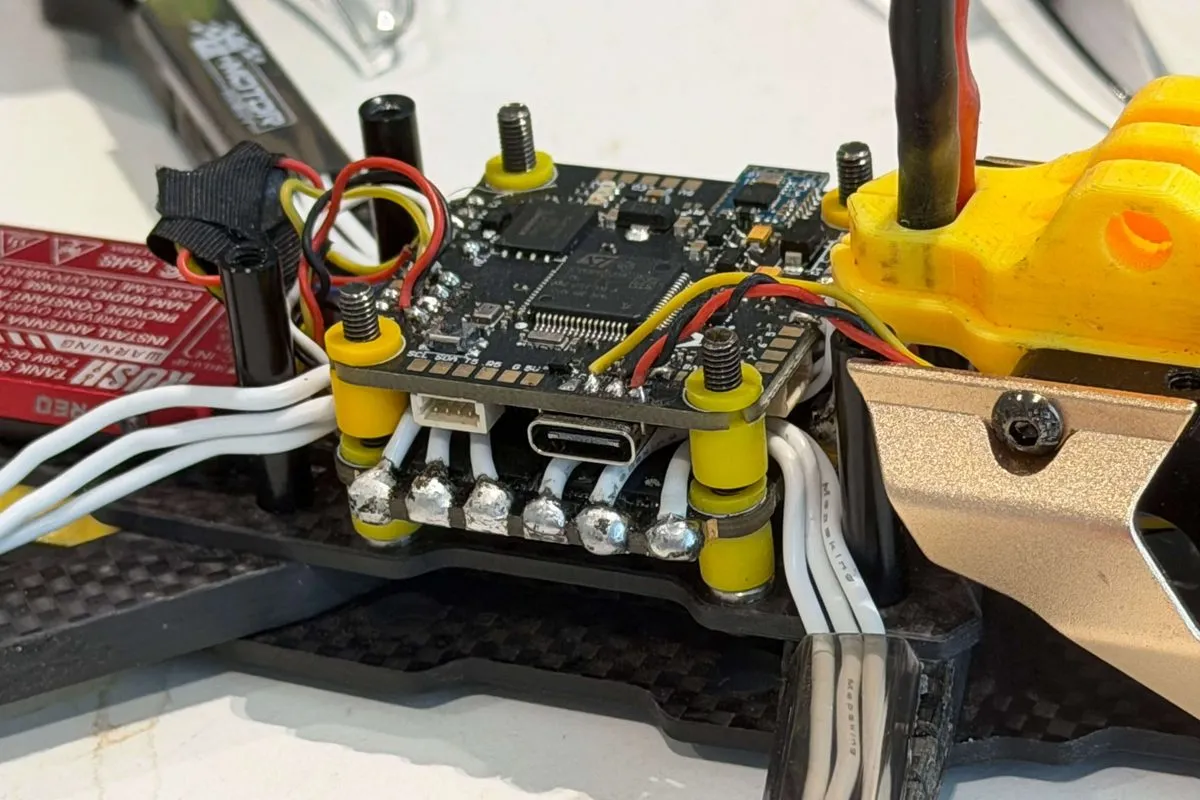
The V70A SE combines a 70A 4-in-1 ESC with an F7 flight controller. Its key features include support for up to 8S input, a plug-in FC-to-ESC connection, and 128MB of Blackbox storage according to the product specifications.
The flight controller’s Blackbox logging can help pilots review flight data and investigate issues during tuning. The plug-in connection also simplifies installation when the stack is assembled according to its specified wiring and pinout.
What makes the combination worth considering?
- A clear 5-inch freestyle direction: The NEON 2207 V2 is designed for this frame class.
- A 6S motor option: The 1950KV and 2050KV versions give builders options to evaluate for their preferred setup.
- A high-current ESC rating: The V70A SE offers a 70A continuous-current rating.
- Flight-controller features: Blackbox logging and the FC’s connection options support setup, tuning, and troubleshooting.
These features make the combination worth evaluating, but they do not guarantee better flight performance than every alternative. Final compatibility and performance depend on the complete build.
What Else Do You Need for a 5-Inch 6S Freestyle Build?
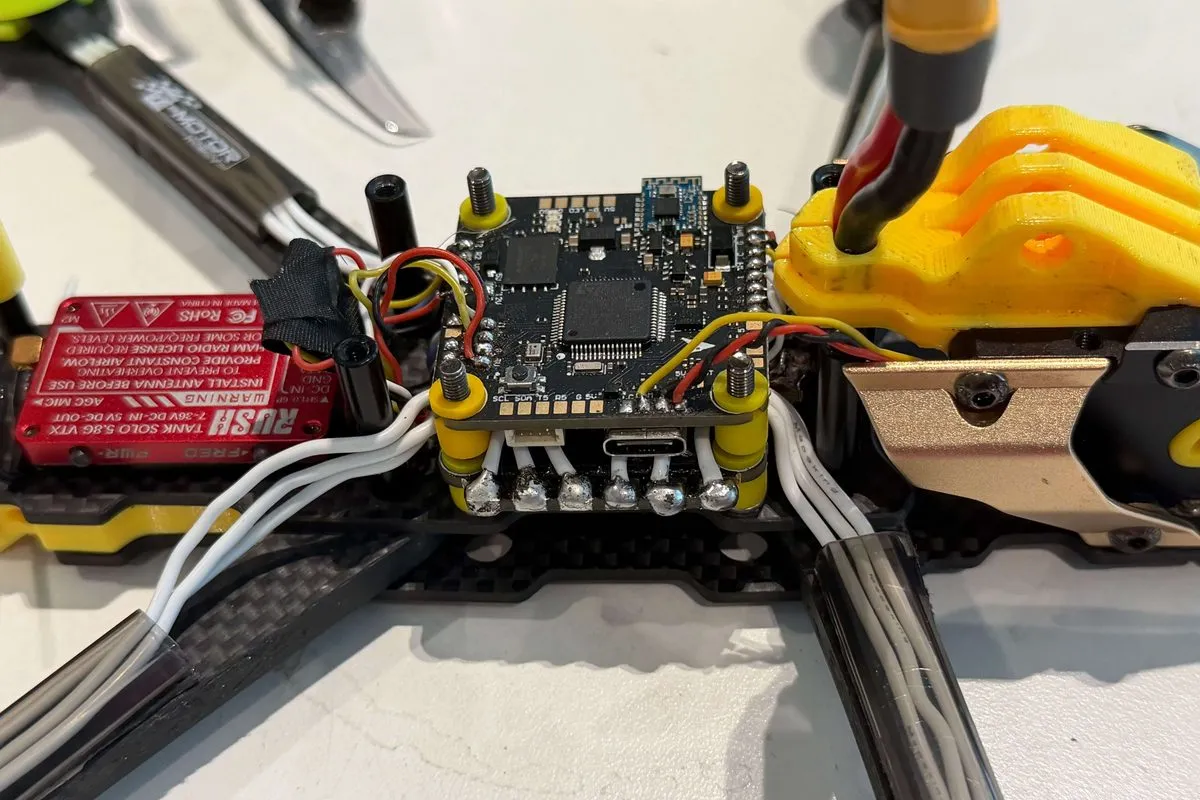
The motor and ESC/FC stack are only part of the system. Before ordering, make sure the rest of the build is compatible.
Battery: Choose a 6S LiPo with suitable capacity, discharge capability, connector, and dimensions for your frame. Avoid selecting a battery based on capacity alone.
Propellers: Match the propeller diameter, pitch, and blade configuration to the motor and frame. A more demanding propeller can increase current draw and motor temperature.
Frame: Confirm that the frame supports 5-inch propellers, the motor mounting pattern, and the stack’s mounting dimensions.
FPV system: Check whether your chosen analog or digital video system is compatible with the flight controller’s available ports, voltage outputs, and wiring requirements.
Wiring and cooling: Use appropriate wire gauges, secure solder joints, and provide sufficient airflow around the ESC. Follow the manufacturer’s installation instructions.
After assembly, inspect the wiring and motor direction, configure the flight controller and ESC correctly, and perform initial checks without propellers installed. Start with conservative testing and monitor current draw and motor temperature before attempting aggressive freestyle maneuvers.
Frequently Asked Questions
Is 1950KV or 2050KV better for a 6S FPV drone?
Both are options for a 6S build with the MEPS NEON 2207 V2. The better choice depends on your propellers, desired throttle response, current draw, and flying preferences. Compare manufacturer data and test the complete configuration before deciding.
Is a 70A ESC enough for a 5-inch FPV drone?
A 70A ESC can be suitable for many 5-inch builds, but the required rating depends on the motors, propellers, battery, and operating conditions. Confirm that the expected current remains within the ESC’s specifications.
Can I use an 8S ESC with a 6S battery?
Yes, if the ESC explicitly supports 6S input. The T-HOBBY V70A SE supports 4S–8S LiPo input, so 6S is within its stated range.
Does this combination work with every 5-inch frame?
Not automatically. Check the frame’s motor mounting pattern, stack mounting dimensions, available space, propeller clearance, and wiring requirements before purchasing.
Do I need a 70A ESC for a 2207 motor?
Not necessarily. Motor size alone does not determine the required ESC rating. The motor’s current draw with your chosen battery and propellers is a more useful basis for selecting an ESC. The V70A SE is one option for builders who want its current rating and flight-controller features.
Final Thoughts
A successful 5-inch 6S freestyle build starts with choosing components that work together. The MEPS NEON 2207 V2 offers 1950KV and 2050KV options for 6S configurations, while the T-HOBBY V70A SE stack combines a 70A continuous-current ESC with an F7 flight controller and support for up to 8S input.
If these specifications fit your build requirements, explore both products before finalizing your configuration:
Check the specifications of your battery, propellers, frame, and electronics before assembly to make sure the complete power system is suitable for your intended flying style.