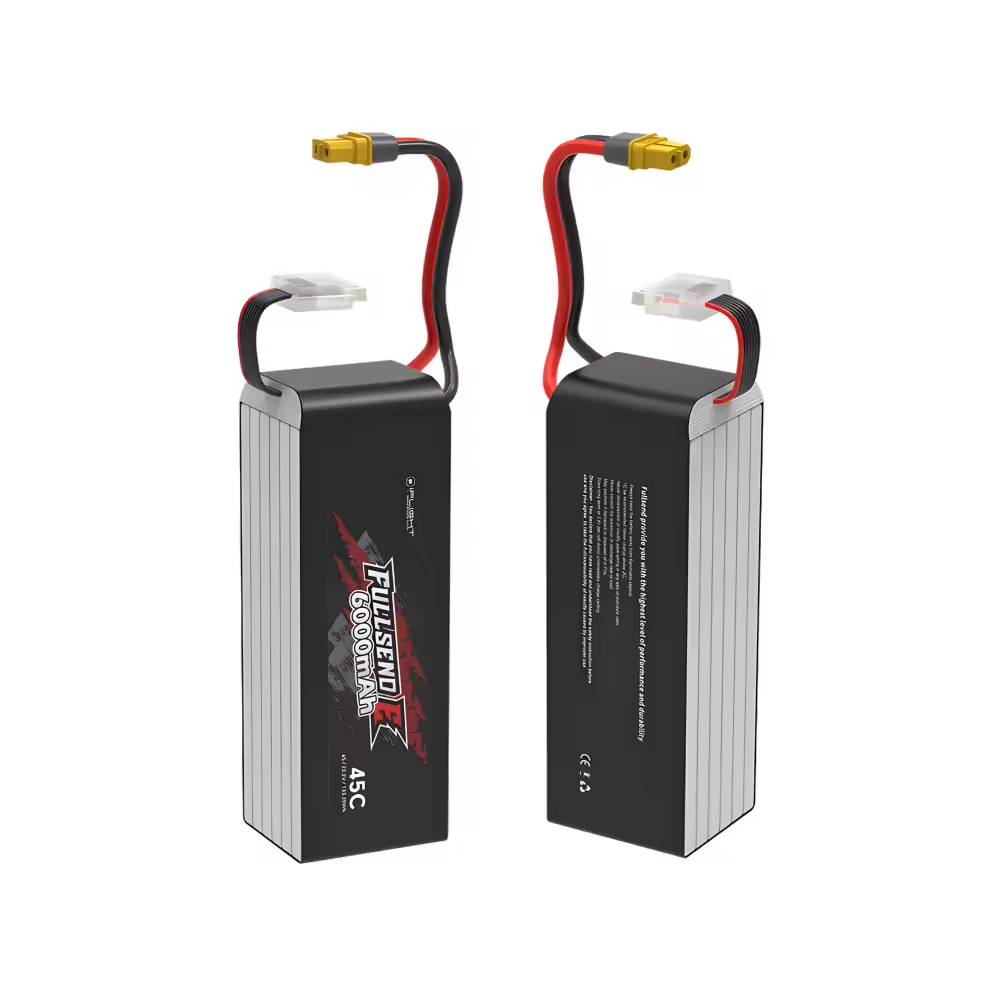
iFlight Fullsend E 6S 6000mAh Buying Guide: Is It Right for Your FPV Drone?
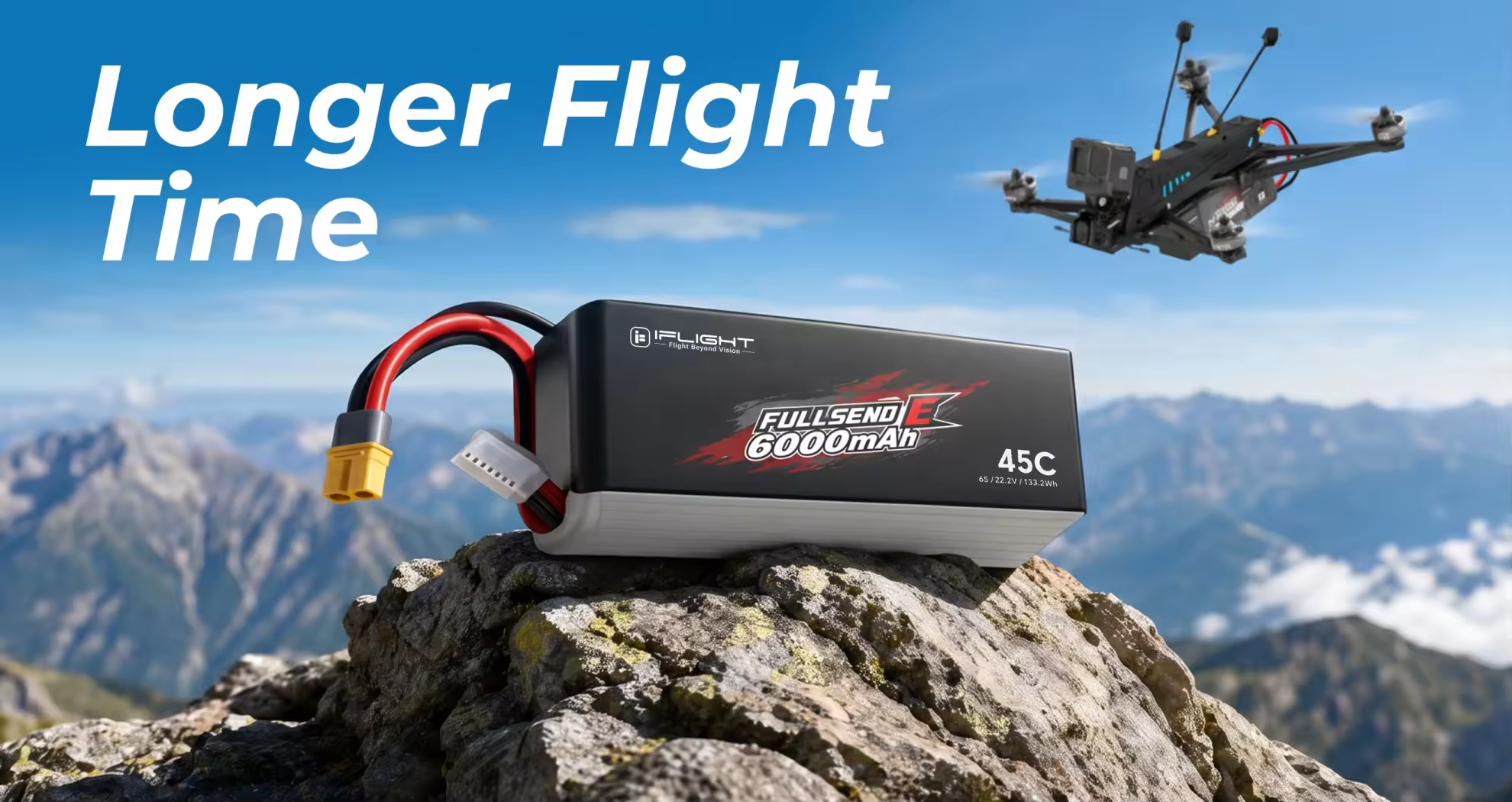
Choosing an FPV battery is not simply about picking the highest capacity. The right battery depends on your drone size, total weight, motor and propeller setup, and how you actually fly. The iFlight Fullsend E 6S 6000mAh is best suited to pilots who want more usable energy and longer sessions, rather than the lightest possible setup.
Who Should Choose the Fullsend E 6000mAh?
This battery is a strong option if your FPV build is designed around endurance, cruising, or carrying additional equipment.
Choose the Fullsend E 6000mAh if you:
-Fly 7-inch or larger FPV drones designed for longer flights
-Prioritize endurance over minimum takeoff weight
-Fly long-range routes or extended cruising sessions
-Use a GoPro or other camera payload on your drone
-Prefer smooth, efficient flying rather than constant high-throttle maneuvers
-Want to spend more time flying instead of frequently changing batteries
For these use cases, the additional battery capacity can be more valuable than the weight savings of a smaller pack.
When Is a Smaller Battery a Better Choice?
More capacity does not always mean better performance. A larger battery adds weight, and your motors need to produce additional thrust to carry it. If your drone is optimized for lightweight performance, the extra weight can reduce responsiveness and make the aircraft feel less agile.
Consider a smaller 6S battery if you mainly:
-Fly FPV racing
-Perform aggressive freestyle
-Prefer rapid acceleration and sharp direction changes
-Build lightweight 5-inch or performance-focused quads
-Want the lowest possible takeoff weight
For these applications, reducing battery weight can improve handling even if it means giving up some potential flight time.
6000mAh vs. Smaller 6S Batteries: What Should You Prioritize?
The best capacity depends on what you want your drone to do.
6000mAh:
-Maximum endurance
-Long-range cruising
-Cinematic flying
-Camera-equipped builds
-Fewer battery changes
Smaller capacity:
-Fast acceleration
-Maximum agility
-Racing
-Lightweight freestyle
Think of the decision as a trade-off:
More Capacity → More Available Energy → Potentially Longer Flights
but also:
More Capacity → More Battery Weight → More Thrust Required
The best result comes when your drone has enough power and efficiency to take advantage of the additional capacity.
Can Your Drone Handle a High-Capacity 6S Battery?
Before ordering, check your complete build rather than looking at the battery alone.
1. Check Your Battery Voltage
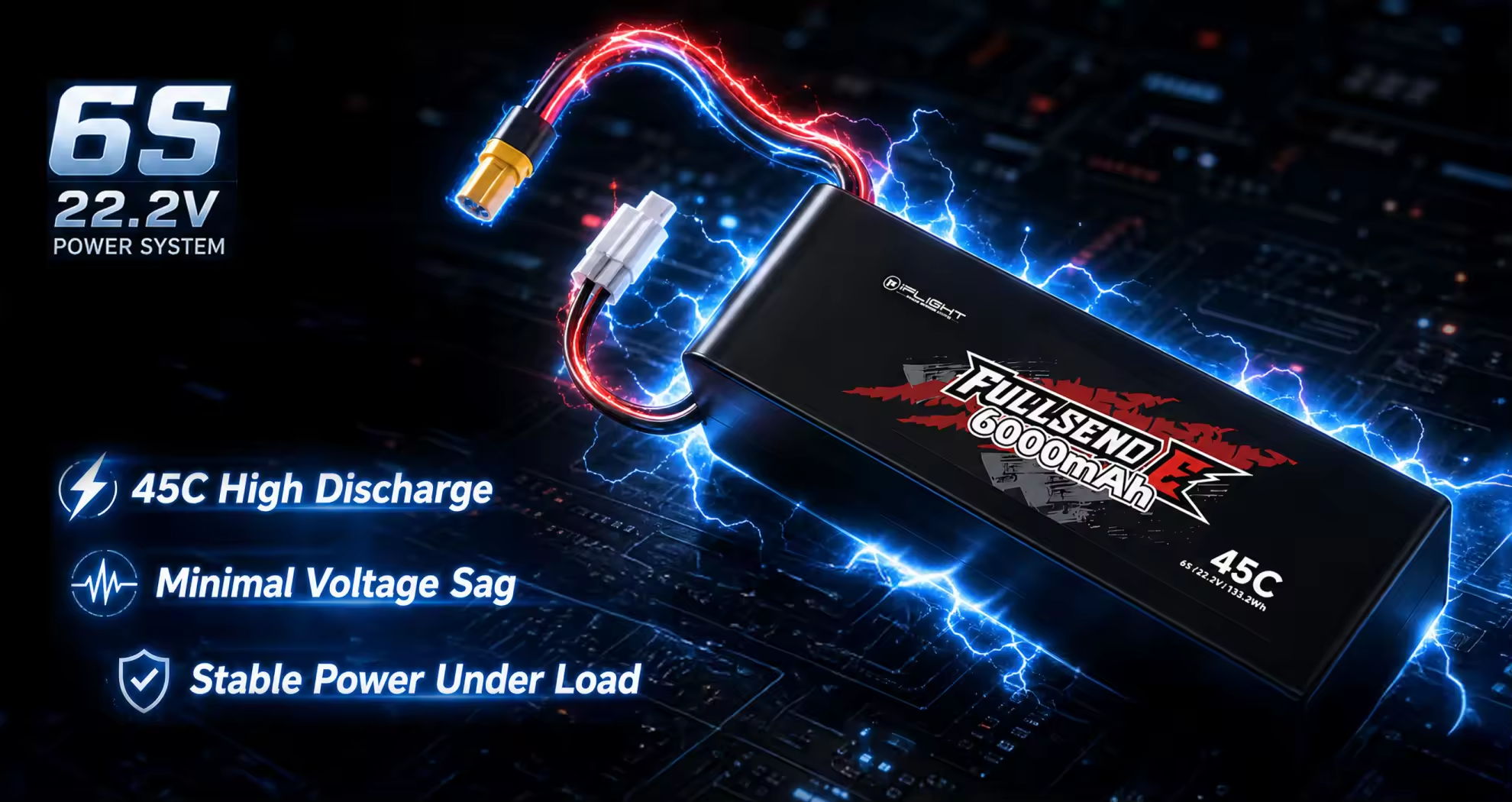
Your drone's power system must be designed for 6S operation. Make sure your flight controller, ESC, motors, and other electronics are compatible with the intended battery voltage.
2. Check Total Takeoff Weight
Consider the weight of the complete aircraft, including the frame, motors, electronics, FPV camera, GPS, action camera, and battery. A battery that your drone can technically lift may still make the setup inefficient if the overall weight becomes too high.
3. Check Motor and Propeller Performance
Your motor and propeller combination should provide sufficient thrust for the completed build. Long-range and cinematic setups generally benefit from an efficient motor/propeller combination rather than simply maximizing peak thrust.
4. Check Physical Battery Space
High-capacity batteries are physically larger than lightweight racing packs. Make sure your frame has enough room to mount the battery securely without interfering with the props, camera, GPS, or other components.


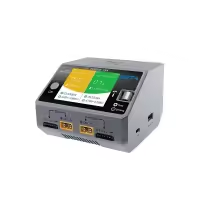 GEPRC HOTA D6 Pro 325W 15A 1-6S Dual Channel AC/DC Smart Charger w/ Wireless ChargingHOTA D6 Pro 325W Charger$115.42 Save $3.57
 ToolkitRC Q6AC 4-Channel AC/DC Smart Battery Charger for RC BatteriesUS$203.69 Save $6.30










 Verified