Buying Guide: Tattu R-Line V5 1550mAh 6S 150C Battery
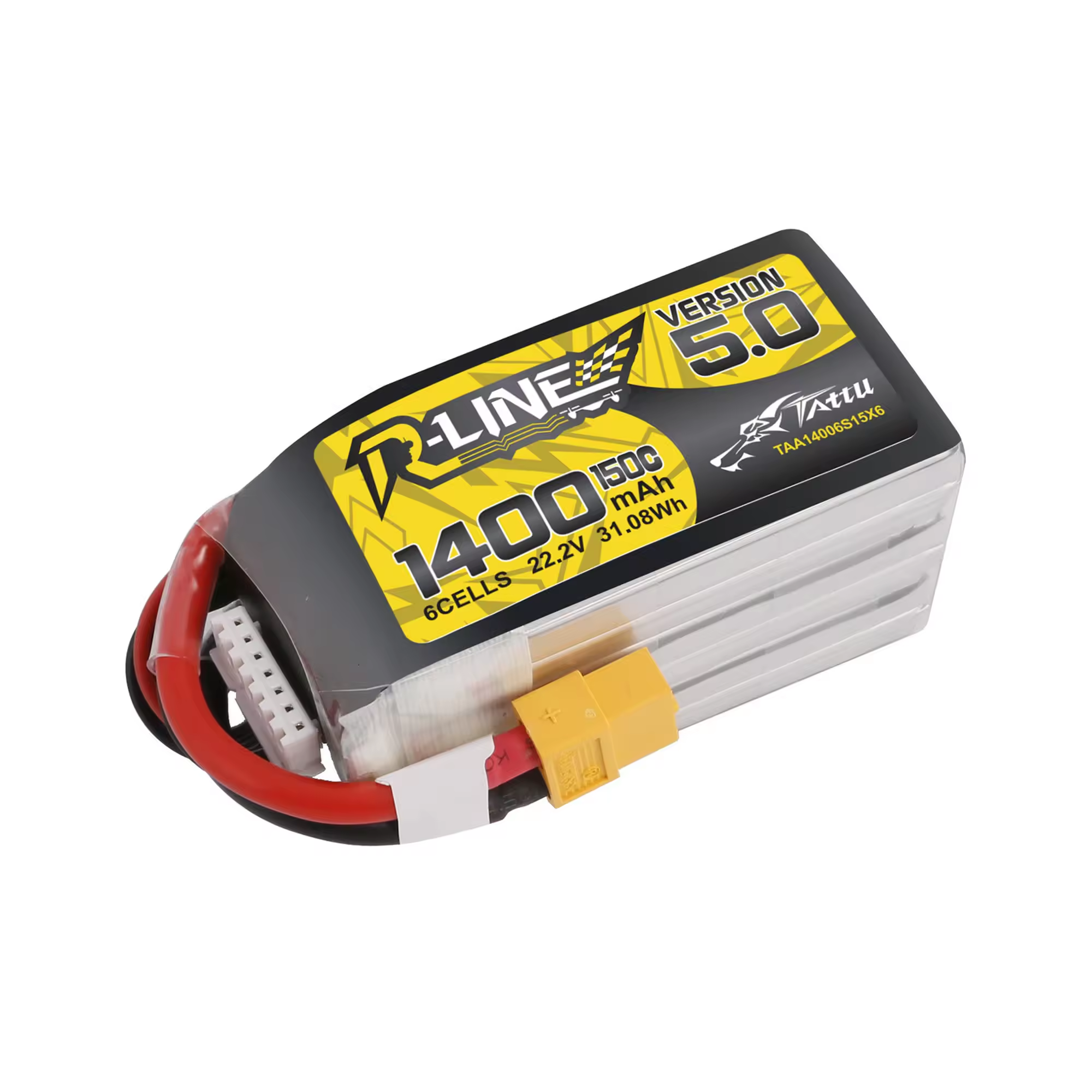
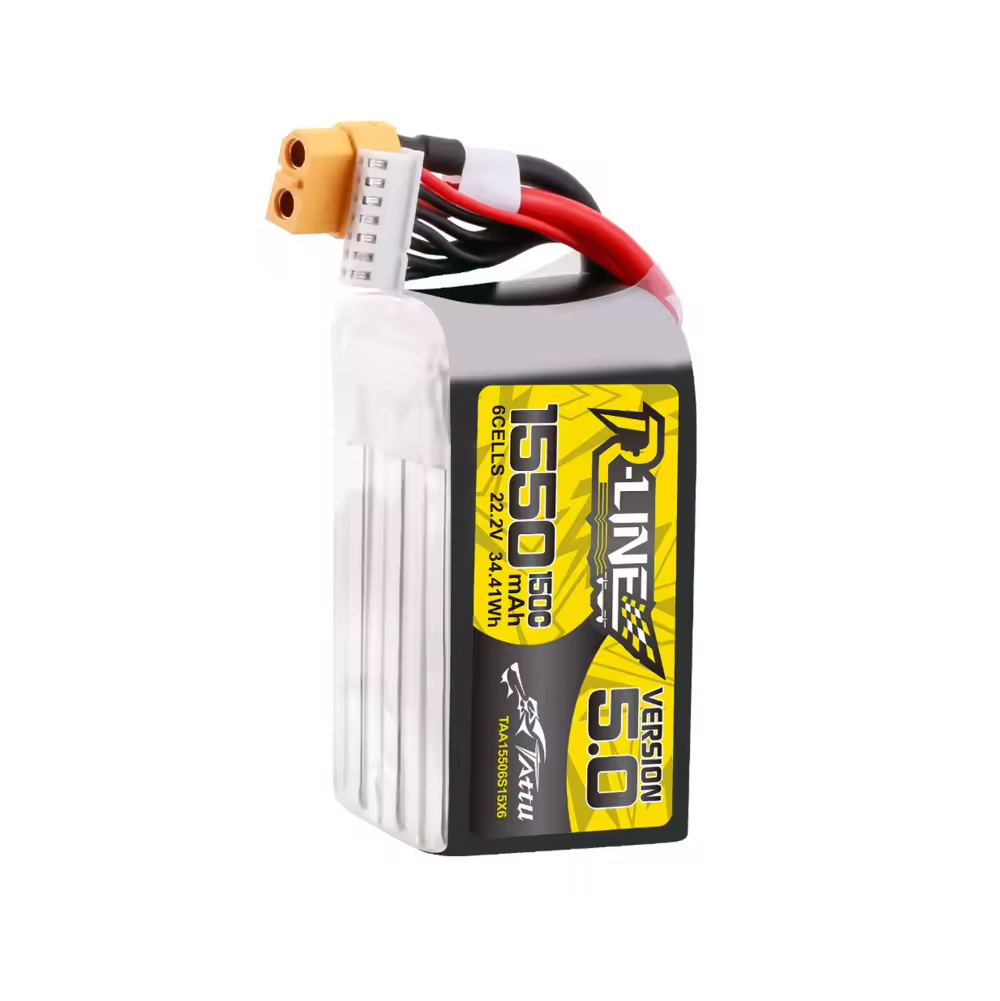
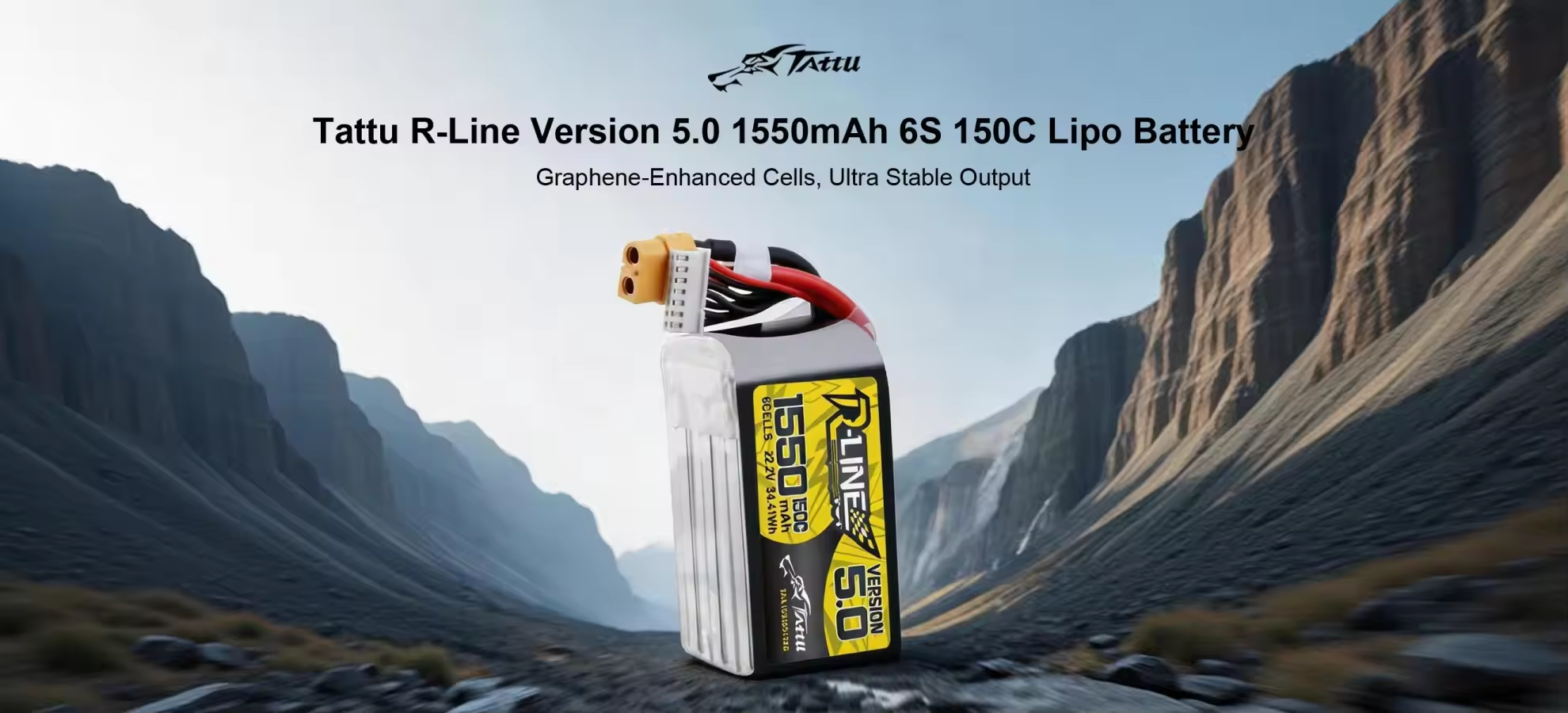
The Tattu R-Line Version 5.0 1550mAh 6S 150C is designed for FPV pilots who want a balance between battery weight, punch and flight time. For a typical 5-inch 6S build, 1550mAh sits between lightweight racing packs and higher-capacity freestyle batteries, making it a versatile choice for pilots who do not want to sacrifice too much agility for additional runtime.
MEPSKING Expert Assessment
For 5-inch FPV, battery capacity has a direct effect on how the quad feels in the air.
A smaller 1300mAh or 1400mAh pack reduces weight and can make the drone feel more responsive during acceleration, braking and rapid direction changes. The trade-off is shorter flight time.
The 1550mAh version adds capacity without moving too far into the heavier end of the range. It is therefore a strong all-around option for pilots who fly both freestyle and general-purpose 5-inch FPV.
The 1800mAh version prioritizes flight time. However, the additional battery weight can make a lightweight 5-inch quad feel less aggressive and less agile.
The right choice therefore depends less on the battery's maximum capacity and more on how you want the drone to fly.
Which Tattu R-Line V5 Capacity Should You Choose?
| Buying Factor | 1300mAh | 1400mAh | 1550mAh | 1800mAh |
|---|
| Voltage | 6S / 22.2V | 6S / 22.2V | 6S / 22.2V | 6S / 22.2V |
| Discharge | 150C | 150C | 150C | 150C |
| Weight | Lightest | Very light | Balanced | Heaviest |
| Flight Time | Shorter | Short | Balanced | Longer |
| Agility | Highest | High | Very good | Lower |
| Best Application | Racing | Racing / freestyle | Freestyle / all-round | Freestyle / cruising |
| Purchase Advice | Minimum weight | Lightweight performance | Best balance | Longer runtime |
1300mAh vs 1400mAh vs 1550mAh vs 1800mAh
1300mAh — Choose for maximum agility
A 1300mAh 6S pack is a good option for pilots who want to keep a 5-inch quad as light as possible.
The lower battery weight helps with:
● Faster acceleration
● Quicker direction changes
● More responsive freestyle
● Competitive racing
If your priority is racing performance rather than flight duration, 1300mAh is worth considering.
The trade-off is that you will generally need to land and change batteries sooner.
1400mAh — Lightweight all-round performance
1400mAh is a small step up from 1300mAh and provides a little more energy without moving too far away from a lightweight racing setup.
Choose 1400mAh if you want a responsive 5-inch quad but find 1300mAh flight time too short.
It is particularly suitable for 5-inch racing and lightweight freestyle builds.
1550mAh — Best overall balance
The 1550mAh version is the most versatile choice in this comparison.
It provides more capacity than 1300mAh and 1400mAh while avoiding the larger weight increase associated with 1800mAh.
This makes it a strong match for:
● 5-inch freestyle
● General FPV flying
● Mixed racing and freestyle
● Pilots who want reasonable flight time without a heavy battery
If you only want to buy one 6S battery capacity for a typical 5-inch FPV fleet, 1550mAh is the easiest capacity to recommend.
1800mAh — Choose for longer flight time
1800mAh is designed for pilots who value flight time more than minimum weight.
The additional capacity can be useful for:
● Long freestyle sessions
● Cruising
● Cinematic FPV
● Long-range-oriented 5-inch builds
● Heavier builds carrying an HD camera
However, the additional battery weight will affect the quad's handling. A drone optimized around a 1300mAh pack may feel noticeably heavier with an 1800mAh battery.
Which Capacity Is Best for Your 5-Inch FPV Drone?
| Flying Style | Recommended Capacity | Why |
|---|
| Competitive racing | 1300mAh | Minimum weight and fast response |
| Racing + freestyle | 1400mAh | Lightweight with slightly more runtime |
| Everyday freestyle | 1550mAh | Best balance of power, weight and runtime |
| Cinematic freestyle | 1550–1800mAh | More flight time |
| Cruising / long-range | 1800mAh | Capacity is more important than agility |
| Heavy 5-inch build | 1800mAh | Better suited to higher takeoff weight |
This also explains why 1550mAh should not be treated as universally better than 1300mAh or 1800mAh.
A racing pilot may prefer 1300mAh because every gram matters.
A cinematic pilot may prefer 1800mAh because landing every few minutes is more inconvenient than carrying additional weight.
The 1550mAh version is recommended because it sits in the middle and works well for the largest range of typical 5-inch FPV applications.
1550mAh or 1800mAh: Which Upgrade Makes More Sense?
If you are currently using 1300mAh or 1400mAh and want longer flight time, 1550mAh is the more conservative upgrade.
You gain additional capacity without making the battery as heavy as an 1800mAh pack.
Move directly to 1800mAh when your build is already designed around longer flight time and can handle the additional weight.
A simple rule is:
1300mAh → "I want the lightest quad."
1400mAh → "I want lightweight performance with a little more runtime."
1550mAh → "I want the best overall balance."
1800mAh → "I want longer flight time."
Compatibility and Battery Selection
● Confirm your drone is designed for 6S / 22.2V operation.
● Check the motor KV, ESC, propeller and total takeoff weight before selecting battery capacity.
● Confirm the frame battery compartment can accommodate the selected pack.
● Use an XT60-compatible power lead for the 1550mAh version.
● Do not assume a larger capacity will automatically improve flight performance. The additional weight can reduce acceleration and agility.
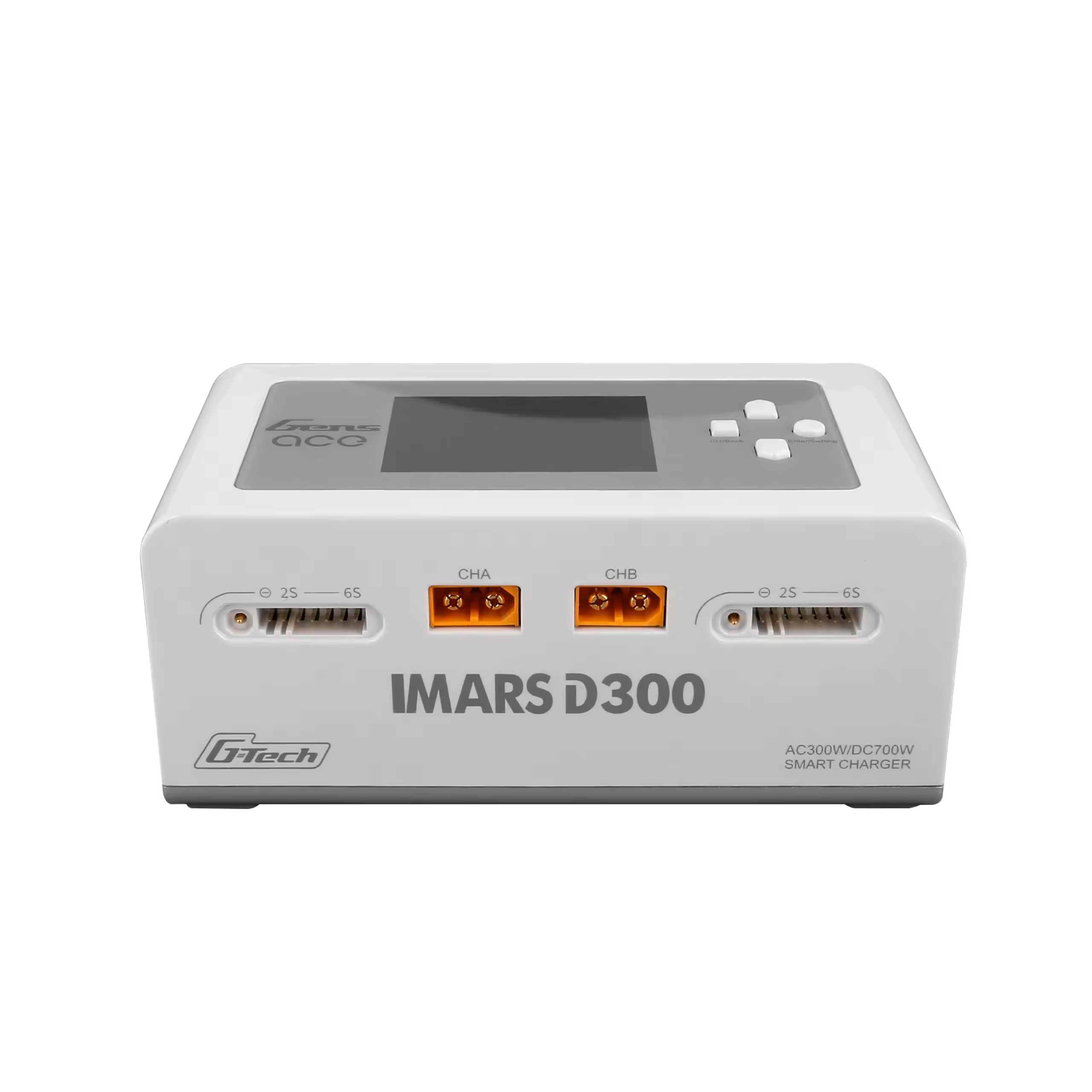
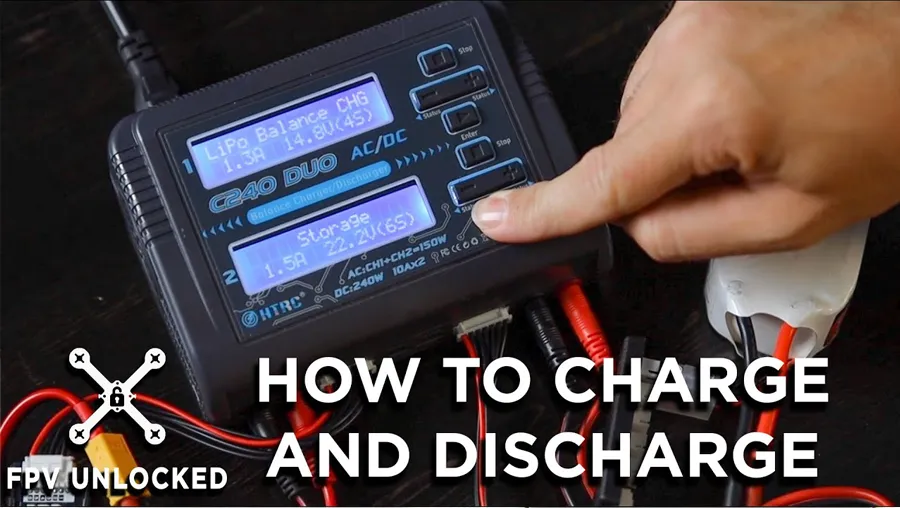
● Use a suitable 6S LiPo charger and follow proper charging and storage procedures.
MEPSKING Purchase Verdict
Choose the Tattu R-Line V5 1550mAh 6S 150C if you want a versatile battery for 5-inch FPV freestyle and general-purpose flying. It offers a practical middle ground between the lightweight 1300/1400mAh options and the longer-runtime 1800mAh pack.
Choose 1300mAh for racing weight, 1400mAh for lightweight performance, 1550mAh for the best overall balance, and 1800mAh when flight time matters more than agility.











 Verified