Kaufberatung: Aikon F7 60A 3-6S AIO Flugcontroller
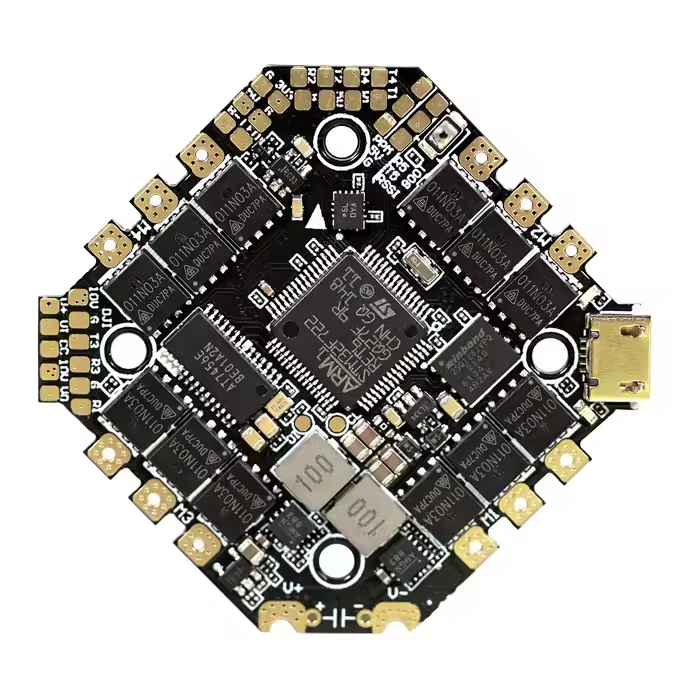
Die meisten All-in-One-Flugcontroller werden für kompakte Bauweisen ausgewählt, doch geringe Abmessungen bedeuten nicht immer eine niedrige Leistungsfähigkeit. Der Aikon F7 60A kombiniert einen STM32F722-Flugcontroller mit 216 MHz und einen 60-A-Beregler. 4-in-1 ESC, Dies bietet Bauherren ein Hochstrom-Stromversorgungssystem, ohne dass ein herkömmlicher FC- und ESC-Stack erforderlich ist..
Mit Unterstützung für 3–6S, 16 MB Blackbox-Speicher, fünf softwareseitig invertierbaren UARTs, integriertem OSD sowie einem dedizierten 10-V-1,5-A-BEC für kompatible DJI-HD-Systeme ist das Aikon F7 60A speziell für Cinewhoops und andere kompakte FPV-Ramen konzipiert, die sowohl eine vereinfachte Verkabelung als auch eine hohe Strombelastbarkeit erfordern..
Für wen ist das Aikon F7 60A AIO am besten geeignet?
Der Aikon F7 60A eignet sich besonders für Piloten, die die Vorteile einer sauberen Installation eines AIO-Boards nutzen möchten, jedoch keine Kompromisse bei der Strombelastbarkeit der ESCs eingehen wollen..
Es eignet sich besonders für::
● ● Hochleistungs-Cinewhoop-Bauten
● ● Kompakte 3-6S-FPV-Drohnen
● ● Konstruktionen, die einen hohen Stromreservemargin des ESC erfordern
● ● DJI HD-FPV-Bauten, die eine geregelte 10-V-Stromversorgung erfordern
● ● Piloten, die eine kompakte Alternative zu einem vollständigen FC- und ESC-Stack suchen
Warum unterscheidet sich ein 60-A-All-in-One-Gerät?
Der integrierte ESC ist für einen Dauerstrom von 60 A und einen Kurzzeitstrom von 70 A ausgelegt. Dies stellt eine für ein Board im AIO‑Stil ungewöhnlich hohe Leistungsfähigkeit dar und macht das Aikon für anspruchsvollere Motor‑Propeller‑Kombinationen geeignet als herkömmliche AIO‑Boards mit niedrigem Strombedarf..
Eine höhere Strombelastbarkeit bedeutet nicht zwangsläufig, dass die Drohne schneller fliegt. Der wesentliche Vorteil ist der elektrische Leistungsreserven. Bauherren sollten den erwarteten Stromverbrauch ihrer Motoren und Propeller dennoch prüfen, bevor sie ein ESC auswählen..
Bei kompakten Cinewhoops und leistungsstarken FPV-Racern bietet ein 60-A-AIO eine sauberere Alternative zur Verwendung einer separaten Flugsteuerung und 4-in-1 ESC Stapel..
Ressourcen für den F722-Prozessor und die Flugsteuerung
Das Board verwendet einen 216-MHz-STM32F722-Prozessor und bietet fünf hardwareseitig per Software umschaltbare UARTs. Dies ermöglicht Bauern große Flexibilität beim Anschließen eines Empfängers, eines VTX, eines GPS‑Geräts, eines Telemetrie‑Geräts oder anderer unterstützter Peripheriegeräte..
Der AIO verfügt außerdem über 16 MB integrierten Blackbox-Speicher zur Aufzeichnung von Flugdaten. Dies kann bei der Fehlersuche bei Vibrationen, Filtereinstellungen, der PID-Optimierung und anderen Problemen mit der Flugleistung hilfreich sein..
DJI HD Stromversorgung Unterstützung
Eine der Hauptmerkmale des Aikon F7 60A ist sein Spannungsregler mit 10 V und 1,5 A, der speziell für kompatible DJI-HD-Systeme entwickelt wurde. Dieser liefert eine stabilisierte Stromversorgung direkt vom Flugcontroller für unterstützte digitale Videogeräte..
Bei digitalen FPV-Bauvorhaben kann eine geregelte Stromversorgung die Installation vereinfachen, da weniger externe Spannungsregler erforderlich sind. Bevor Sie ein digitales Air-Unit anschließen, überprüfen Sie stets dessen vorgeschriebene Spannungs- und Stromangaben..
Kompatibilität von BLHeli_S und Bluejay
Der integrierte ESC verwendet die BLHeli_S-Firmware und unterstützt Bluejay. Dadurch erhalten Nutzer Zugriff auf moderne ESC-Funktionen, die vom Bluejay-Firmware-Ökosystem unterstützt werden, darunter bei entsprechender Konfiguration auch bidirektionaler DShot..
Für die meisten Anwender sollte die Auswahl der Firmware vorrangig von ihrer Betaflight-Konfiguration und den gewünschten ESC-Funktionen abhängen, anstatt einfach die neueste verfügbare Firmware zu wählen..
AIO vs. herkömmlicher FC- und ESC-Stack
Der Hauptvorteil des Aikon F7 60A ist die Integration. Durch die Kombination von Flight Controller und ESC auf einer einzigen Platine wird die Verkabelung vereinfacht, was die Montage in Rahmen mit begrenztem Innenraum erleichtern kann..
Dies ist besonders nützlich für Cinewhoops, bei denen Luftkanäle, Kameramontagesysteme und digitale Videogeräte nur begrenzten Platz für die Elektronik lassen..
Der Kompromiss besteht in der Flexibilität bei Reparaturen. Bei einem herkömmlichen Stack können FC und ESC in der Regel separat ausgetauscht werden. Bei einem AIO-Design kann eine Beschädigung eines Hauptbauteils den Austausch der gesamten Platine erforderlich machen..
Aikon F7 60A vs. iFlight BLITZ Whoop F7 55A
Der iFlight BLITZ Whoop F7 55A stellt eine nahezu gleichwertige Alternative dar, da er das gleiche Montageformat von 25,5 × 25,5 mm verwendet und einen F7-Flugcontroller mit einem hochstromfähigen 4-in-1-ESC kombiniert. Allerdings sind die beiden Boards hinsichtlich leicht unterschiedlicher Schwerpunkte optimiert.
| Funktion | Aikon F7 60A AIO |
iFlight BLITZ Whoop F7 55A |
|---|
| FC-Prozessor | STM32F722 | STM32F745 |
| Gyro | BMI270 | ICM42688 |
| ESC-Stromstärke | 60A / 70A Spitze | 55A / 65A Spitze |
| Batterieeingang | 3-6S | 2-6S LiHV |
| Blackbox | 16 MB | 16 MB |
| Dediziertes HD-BEC | 10 V 1,5 A | Nicht als dedizierte 10-V-Ausgangsspannung aufgeführt |
| Barometer | Nicht aufgeführt | DPS310 |
| Gewicht | 14 g | 10,5 g |
| Am besten für | Hochstrom-kompakte Cinewhoop- und HD-Bauten | Leichter Cinewhoop und flexible Konstruktionen für 2–6S-Akkus |
Welches sollten Sie wählen?
Wählen Sie den Aikon F7 60A, wenn: Ihr System ist auf maximale ESC-Reserven ausgelegt, Sie benötigen einen dedizierten 10-V-Ausgang für kompatible HD-Geräte, oder Sie wünschen sich mehr UART-Flexibilität in einem kompakten All-in-One-Format..
Wählen Sie den iFlight BLITZ Whoop F7 55A, wenn: Ein geringeres Gewicht des Flugcontrollers, 2S-Kompatibilität, ein F745-Prozessor, ein ICM42688-Gyroskop oder ein integrierter Barometer sind für Ihren Aufbau wichtiger..
Der Unterschied allein zwischen 55 A und 60 A sollte nicht über Ihren Kauf entscheiden. Die bessere Wahl hängt von der Akkulaufzeit, dem Videosystem, den benötigten Peripheriegeräten, dem gewünschten Gewichtsziel sowie den gesamten Leistungsanforderungen Ihrer FPV-Drone ab..
Bevor Sie kaufen
Vergewissern Sie sich, dass Ihr Rahmen das Montagemuster 25,5 × 25,5 mm unterstützt und dass der verfügbare Bauraum für das AIO-Modul, den Kondensator, den Empfänger sowie das Videosystem ausreichend ist..
Überprüfen Sie außerdem, ob Ihre Motor-Propeller-Kombination innerhalb der erwarteten Strombelastbarkeit des ESC bleibt. Bei 6S-Baukonzepten stellen Sie sicher, dass alle angeschlossenen elektronischen Komponenten die Akkuspannung unterstützen, und verwenden Sie bei Bedarf geeignete Filter und Kondensatoren..
Der Aikon F7 60A überzeugt vor allem dann, wenn Sie die kompakten Installationsvorteile eines AIO-Boards benötigen, gleichzeitig aber eine Leistungskapazität erwarten, die normalerweise größeren FPV-Elektronikkomponenten vorbehalten ist.



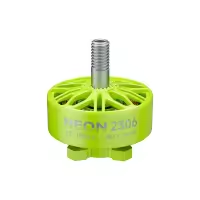 MEPS NEON 2306 V2 Hocheffizienter bürstenloser Motor für 5‑Zoll‑Freestyle-FPV‑Drohnen1950KV / Fluorescent Green$10.22 Speichern $0.77
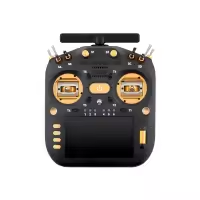 RadioMaster TX16S MK3 MAX Funksteuerung – Dualband ELRS/M2, H7‑Power und VollgrößenbedienungGold$296.99 Speichern $3.00
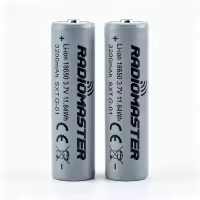 RadioMaster 18650 3200 mAh 1S 3,7 V Li-Ionen-Akku (2 Stück) für TX16S / Boxer / TX12/ Pocket / MT12 Funksteuerungen1S 3200mAh$12.21 Speichern $0.78